The best cycling routes around Daignac
4.4
(285)
1,894
riders
153
rides
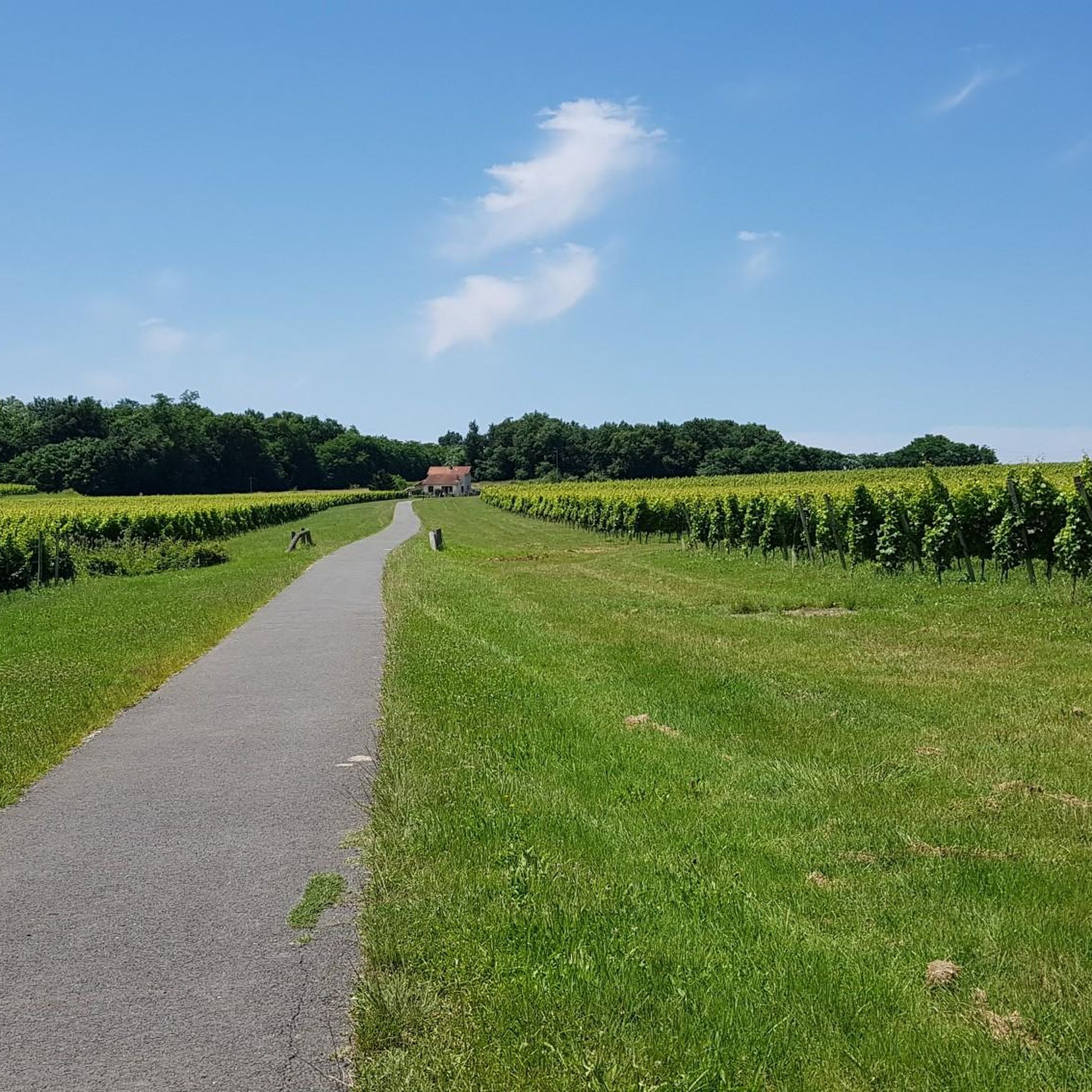
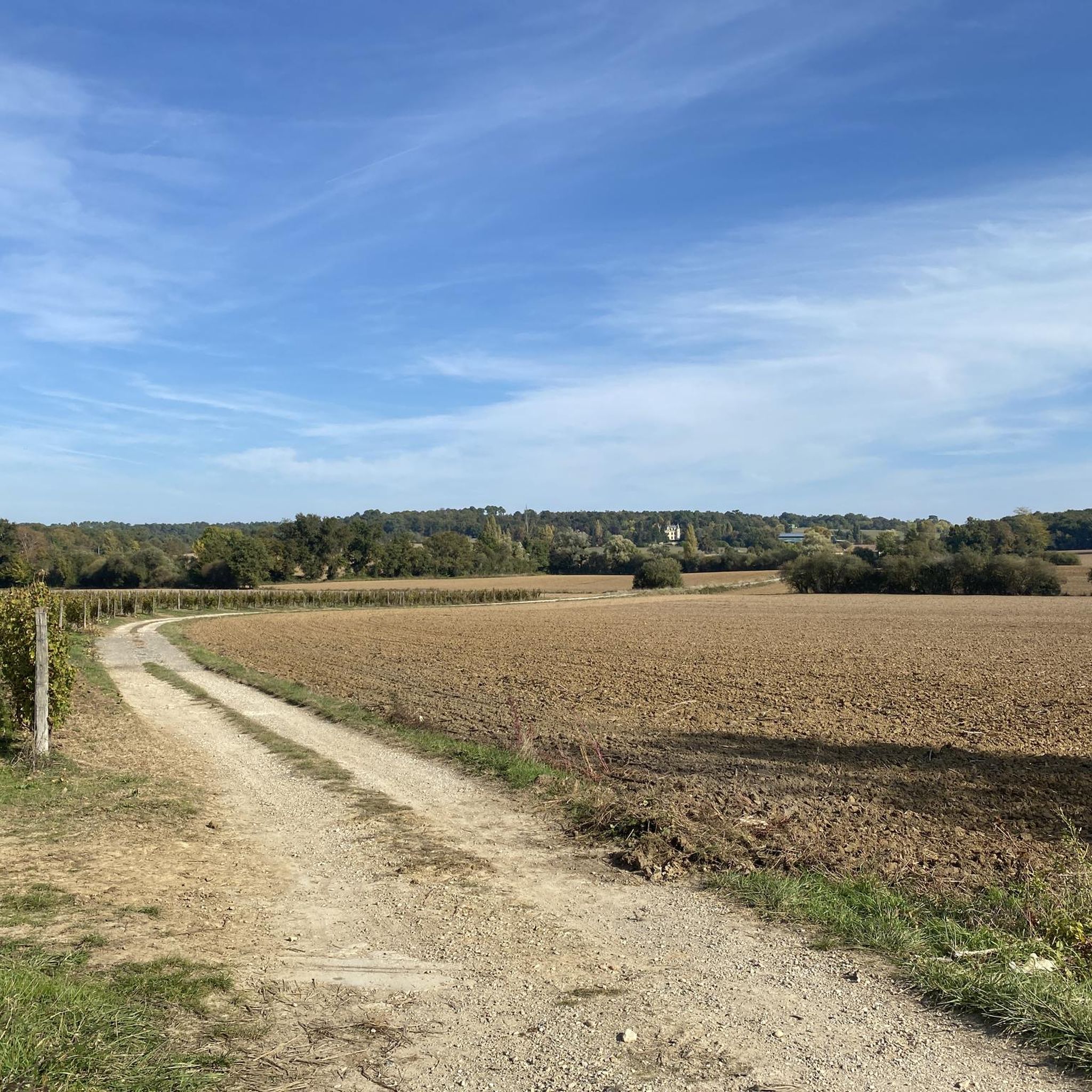
Touring cycling routes around Daignac are set within the Gironde department of Nouvelle-Aquitaine, a region characterized by its extensive vineyards, river valleys, and rolling hills. The area features a diverse topography, with moderate elevation gains suitable for touring cyclists. Numerous paths traverse the countryside, offering routes through forests and along the Dordogne River.
Best touring cycling routes around Daignac
- The most popular touring cycling route is Vines – Branne/Dordogne loop from Tizac-de-Curton, a 32.1 miles (51.6 km) trail that…
Last updated: August 25, 2026
4.6
(7)
38
riders
53.3km
03:11
360m
360m
Moderate bike ride. Good fitness required. Mostly paved surfaces. Suitable for all skill levels.
4.7
(7)
62
riders
19.5km
01:10
150m
150m
Easy bike ride. Great for any fitness level. Mostly paved surfaces. Suitable for all skill levels.

Sign up for free
4.7
(6)
18
riders
62.5km
03:48
450m
450m
Moderate bike ride. Good fitness required. Mostly paved surfaces. Suitable for all skill levels.
5.0
(1)
16
riders
17.1km
01:00
130m
130m
Easy bike ride. Great for any fitness level. Mostly paved surfaces. Suitable for all skill levels.
5.0
(2)
10
riders
124km
07:31
950m
950m
Hard bike ride. Very good fitness required. Mostly paved surfaces. Suitable for all skill levels.
Get access to more routes and recommendations from other explorers.
Sign up for free
Already have an account?
Our route recommendations are based on thousands of hikes, rides, and runs completed by other people on komoot.
Start today with a free account
Your next adventure awaits.
Login or Signup



Tips from the Community

For centuries, this former "Camp Fortet" (small fortress) has overlooked the historic town of Saint-Émilion, guarding it in times of prosperity and defending it in times of war. Its 20-hectare vineyard is located on the highest slopes to the west of Saint-Émilion. The surrounding walls and the building originate from the distinctive limestone plateau on which they are built. Since the beginning of the classification in 1956, Clos Fourtet has belonged to the elite of Saint-Émilion's Premiers Grands Crus Classés.
2
0

Lively small market town, with an arcaded market square
0
0

The TV series – available only in German – »Schätze der Welt – Erbe der Menschheit« documents in short episodes, each lasting a quarter of an hour, important places that have been honored as World Heritage Sites by UNESCO. The accompanying text states: "Saint- Emilion is one of the most romantic wine towns in the world. The small town lies on a limestone plateau, framed by vineyards where the grapes for the famous 'grands crus' grow. With this important wine-growing region in southwestern France, UNESCO has also declared wine a World Heritage Site. Rightly so, because Saint- Emilion represents the perfection of wine." Follow this link to the film =>> https://www.ardmediathek.de/video/schaetze-der-welt/saint-emilion-frankreich-folge-226/swr/Y3JpZDovL3N3ci5kZS83Nzg1MTUw
0
0
The website france-voyage informs: "The building was erected in the 15th century as the successor to a first church from the time of the founding of the Bastide in the 13th century. The Notre-Dame church follows a traditional plan with a single nave with a ribbed vault, flanked by two side chapels. The whole ends in a pentagonal apse with pierced windows in the late Gothic style, which was completed in the 16th century. The buttress portal also dates from this period, which is covered by a bell tower porch in the 17th century. The latter is the successor to a bell tower and consists of a massive tower crowned with a battlement. There are semicircular arcades." (Source: https://www.france-voyage.com/frankreich-stadte/creon-11383/kirche-notre-dame-17190.htm )
0
0

Well-lit tunnel on the cycle path
0
0

Beautiful passage with a train relic recalling the history of the place, formerly a railway.
0
0

At the Creon station, several information panels about the history of the railway line are offered, and wagons and engines that operated on this line can be seen.
0
0

Frequently Asked Questions
How many touring cycling routes are available around Daignac?
There are over 130 touring cycling routes in the Daignac area, offering a wide range of options for different skill levels and preferences. The komoot community has explored more than 1,500 of these routes.
What is the general terrain like for touring cycling around Daignac?
The terrain around Daignac is characterized by extensive vineyards, river valleys, and rolling hills. You'll find diverse topography with moderate elevation gains, making it suitable for touring cyclists. Many paths traverse picturesque countryside, forests, and sections along the Dordogne River.
Are there touring cycling routes suitable for beginners or those seeking an easier ride?
Yes, Daignac offers plenty of options for easier rides. Approximately 54 of the routes are classified as easy, providing gentle gradients and enjoyable scenery for less experienced cyclists or those looking for a relaxed tour.
Which routes incorporate sections of the Roger Lapébie cycle path?
Several routes in the area utilize sections of the popular Roger Lapébie cycle path. For example, the Bistrot de la Pimpine – Espiet tunnel loop from Espiet and the Bivouac Area – Piste Lapébie – Vue sur Église Saint-Eutrope loop from Saint-Léon both include parts of this dedicated cycle path. You can also explore the Espiet tunnel – View over La Sauve loop from Tizac-de-Curton which features the Espiet tunnel, a notable highlight of the path.
Can I cycle through the famous vineyards of the region?
Absolutely! Daignac is nestled in a renowned wine-producing area. Many routes, such as the Vines – Branne/Dordogne loop from Tizac-de-Curton, take you directly through the picturesque vineyards of the 'Entre-Deux-Mers' region. The Saint-Émilion Village – Vines loop from Espiet also offers a fantastic opportunity to explore the vine-covered landscapes, including those near the famous medieval town of Saint-Émilion.
Are there any historical landmarks or notable attractions accessible by bike?
Yes, the region is rich in history and culture. You can cycle to sites like the Espiet tunnel, which is part of the Roger Lapébie cycle path. The medieval town of Saint-Émilion, a UNESCO World Heritage site known for its monolithic church and wine heritage, is also within cycling distance. The impressive Sauve-Majeure Abbey, another UNESCO site, is also nearby and makes for a great cycling destination.
What do other touring cyclists enjoy most about cycling in Daignac?
The touring cycling routes around Daignac are highly rated by the komoot community, with an average score of 4.5 stars from over 230 reviews. Cyclists often praise the beautiful vine-covered hills, the serene river valleys, and the well-maintained paths, especially sections of the Roger Lapébie cycle path, which offer varied and enjoyable scenery.
Are there circular touring cycling routes available around Daignac?
Yes, many of the touring cycling routes around Daignac are designed as loops, allowing you to start and finish at the same point. This makes planning your ride convenient, as you don't need to arrange for return transport. All the featured routes in this guide are circular.
What is the best time of year to go touring cycling in Daignac?
The spring (April to June) and autumn (September to October) months are generally considered the best times for touring cycling in Daignac. During these periods, the weather is typically mild and pleasant, with less extreme heat than summer and fewer crowds. The vineyards are also particularly beautiful in spring with new growth or in autumn during harvest season.
Is public transport available to access touring cycling routes near Daignac?
While Daignac itself is a smaller commune, the broader Gironde department has some public transport options. However, direct public transport links specifically designed for cyclists to access the start of every route might be limited. It's often more convenient to drive to a starting point with parking or cycle directly from your accommodation.
Are there any long-distance cycling routes that pass through or near Daignac?
Yes, the Gironde department is part of several major long-distance cycling routes. The Vélodyssée (Eurovéloroute 1) runs along the Atlantic coast, and the Tour de Gironde à Vélo is a nearly 500 km loop showcasing the region's vineyards and estuary. The Canal des 2 Mers à Vélo also has sections winding along the Gironde estuary. While these don't pass directly through Daignac, sections are accessible within the broader region and can be linked to local tours.
Most popular attractions around Daignac

Get inspired with the komoot mobile app


Explore more
Browse the best Cycling routes in other regions.
