Attractions and Places To See around Maisons-Du-Bois-Lièvremont - Top 20
Best attractions and places to see around Maisons-Du-Bois-Lièvremont include a blend of cultural heritage and natural features within the Doubs department of France. The area is characterized by the Doubs River, which flows through the commune, and high-altitude plateaus reaching over 950 meters. Notable landmarks include the Église de l'Assomption de Lièvremont and traditional Fermes avec tuyés, showcasing local architecture. The region is also known for its unique geological formations, such as the Doubs River's "losses" into limestone, which feed…
Last updated: July 6, 2026
Source de la Loue
Highlight • Cave
Translated by Google •
Tip by

Source du Pontet
Highlight • Cave
Translated by Google •
Tip by
Sign up now to discover places like this
Get recommendations on the best single tracks, peaks, & plenty of other exciting outdoor places.
Sign up for free
Gorges de Noailles
Highlight (Segment) • Gorge
Translated by Google •
Tip by
La Cluse-et-Mijoux
Highlight • Settlement
Translated by Google •
Tip by

Pontarlier
Highlight • Settlement
Translated by Google •
Tip by

Sign up for free to discover even more attractions around Maisons-Du-Bois-Lièvremont.
Sign up for free
Already have an account?
Start today with a free account
Your next adventure awaits.
Login or Signup
Popular around Maisons-Du-Bois-Lièvremont

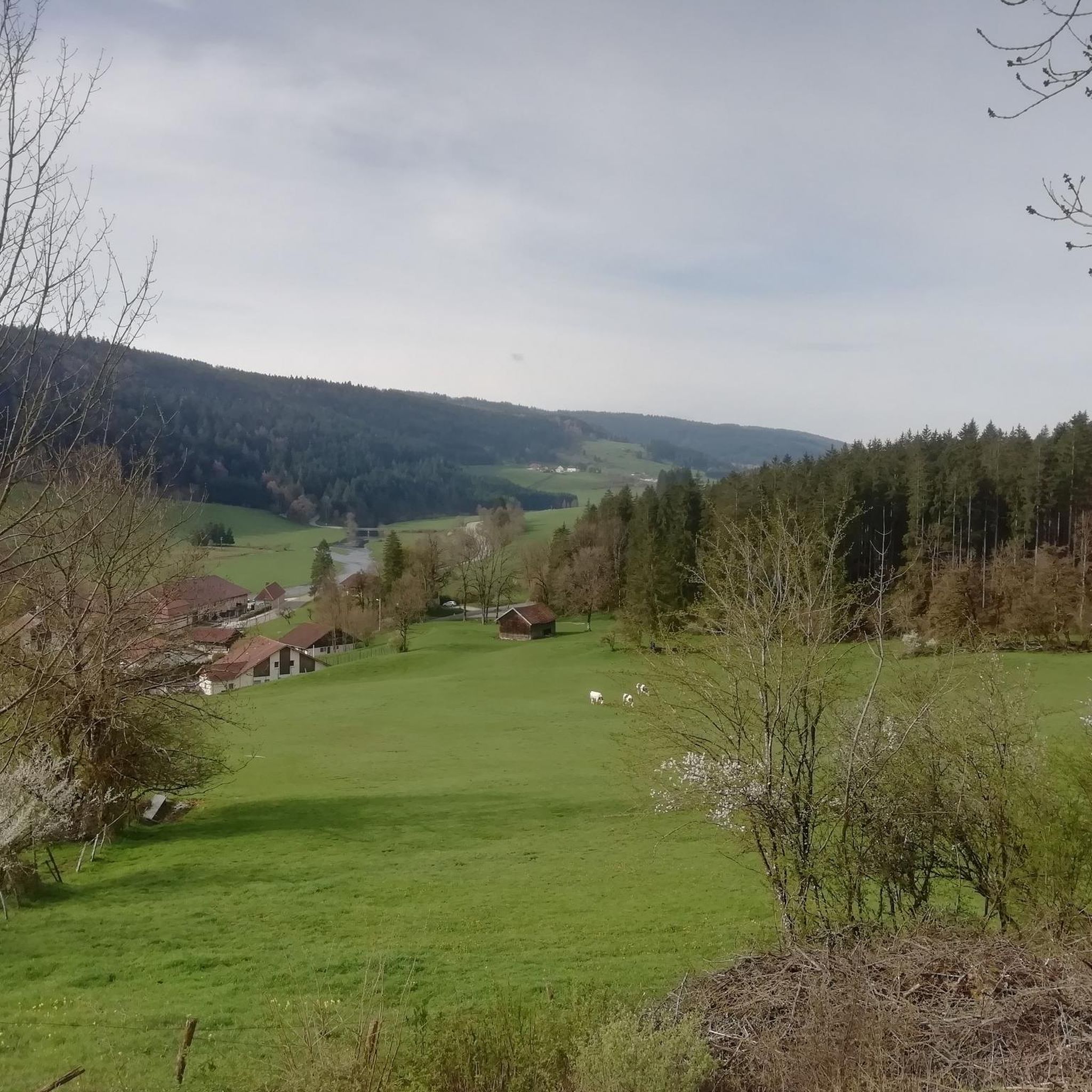
Tips from the Community

Please note that the trail has been closed since 2022. The original plan was to secure the trail until 2023, but it was then extended to 2024, but it was still closed in 2025.
2
0

La Cluse-et-Mijoux is a pretty village nestled at the bottom of a valley in the Jura Mountains. Busy with cars heading to Switzerland, the town boasts a wide range of shops and services. History buffs can visit Fort de Joux or Fort Malher, which overlook La Cluse-et-Mijoux. Several chapels (Saint-Léger and Saint-Claude) also dot the outskirts of the town.
1
0

The source of the Loue River is announced by the rushing water even before you see it. It's impressive and magical to stand beneath the 150-meter-high cliffs and watch the river rush out of its cave.
5
1

Village located between the Joux fortified castle and Fort Malher
0
0


Pontarlier is a mountain town located 837 meters above sea level in the heart of the Jura Mountains. As the capital of Haut Doubs, it is located at the entrance to a vast area of protected natural areas, where forests, lakes and green meadows are essential for the production of Mont d'Or and Comté cheese. Pontarlier was once known worldwide for its production of absinthe at the beginning of the last century. Today, the city has revived this tradition, with two distilleries once again producing absinthe.
8
0

This trail is superb. On the banks of the Loue, the turquoise and emerald reflections of the sun on the river pierce the foliage and offer a superb spectacle. Be careful after the rains, the path can be slippery and some bends are thin and require special attention. No problem in dry weather, but tumbling is never far away with mud.
4
0
This cavern is impressive, the immense cliff seems to crush this “small” opening in the wall, from which clear waters gush. The lights and the tranquility of the place are remarkable. Consider bringing a headlamp to explore the caves a little more. Climbing enthusiasts will notice some equipped routes with quite an overhang.
2
2
Frequently Asked Questions
What natural features can I explore around Maisons-Du-Bois-Lièvremont?
The region is rich in natural wonders, particularly karst springs and gorges. You can visit the spectacular Source de la Loue, a mighty karst spring emerging from a 150-meter high rock wall. Another impressive site is Source du Pontet, where a powerful waterfall emanates from a deep cave. The Gorges de Noailles offer a scenic path along the Loue river with turquoise and emerald reflections.
Are there any historical or cultural sites to visit in the area?
Yes, Maisons-Du-Bois-Lièvremont offers cultural insights. The Église de l'Assomption de Lièvremont is a prominent cultural site with a distinctive bell tower, altarpiece, and carved wooden pulpit. You can also see the Monument aux morts de Lièvremont (War Memorial) and traditional Fermes avec tuyés, showcasing local architectural heritage. The nearby settlement of La Cluse-et-Mijoux also features historical sites like Fort de Joux.
What kind of outdoor activities are available near Maisons-Du-Bois-Lièvremont?
The area is ideal for various outdoor activities. You can find numerous routes for hiking, cycling, and gravel biking. For hiking, explore trails like "Le Crêt Monniot" or "Grand Taureau Shelter." Cyclists can enjoy routes such as the "Greenway of the train path" or the scenic "Col sur le Mont." You can find more details on these activities and specific routes in the dedicated guides for hiking, cycling, and gravel biking around Maisons-Du-Bois-Lièvremont.
Are there hiking trails suitable for different skill levels?
Yes, there are hiking trails for various skill levels. You can find easy walks like the 3.6 km "Le Crêt Monniot loop from La Chaux," or moderate options such as the 8 km "Le Crêt Monniot — loop from la Chaux." For longer, more challenging hikes, consider routes like the 13.7 km "Grand Taureau Shelter (1290 m) – Le Grand Taureau loop." Explore more options in the hiking guide.
Can I find family-friendly attractions in Maisons-Du-Bois-Lièvremont?
While specific family-friendly activities within Maisons-Du-Bois-Lièvremont are not detailed, the natural attractions like the Source de la Loue and Gorges de Noailles offer accessible paths for walks that families can enjoy. The nearby settlement of La Cluse-et-Mijoux is also noted as family-friendly, offering historical sites like Fort de Joux that can be engaging for all ages.
What are the unique geological formations in the region?
The region is famous for its unique karst geology. A notable phenomenon is the Doubs River's "losses" into Portlandian limestone formations within the commune. These underground flows have been historically proven to feed the source of the Loue river, creating impressive karst springs like the Source de la Loue and Source du Pontet.
Where can I observe wildlife around Maisons-Du-Bois-Lièvremont?
The natural environment around Maisons-Du-Bois-Lièvremont offers opportunities for wildlife observation. A notable feature is a colonie de hérons en forêt (heron colony in the forest), providing a chance to see these birds in their natural habitat. The scenic paths along the Doubs and Loue rivers, particularly in the Gorges de Noailles, are also good spots for general wildlife spotting.
What do visitors particularly enjoy about the attractions here?
Visitors are often captivated by the dramatic natural beauty, especially the powerful karst springs and scenic gorges. The Source de la Loue is praised for its spectacular cirque and the sheer volume of water. The Gorges de Noailles are loved for their moody paths through beech forests and the stunning turquoise and emerald reflections of the Loue river.
Is there a good time of year to visit Maisons-Du-Bois-Lièvremont?
The best time to visit Maisons-Du-Bois-Lièvremont for outdoor activities like hiking and cycling is generally during the warmer months, from spring to autumn, when the weather is pleasant and paths are dry. The natural springs and rivers are particularly impressive after periods of rain or snowmelt. The forest sections, such as those in the Gorges de Noailles, offer shade during summer.
Are there any notable viewpoints or scenic spots?
Yes, the region offers several scenic spots. The high-altitude areas like "les Sanglards, les Joumets et le Pré-Jacquier" rise to over 950 meters, providing elevated views of the landscape. The Col sur le Mont is also a viewpoint offering pleasant vistas. Additionally, the steep rock wall at the Source de la Loue forms a spectacular natural cirque, which is a highly scenic spot.
Can I explore the traditional architecture of the region?
Yes, the commune preserves examples of traditional architecture. You can observe traditional Fermes avec tuyés (farms with specific regional chimneys) dotting the landscape, which are characteristic of the local heritage. The layout of the villages themselves, with Maisons-du-Bois stretching along the main road and Lièvremont as a "village-rue" overlooking the Doubs valley, also provides insight into the region's historical development.
What are the main features of the Doubs River in this area?
The Doubs River is a central natural element of Maisons-Du-Bois-Lièvremont, with houses distributed along its banks. Its valley features a bridge, the Pont sur le Doubs à Maisons-du-Bois, and dams like the Barrage de l'Oye Longe, contributing to the scenic landscape. Notably, the Doubs River experiences significant "losses" into limestone formations within the commune, which are a key part of the region's unique hydrogeology.
Most popular routes around Maisons-Du-Bois-Lièvremont
Most popular attractions around Maisons-Du-Bois-Lièvremont

Get inspired with the komoot mobile app


Explore more
Still not found the Highlight you’re looking for? See guides of the top attractions in other regions:
