Attractions and Places To See around La Bâtie-Montgascon - Top 20
Best attractions and places to see around La Bâtie-Montgascon include a variety of cultural sites, historical landmarks, and natural features. This commune, once known for its textile industry as the "Croix Rousse of Bas Dauphiné," offers insights into its rich heritage. Visitors can explore the coexistence of rural life and industry, alongside opportunities for outdoor exploration on nature trails. The area provides a focused look at its distinct character and history.
Best attractions and places to see around La Bâtie-Montgascon
…Last updated: July 2, 2026
Our Lady of the Vines
Highlight • Religious Site
Translated by Google •
Tip by

Saint John the Evangelist Church of Valencogne
Highlight • Religious Site
Translated by Google •
Tip by

Sign up now to discover places like this
Get recommendations on the best single tracks, peaks, & plenty of other exciting outdoor places.
Sign up for free
Restored Washhouse
Highlight • Monument
I …
Translated by Google •
Tip by
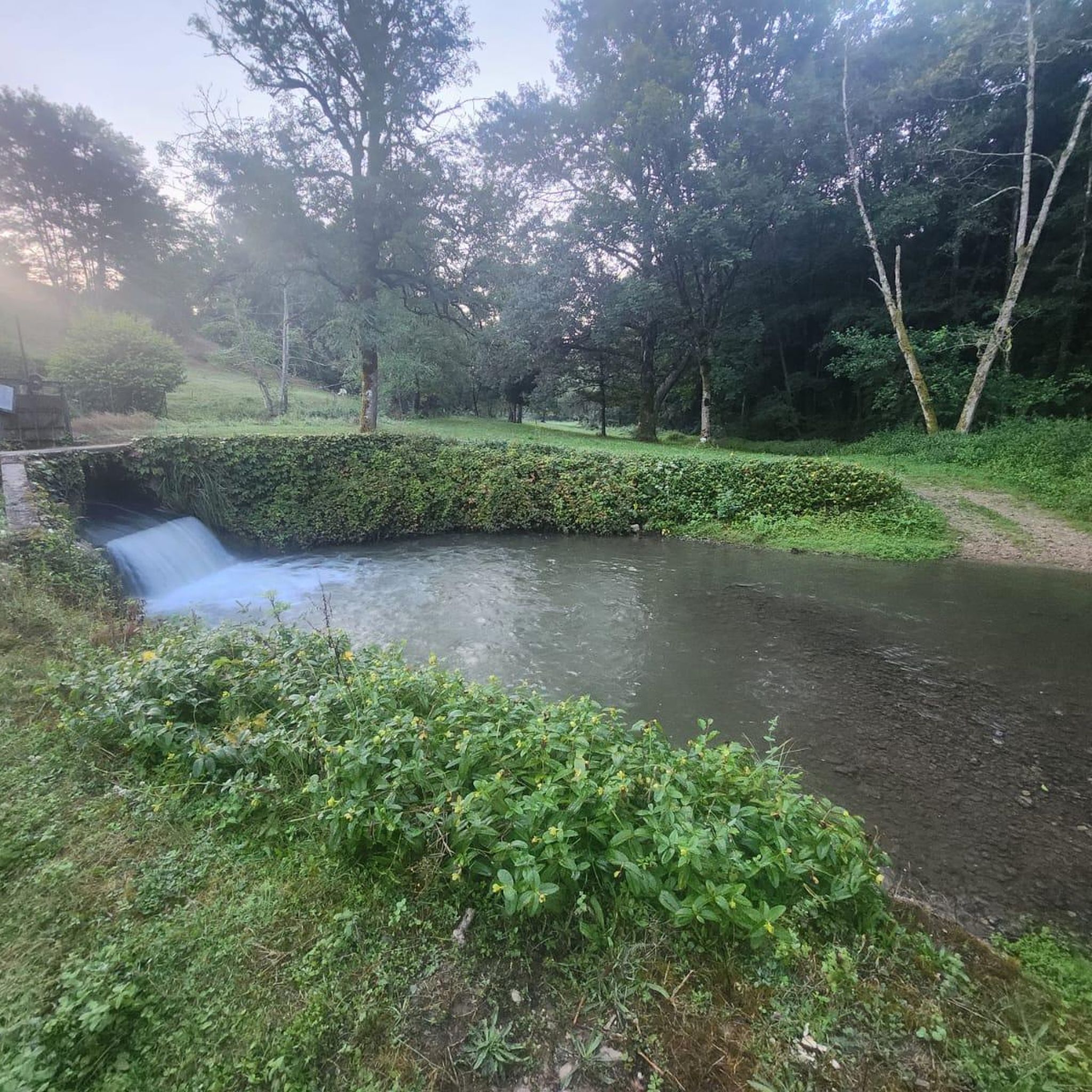
Glandieu Waterfall
Highlight • Waterfall
Quite close (5 min) to the ViaRhona
Translated by Google •
Tip by

Bed & Breakfast
Highlight • Other
A place of authentic charm in an old adobe farm which, after restoration, has found its …
Translated by Google •
Tip by

Sign up for free to discover even more attractions around La Bâtie-Montgascon.
Sign up for free
Already have an account?
Start today with a free account
Your next adventure awaits.
Login or Signup

Tips from the Community

Wow, what a beautiful waterfall! 🤩🤩
1
0

Here we encounter three stone cubes stacked on top of each other, each smaller than the one below it. The gray cubes each have a white field in the center of their sides, with a cross carved into it, painted blue and standing out against the gray/white background. This construction forms the basis for the present small sacred monument: above it rises a radiant gold figure of the Madonna. From this prominent position, the Virgin Mary – venerated in France almost always under the title "Notre-Dame" ("Our Lady") – gazes far into the country, and has done so for more than 120 years. @Rainer N. has already explained the date and reason for its construction in his short post.
2
0

The abbey basilica was rebuilt starting around 1490 and completed in 1510 by Bernardino Zaccagni. The famous artist Correggio left his mark on this church. He created five frescoes there, including the lunette with Saint John and the Eagle (1520), which is considered the first to be created. The frescoes, the dome depicting the Ascension of Christ, the decoration of the drum and pendants, and the frieze of images that extends around the entire interior perimeter are all artistic treasures worth discovering. The Way of St. James is very well documented in several places in the church.
9
0
Many thanks to Gerhard Mauerberger for posting his picture before the restoration, so you can see what has been recreated from this dilapidated part.
5
0
The first name John has been widespread since biblical times, and so it should not surprise us to find a whole series of blessed and saints with this name over the two millennia of Christianity. At the threshold from the Old to the New Testament we encounter John the Baptist (also John Baptist), to whom most of the John churches are dedicated. But one of the four men who wrote the New Testament gospels also bears this name. This church in ___ is dedicated to him, JOHN EVANGELIST. A long church tradition has regarded the evangelist as identical with the apostle John mentioned in the Bible, but this is doubted in biblical scholarship. "The Gospel of John exerts a peculiar fascination. It is difficult to escape its solemn, sometimes mystical language. It addresses deep human needs and longings: hunger and thirst, the search for fulfilling eternal life, the longing for personal communion with God.” (Franz-Josef Ortkemper)
2
0

A must-see spot in the region, magnificent and impressive, but be careful of the incredible number of tourists in case of good weather during the day, choose to go there early in the morning!
1
0
Old washhouse, very well preserved and easily accessible.
0
0

Great tour. The landscapes are really great, passing through the forest...! Too bad no place to park to start the tour.
0
0
Frequently Asked Questions
What historical and cultural sites can I explore in La Bâtie-Montgascon?
La Bâtie-Montgascon offers a rich historical and cultural experience. You can visit the Musée du Tisserand (Weaver's Museum) to learn about the village's silk weaving past. Additionally, the "Au fil de la Bâtie" Circuit is a pedestrian route that guides you through 17 interpretive panels detailing the village's public, historical, industrial, and rural heritage. Don't miss the Restored Washhouse, a preserved historical site showcasing a part of the village's past.
Are there any natural attractions or viewpoints to visit?
Yes, you can find several natural features and viewpoints. The Our Lady of the Vines offers panoramic views and a picnic spot, with a statue erected in 1903 to protect the village's vines. For a beautiful natural spectacle, the Glandieu Waterfall is a very pretty waterfall with lush vegetation, providing pleasant shade in the summer.
What outdoor activities are available around La Bâtie-Montgascon?
Beyond exploring the village, you can enjoy various outdoor activities. There's a "Sentier nature" or nature trail for appreciating the local natural environment. For more structured activities, you can find numerous cycling and hiking routes. Explore options like Cycling around La Bâtie-Montgascon or Hiking around La Bâtie-Montgascon for detailed routes.
Are there family-friendly attractions in the area?
Many attractions in and around La Bâtie-Montgascon are suitable for families. The Our Lady of the Vines offers great views and a picnic spot, perfect for a family outing. The Restored Washhouse and the Saint John the Evangelist Church of Valencogne are historical sites that can be interesting for all ages. The Glandieu Waterfall is also a popular spot for families to visit.
Can I find accessible attractions for wheelchair users?
Yes, the Restored Washhouse is noted as being wheelchair accessible, allowing visitors with mobility challenges to experience this historical site.
What is the "Au fil de la Bâtie" circuit?
The "Au fil de la Bâtie" Circuit is a pedestrian route, approximately 6 kilometers long, that takes about 90 minutes to complete. It guides visitors through the village's public, historical, industrial, and rural heritage, featuring 17 interpretive panels that delve into the history of La Bâtie-Montgascon, particularly its textile industry.
Where can I learn about the textile history of La Bâtie-Montgascon?
To delve into the textile history of La Bâtie-Montgascon, visit the Musée du Tisserand (Weaver's Museum). This museum is a central point for understanding the village's past, especially its significant history of silk weaving. It also serves as a starting or ending point for the "Au fil de la Bâtie" circuit.
Are there hiking trails near the attractions?
Yes, there are several hiking opportunities. The "Sentier nature" offers local outdoor exploration. For more extensive hikes, you can find routes like the "Restored Washhouse – Old wash-house loop from Les Abrets en Dauphiné" which is a moderate 13.3 km trail. More hiking options are available in the Hiking around La Bâtie-Montgascon guide.
What do visitors particularly enjoy about the attractions here?
Visitors appreciate the blend of history, nature, and tranquility. For instance, the Our Lady of the Vines is loved for its great views and picnic opportunities. The Restored Washhouse is valued for showcasing a preserved part of the village's past, with visitors pleased by its restoration. The Saint John the Evangelist Church of Valencogne is noted for its historical significance and its connection to the Camino de Santiago.
What is the significance of the Saint John the Evangelist Church of Valencogne?
The Saint John the Evangelist Church of Valencogne is a significant religious building located on the Via Gebennensis, a Camino de Santiago route. It contains evidence of ancient pilgrim traditions, with many coastal works and historical details worth seeing. The church itself, and the whole village of Valencogne, are considered noteworthy.
What kind of cycling routes are available around La Bâtie-Montgascon?
The area around La Bâtie-Montgascon offers diverse cycling routes. You can find touring bicycle routes, such as the challenging "On the banks of the Aiguebelette – Lake Aiguebelette loop from Les Abrets - Fitilieu" (59.1 km). For road cycling, there are options like the moderate "Lake Paladru – Lac de Paladru loop from Les Abrets - Fitilieu" (53 km). More routes are detailed in the Cycling around La Bâtie-Montgascon and Road Cycling Routes around La Bâtie-Montgascon guides.
Most popular routes around La Bâtie-Montgascon

Get inspired with the komoot mobile app


Explore more
Still not found the Highlight you’re looking for? See guides of the top attractions in other regions:
