Attractions and Places To See around La Remuée - Top 11
Best attractions and places to see around La Remuée, a commune in the Seine-Maritime department of Normandy, France, serves as a base for exploring a region rich in historical, cultural, and natural attractions. Situated within the Seine-Normandy basin, the area offers diverse landscapes and heritage. Visitors can discover notable landmarks, natural features, and cultural sites within a reasonable distance. The region provides opportunities for cultural walks, nature hikes, and exploring architectural and natural heritage.
Best attractions and places to see…
Last updated: June 29, 2026
Tancarville Bridge
Highlight • Other
Translated by Google •
Tip by

Mirville Viaduct
Highlight • Bridge
Translated by Google •
Tip by

Sign up now to discover places like this
Get recommendations on the best single tracks, peaks, & plenty of other exciting outdoor places.
Sign up for free
Valasse Abbey
Highlight • Other
It is surrounded by a vast green park, …
Translated by Google •
Tip by

Juliobona Ancient Theatre
Highlight • Other
Translated by Google •
Tip by
Monument aux morts
Highlight • Other
Translated by Google •
Tip by

Sign up for free to discover even more attractions around La Remuée.
Sign up for free
Already have an account?
Start today with a free account
Your next adventure awaits.
Login or Signup



Tips from the Community

Close to the castle of Baron Pierre de Coubertin
0
0

As a memorial to the many dead, such a "MONUMENT AUX MORTS" (usually called a "Central Memorial" or "War Memorial" in German-speaking countries) is still very important today. "Now, Lord, you let your servant depart in peace, as you have said..." it says in the so-called "Hymn of Simeon" (Luke's Gospel, Chapter 2, Verse 29). However, the people who are remembered here did not depart in peace, but became victims of war and tyranny. Therefore, the term "Fallen Memorial" is now sometimes used instead of the "War Memorial" that was previously common in German. In the French-speaking world, however, this aspect of commemoration of the dead has long been included in the most commonly used term "MONUMENT AUX MORTS". Regardless of language and nation, such a memorial has two important and at the same time everlasting tasks: -1- to keep the memory of the suffering and horror of war alive, -2- and to remind people of the need to maintain peace in the long term.
0
0

The Mirville Viaduct is an impressive brick viaduct built in 1846 by the English engineer Joseph Locke to pass the Paris-Le Havre railway line over the Ru de Bolbec valley. It is made up of 48 arches and has a length of 530 meters and a height of 32 meters. You can admire its elegant curves and its red color which contrasts with the green landscape. The viaduct was partially destroyed during the Franco-Prussian War of 1870 and World War II, but it was quickly restored and is still in use today. You can access the viaduct from the village of Mirville, where you can also visit the 12th century Saint-Martin church and the 16th century Mirville castle.
3
0
The ancient theater of Juliobona is the ancient theater of Lillebonne. This impressive monument, built in the 1st century then enlarged and fortified, is one of the largest and best preserved Roman theaters north of the Loire. You will be able to discover the remains of the stage, the orchestra and the stands, and imagine the shows that took place there: dramas, comedies, gladiator fights and religious ceremonies. You can also enjoy the panoramic view of the city and the Seine valley from the top of the theater. The site is open every day from 10 a.m. to 6 p.m. and entry is free. Don't miss this opportunity to discover a part of Normandy's ancient history!
3
0

Railway viaduct linking Paris Saint-Lazare to Le Havre. It is an impressive building with 48 arches for a length of 530m and a maximum height of 32m. It crosses the Ru de Bolbec valley.
1
0
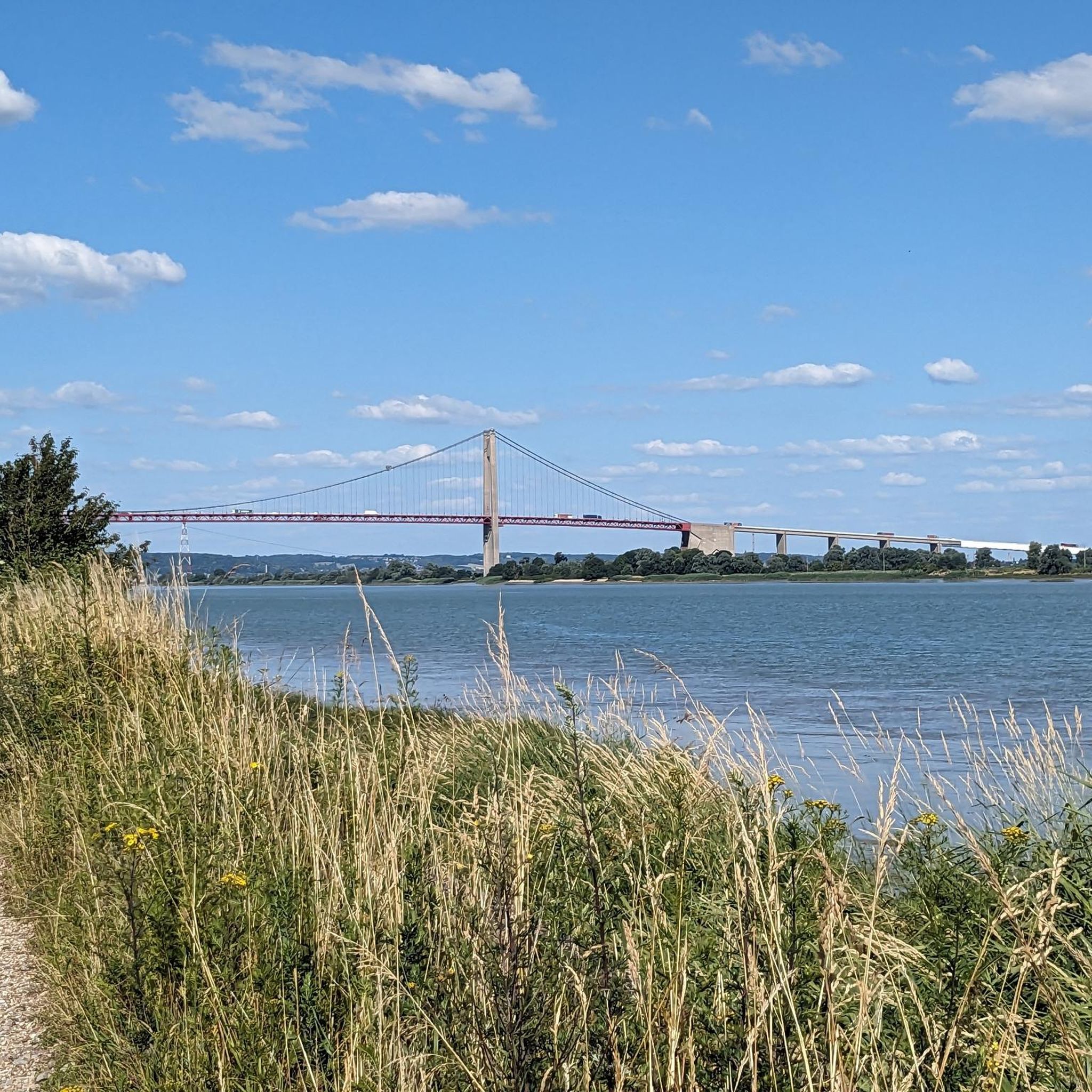
One of the two famous bridges in the region (along with the Normandy Bridge), the Tancarville Bridge is an impressive suspension bridge which allows you to cross the Seine. This impressive structure is worth the detour and to be seen.
0
0

Valasse Abbey is a magnificent monastery in Normandy. Its construction dates back to the 12th century, and its Gothic architecture is impressive. It is surrounded by a vast green park, thus offering a peaceful and serene setting to visitors. Well-kept gardens and water features add to its quaint charm. Today, Valasse Abbey is a vibrant cultural venue that hosts contemporary art exhibitions, concerts and other cultural events. It is a great place to immerse yourself in history while enjoying modern artistic creations.
1
0
Frequently Asked Questions
What historical sites can I visit near La Remuée?
The region around La Remuée is rich in history. You can explore the impressive Valasse Abbey, a 12th-century Gothic monastery surrounded by a vast green park. Another significant historical landmark is the Juliobona Ancient Theatre in Lillebonne, one of the largest and best-preserved Roman theaters north of the Loire, offering free entry. Additionally, the Mirville Viaduct, an impressive brick structure from 1846, is still in use today and accessible from the village of Mirville, which also features a 12th-century church and a 16th-century château.
Are there any natural attractions or scenic viewpoints in the area?
Yes, for natural beauty, consider visiting the Bois de Tancarville, a forest offering peaceful walks, lush vegetation, and opportunities for wildlife spotting. While not directly in La Remuée, the dramatic cliffs of Étretat, including the Porte d'Aval and Manneporte, are about 25 km away and offer stunning natural arches carved by the sea.
What are some family-friendly activities or attractions near La Remuée?
Families can enjoy a peaceful walk through the Bois de Tancarville, which is noted for its lush vegetation and wildlife, making it a pleasant outdoor experience. The Juliobona Ancient Theatre also offers an engaging historical outing for all ages, with free entry to explore the ancient Roman remains.
Can I go cycling around La Remuée?
Absolutely! The area offers several cycling opportunities. You can find various routes, including a 'Pont de Normandie – Rouelles Park loop' or a 'Tancarville and its castle – Valasse Abbey loop'. For more detailed routes and options, check out the Cycling around La Remuée guide.
Are there running trails available near La Remuée?
Yes, there are several running trails in the vicinity. You can explore routes like the 'Bois de Tancarville loop from La Remuée' or a 'Running loop from Les Trois-Pierres'. For a comprehensive list of options, refer to the Running Trails around La Remuée guide.
What is the Tancarville Bridge and can I cross it?
The Tancarville Bridge is an impressive suspension bridge that allows you to cross the Seine. It was once the longest central span in Europe. While it can be crossed by bike, be aware that it experiences significant traffic. Its design and scale make it a notable landmark.
What do visitors enjoy most about the attractions near La Remuée?
Visitors particularly appreciate the blend of historical and natural attractions. The peaceful setting of Valasse Abbey's green park and the lush vegetation and wildlife found in Bois de Tancarville are frequently highlighted. The architectural marvels like the Tancarville Bridge and the historical depth of the Juliobona Ancient Theatre also receive positive feedback.
Are there any notable abbeys or religious sites to visit?
Yes, the magnificent Valasse Abbey, a 12th-century Gothic monastery, is a key attraction. Beyond this, the extensive ruins of Abbaye de Jumièges, one of the most visited religious monuments in the region, are about 32 km away, and Abbaye Saint Georges de Boscherville is approximately 41 km distant.
What are some interesting towns to visit near La Remuée?
Several charming towns are within a reasonable distance. Honfleur, about 17 km away, is famous for its picturesque old harbor. Le Havre, approximately 22 km distant, is a UNESCO World Heritage site known for its post-war architecture. Étretat, 25 km northwest, is renowned for its dramatic cliffs. Other towns include Pont-Audemer with its canals, Fécamp with its Bishop's Palace, and Caudebec-en-Caux offering scenic views along the Seine.
Can I find any unique architectural marvels in the area?
Beyond the Tancarville Bridge, the Mirville Viaduct stands out as an impressive brick structure with 48 arches, spanning 530 meters. It's a testament to 19th-century engineering and remains an active part of the railway line today.
Are there opportunities for road cycling near La Remuée?
Yes, road cyclists can find routes such as the 'Viaduc de Mirville loop from La Cerlangue' or a route that takes you past the 'Château du Bec – Abbaye de Montivilliers'. For more options and details, consult the Road Cycling Routes around La Remuée guide.

Get inspired with the komoot mobile app


Explore more
Still not found the Highlight you’re looking for? See guides of the top attractions in other regions:
