The best road cycling routes around Bérus
4.4
(56)
2,546
riders
592
rides
Road cycling routes around Bérus traverse a landscape characterized by rolling hills and forested areas, typical of the Saarland region. The terrain offers a diverse network of cycling paths suitable for various preferences and fitness levels. Cyclists can expect routes that wind through rural countryside and river valleys, providing varied elevation changes.
Best road cycling routes around Bérus
- The most popular road cycling route is Saint Denis Church loop from Arçonnay, an easy 26.6 miles (42.8 km) trail that…
Last updated: October 8, 2026
7
riders
55.9km
02:21
420m
420m
Moderate road ride. Good fitness required. Mostly well-paved surfaces and easy to ride.
7
riders
43.0km
01:48
230m
230m
Easy road ride. Great for any fitness level. Mostly well-paved surfaces and easy to ride.

5.0
(1)
5
riders
44.4km
01:58
300m
300m
Easy road ride. Great for any fitness level. Mostly well-paved surfaces and easy to ride.
5
riders
59.5km
02:31
370m
370m
Moderate road ride. Good fitness required. Mostly well-paved surfaces and easy to ride.
4
riders
31.7km
01:29
280m
280m
Easy road ride. Great for any fitness level. Mostly well-paved surfaces and easy to ride.
Get access to more routes and recommendations from other explorers.
Already have an account?
Our route recommendations are based on thousands of hikes, rides, and runs completed by other people on komoot.
Start today with a free account
Your next adventure awaits.




Tips from the Community

This 11th century medieval bridge is a beautiful place to contemplate Beaumont-sur-Sarthe for a short moment. In addition to the river, you can see the castle located on the heights of the town.
0
0

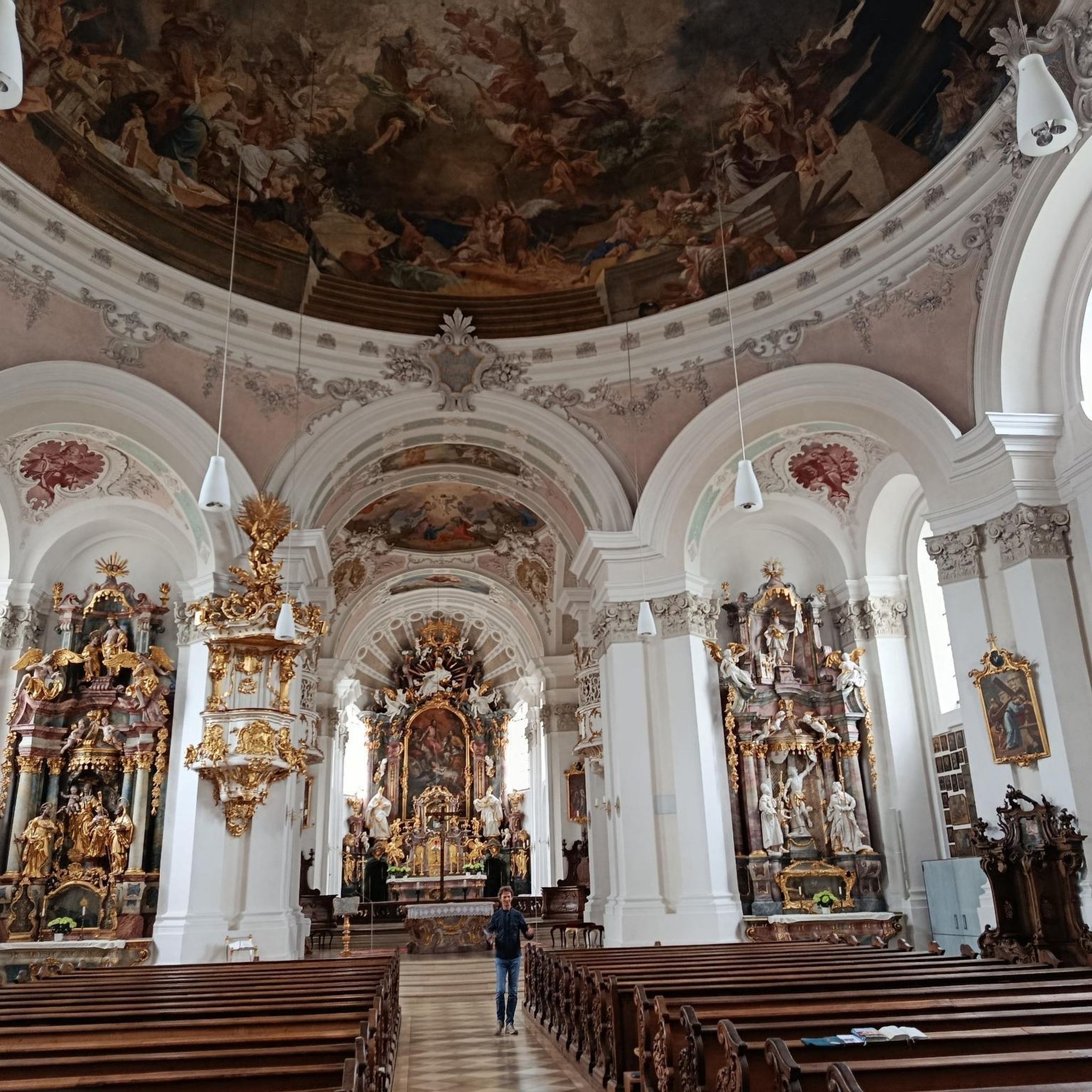
The church is composed of a bell tower grafted onto the side, the ground floor of which is vaulted with ribs, three of the bases supporting the fall of the arches having no decoration, the fourth being sculpted with a small fox's head. The stained glass windows are from 1866 and 1934-1942, five presenting an element of the heritage of the commune associated with a scene from the life of a Saint venerated in the parish, such as Saint Mathurin. The old presbytery from 1704 with openings with debarked lintels is attached to the church.
0
0
Saint-Pierre Church, from the mid-19th century (from 1856 or 1858).
0
0
The Chapitrel is the name given to the entrance gate. The period door is in the Renaissance style. This construction had several functions: It was reserved for catechumens who were not allowed to enter the church and served as a warehouse for farmers who sold at the market on Sunday mornings. The saddleback tower dates from 1545. It is 28 m high. It is square and has four levels. Each floor is separated by an external Roussard belt called a "larmier" which overhangs quite widely, preventing water from running off. At the top of the roof are two granite crosses, each topped with a copper weather vane representing a crowned dragon's head.
0
0
Saint-Martin Chapel. It dates from the 12th or 13th century. It is made of granite, roussard sandstone and brick. This small chapel is lost in the middle of the fields. It is a simple rectangular nave which has a Romanesque window at its chevet.
0
0
19th century Sainte-Madeleine Church, housing a painted panel (The Adoration of the Shepherds) from the 16th or 17th century classified as a Historic Monument
0
0
In the 13th century, a first church was built in the current Old Town, it was consecrated by Bishop Jean de Chanlay. The parish lordship, attached to the land and castle of Maleffre, belonged to the Paulmier du Bouillon house. Maleffre was a fortified castle, surrounded by moats. The parish owned several other fiefs such as Chevalerie and Bois Margot. The territory of Arçonnay extended to the river which constituted the boundary between the departments. The construction, by Abbot Drouin, of the current church in the hamlet of Saint-Blaise, was completed in 1848.
0
0
A first church was founded in 1070 by the Bishop of Le Mans, Guillaume de Passavant. The current building consists of a nave with two bays and an elongated choir narrower than the nave. The two aisles are unequal, the northern one being narrower than the southern one. A sacristy has been added to the east of the choir. The bell tower, almost square in plan, is located to the south of the choir, it is topped with a saddleback roof: it is the most authentic element of the whole, despite a very cemented coating. Three small bays with a pointed arch have been opened on the east side, two on the south side. The western facade, restored in the 19th century, has a semicircular portal resting on engaged columns with two Romanesque-style capitals. A tall semicircular window was opened late on the first level of the gable wall. The windows of the side façades are in pointed arches, their flamboyant network could date from the 16th century. The last bay of the choir is lit by a high semicircular window which dates, like the large façade window, from the 19th century. The interior of the church is covered with wooden barrel vaults whose decoration dates from the last century. The main altarpiece and the side altarpieces are of quality; the church has preserved its wooden pews. In 2002, the Sauvegarde de l’Art français granted a sum of €12,000 for the repair of the exterior plasterwork.
0
0
Frequently Asked Questions
How many road cycling routes are available around Bérus?
There are over 550 road cycling routes around Bérus, offering a wide range of options for different skill levels. This includes more than 110 easy routes, over 400 moderate routes, and nearly 40 challenging routes for experienced cyclists.
What kind of terrain can I expect when road cycling near Bérus?
The terrain around Bérus is characterized by rolling hills, forested areas like the Bois de Vaux, and river valleys. Elevations typically range from 141 to 196 meters, providing varied and engaging conditions for road cycling within the picturesque Pays de la Loire region.
Are there any easy road cycling routes suitable for beginners or a relaxed ride?
Yes, Bérus offers several easy road cycling routes. A popular choice is the Saint Denis Church loop from Arçonnay, an easy 42.8 km trail that takes you through rural landscapes.
What historical sites or landmarks can I see along the road cycling routes?
Many routes pass by historical sites. For example, the Prieuré de Vivoin – Château de Fresnay-sur-Sarthe loop from Arçonnay leads through historic sites. You can also visit the impressive Château de Fresnay-sur-Sarthe, or the remains of the Castle of the Dukes of Alençon, which is featured on the Castle of the Dukes of Alençon – Saint Leonard's Church loop from Arçonnay.
Are there any routes that pass through particularly scenic villages or towns?
Yes, the region is known for its charming villages. You might consider routes that take you near Saint-Cénéri-le-Gérei, recognized as one of France's "Most Beautiful Villages," which attracted 19th-century painters.
What do other road cyclists say about the routes in Bérus?
The road cycling routes in Bérus are highly rated by the komoot community, with an average score of 4.4 stars from over 48 reviews. Cyclists often praise the varied terrain, the blend of open countryside and village views, and the opportunity to cycle through historic sites.
Are there any longer, more challenging road cycling routes for experienced riders?
Yes, for more experienced riders, there are routes with significant elevation gains and longer distances. The Sées Cathedral – Castle of the Dukes of Alençon loop from Arçonnay is a moderate 85.6 km route that offers a good challenge.
Can I find circular road cycling routes around Bérus?
Many of the routes around Bérus are designed as loops, allowing you to start and end your ride in the same location. Examples include the Saint Denis Church loop from Arçonnay and the Château de Courtilloles – Saint Leonard's Church loop from Arçonnay.
What is the best time of year for road cycling in Bérus?
The Pays de la Loire region generally offers pleasant cycling conditions from spring through autumn. The mild climate and beautiful landscapes make these seasons ideal for exploring the roads around Bérus.
Are there opportunities to see castles or manors while cycling?
Absolutely. The region is dotted with historical architecture. Besides the Château de Fresnay-sur-Sarthe and the Castle of the Dukes of Alençon, you might also encounter structures like the private 16th-century Manor of La Poterie, showcasing unique local architecture.
Most popular attractions around Bérus

Get inspired with the komoot mobile app


Explore more
Browse the best Road cycling routes in other regions.
