The best road cycling routes around Neufchâtel-En-Saosnois
4.4
(34)
1,792
riders
130
rides
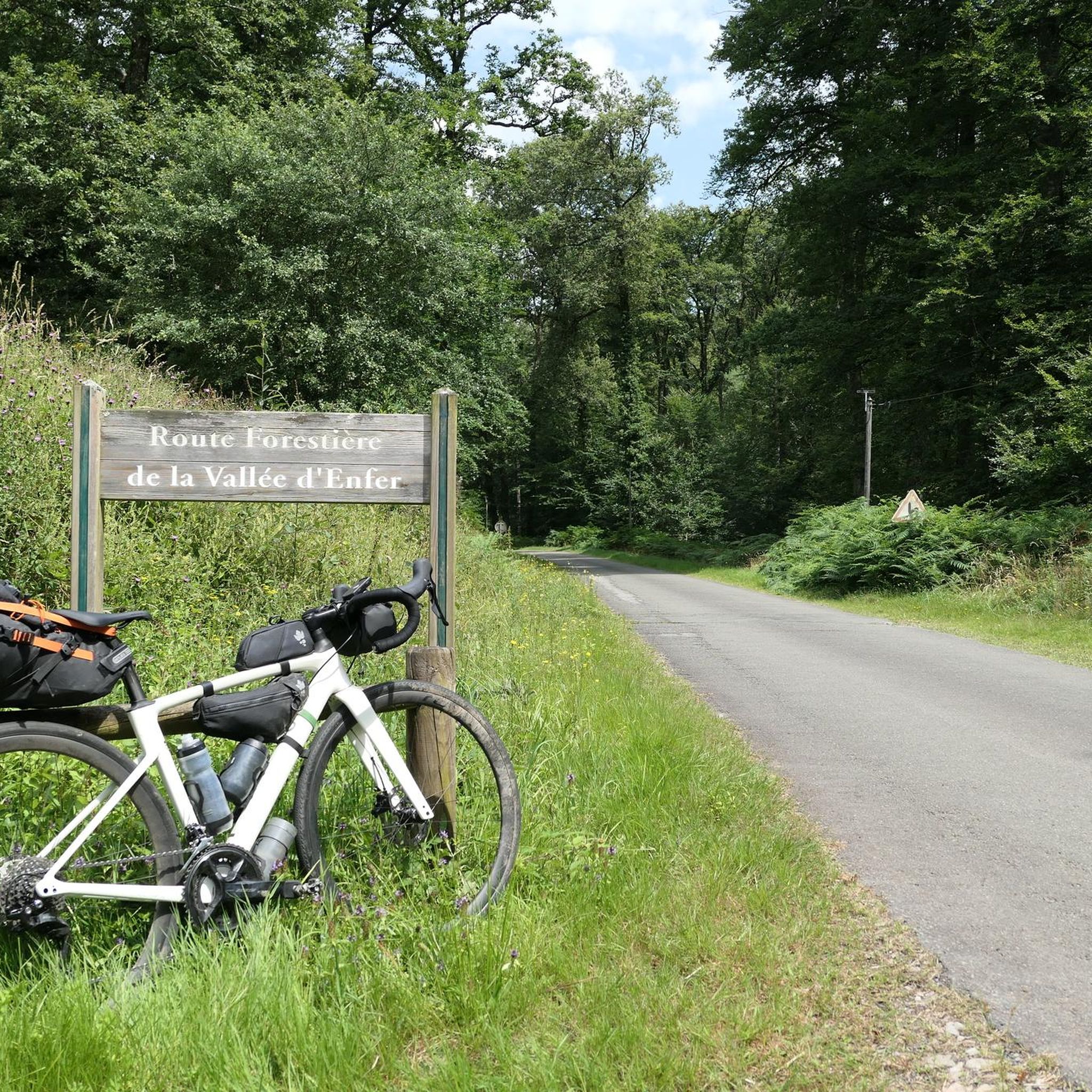
Road cycling around Neufchâtel-En-Saosnois features a landscape characterized by rolling hills, forested areas, and scenic valleys. The region offers a mix of terrain, from gentle ascents to more challenging climbs, providing diverse options for road cyclists. Many routes traverse the countryside, passing through small villages and offering views of the local agricultural land. The area's physical features include elevations like the Perseigne Viewpoint and the Vallée d'Enfer, contributing to varied road cycling experiences.
Best road cycling routes around Neufchâtel-En-Saosnois
- The…
Last updated: July 2, 2026
14
riders
43.9km
02:04
410m
410m
Moderate road ride. Good fitness required. Mostly well-paved surfaces and easy to ride.
8
riders
Moderate road ride. Good fitness required. Some segments of this route may be unpaved and difficult to ride.

Sign up for free
5
riders
Easy road ride. Great for any fitness level. Mostly well-paved surfaces and easy to ride.
9
riders
8.87km
00:23
70m
70m
Easy road ride. Great for any fitness level. Mostly well-paved surfaces and easy to ride.
3
riders
45.0km
02:02
400m
400m
Moderate road ride. Good fitness required. Mostly well-paved surfaces and easy to ride.
Get access to more routes and recommendations from other explorers.
Sign up for free
Already have an account?
Our route recommendations are based on thousands of hikes, rides, and runs completed by other people on komoot.
Start today with a free account
Your next adventure awaits.
Login or Signup



Tips from the Community

This magnificent church in Neuchâtel is dedicated to the patronage of "Saint-ETIENNE". He is one of the first seven deacons of the early Jerusalem community and, according to the biblical accounts in the "New Testament", the first martyr (witness by blood) of early Christianity. The church commemorates his death on the second day of Christmas, December 26th. As the Acts of the Apostles reports: When Stephen loudly proclaimed his vision of the open sky "But he, full of the Holy Spirit, looked up to heaven and saw the glory of God, and Jesus standing at the right hand of God" (Chapter 7, Verse 55), the people were so outraged that they drove him out of the city and stoned him.
0
0

A beautiful place to take a break along the greenway
0
0

11th Century Church Worship was abolished in the parish of Chevain. The church was sold for 31,700 livres to the citizen of Villeray on 6 Vendémiaire, Year VII (September 27, 1799). The Chevain church, having been donated by Madame du Hameau de Villeray to the commune by notarial deed dated April 16, 1827, was restored to worship there on January 15, 1827. The parish was established as a branch parish.
0
0
Built at the end of the 12th century, the church belonged to the former diocese of Saintes. It has been restored several times, notably in the 15th century. Rectangular building with a straight chevet. A single nave with a ribbed vault. Sculpted column capitals. In the transept, a dome on pendentives. Chancel with a ribbed vault and a large 13th-century chevet window. On the north side of the chancel, a large pointed arch gives access to a ribbed vaulted chapel. The western façade dates from the 13th century, with a pointed arch portal with three arches on round columns. Two chamfered pilasters separate the portal from the blind doors and rise to the top of the façade. Above this ground floor and set back are three pointed arch arcades with sculpted figures (seated Virgin, shepherds guided by an angel, three wise men). On each side, twin arcades with pointed arches with heads, fantastic animals, diamond points and crockets. On the transept rises a square bell tower.
0
0
The Church of Saint Pierre and Saint Paul in Ancinnes is in its original part from the 11th and 12th centuries. It was modified in the middle of the 19th century by the addition of a transept which gives it the shape of a Latin cross. The Organ of the Church of Saint Pierre and Saint Paul in Ancinnes was built by the Damiens brothers in the middle of the 19th century (1863) following the late 18th century. It was the work of Abbé Dubois, priest of Ancinnes from 1843 to 1865. This organ, built by the brothers Louis and Robert Damiens, organ builders in Gaillon (Eure) remains, today, one of the only survivors in the region in working order. It is a unique instrument due to its size, which can be heard as the Damiens brothers would have wished. They built 85 instruments, including 3 in Sarthe. The others were abandoned, looted or burned. Previously the Damiens brothers were wheelwrights, which explains the robustness and solidity of their organs. These organs were built to last. The Ancinnes Organ has about fifteen stops divided between two manual keyboards and a pedal keyboard of 13 notes and 850 pipes. The 12th century openings of the nave, alternating limestone and roussard, remain in the state of vestiges being walled up or enlarged in the 19th century. In the 12th/14th century, a door was opened in the gable while the bell tower and the choir rose, which retain pointed arches and trefoil tracery. Boucher built the North chapel in 1854. Chadaigne, from Alençon, repainted the entire interior around 1860 representing the Eucharist and the story of Saint Peter. A staircase tower was built against the bell tower in 1895.
0
0

Good for a little break
0
0
Fresh climb to the north of Sarthe
0
0
Meeting points for walks to Perseigne
0
0
Frequently Asked Questions
How many road cycling routes are available around Neufchâtel-En-Saosnois?
There are over 140 road cycling routes in the Neufchâtel-En-Saosnois region, offering a wide variety of options for different skill levels and preferences.
Are there easy road cycling routes suitable for beginners in Neufchâtel-En-Saosnois?
Yes, the region offers a good selection of easy routes. You can find over 35 easy road cycling routes, such as the Roadbike loop from Neufchâtel-en-Saosnois, which is a shorter, less demanding ride through the local countryside.
Where can I find challenging road bike climbs around Neufchâtel-En-Saosnois?
For those seeking a challenge, routes like the Vallée d'Enfer – Perseigne Viewpoint loop from Neufchâtel-en-Saosnois offer significant elevation gains, including climbs towards the Perseigne Viewpoint. There are 4 difficult routes and over 100 moderate routes that include varied terrain and ascents.
What is the best time of year for road cycling in Neufchâtel-En-Saosnois?
The best time for road cycling in Neufchâtel-En-Saosnois is typically from spring to early autumn (April to October). During these months, the weather is generally mild, and the natural landscape is at its most vibrant, making for pleasant riding conditions.
Are there family-friendly road cycling routes in the area?
While specific 'family-friendly' designations aren't always explicit for road cycling, many of the easier and shorter routes, particularly those that pass through quieter rural roads, can be suitable for families. Consider routes with less traffic and gentler gradients for a more enjoyable family experience.
Which routes offer the most scenic views?
Many routes in the region are scenic, traversing rolling hills and forested areas. The Perseigne Viewpoint – Vallée d'Enfer loop from Villeneuve-en-Perseigne is particularly noted for its views of the surrounding natural landscape, including the Perseigne Viewpoint itself.
Are there road cycling routes that form a loop?
Yes, many of the road cycling routes around Neufchâtel-En-Saosnois are designed as loops, allowing you to start and finish at the same point. Examples include the popular Perseigne Viewpoint – Vallée d'Enfer loop from Villeneuve-en-Perseigne and the Alençon Courthouse – Saint Leonard's Church loop from La Fresnaye-sur-Chédouet.
What can I see along the road cycling routes in Neufchâtel-En-Saosnois?
Beyond the natural beauty of rolling hills and forests, routes often pass through charming villages and near historical sites. You might encounter landmarks such as the Perseigne Viewpoint, or historical points of interest like the Saint Mathurin Gate and Chapel in nearby areas.
What do other road cyclists enjoy most about road cycling in Neufchâtel-En-Saosnois?
The area is highly rated by the komoot community, with an average score of 4.1 stars from over 20 reviews. Reviewers often praise the varied terrain, the quiet rural roads, and the beautiful natural scenery, especially routes that include viewpoints or forested sections.
Are there opportunities for refreshment stops along the routes?
Many road cycling routes in Neufchâtel-En-Saosnois pass through small villages and towns. These often provide opportunities to stop for refreshments at local cafes or bakeries, allowing you to experience the local culture while taking a break.
Where can I find parking for road cycling routes?
Most routes start from villages or towns, where public parking is generally available. For example, routes starting from Villeneuve-en-Perseigne or La Fresnaye-sur-Chédouet typically have parking options near their starting points, making it convenient to access the trails.
Are there any routes that explore historical sites?
Yes, some routes connect historical points of interest. For instance, the Alençon Courthouse – Saint Leonard's Church loop from La Fresnaye-sur-Chédouet navigates through rural settings while linking historical landmarks in the broader area.
Most popular routes around Neufchâtel-En-Saosnois
Most popular attractions around Neufchâtel-En-Saosnois

Get inspired with the komoot mobile app


Explore more
Browse the best Road cycling routes in other regions.
