The best road cycling routes around Beillé
4.5
(20)
1,239
riders
70
rides
Road cycling routes around Beillé traverse a landscape characterized by rural roads, agricultural fields, and sections of woodland. The region features gentle to moderate elevation changes, making it suitable for various fitness levels. Routes often connect small villages and historical points, offering a blend of open countryside and shaded forest paths. The terrain is generally rolling, with no significant peaks, providing consistent cycling conditions.
Best road cycling routes around Beillé
- The most popular road cycling route is Saint-Maurice Church –…
Last updated: July 2, 2026
4.3
(3)
55
riders
41.3km
01:39
130m
130m
Easy road ride. Great for any fitness level. Mostly well-paved surfaces and easy to ride.
4.0
(1)
47
riders
56.1km
02:28
370m
370m
Moderate road ride. Good fitness required. Mostly well-paved surfaces and easy to ride.

Sign up for free
5.0
(1)
19
riders
Moderate road ride. Good fitness required. Some segments of this route may be unpaved and difficult to ride.
12
riders
96.8km
03:55
500m
500m
Moderate road ride. Good fitness required. Mostly well-paved surfaces and easy to ride.
8
riders
66.1km
02:47
460m
460m
Moderate road ride. Good fitness required. Mostly well-paved surfaces and easy to ride.
Get access to more routes and recommendations from other explorers.
Sign up for free
Already have an account?
Our route recommendations are based on thousands of hikes, rides, and runs completed by other people on komoot.
Start today with a free account
Your next adventure awaits.
Login or Signup



Tips from the Community

Detailed information is available on Wikipedia: https://fr.wikipedia.org/wiki/Porte_Saint-Julien_(La_Fert%C3%A9-Bernard)
0
0

Placed in a self-service distributor 7 days a week, 24 hours a day, if you have a craving for rillettes! Butcher, bakery and Spar right next door
0
0

The nave is covered with a wooden vault with exposed beams. The archivolts of the Romanesque door are decorated with saw teeth. The west gable wall is topped with a slender bell tower. The interior contains three classical altars whose designs were apparently made by Mansard at the request of Louvois, owner of the Prairie de Marcilly.
0
0

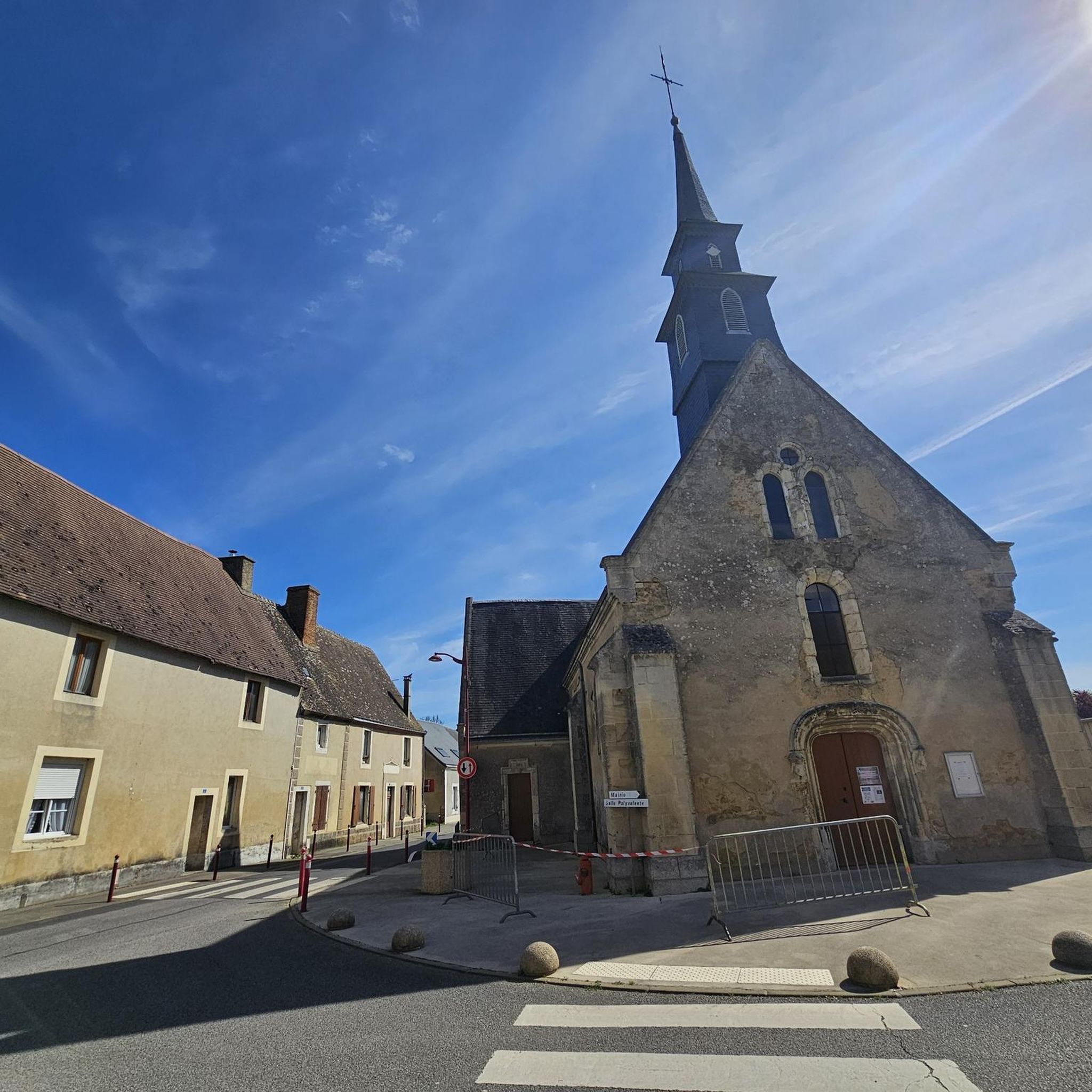
Latin cross plan with one nave. Bell tower rising at the corner of one of the side walls of the nave and one of the arms of the transept. Very simple front facade: semi-circular portal and oculus. Gable of the north arm of the transept pierced with a broken bay with tracery. Church built in the 16th century. A bay dates back to the 11th century; the north chapel dates from the 16th century; church remodeled in the 17th century
0
0
In this architecture we find different styles and periods, from the 12th, 15th, 16th to the 19th century, including Gothic and Neo-Romanesque. Romanesque bays and foothills. Stained glass window and 16th century font as well as the current apse and the two side chapels. The south door with its lintel and its straight feet decorated with rosettes and diamonds. The church had stained glass windows from the end of the 15th and beginning of the 16th century. Fragments exist in the speckles and spandrels of the bay of the Rosary Chapel, listed in 1983. The stained glass windows are almost all dated and signed by the same glass painter between 1885-1889 "af Paris" probably Anselme Fialex, son of François Fialex who was a glass painter in Mayet Creation of an entrance to the square as well as the opening of new 19th century bays. the vault, paneled and undoubtedly painted from the beginning, was redone in 1602 with restoration in the 19th century, when a new decoration was painted. The main altar dates from 1867.
0
0
Located in the heart of Connerré, the Catholic church of Saint Symphorien is an essential historical monument of the city. With its Gothic architecture and colorful stained glass windows, this church offers visitors a unique experience. It is a place of worship as well as a place to visit for all architecture and history enthusiasts. The beauty of Saint Symphorien leaves no one indifferent, whether for a simple visit or to attend a mass. Its doors are open to all and everyone can find a place of meditation and peace there. Don't hesitate to take a trip there to discover the richness of this monument steeped in history.
0
0
Church founded in the 11th century, dependent on the archdeaconry of Montfort. Built in the Romanesque style, it originally had a single nave extended by an apse. The building was remodeled in the 16th, 17th and 18th centuries. The two side chapels were successively added in 1550 (north) and in 1607 (south). The western portal dates from the 16th century. It is flanked by bas-reliefs embedded in the masonry dating from the construction of the building and which represent masks, volutes and circles. In the north wall is another vestige of the ancient decoration of the church, a curious stone statue probably representing Saint George. The spire of the bell tower has been registered as a historic monument since January 6, 1926. The registration was extended to the entire building and the sacristy on July 1, 2015.
0
0
Frequently Asked Questions
How many road cycling routes are available in Beillé?
Beillé offers a diverse network of over 70 road cycling routes, catering to various skill levels. You'll find options ranging from easy, leisurely rides to more challenging excursions through the region's rolling terrain.
Are there easy road cycling routes suitable for beginners in Beillé?
Yes, Beillé has several easy road cycling routes perfect for beginners or those seeking a relaxed ride. An excellent option is the Saint-Maurice Church – Porte Saint Julien loop from Connerré Beillé, which is 25.7 miles (41.4 km) long with gentle elevation changes, offering a pleasant journey through the local countryside.
What are the typical distances and elevations for road cycling routes in Beillé?
Routes in Beillé vary, with distances generally ranging from 25 to 50 miles (40 to 80 km). Elevation gains are typically gentle to moderate, reflecting the region's rolling hills rather than steep climbs. For example, the Porte Saint Julien – Saint Symphorien Church loop from Connerré Beillé covers 34.9 miles (56.1 km) with about 370 meters of elevation gain.
Are there challenging road cycling routes for experienced riders in Beillé?
While Beillé is known for its rolling terrain, there are routes that offer more significant challenges. For a longer ride with more elevation, consider the L'Enfournerie – Smooth Forest Road loop from Connerré Beillé, which spans 82.1 km (51 miles) and features over 680 meters of climbing, providing a good workout for experienced cyclists.
What is the best time of year for road cycling in Beillé?
The best time for road cycling in Beillé is typically from spring through autumn, when the weather is mild and the rural landscapes are at their most vibrant. The region's generally rolling terrain makes it enjoyable across these seasons, with fewer concerns about extreme weather.
Are most road cycling routes in Beillé circular?
Yes, many of the road cycling routes in Beillé are designed as loops, allowing you to start and finish at the same point. This is convenient for planning your ride, especially if you're driving to a starting point. Examples include the popular Smooth Forest Road – Rillette from Parigné-l'Évêque loop from Connerré Beillé.
What do other road cyclists enjoy most about road cycling in Beillé?
The area is highly rated by the komoot community, with an average score of 4.4 stars from over 10 reviews. Cyclists often praise the quiet rural roads, the blend of open countryside and shaded forest paths, and the gentle, consistent cycling conditions that make for an enjoyable ride.
What can I see along the road cycling routes in Beillé?
Road cycling routes in Beillé often pass through charming villages and offer glimpses of historical sites. You might encounter local churches like the Saint Symphorien Church or pass by the impressive La Chéronne Castle. The routes also provide scenic views of agricultural fields and woodlands.
Are there any interesting landmarks around Beillé that I can explore?
Beyond the cycling routes, Beillé's surroundings offer several points of interest. You could visit the Tuffé Val de la Chéronne Leisure Centre, which includes a lake, or explore the historic Saint-Germain Church of Sceaux-sur-Huisne. These attractions provide a nice break from cycling and a chance to experience local culture.
Are there road cycling routes in Beillé that include cafe stops?
While specific routes aren't always designed with designated cafe stops, the routes in Beillé often connect small villages. These villages typically offer opportunities to find local bakeries or cafes for a refreshment break. Planning your route to pass through larger villages will increase your chances of finding suitable stops.
Where can I find parking when road cycling in Beillé?
As many routes start and end in or near Connerré Beillé, you can often find public parking in the villages. Look for designated parking areas near town centers or public facilities. It's advisable to check local maps or komoot route details for specific parking suggestions at your chosen starting point.
Is Beillé accessible by public transport for road cyclists?
Beillé is a rural area, and public transport options directly to trailheads might be limited. However, the nearest larger towns may have train or bus connections. For the most convenient access with your bike, driving to a starting point in Beillé or a nearby village is often the preferred option.
Most popular attractions around Beillé

Get inspired with the komoot mobile app


Explore more
Browse the best Road cycling routes in other regions.
