The best road cycling routes around Chassors
4.5
(70)
1,821
riders
490
rides
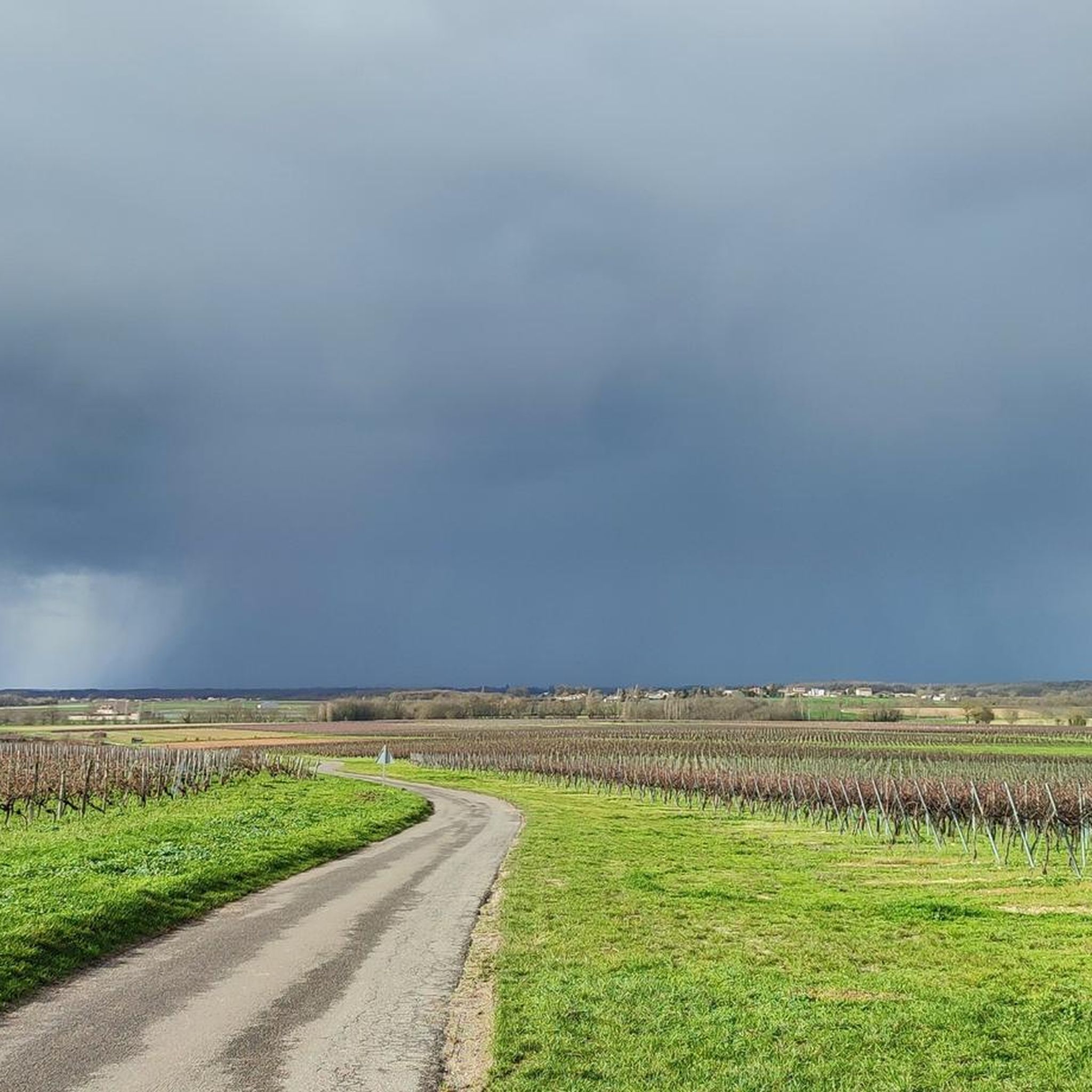
Road cycling around Chassors, located in the Charente department of southwestern France, offers an extensive network of quiet roads and cycle tracks. The region is characterized by rolling vineyards and green riverbanks, providing scenic and varied routes. The Charente River is a central natural feature, with the "Flow Vélo" cycle path accessible nearby, stretching along the river. This landscape provides a serene environment for road cyclists.
Best road cycling routes around Chassors
- The most popular road cycling route is La…
Last updated: October 20, 2026
5.0
(1)
12
riders
41.8km
01:52
300m
300m
Easy 26.0-mile road cycling loop through the Charente countryside, featuring riverside views, vineyards, and historic sites like Château de
5.0
(1)
14
riders
25.9km
01:06
80m
80m
Easy road ride. Great for any fitness level. Mostly well-paved surfaces and easy to ride.

12
riders
8.64km
00:25
50m
50m
Easy road ride. Great for any fitness level. Mostly well-paved surfaces and easy to ride.
5.0
(5)
11
riders
25.7km
01:04
140m
150m
Easy road ride. Great for any fitness level. Mostly well-paved surfaces and easy to ride.
6
riders
35.0km
01:33
210m
210m
Easy road ride. Great for any fitness level. Mostly well-paved surfaces and easy to ride.
Get access to more routes and recommendations from other explorers.
Already have an account?
Our route recommendations are based on thousands of hikes, rides, and runs completed by other people on komoot.
Start today with a free account
Your next adventure awaits.


Tips from the Community

1656 - Birth of the BRILLET House The Brillet House is located in Graves-Saint-Amant, in a place called Les Aireaux, in an enchanting setting, on the edge of the bucolic Charente. The story begins in 1656 with the birth of Guy Brillet, founding father of the wine estate in the very heart of the Cognac region. 1850 - Creation of the Négoce Vivien Brillet, 7th generation, inaugurates the trading house in 1850, creating a distillery and cellars. This is the beginning of the growth of the Brillet House that Raymond and his son Jean will develop at the turn of the 1920s, creating their own brand of Cognac, in Petite and Grande Champagne (the first two Cognac vintages) and Pineau des Charentes. Thus, 10 generations of the Brillet family succeed one another, passing on and passionately keeping the family heritage alive. 1985 - Creation of a Cognac and Pear liqueur Belle de Brillet It was in 1985 that Jean-Louis Brillet created Belle de Brillet, whose name pays homage to his "Belle", his wife Isabelle. Together, they worked passionately to promote Belle de Brillet, a unique liqueur combining Pear and Cognac with its distinctive pear-shaped bottle. Very quickly, it established itself as the flagship of the House. 2020 - Acquisition of Maison Brillet by the Rémy-Cointreau Group, which also cultivates 50 hectares of vines in Grande Champagne and Petite Champagne. Its Cognac comes from a single vineyard, certified HVE3, planted with the traditional Ugni Blanc grape variety. It is located in an atypical terroir of Fins Bois, on hillsides overlooking the Gironde estuary, and benefiting from the temperate influence of the Atlantic Ocean. These eaux-de-vie are the result of a double distillation without lees in a traditional Charente still, and are aged partly in new oak barrels. They have round, fruity and floral notes, ideal for a harmonious marriage with pear eaux-de-vie. > For more information: https://belledebrillet.com/ > Address: “Les Aireaux” 22 route de Graves 16120 Graves-St-Amant. > Visit, Tasting and Purchases possible: Opening Hours: Monday - Saturday: 9:30 a.m. - 6:30 p.m. Private & professional contact visit: contact@brillet.fr / +336 76 01 10 10
0
0
The Giraud d'Anqueville, lords of Bois-Charente, built the castle in the 16th century. The main building has a 16th century tower and extensions dating from the 19th century. In 1680, the castle passed through marriage to François Goulard, lord of La Faye, and it became the property of Jean Thioulet, gentleman of the king, at the beginning of the 18th century. Bois-Charente belonged in 1900, at the beginning of the 20th century, to Jean Fougerat known as Élie, a wealthy owner and benefactor for the development of the Cognac vineyard. The Charente pharmacist and winegrower Jean Fougerat (1863-1932) made a fortune by exploiting several pharmaceutical specialties, in particular the famous Rami syrup to treat the bronchi. This bachelor amassed a "considerable fortune", part of his income came from the exploitation of large vineyards that he had acquired around Graves-Saint-amant, his native land. Indeed, after the phylloxera, in 1897, he replanted 350 hectares of vines on his land acquired in the communes of Graves (logis de Bois Charente), Champmillon (domaine de la Chapelle), Saint-Preuil, in 1897 and Lignières-Sonneville between 1898 and 1901. In 1906, he harvested 22,000 hl of wine and produced 3,000 hl of brandy. He developed the logis de Bois Charente and enlarged its park. He planted more than 500 different species there. He set up a wine station where, with his colleagues, he prepared future plantations and improved the distillation processes. In the absence of immediate outlets, he distilled and aged the eau-de-vie and built numerous ageing cellars in Champmillon, Saint-Preuil and Bourg-Charente. When he died, Fougerat donated his estate and his Bois-Charente manor to the city of Angoulême, the universal legatee. She set up an "Institut de la viticulture charentaise" there (soon renamed the "Bureau interprofessionnel du cognac" and repatriated to Cognac in the 1980s). The Manor was active until the early 1980s, then between 2003 and 2016 it became an educational center for young people in judicial protection. The educational support was based on a high-end application restaurant, with the preparation of CAP and BEP certificates as a key. In his will, Jean Fougerat also had an imposing monument erected in Bois-Charente to the glory of Charente viticulture and cognac. Created by the sculptors R. Lamour de dieu and Émile Peyronnet, the work represents "six figures engaged in viticultural work, in bronze bas-relief; a distillery is engraved in marble". Jean Fougerat gave his name to a street in Angoulême and to his foundation, based in Graves-Saint-Amant. The latter supported the Institute of Viticultural Research in 1936, then currently supports the educational center with the CCAS.
0
0

The Garde-Épée dolmen is classified as a historic monument. It is made up of five slabs which delimit the room and slabs which cover it. The dolmen is five meters long and more than two meters high.
0
0

The ruins of Bouteville Castle were built around the year 1000 on the site of a Roman villa.
3
0
A Romanesque church probably built in the 12th century.
4
0

In 1655, Pierre Laisné, Sieur du Chardonneaux acquired the land of Gondeville from the heirs of Samuel de Lanauve. He made great efforts to have Gondeville erected into a parish, which led to many disputes with Jean de Culant, lord of Saint-Même who had a pew in the church while the lord of Gondeville did not. had not. The construction of the church in Gondeville is due to his son-in-law, Isaac Laisné de Nanclas, whose name was given to the main street. Isaac Laisné de Nanclas had a brilliant military career; First becoming lieutenant-colonel of the Sainte-Maure regiment, he was appointed, in 1690, brigadier of the king's armies. He distinguished himself in numerous campaigns and died on October 30, 1704, after having obtained the title of lieutenant-general; he was buried in the church of Gondeville. His son, Philippe Laisné de Nanclas, having died childless, left his property to his nephew, Louis Saulnier, de Pierre Levée. The Saulnier family kept Gondeville until the end of the 18th century. At the beginning of the 18th century, Philippe Laisné de Nanclas built the new castle, all the buildings surrounded a long rectangular courtyard. The castle occupies the east side. On the west side, rose a circular leak. The wrought iron entrance gate to the courtyard is surmounted by a wrought iron impost, bearing an escutcheon with the arms of the Saulnier de la Pierre Levée and Laisné de Nanclas families, flanked by two lions and surmounted by a crown. . On the cadastre of 1849, the various buildings are arranged around a large rectangular courtyard, there remains only the house to the east, part of the outbuildings to the north, a well and the gate to the south. It should be noted that the stones which would have been used to build the current castle would come from the first fortified castle which would have been built in the 10th century on an island in the Charente to block the road to the Vikings who went up the Charente. It would have been destroyed during the Hundred Years War, but still existed in the 17th century. The two remaining wings became the town hall in 1947. .
0
0

The town has a bridge dating perhaps from the 12th century, a fairly characteristic and well-known limestone bent bridge, called Petit Pont and one from the 18th century known as the Pont de bois or Pont de Bouet. These two bridges cross the two main arms of the Charente.
0
0

I thought this famous dolmen was located in Cognac. Thank you for this reminder
0
0
Frequently Asked Questions
How many road cycling routes are available around Chassors?
The Chassors area offers a wide variety of road cycling routes, with nearly 500 routes available on komoot. This includes over 100 easy routes, more than 350 moderate routes, and a few challenging options for experienced cyclists.
What kind of terrain can I expect on road cycling routes in Chassors?
Road cycling in Chassors is characterized by picturesque landscapes, including extensive rolling vineyards and green riverbanks along the Charente River. The region boasts an extensive network of quiet country roads and dedicated cycle tracks, such as sections of the "Flow Vélo".
What is the best time of year for road cycling in Chassors?
The Charente region generally offers pleasant conditions for road cycling for much of the year. Spring and autumn provide comfortable temperatures and beautiful scenery, especially during harvest season in the vineyards. Summer is also popular, though it can be warmer, making early morning or late afternoon rides ideal.
Are there road cycling routes suitable for beginners or families in Chassors?
Yes, Chassors offers many easy and family-friendly road cycling options. The region's quiet country roads and dedicated cycle paths, like the accessible "Flow Vélo" near Jarnac, are perfect for leisurely rides. Routes such as Vibrac Bridge loop from Jarnac are rated as easy and follow quiet country roads.
Are there more challenging road cycling routes for experienced cyclists?
While the region is known for its gentle terrain, there are a few routes that offer more challenge. The komoot community has identified 8 routes around Chassors as difficult, providing options for cyclists looking for more demanding rides with greater elevation changes.
What natural features or landmarks can I see along the road cycling routes?
Many routes offer stunning views of the Charente River and its green banks, as well as the vast vineyards that define the Cognac production region. You might also pass by historical sites like the Bourg-Charente Castle or the Abbaye de Bassac, adding cultural interest to your ride.
Are there any historical sites or cultural attractions accessible by bike?
Absolutely. Cycling routes often lead through charming towns like Jarnac and Cognac, where you can explore old towns, riverside walks, and famous Cognac distilleries. You can also cycle past historical landmarks such as the Logis de Gardépée in Saint-Brice or the Maison Hine – Cognac Distillery.
Are there circular road cycling routes around Chassors?
Yes, many road cycling routes in the Chassors area are designed as loops, allowing you to start and end at the same point. Examples include La Flow Vélo: Bouteville and Cognac Vineyards Loop and Garde-Épée Dolmen – Garde-Épée Dolmen loop from Julienne.
Where can I park my car when starting a road cycling route in Chassors?
Given the rural nature of the Chassors area and its surrounding towns, you can typically find parking in village centers or designated parking areas near popular starting points for routes. For specific routes, checking the komoot tour details often provides information on suitable parking locations.
Are there places to stop for refreshments or accommodation along the routes?
Yes, the Charente region is dotted with charming villages and towns like Jarnac and Cognac, which offer cafes, restaurants, and accommodation options. Many routes pass through or near these places, providing opportunities for a break, a meal, or an overnight stay. You can also find local producers offering Cognac and Pineau tastings.
Is public transport an option for accessing cycling routes in Chassors?
While Chassors itself is a smaller commune, nearby larger towns like Jarnac, Cognac, and Angoulême are more connected by public transport. You may be able to use regional buses or trains to reach these towns and then cycle to your desired starting point. However, for direct access to specific rural routes, a car is often more convenient.
Are there any specific permits required for road cycling in the Chassors area?
No, there are no specific permits required for road cycling on public roads and designated cycle paths in the Chassors area. Cyclists are generally free to explore the extensive network of quiet roads and cycle tracks.
What do other cyclists say about road cycling in Chassors?
The road cycling routes around Chassors are highly rated by the komoot community, with an average score of 4.5 stars from over 60 reviews. Cyclists often praise the serene environment, the beauty of the vineyards, the quiet country roads, and the scenic river views, making it a popular destination for over 1,700 komoot users.
Most popular attractions around Chassors

Get inspired with the komoot mobile app


Explore more
Browse the best Road cycling routes in other regions.
