Attractions and Places To See around Marcillac-Lanville - Top 10
Best attractions and places to see around Marcillac-Lanville include historical landmarks and natural features within the Charente department of France. The commune is situated within the Charente River basin, characterized by arable land, agricultural areas, prairies, and forests. Key historical sites, such as the Prieuré Notre-Dame de Lanville and the motte féodale of the Château de Marcillac, reflect its rich past. The area offers a blend of cultural heritage and river landscapes for exploration.
Best attractions and places to see…
Last updated: August 30, 2026
Saint-Amant-de-Boixe Abbey
Highlight • Other
Possibility of …
Translated by Google •
Tip by

Keep of Montignac-Charente
Highlight • Castle
It is built on a terrace overlooking the Charente.
Of the enclosure, there …
Translated by Google •
Tip by

Sign up now to discover places like this
Get recommendations on the best single tracks, peaks, & plenty of other exciting outdoor places.
Sign up for free
Notre-Dame de Lanville Priory in Marcillac-Lanville
Highlight • Other
Translated by Google •
Tip by
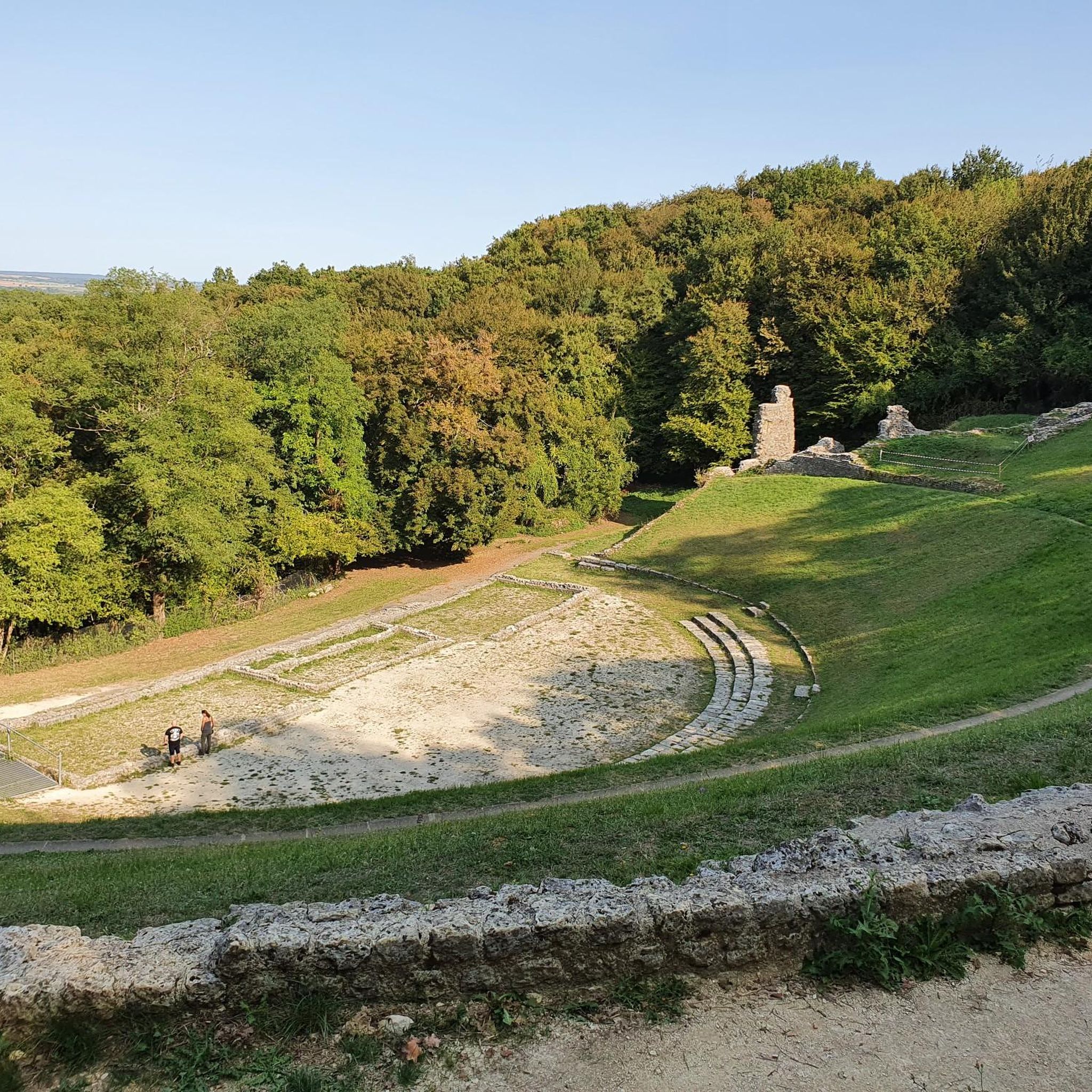
Gallo-Roman Theatre of Bouchauds
Highlight • Historical Site
Translated by Google •
Tip by

Tusson
Highlight • Other
Translated by Google •
Tip by

Sign up for free to discover even more attractions around Marcillac-Lanville.
Sign up for free
Already have an account?
Start today with a free account
Your next adventure awaits.
Login or Signup




Tips from the Community

The town of Tusson is rich in a unique historical heritage. The four tumulus of Tusson date from the fifth century BC and have the particularity of being aligned. These prehistoric monuments made up of one or more blocks of stone and earth were then raised above certain graves. Those of Tusson are among the largest in Europe. The priory and its monastic garden are also worth a look and take you back in time. In addition, gourmets can sit at one of the restaurants or tea rooms in the town to enhance their break.
1
0

A Gallo-Roman theater, which is located on the territory of the commune of Saint-Cybardeaux. The ruins of the Gallo-Roman theater of Bouchauds are at the heart of a natural concavity.
1
0

Located in the archpriest of Ambérac, diocese of Angoulême, the conventual priory of Notre-Dame de Lanville, founded at an unknown date, was attached around 1120 to the rule of the canons regular of Saint Augustine. It will remain conventual until its suppression in 1791. The buildings were largely in ruins in 1632 and the difficulties becoming greater and greater, the priory was united with the abbey of Sainte-Geneviève du Mont. The visit reports of 1636 and 1672 indicate that major work was carried out to raise the priory in the second half of the 17th century. The buildings located to the south of the church could be the lodgings of the prior or the chaplain. They include a main building for residential use, flanked by two north and south wings constituting the outbuildings, arranged around a closed courtyard. The partly modern north wing has retained some openings characteristic of the 14th and 15th centuries. A long vaulted cellar of a broken cradle develops under the entire length of this wing. The south wing has semicircular openings alternating with small rectangular bays, no doubt from the 17th century. The rectangular main building opens, to the west, onto a terrace overlooking a pool spanned by a bridge-staircase. The house itself is built on a long barrel-shaped cellar with a basket handle. The church was fortified in the 15th century. In its primitive state, its nave was covered with three domes which collapsed and were replaced, in the 15th century, by ribbed vaults. In 1904, the presence of a channeled stream having weakened the foundations of the building, the facade collapsed.
1
0
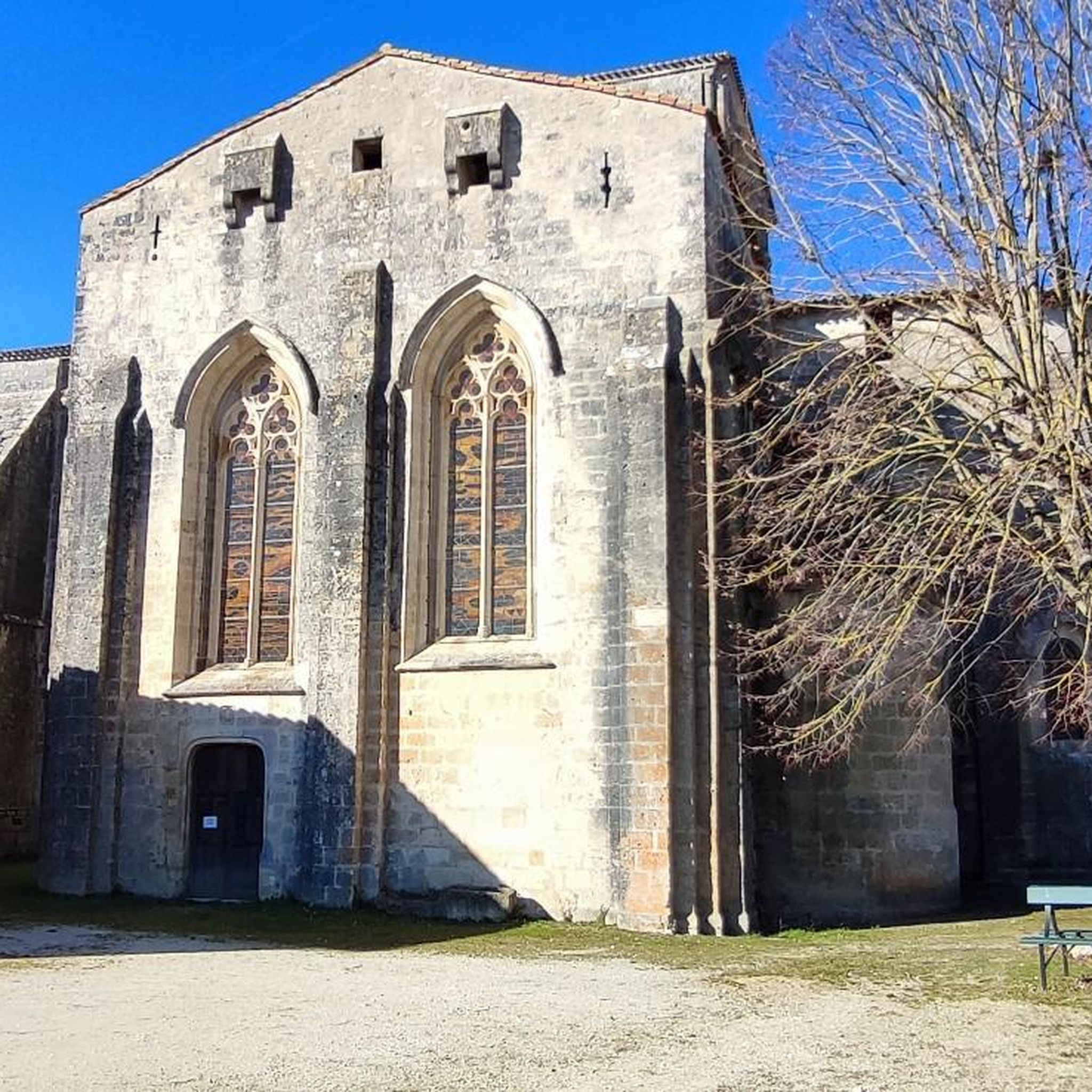
Nestled between the Charente river and the Boixe forest, the former abbey has watched over the north of Angoumois for over a thousand years. Mentioned in 888, the abbey church was rebuilt in the 11th and 12th centuries, thanks to the generosity of the Counts of Angoulême. This building constitutes an inescapable testimony of the Charente Romanesque art. In the 13th century, a large fire destroyed the site, forcing the reconstruction of the choir of the church, which was not completed until the 16th century. Listed as a historical monument in 1840 on the initiative of Mérimée, this vast monument has always impressed with its mass and its refinement: artists such as Eugène Delacroix and Maurice Utrillo are not mistaken. Each year, more than 13,000 visitors come to discover and appreciate this building with such a rich history. The abbey site has also given rise to several archaeological excavations, enriching the historical and cultural interest of this high heritage site.
0
0
Of the castle of Montignac, located in the town of Montignac-Charente, in Charente, only the keep remains. It is built on a terrace overlooking the Charente. Of the enclosure, there remains the gate with portcullis with two round towers at the top of an escarpment, the western part of the enclosure and a round tower.
0
1


On the route of Saint-Jacques de Compostelle, the fortified abbey remains an imposing building of Romanesque style that can be discovered from the high paths around the village. Possibility of visits to the abbey. A few shops nearby allow you to eat.
0
0
Frequently Asked Questions
What historical sites can I visit in Marcillac-Lanville itself?
Within Marcillac-Lanville, you can explore the Prieuré Notre-Dame de Lanville, a former conventual priory dating back to the 12th century. Its church, 14th-century vaulted cellars, and remnants of a 15th-century capitular hall and cloister are significant. You can find more details about this site at Notre-Dame de Lanville Priory in Marcillac-Lanville. Additionally, the motte féodale of the Château de Marcillac marks the site of an ancient castle built in 866.
Are there any ancient ruins or significant historical monuments to explore near Marcillac-Lanville?
Yes, a prominent ancient ruin nearby is the Gallo-Roman Theatre of Bouchauds, located in Saint-Cybardeaux. These impressive ruins are set within a natural concavity. Another significant historical monument is the Saint-Amant-de-Boixe Abbey, a fortified Romanesque abbey listed as a historical monument, with parts dating back to the 11th and 12th centuries.
What natural features can I see around Marcillac-Lanville?
Marcillac-Lanville is situated within the Charente River basin, with the river forming a large meander on its eastern border. The landscape features arable land, agricultural areas, prairies, and forests. Several smaller waterways like the Aume, l'Auge stream, and Jauges stream also crisscross the commune. The wider region includes protected natural areas known as ZNIEFF zones within the Charente valley.
Can I find hiking trails near Marcillac-Lanville?
Yes, there are several hiking opportunities in the area. You can find various routes, including moderate trails like the "Tusson – loop" or the "Laundry – Tour of Rouillac loop from Rouillac." For more options and details, explore the Hiking around Marcillac-Lanville guide.
Are there cycling routes available in the Marcillac-Lanville area?
Absolutely. The region offers a variety of road cycling routes, ranging from easy to difficult. Examples include the "Maison Gautier – Church loop from Villejésus" for an easier ride, or more challenging options like the "Mansle – Saint-Amant-de-Boixe Abbey loop from Aigre." You can discover more routes in the Road Cycling Routes around Marcillac-Lanville guide.
What kind of family-friendly activities are available around Marcillac-Lanville?
While specific family-friendly attractions are not detailed, the natural landscape offers opportunities for outdoor activities suitable for families. Exploring the Charente River basin, visiting historical sites like the Gallo-Roman Theatre of Bouchauds, or enjoying easy walks on local trails can be enjoyable for families. The nearby town of Tusson also offers a monastic garden that might appeal to families.
What are some notable historical sites in the wider region surrounding Marcillac-Lanville?
Beyond Marcillac-Lanville, you can visit the historic town of Tusson, known for its unique historical heritage including ancient tumuli and a priory. The town of Cognac, approximately 32 km away, is famous for its old town and brandy houses. Additionally, the Château de La Rochefoucauld, a significant castle in Charente, is about 30 km from Marcillac-Lanville.
What do visitors enjoy the most about the attractions around Marcillac-Lanville?
Visitors appreciate the blend of historical landmarks and natural beauty. The Saint-Amant-de-Boixe Abbey is noted for its imposing Romanesque style and rich history, attracting over 13,000 visitors annually. The Keep of Montignac-Charente is admired for its views overlooking the Charente River. The area's historical monuments, river landscapes, and ancient ruins offer a diverse exploration experience.
What are the options for water activities on the Charente River?
The Charente River, which borders the eastern part of Marcillac-Lanville, offers opportunities for various water activities. Visitors can enjoy kayaking or canoeing along its scenic stretches, providing a unique perspective of the surrounding natural beauty.
When is the best time to visit Marcillac-Lanville for outdoor activities?
The Charente region generally offers pleasant conditions for outdoor activities during spring, summer, and early autumn. These seasons provide comfortable temperatures for hiking, cycling, and exploring historical sites, allowing visitors to fully enjoy the natural landscapes and waterways.
Are there any dog-friendly walking options around Marcillac-Lanville?
Many of the natural trails and paths around Marcillac-Lanville, particularly those along the Charente River and through agricultural areas, are suitable for dog walking. It's always advisable to keep dogs on a leash and respect local regulations, especially in protected natural zones or near private property.
How can I find running trails near Marcillac-Lanville?
You can find a variety of running trails around Marcillac-Lanville, ranging from moderate to difficult. For example, there's the "Peaceful Place loop from Rouillac" or the longer "Théâtre Antique des Bouchauds – Farm Shop loop from Genac-Bignac." More options are available in the Running Trails around Marcillac-Lanville guide.
Most popular routes around Marcillac-Lanville

Get inspired with the komoot mobile app


Explore more
Still not found the Highlight you’re looking for? See guides of the top attractions in other regions:
