The best road cycling routes around Angeac-Champagne
4.6
(68)
1,875
riders
507
rides
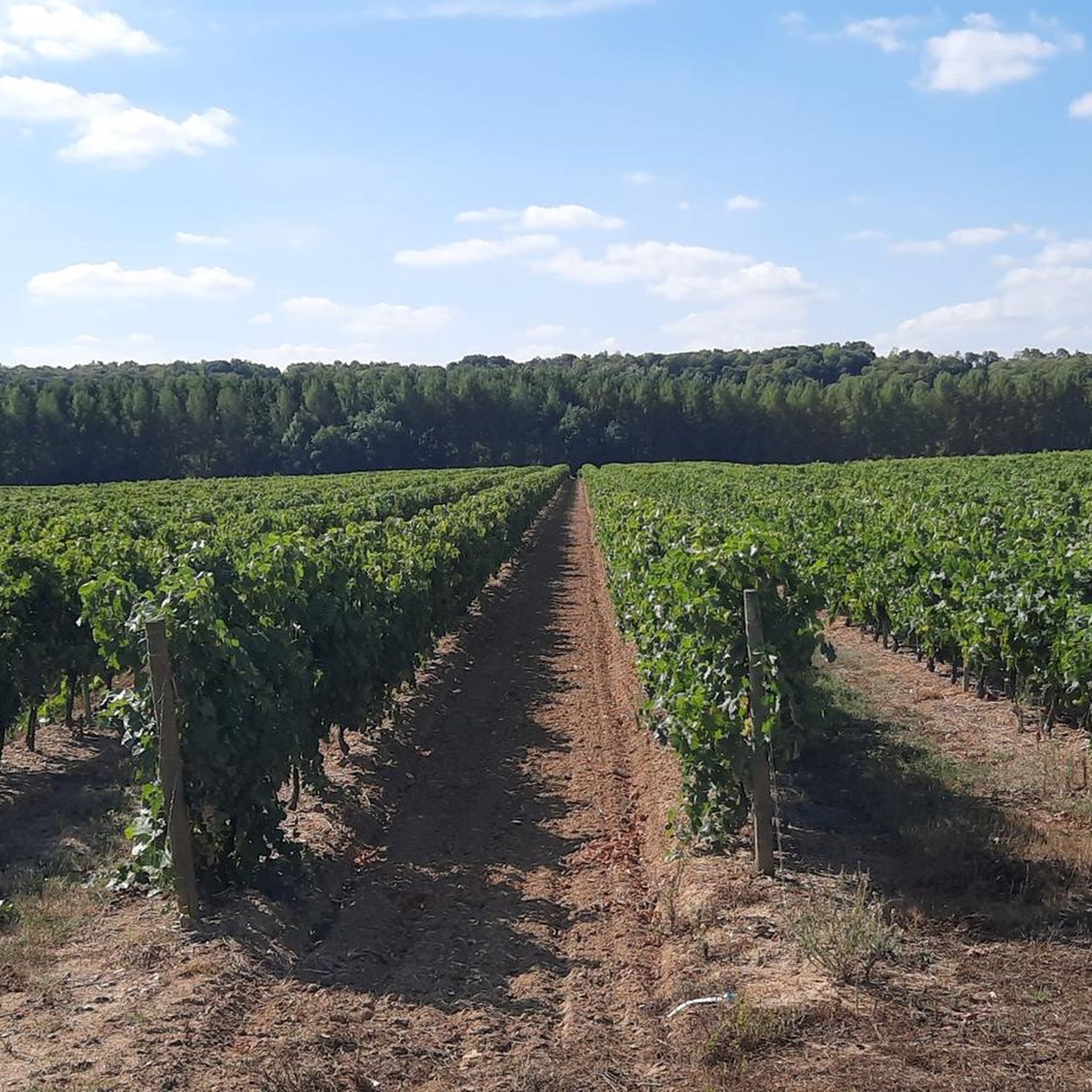
Road cycling routes around Angeac-Champagne traverse the rolling vineyards of Grande Champagne, offering a distinctive landscape for cyclists. The region features gentle topography with modest elevation changes, making it suitable for various fitness levels. Cyclists can expect quiet country roads that wind through the Charente countryside, providing a serene environment away from heavy traffic. This area is characterized by its agricultural setting, with vineyards dominating the scenery.
Best road cycling routes around Angeac-Champagne
- The most popular road cycling route is…
Last updated: July 17, 2026
9
riders
35.6km
01:29
200m
200m
Easy road ride. Great for any fitness level. Mostly well-paved surfaces and easy to ride.
5
riders
Moderate road ride. Good fitness required. Some segments of this route may be unpaved and difficult to ride.

Sign up for free
5
riders
71.4km
03:10
530m
530m
Moderate road ride. Good fitness required. Mostly well-paved surfaces and easy to ride.
4
riders
Moderate road ride. Good fitness required. Some segments of this route may be unpaved and difficult to ride.
4
riders
80.2km
03:30
550m
550m
Moderate road ride. Good fitness required. Some segments of this route may be unpaved and difficult to ride.
Get access to more routes and recommendations from other explorers.
Sign up for free
Already have an account?
Our route recommendations are based on thousands of hikes, rides, and runs completed by other people on komoot.
Start today with a free account
Your next adventure awaits.
Login or Signup



Tips from the Community


A beautiful church with beautiful houses hidden in an ancient but romantic village, it's worth a stop. The Saint-Étienne church in Brives-sur-Charente is recent. It was consecrated in 1868 and reflects the 14th-century Gothic style. It replaced an older church, of which only a baptismal font, listed as a historic object in 1922, and a capital remain. This font, square and made of a single block of siliceous limestone, is a rare specimen of 12th-century sculpture and symbolism. Certain characteristic features, such as the draperies, allow it to be dated to the 1150s. On three sides, we discover the Annunciation made to Mary, then on the main face of the font, Christ officiating in heaven, and finally Christ descending into hell, savior of souls.
0
0

HISTORY OF THE HOUSE OF HINE In 1791, Thomas Hine (1775-1822), then aged 16, left his native land on the south coast of England to go to France… in the middle of the French Revolution. He went to Jarnac, Charente, where he was hired as a clerk in the Ranson et Delamain trading house, which produced his father’s favourite cognac. James Delamain (1738-1800), a Huguenot who had emigrated from Ireland, founded the trading house in 1763 with his father-in-law Jean-Isaac Ranson. On 3 October 1797 (13 Brumaire Year VI), Thomas Hine married Françoise Élisabeth Delamain, daughter of James Delamain and Marie Ranson. In 1817, the Ranson et Delamain house was liquidated, the heirs having been unable to agree on the succession. The eponymous son-in-law founded Thomas Hine & Co, and his cousins Paul Roullet and Henri Delamain (James' grandson) founded the Maison Roullet et Delamain seven years later, which would become Delamain et Cie. The links between the two Protestant Jarnac families remained close, and Thomas Hine's great-granddaughter, Adrienne Hine (1850-1922) married Philippe Delamain (1847-1902) - they had sons Jacques and Robert Delamain. Today, as in Thomas Hine's time, the Hine establishments line the banks of the Charente in Jarnac. The logo is inspired by Hine's speaking arms, hind meaning doe in Old English. He is lying down, his head turned backwards, symbolically looking towards England2. In 1962, Hine was granted the Royal Warrant of Her Majesty Queen Elizabeth II, and became the official supplier of cognac to the Court of England. In 1987, the company was bought by Moët Hennessy. In 2003, it became the property of the CL Financial group, which emerged from the Angostura group. The House was bought in 2013 by the Edv company. TYPOLOGY OF HINE EAUX DE VIE The House of HINE is located on the banks of the Charente, in the heart of the Cognac region. In the cellars, which ensure the protection of the precious vintages under seal, little has changed in more than 260 years. From the neighboring quays once began the journey of HINE cognacs around the world. This house is one of the oldest in Jarnac. Cognacs exclusively from the Grande and Petite Champagne vintages, a distillation with the lees, and an aging in fine grains with a light to moderate heating. Here, every manufacturing detail will be revealed to you. > To find out more: - https://hine.com/fr - Address: 16 quai Orangerie 16200 Jarnac - 05 45 35 59 59 - Visits, Tasting and Purchases possible - Opening periods: From 01/04 to 31/12 Monday, Tuesday, Wednesday, Thursday and Friday from 9 a.m. to 5:30 p.m. Excluding public holidays. Full price: from €20. Free for children under 18. (Subject to change)
0
0
The Giraud d'Anqueville, lords of Bois-Charente, built the castle in the 16th century. The main building has a 16th century tower and extensions dating from the 19th century. In 1680, the castle passed through marriage to François Goulard, lord of La Faye, and it became the property of Jean Thioulet, gentleman of the king, at the beginning of the 18th century. Bois-Charente belonged in 1900, at the beginning of the 20th century, to Jean Fougerat known as Élie, a wealthy owner and benefactor for the development of the Cognac vineyard. The Charente pharmacist and winegrower Jean Fougerat (1863-1932) made a fortune by exploiting several pharmaceutical specialties, in particular the famous Rami syrup to treat the bronchi. This bachelor amassed a "considerable fortune", part of his income came from the exploitation of large vineyards that he had acquired around Graves-Saint-amant, his native land. Indeed, after the phylloxera, in 1897, he replanted 350 hectares of vines on his land acquired in the communes of Graves (logis de Bois Charente), Champmillon (domaine de la Chapelle), Saint-Preuil, in 1897 and Lignières-Sonneville between 1898 and 1901. In 1906, he harvested 22,000 hl of wine and produced 3,000 hl of brandy. He developed the logis de Bois Charente and enlarged its park. He planted more than 500 different species there. He set up a wine station where, with his colleagues, he prepared future plantations and improved the distillation processes. In the absence of immediate outlets, he distilled and aged the eau-de-vie and built numerous ageing cellars in Champmillon, Saint-Preuil and Bourg-Charente. When he died, Fougerat donated his estate and his Bois-Charente manor to the city of Angoulême, the universal legatee. She set up an "Institut de la viticulture charentaise" there (soon renamed the "Bureau interprofessionnel du cognac" and repatriated to Cognac in the 1980s). The Manor was active until the early 1980s, then between 2003 and 2016 it became an educational center for young people in judicial protection. The educational support was based on a high-end application restaurant, with the preparation of CAP and BEP certificates as a key. In his will, Jean Fougerat also had an imposing monument erected in Bois-Charente to the glory of Charente viticulture and cognac. Created by the sculptors R. Lamour de dieu and Émile Peyronnet, the work represents "six figures engaged in viticultural work, in bronze bas-relief; a distillery is engraved in marble". Jean Fougerat gave his name to a street in Angoulême and to his foundation, based in Graves-Saint-Amant. The latter supported the Institute of Viticultural Research in 1936, then currently supports the educational center with the CCAS.
0
0

Magnificent We can also have a picnic
0
0
Visit of the quarries on request. From September to May: visit at 3 p.m. From June to August: visit at 5 p.m. A walk of about 2 hours allows you to contemplate the facade of the quarries, the church, the washhouse, the communal oven, the castle, the porches and the wells. 05 45 81 92 28 smpatrim@gmail.com Meet at the post office square A link to find out more: https://pierre-et-carriers.haute-saintonge.org/la-pierre-et-ses-carrieres/237-pierre-et-carrieres/868-saint-meme-les-carrieres
0
0
In Saint-Meme-des-Carrières, you will find access to the quarries which can be visited with a guide. These limestone stones are visible on many buildings in Charente, and internationally.
0
0

Superb dolmen surrounded by vineyards. The site is wonderful. Accessible by a short passable white path.
0
0
Frequently Asked Questions
What is the general terrain like for road cycling around Angeac-Champagne?
The region is characterized by gentle topography and rolling vineyards of Grande Champagne. You'll find quiet country roads winding through the Charente countryside, offering a serene environment. While local elevation changes are modest, the broader Charente region features green hills, providing a mix of easy rides and routes with moderate elevation gains.
How many road cycling routes are available in the Angeac-Champagne area?
There are over 500 road cycling routes around Angeac-Champagne available on komoot. This extensive network offers a wide variety of options for different preferences and fitness levels.
What are the typical difficulty levels for road cycling routes in Angeac-Champagne?
The routes cater to various abilities. You'll find a significant number of easy routes, perfect for a relaxed ride, alongside many moderate options that include gentle climbs and descents. There are also a few more challenging routes for experienced cyclists seeking greater elevation.
Are there any family-friendly road cycling routes in Angeac-Champagne?
Yes, the gentle topography and quiet country roads make Angeac-Champagne suitable for family cycling. The local "Base de Loisirs" (Leisure Base) even features a dedicated bike track for beginners, making it accessible for families or those new to cycling. Look for routes marked as 'easy' for the most family-friendly options.
What kind of landmarks or attractions can I expect to see along road cycling routes?
Road cycling routes often pass through picturesque vineyards and charming small villages. You can also integrate visits to historic sites. Notable attractions include the Bourg-Charente Castle, Château de Bouteville, and the Maison Hine – Cognac Distillery, which are all within easy reach.
Are there any circular road cycling routes starting from Angeac-Champagne?
Yes, many routes in the area are designed as loops, allowing you to start and finish in the same location. An example is the Saint-Fort Dolmen – Dolmen among the vines loop from Saint-Fort-sur-le-Né, which offers a scenic circular ride through the vineyards.
What do other road cyclists enjoy most about cycling in Angeac-Champagne?
The area is highly rated by the komoot community, with an average score of 4.6 stars from over 60 reviews. Cyclists frequently praise the serene environment of the quiet country roads, the picturesque rolling vineyards, and the blend of gentle terrain with cultural points of interest.
Is it possible to combine road cycling with visits to Cognac houses?
Absolutely. Angeac-Champagne is located just 10 km south of Cognac, making it very convenient to integrate visits to famous Cognac houses, such as Maison Hine, into your cycling trips. Many routes will take you through the heart of the Cognac region.
What is the best time of year to go road cycling in Angeac-Champagne?
The region is generally pleasant for cycling from spring through autumn. Spring offers blooming landscapes, while autumn provides beautiful colors in the vineyards. Summers are typically warm, making early mornings or late afternoons ideal for rides. Always check local weather forecasts before heading out.
Are there any routes that feature riverside scenery?
While Angeac-Champagne itself isn't directly on a major river, the nearby Charente River is a significant natural feature of the wider region. Routes like the Vibrac Bridge – Vibrac Bridge loop from Gensac-la-Pallue offer views of the local countryside and the Charente River, combining vineyards with water views.
Where can I find parking for road cycling routes in Angeac-Champagne?
Many routes start from villages or towns where public parking is available. For example, routes often begin from locations like Gensac-la-Pallue or Saint-Fort-sur-le-Né, which typically offer convenient parking options for cyclists.
Can I find longer road cycling routes for more advanced rides?
Yes, while many routes feature gentle terrain, there are longer options with moderate elevation gains for those seeking a greater challenge. For instance, the Roadbike loop from Saint-Fort-sur-le-Né covers over 80 km with significant elevation, providing a more advanced experience.
Most popular routes around Angeac-Champagne
Most popular attractions around Angeac-Champagne

Get inspired with the komoot mobile app


Explore more
Browse the best Road cycling routes in other regions.
