Attractions and Places To See around Lusanger - Top 8
Best attractions and places to see around Lusanger, a commune in Loire-Atlantique, France, offer a blend of historical landmarks and natural beauty. The region is characterized by its rich cultural heritage, including ancient megaliths and historical structures. Visitors can explore picturesque landscapes featuring forests, rivers, and ponds. Lusanger provides opportunities to discover its deep historical roots, from prehistoric to Gallo-Roman occupation.
Best attractions and places to see around Lusanger
- The most popular attractions is Mine Lake, a lake that…
Last updated: October 16, 2026
The Slag Heap
Highlight • Other
Translated by Google •
Tip by

Mine Lake
Highlight • Lake
Translated by Google •
Tip by
Sign up now to discover places like this
Get recommendations on the best single tracks, peaks, & plenty of other exciting outdoor places.
Abbaretz lagoon
Highlight • Other
Translated by Google •
Tip by

Saint-Pierre and Saint-Paul Church
Highlight • Other
Translated by Google •
Tip by

"Acidic and contaminated water, quicksand
Highlight • Other
The remains of ore oxidize in the open air and release the metals they contain: iron, manganese, cobalt and arsenic. We thus find red runoff waters that must absolutely not be touched
Translated by Google •
Tip by

Sign up for free to discover even more attractions around Lusanger.
Already have an account?
Start today with a free account
Your next adventure awaits.



Tips from the Community

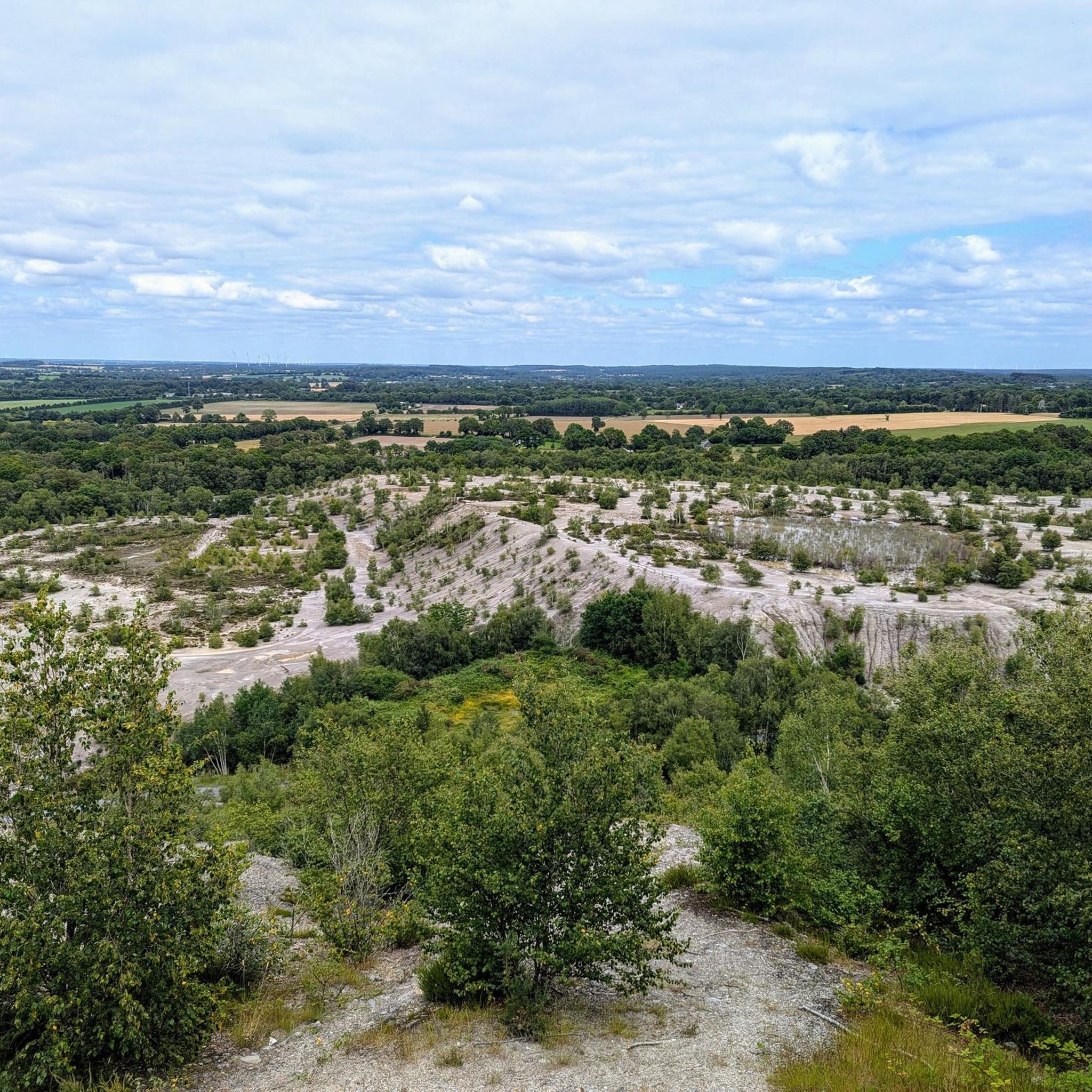
While the ascent of the slag heap is flat and gently uphill in its first part, it is followed by a long, steeper section of walking before reaching the summit. It is clearly stated that descending via any route other than the designated access point is strongly discouraged due to the risk of rockfalls.
0
0

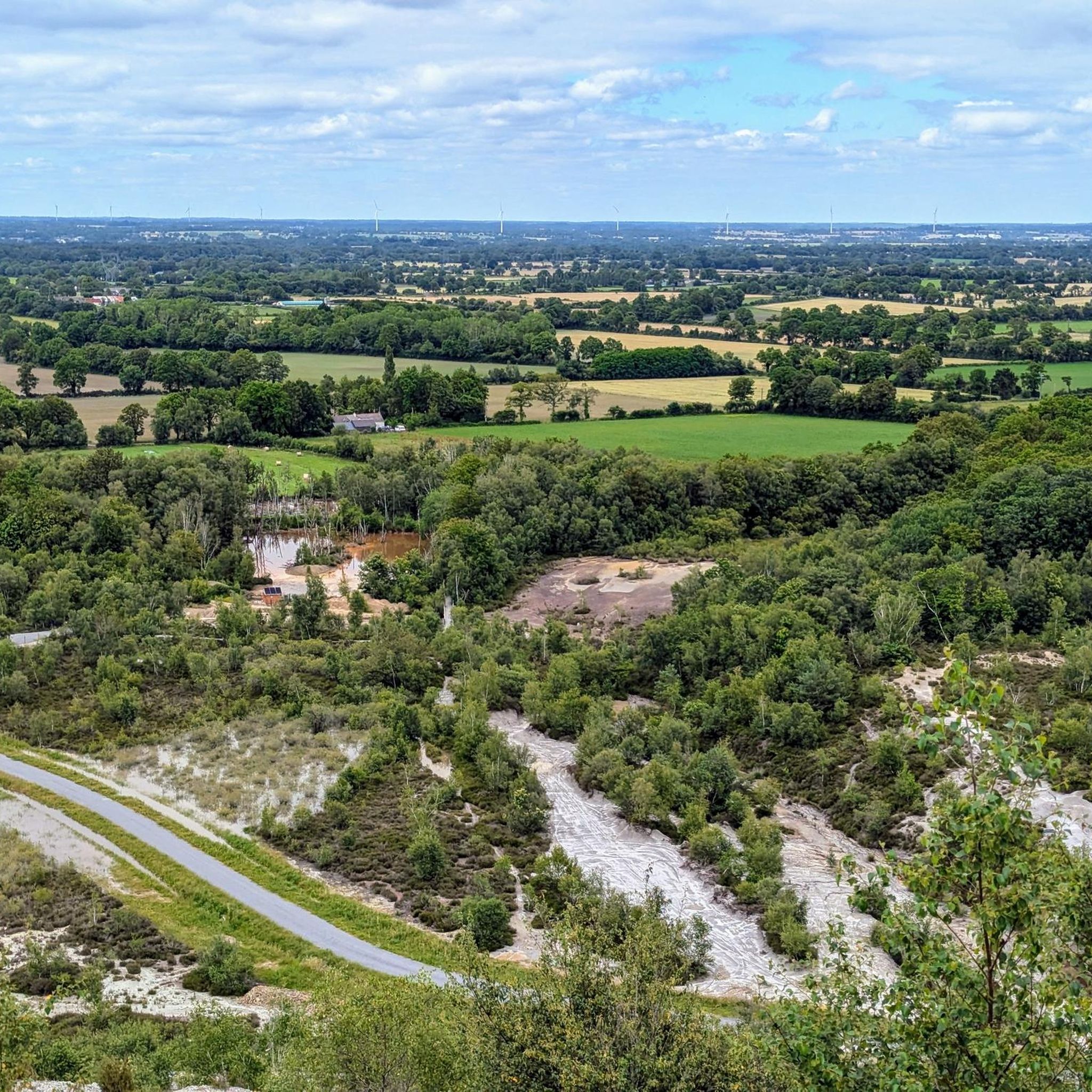
A half-Mordor, half-Mad Max atmosphere with these reddish-orange marshes. The color is due to the oxidation of heavy metals contained in these highly acidic waters: iron, manganese, cobalt, and... arsenic. It's actually due to severe arsenic pollution that access to the second spoil heap has been prohibited since 2019. You can tour the site by bike, but it's clearly mountain biking/gravel riding (walkways, roots, rocks, etc.).
1
0

An extraordinary and disturbing landscape. The remains of ore oxidize in the open air and release the metals they contain: iron, manganese, cobalt and arsenic. We thus find red runoff waters that must absolutely not be touched
0
0

This church is in Romanesque style and has retained certain elements from the 12th century. The lantern on the right side of the tower is representative of the belief in guiding the dead into the darkness of the afterlife. The church is generally open to visitors and masses are sometimes organized there.
0
0

This deep mine excavation is now a beautiful lake and hiking spot. The calm waters offer amazing reflections from the shore.
2
1
Frequently Asked Questions
What unique natural landscapes can I explore around Lusanger?
Lusanger offers a blend of natural beauty shaped by its mining history. You can visit Mine Lake, a deep mine excavation now transformed into a beautiful lake and hiking spot, known for its calm waters and reflections. Another striking site is Abbaretz lagoon, characterized by reddish-orange marshes due to the oxidation of heavy metals. Be aware that some areas, like the second spoil heap, are prohibited due to arsenic pollution. The region also features the extensive Forêt de Domnaiche, which holds historical significance and natural trails.
Are there historical or cultural sites to visit in Lusanger?
Yes, Lusanger is rich in history. The Saint-Pierre and Saint-Paul Church is a Romanesque church with elements dating back to the 12th century, generally open to visitors. You can also explore ancient megalithic sites like the Pierre du Hochu Menhir and the Alignement de la Grée Galot, which retains nine menhirs. The ruins of the Vieux-Château in the Forêt de Domnaiche, with origins tracing back to the Gallo-Roman era, offer a glimpse into the region's past.
What kind of outdoor activities are available near Lusanger's attractions?
The area around Lusanger is excellent for outdoor activities. You can find numerous road cycling routes, such as the 'Abbaretz mine spoil tip – Mine Lake loop from Mouais' which is a moderate 51.9 km ride. For hiking, consider the 'Étang de Gruellau loop' (3 km, easy) or the 'Étang de la Hunaudière – Le Bois de la Roche loop' (15.7 km, moderate). Running enthusiasts can explore trails like the 'Menhir de la Grée à Midi loop' (8.5 km, moderate). You can find more details on these and other routes in the Road Cycling Routes around Lusanger, Hiking around Lusanger, and Running Trails around Lusanger guides.
Are there any challenging hikes or viewpoints in the area?
For a challenging experience and panoramic views, consider ascending The Slag Heap. This former tin mine site offers a magnificent vantage point with an orientation table at the top. While the initial ascent is gentle, it's followed by a long, steeper section. It's important to note that descending via any route other than the designated access point is strongly discouraged due to the risk of rockfalls.
What should I know about the 'Acidic and contaminated water' highlight?
The highlight titled "Acidic and contaminated water, quicksand" describes an extraordinary and disturbing landscape resulting from ore oxidation. The remains release metals like iron, manganese, cobalt, and arsenic, creating red runoff waters. It is crucial that these waters are absolutely not touched due to their highly acidic and contaminated nature.
Are there any family-friendly activities or attractions around Lusanger?
While specific 'family-friendly' categories aren't listed for all attractions, exploring the natural beauty of Mine Lake and its surrounding trails can be an enjoyable activity for families. The Forêt de Domnaiche also offers opportunities for walks and discovering historical ruins. For older children, the unique landscape of Abbaretz lagoon could be an interesting, albeit cautionary, visit.
What is the best time to visit Lusanger for outdoor activities?
The best time to visit Lusanger for outdoor activities generally aligns with milder weather conditions, typically spring (April to June) and autumn (September to October). During these periods, temperatures are pleasant for hiking, cycling, and exploring the natural and historical sites without the extreme heat of summer or the cold of winter. Always check the local weather forecast before planning your visit.
Can I find easy walking routes near Lusanger?
Yes, there are several easy walking routes. For instance, the 'Étang de Gruellau loop' is an easy 3 km hike, perfect for a relaxed stroll. Another easy option is the 'Saint Aubin Chapel loop' which is about 6.1 km. These routes allow you to enjoy the local scenery without strenuous effort. More easy routes can be found in the Hiking around Lusanger guide.
What are some lesser-known historical sites or 'hidden gems' in the Lusanger region?
Beyond the more prominent sites, Lusanger's history is also reflected in its numerous ancient megaliths, such as the Menhir du Tertre Gicquel. The region was also home to several old mills, including the watermills of Bouvetière and Surget (though now disappeared), and windmills like Butte de l'Epine, Chasse Loup, and Corbinais, which offer a glimpse into the area's industrial past.
What do visitors appreciate most about the attractions around Lusanger?
Visitors frequently appreciate the unique blend of historical significance and natural beauty. The transformation of former mining sites into scenic spots like Mine Lake and the vantage point offered by The Slag Heap are often highlighted. The rich cultural heritage, including ancient churches and megalithic structures, also draws significant interest from those exploring the region.
Are there any specific considerations for mountain biking or gravel riding near Lusanger?
If you're interested in mountain biking or gravel riding, the area around Abbaretz lagoon offers suitable terrain. The site can be toured by bike, but be prepared for conditions like walkways, roots, and rocks, indicating it's more suited for mountain biking or gravel riding rather than standard road cycling.
Most popular routes around Lusanger

Get inspired with the komoot mobile app


Explore more
Still not found the Highlight you’re looking for? See guides of the top attractions in other regions:
