The best cycling routes around Saujon
3.9
(76)
331
riders
31
rides
Touring cycling routes around Saujon are characterized by the region's flat terrain and proximity to the Seudre estuary. The area features a network of small tarmacked roads and dedicated paths, making it accessible for various fitness levels. Cyclists can explore diverse landscapes, including the vast marshes of La Lande and the Marine Natural Park of the Gironde Estuary. This preserved natural environment offers a blend of riverine and coastal scenery.
Best touring cycling routes around Saujon
- The most popular touring…
Last updated: October 10, 2026
4.3
(23)
78
riders
59.8km
03:33
120m
120m
Cycle 37.2 miles (59.8 km) through the Marine natural park of the Gironde Estuary and the Sea of Pertuis, a moderate touring route with dive
4.5
(12)
65
riders
20.8km
01:24
30m
30m
Easy bike ride. Great for any fitness level. Mostly paved surfaces. Suitable for all skill levels.

4.4
(9)
30
riders
Moderate bike ride. Good fitness required. Mostly paved surfaces. Suitable for all skill levels.
3.3
(9)
23
riders
26.0km
01:34
60m
60m
Easy bike ride. Great for any fitness level. Mostly paved surfaces. Suitable for all skill levels.
4.5
(4)
8
riders
Moderate bike ride. Good fitness required. Mostly paved surfaces. Suitable for all skill levels.
Get access to more routes and recommendations from other explorers.
Already have an account?
Our route recommendations are based on thousands of hikes, rides, and runs completed by other people on komoot.
Start today with a free account
Your next adventure awaits.


Tips from the Community

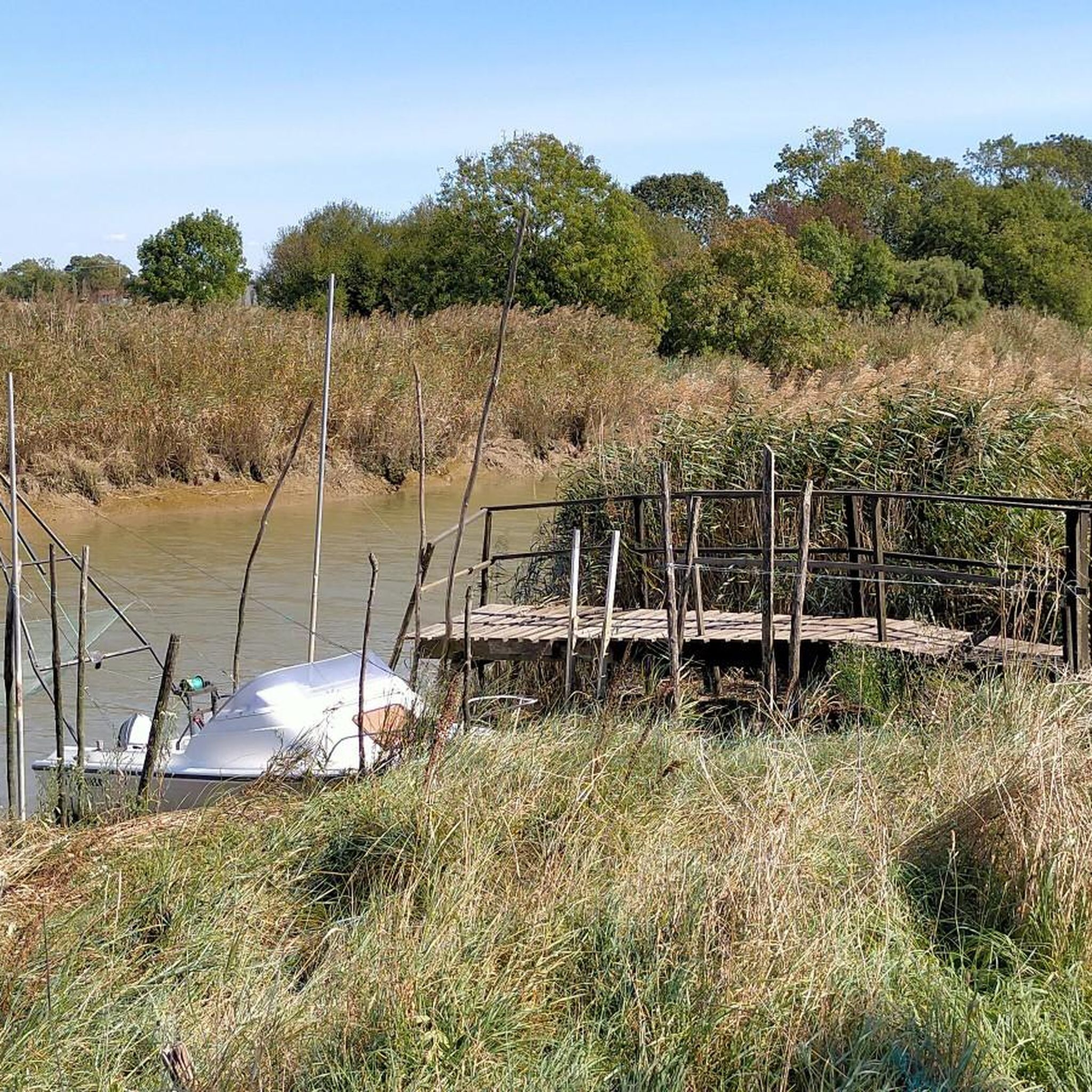
The carrelets are today part of the emblematic images of Royan and the Côte de Beauté. However, contrary to what the current landscape might suggest, the large pontoons with huts are relatively recent. A much older fishing The word carrelet originally designates the square net used for very simple fishing. Fishing with a carrelet has been attested in the region since at least the 18th century. At that time, these were not yet the elegant huts on stilts that we know today. The fisherman used a square frame with a net, which he lowered into the water and then quickly pulled up. This fishing was particularly practiced by women and could provide a dietary supplement. The turning point of 1900: the birth of the pontoons It was around 1900 that the carrelet began to change its nature. With the development of sea bathing and seaside tourism in Royan, fixed structures appeared on the quays, rocks, and cliffs. In Royan, they can be found in particular on the rocks of Pigeonnier and at Pontaillac. Initially, they were essentially simple masts equipped with a winch. The users were often merchants, liberal professions, retirees, or wealthy owners rather than professional fishermen. A particularly interesting old photograph shows the conche de Pontaillac in 1918, with fishing installations. The carrelets become leisure spots Between the two wars, and especially after 1945, the carrelets multiplied. The generalization of paid holidays, the increase in free time, and the development of popular holidays favored their transformation into real small holiday resorts. The installations gradually became more substantial: cliff → footbridge → pontoon → hut → mast and winch → square net Owners often built their own installations with wood or salvaged materials. In the 1950s, this practice experienced a real boom around Royan. Why are there so many carrelets around Royan? The relief of the Côte de Beauté is particularly well-suited for this. They can be found in particular: * in Royan, at the Pointe du Chay, at Pigeonnier and at Pontaillac; * in Vaux-sur-Mer, particularly towards the conche de Gilet; * in Saint-Palais-sur-Mer, along the headlands of Terre-Nègre and Perrières, towards the Pont du Diable and the Concié; * in Saint-Georges-de-Didonne, particularly towards Suzac; * in Meschers-sur-Gironde, along the cliffs and coves. The carrelet is indeed identified today as a viewpoint in Royan. The 1999 storm: a catastrophe The carrelets are extremely vulnerable to storms. The storms of 1996 and especially 1999 destroyed a very large part of the installations in Charente-Maritime. On the coasts of Aunis and Saintonge, nearly 90% of the approximately 700 carrelets had been destroyed during the January 2000 storm. They were then gradually rebuilt, with the help of owners and public schemes. Today: a heritage of Royan The carrelet is therefore not just a fishing equipment. It has become an element of the maritime and landscape heritage of Royan. The Musée du patrimoine du Pays Royannais classifies it as 20th-century maritime heritage and points out that the current installations are essentially the result of the development of this practice in the 20th century. An interesting historical point: the carrelets that we spontaneously associate with Royan today are therefore mainly the result of the evolution of seaside tourism after 1900 and their extraordinary development after 1945, and not the intact survival of a very old tradition of fishing huts.
0
0

The Halles of Mornac first appeared in the Middle Ages. It was only in 1664 that the first written proof attested to their existence. They are likely older and could date back to the 1550s. The Halles are generally timber-framed shelters supported by stone pillars and covered with tiles. It can be assumed that, like those of Cozes and Pisany, they suffered the vicissitudes of the Wars of Religion and were damaged, or even destroyed, then rebuilt when peace returned. The site of the Halles of Mornac was a renowned fairground and allowed the inhabitants to sell their products in exchange for a fee paid to the Lord. It was an important source of income for him, which also obliged him to maintain these Halles in perfect condition. An act engaging the Lord and the seller sealed a contract signifying the rights to sell unpacked goods and the maintenance of the said Halles.
0
0

Attention: The ferry does not accept card payments! Without cash, the only option is to take a detour over the busy bridge. Price in 2026 is €3.
1
0
The port of Ribérou is a major heritage site in Saujon, bearing witness to a prosperous maritime past linked to the salt and wine trade. Transformed in the 19th century by ambitious works, it has now been reinvented as a place for living, relaxation, and preserving local history. 🛶 Origins and the Middle Ages The port of Ribérou takes its name from the Latin word ripa ("riverbank") or the Occitan word ribèira ("river"). It is located at the head of the Seudre estuary. It existed as early as the 11th century and became an important river and sea port thanks to its strategic position at the head of the estuary, used particularly for the salt trade—then called "white gold"—a highly sought-after product for preserving food. 🚢 Medieval Period and International Trade With the opening of British markets during the reigns of Eleanor of Aquitaine and Henry II Plantagenet, ships laden with wool, salt, wine, and other goods flocked to Ribérou. In the 16th century, the port exported local wines (such as cognac and pineau) throughout Europe. In 1577, during the Wars of Religion, the port was a strategic site: troops were stationed there, and battles took place. 🏗️ Decline, Reconstruction, and the 19th Century The estuary gradually silted up, making navigation difficult. By 1691, only smaller vessels could dock there. During the French Revolution, the sale of the tidal mill, which helped remove sediment, worsened the silting, leading to the port's decline. A modernization project began in 1822, but it wasn't until 1839 that an ambitious program was launched under the impetus of Jules Dufaure—a native of Saujon and Minister of Public Works—with the construction of sturdy quays, slipways, a lock bridge (marking the boundary between fresh and salt water), and reception facilities. In 1842, the work was completed, and the main quay was named Quai Dufaure in honor of this political support. 📉 Gradual Decline and Modernization The arrival of the railway in 1876 and the persistent problems of silting led to a decline in the port's traditional commercial activity, already facing competition from other transport networks. In the 20th century, the port gradually lost its economic importance but remained active for traditional fishing and became a place for pleasure boating, leisure, and local culture. Urban and tourism development projects (particularly in 2011–2012) modernized the port while preserving its historical charm. 🌊 Today The port of Ribérou is now a small fishing and pleasure port, much appreciated for its walks along the Seudre River, water sports (canoeing, kayaking, paddleboarding, etc.), and seasonal events.
0
0
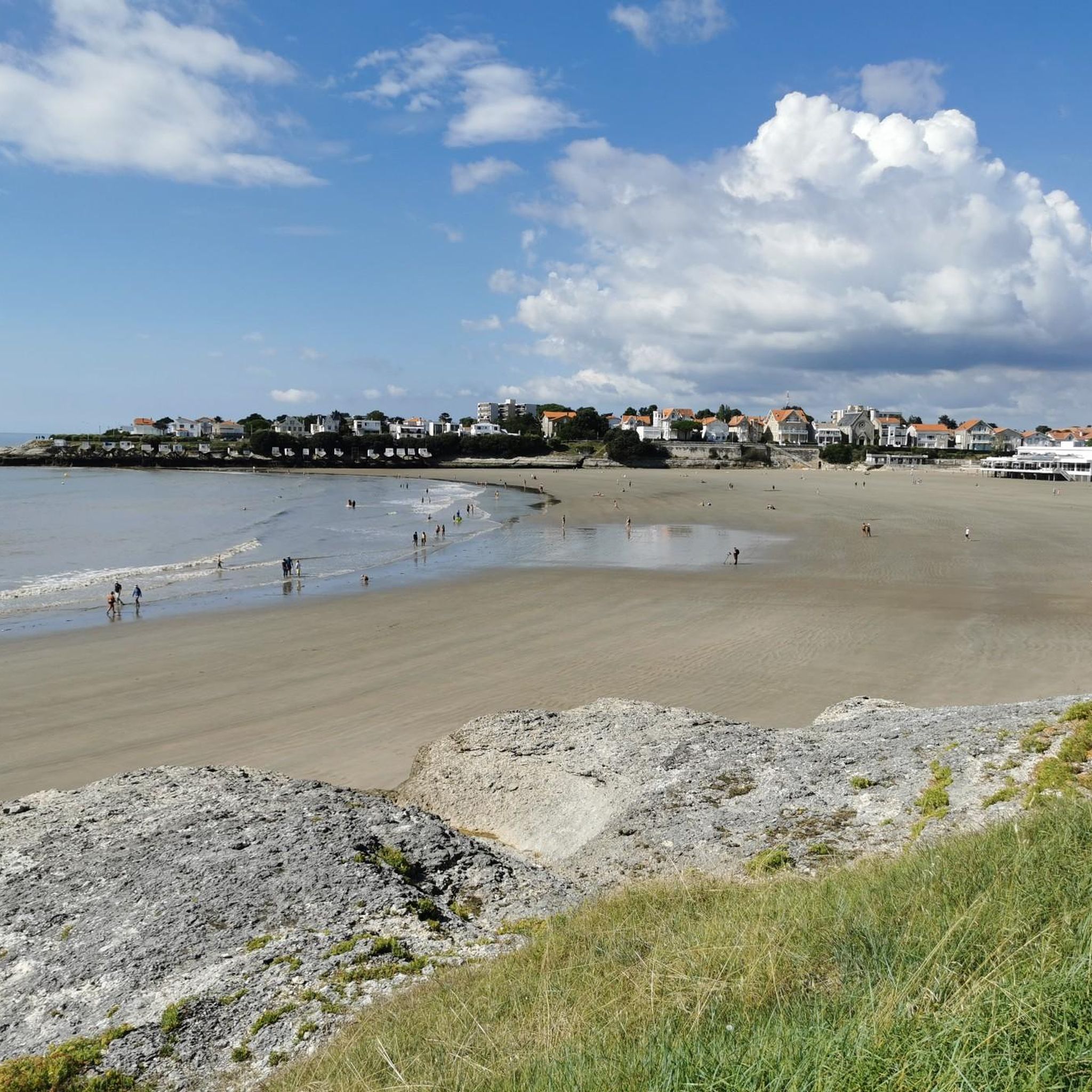
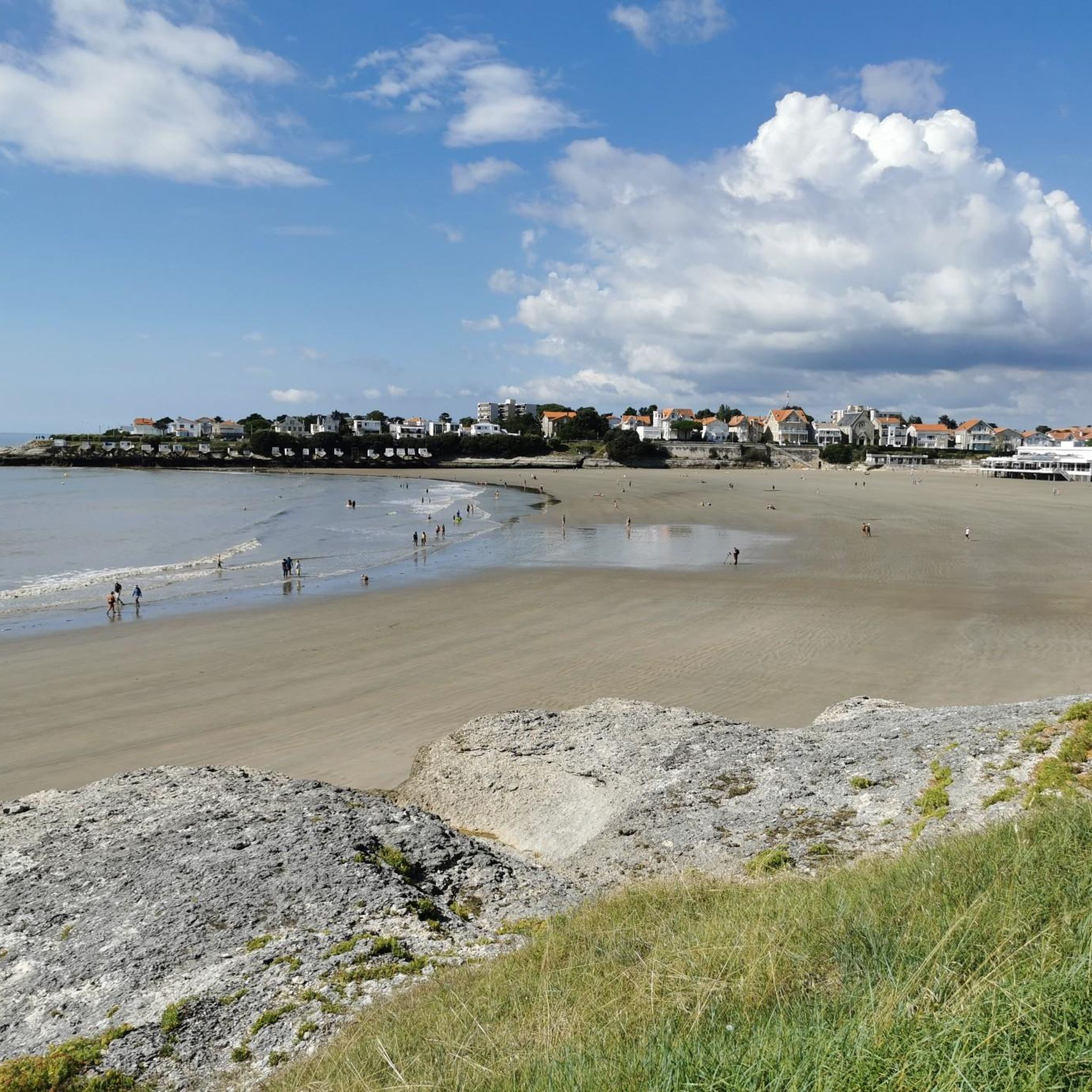
🏖️ General Overview Chay Beach is a family-friendly, fine sandy beach located in Royan (Charente-Maritime), on the Côte d’Argent promenade between Pigeonnier Beach and Pointe du Chay. It stretches for approximately 200 meters and boasts a pleasant natural setting, with a cove bordered by rocks typical of the Charente coastline. 🏝️ Features • 🌊 Beach type: fine sand, sheltered cove. • 🏄♂️ Atmosphere: relatively calm and family-friendly, ideal for children and vacationers seeking relaxation away from the large urban beaches. • 🐾 Pets: prohibited from April 1st to September 30th. • 🫧 Water quality: excellent (Blue Flag label awarded for 2025). 🧭 Lifeguard and Safety • Swimming is supervised during the season (June to early September), with areas marked by red and yellow flags. • The area is classified as a Category 3 "Supervised Beach" and lifeguards are present during the indicated hours. 🪑 Amenities On-site, you can find: • 🏖️ Sun loungers, parasols, and mattresses for rent. • 🚿 Foot rinse and public restrooms. • 📶 Wi-Fi access, first aid station, and an area accessible to people with reduced mobility (assistance may be required depending on the slope). • 🍴 Beachfront restaurant ("Le Chay" bar-restaurant with sea views). 🚶♂️ Atmosphere and Activities • 🎈 Ideal for families and leisurely strolls. • 🌞 People come here for swimming, playing on the sand, flying kites, or simply relaxing by the ocean. • 🅿️ Parking is available nearby, and the beach is easily accessible on foot or by bike from Royan town center in just a few minutes. 🧭 Practical Tips • 📆 Best time to visit: summer for supervised swimming and full services, but also during the off-season for a more peaceful atmosphere. • ☀️ Arriving early in the morning makes parking easier during peak season. • 🐶 Dogs are not allowed during the summer season; check the signs on site during the off-season.
0
0

The flushing lock is located at the head of the port, between the north bank's embankment and the south bank's quay. A retention basin, occupying the non-navigable Seudre riverbed as far as Saujon, follows the flushing lock. Within the retention basin, rubble stone embankments extend the lock's return walls for a few meters. The lock itself forms a bridge carrying a road. The lock bridge consists of two piers, forming three arches, each housing two gates. On the upstream side of the lock, the piers have semicircular cutwaters. The three bands are stacked and terminate in clamps. The lock ends with a cornice resting on modillions. The cornice follows the shape of the cutwaters. A metal balustrade, also semicircular in shape, is fixed to the top of the lock. This balustrade is framed by two stone moldings. The sluice gate and its upstream and downstream return walls are constructed of dressed stone. The masonry is of medium and regular quality, except for the coping of the return walls, which features large and regular masonry. The upstream north return wall is lower than the one on the south bank. A small parapet of recently constructed white rubble masonry surmounts it. The sluice gate is equipped with metal gates, the modern racks of which are visible. The first sluice gate was built around 1825 on the site of a former tidal mill. During the works carried out between 1839 and 1842, the sluice gate's embankment was modified to allow the passage of vehicles. Between 1847 and 1853, the lock was enlarged to allow for larger flushes, and the reservoir was excavated. Return walls were also built to connect the flushing lock to the riprap. It was then restored in 1865 and completely rebuilt between 1868 and 1869. The lock is 10.50 m wide, and its gates are each 1.50 m wide. The reservoir is 700 m long and has an average width of 30 m.
0
0

Frequently Asked Questions
How many touring cycling routes are available around Saujon?
There are over 30 touring cycling routes around Saujon, offering a diverse range of experiences. These include 14 easy routes perfect for a relaxed ride, 13 moderate routes for those seeking a bit more adventure, and 3 more challenging options.
Are there easy touring cycling routes suitable for beginners in Saujon?
Yes, Saujon is ideal for beginners and casual cyclists. The region's relatively flat terrain and network of small tarmacked roads make it very accessible. You can find 14 easy routes, such as the Pointe de l'Éguille – Port of Ribérou loop from Saujon, which offers picturesque views over 20 km.
What kind of terrain can I expect on touring cycling routes in Saujon?
The touring cycling routes in Saujon are predominantly flat, winding through a preserved natural environment. You'll cycle on small tarmacked roads and dedicated paths, exploring diverse landscapes including the vast marshes of La Lande, the Seudre estuary, and the Marine Natural Park of the Gironde Estuary. This blend offers both riverine and coastal scenery.
Are there circular touring cycling routes around Saujon?
Yes, many routes around Saujon are designed as loops, allowing you to start and end in the same location. Examples include the Pointe de l'Éguille – Port of Ribérou loop from Saujon and the Port of Ribérou – Saint Martin's Church loop from Le Train des Mouettes - Saujon, which is an easy 22 km ride.
What are some scenic viewpoints or natural features I can see along the routes?
The region is rich in natural beauty. You can enjoy views of the Seudre estuary and its unique marshes, especially within the vast marshes of La Lande. Routes often pass through the Marine Natural Park of the Gironde Estuary. For a stunning vista, consider visiting the View of the estuary and white cliffs at Parc de l'Estuaire.
Are there routes that pass through charming villages or points of interest?
Absolutely. Many routes connect to picturesque locations. For instance, the The market halls in Mornac-sur-Seudre – Chenal de Marennes loop from Le Train des Mouettes - Saujon takes you through charming villages like Mornac-sur-Seudre, designated one of the 'Most Beautiful Villages of France®'. You can also cycle to Port of Royan or explore the attractive river site of Port de Ribérou.
What do other touring cyclists enjoy the most about touring cycling in Saujon?
The area is highly rated by the komoot community, with an average score of 4.04 stars from over 60 reviews. Touring cyclists often praise the region's flat, accessible roads, the beautiful scenery of the Seudre estuary and marshes, and the variety of routes suitable for different skill levels. Over 300 touring cyclists have used komoot to explore Saujon's varied terrain.
Are there more challenging touring cycling routes for experienced cyclists?
While Saujon is known for its flat terrain, there are 3 routes classified as difficult for those seeking a greater challenge. These routes might involve longer distances or slightly more varied elevation, though significant climbs are rare in the region. One moderate option is The Seudre Paths, a 59.8 km trail through the Marine Natural Park.
Can I combine cycling with other activities in Saujon?
Yes, Saujon offers a wealth of other activities. You can enjoy water sports like canoeing and paddleboarding on the Seudre, or visit the thermal baths for relaxation. The famous Le Train des Mouettes offers a unique journey through salt marshes, and nearby attractions include Planet Exotica and the Zoo La Palmyre, making it easy to combine cycling with other interests.
Are there any less crowded touring cycling routes in Saujon?
While popular routes like The Seudre Paths attract many, the extensive network of paths means you can often find quieter options. Exploring some of the shorter, local loops like L'Équille loop from Toutlifaut (12 km) might offer a more serene experience, especially during off-peak times.
Is Saujon suitable for family cycling trips?
Absolutely. Saujon's flat terrain and numerous easy routes make it an excellent destination for family cycling. The dedicated paths and small tarmacked roads provide a safe and enjoyable environment for cyclists of all ages. Many routes offer gentle distances and scenic stops, perfect for a family outing.
Most popular attractions around Saujon

Get inspired with the komoot mobile app


Explore more
Browse the best Cycling routes in other regions.
