The best running trails around Vaux-Sur-Mer
4.5
(32)
2,520
runners
20
runs
Jogging around Vaux-Sur-Mer offers diverse routes along its picturesque coastline and through wooded areas. The region is characterized by sandy beaches, limestone cliffs, and the unique vistas of the Gironde estuary. Runners can explore coastal paths lined with maritime pines and holm oaks, as well as shaded trails in local woods. This blend of seaside and forest environments provides varied terrain for all levels of running.
Best jogging routes around Vaux-Sur-Mer
- The most popular jogging route is Nice view westwards…
Last updated: October 14, 2026
4.5
(6)
951
runners
Hard run. Very good fitness required. Mostly paved surfaces. Suitable for all skill levels.
5.0
(3)
364
runners
9.57km
01:00
50m
50m
Moderate run. Good fitness required. Mostly paved surfaces. Suitable for all skill levels.

141
runners
5.39km
00:34
30m
30m
Moderate run. Good fitness required. Mostly paved surfaces. Suitable for all skill levels.
4.0
(2)
94
runners
18.3km
01:59
130m
130m
Hard run. Very good fitness required. Mostly paved surfaces. Suitable for all skill levels.
5.0
(1)
143
runners
12.8km
01:20
80m
80m
Moderate run. Good fitness required. Mostly paved surfaces. Suitable for all skill levels.
Get access to more routes and recommendations from other explorers.
Already have an account?
Our route recommendations are based on thousands of hikes, rides, and runs completed by other people on komoot.
Start today with a free account
Your next adventure awaits.

Tips from the Community

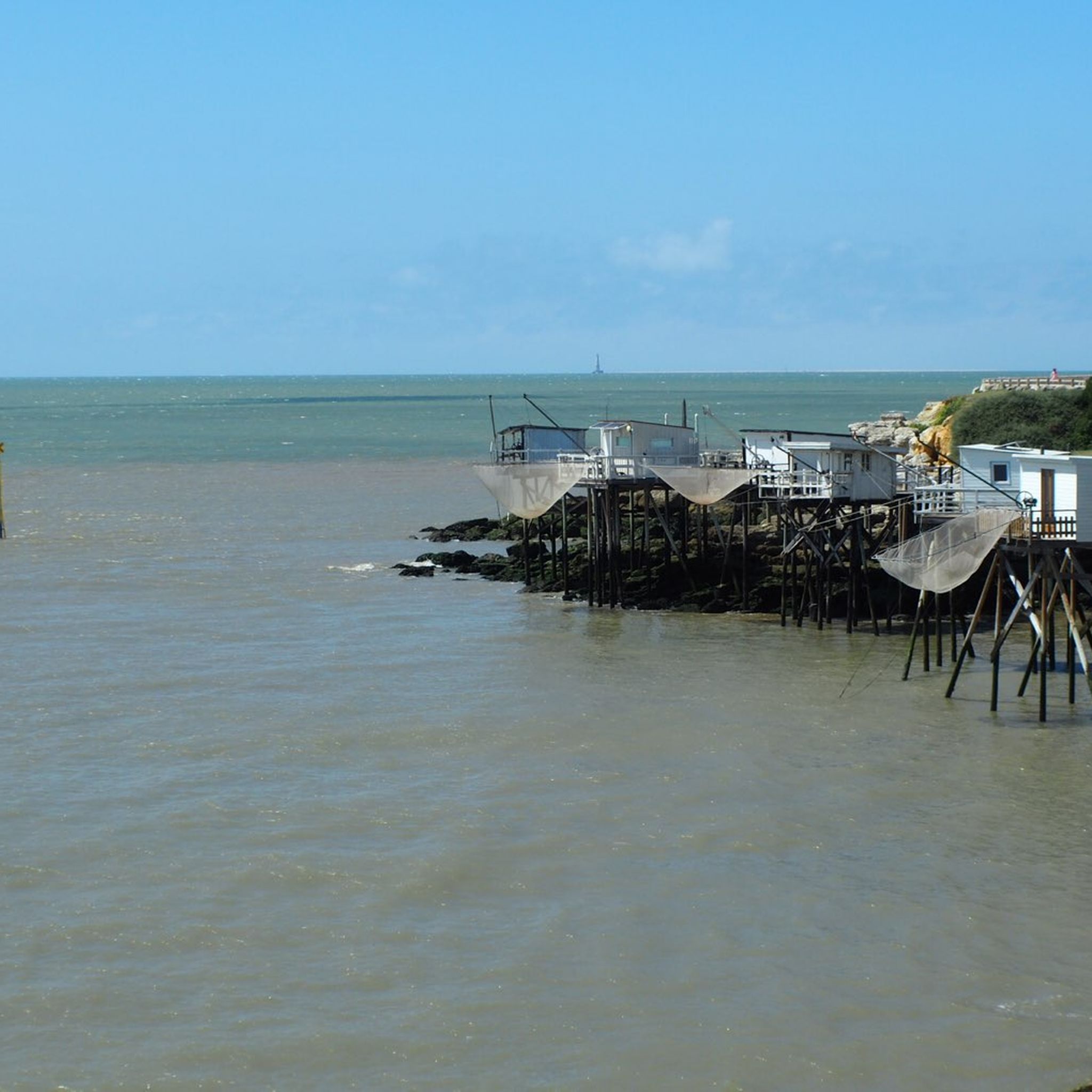
The carrelets are today part of the emblematic images of Royan and the Côte de Beauté. However, contrary to what the current landscape might suggest, the large pontoons with huts are relatively recent. A much older fishing The word carrelet originally designates the square net used for very simple fishing. Fishing with a carrelet has been attested in the region since at least the 18th century. At that time, these were not yet the elegant huts on stilts that we know today. The fisherman used a square frame with a net, which he lowered into the water and then quickly pulled up. This fishing was particularly practiced by women and could provide a dietary supplement. The turning point of 1900: the birth of the pontoons It was around 1900 that the carrelet began to change its nature. With the development of sea bathing and seaside tourism in Royan, fixed structures appeared on the quays, rocks, and cliffs. In Royan, they can be found in particular on the rocks of Pigeonnier and at Pontaillac. Initially, they were essentially simple masts equipped with a winch. The users were often merchants, liberal professions, retirees, or wealthy owners rather than professional fishermen. A particularly interesting old photograph shows the conche de Pontaillac in 1918, with fishing installations. The carrelets become leisure spots Between the two wars, and especially after 1945, the carrelets multiplied. The generalization of paid holidays, the increase in free time, and the development of popular holidays favored their transformation into real small holiday resorts. The installations gradually became more substantial: cliff → footbridge → pontoon → hut → mast and winch → square net Owners often built their own installations with wood or salvaged materials. In the 1950s, this practice experienced a real boom around Royan. Why are there so many carrelets around Royan? The relief of the Côte de Beauté is particularly well-suited for this. They can be found in particular: * in Royan, at the Pointe du Chay, at Pigeonnier and at Pontaillac; * in Vaux-sur-Mer, particularly towards the conche de Gilet; * in Saint-Palais-sur-Mer, along the headlands of Terre-Nègre and Perrières, towards the Pont du Diable and the Concié; * in Saint-Georges-de-Didonne, particularly towards Suzac; * in Meschers-sur-Gironde, along the cliffs and coves. The carrelet is indeed identified today as a viewpoint in Royan. The 1999 storm: a catastrophe The carrelets are extremely vulnerable to storms. The storms of 1996 and especially 1999 destroyed a very large part of the installations in Charente-Maritime. On the coasts of Aunis and Saintonge, nearly 90% of the approximately 700 carrelets had been destroyed during the January 2000 storm. They were then gradually rebuilt, with the help of owners and public schemes. Today: a heritage of Royan The carrelet is therefore not just a fishing equipment. It has become an element of the maritime and landscape heritage of Royan. The Musée du patrimoine du Pays Royannais classifies it as 20th-century maritime heritage and points out that the current installations are essentially the result of the development of this practice in the 20th century. An interesting historical point: the carrelets that we spontaneously associate with Royan today are therefore mainly the result of the evolution of seaside tourism after 1900 and their extraordinary development after 1945, and not the intact survival of a very old tradition of fishing huts.
0
0

Located on the commune of St-Palais-sur-Mer, at the tip of Terre-Nègre, it is intended to mark the southern passage of the Gironde estuary and to signal the presence of a dangerous sandbank, the la barre à l'Anglais.
0
0
The puits de l’Auture is an emblematic natural site located in Puits de l’Auture, north of the commune of Saint-Palais-sur-Mer. Its name often intrigues, and its history blends geology, local traditions, and maritime observation. 🌊 Origin and formation The puits de l’Auture is not a man-made well, but a natural formation: It is a cavity carved into the limestone rock by marine erosion. Under the effect of waves and infiltrations, the rock gradually collapsed, forming a sort of vertical chasm open to the sea. During strong swells or tides, water rushes in violently, creating spectacular eddies. 📜 Origin of the name The term “Auture” probably comes from Old French or the local dialect: It could derive from “hauteur” (height) or “autre” (other), evoking a high or separate place. Another hypothesis suggests a deformation of an old word related to a natural cavity or opening. No completely certain origin has been formally established, which adds to the mystery of the place. ⚓ Local historical role The site has had several uses or functions over time: 👀 Observation point Located on the rocky cornice, it served as a natural observation post to monitor the sea. Locals and fishermen could spot boats, storms, or dangers. 🎣 Fishing activities As elsewhere on the coast of Royan, particularly near the famous carrelets (fishing huts on stilts), the area was frequented by fishermen. The rocks around the well allowed for shore fishing or line fishing. 🌿 A remarkable natural site Today, the puits de l’Auture is mainly: A popular walking spot along the coastal path. A listed site for its landscape and geological interest. A remarkable viewpoint over the Atlantic Ocean, especially at sunset. ⚠️ Caution The site remains fragile and potentially dangerous: Unstable cliffs Powerful waves during storms It is advisable to stay on the marked trails.
0
0
The Church of the Assumption of Our Lady, also known as the Pontaillac Chapel, is a small 19th-century chapel built to serve the parishioners of the Pontaillac seaside district. Replaced around 1890 by a larger chapel (Our Lady of the Angels), it was deconsecrated and converted into a private residence, while retaining its heritage exterior: a discreet yet significant witness to the religious and urban history of Royan and its beaches. 📍 Location and context • The building is located on Boulevard de la Falaise in Royan, facing the ocean, in the Pontaillac/Vaux-sur-Mer district, right on the beach. 🏛️ Origins and Religious History 🛠️ Construction • Faced with the rise of seaside tourism in the mid-19th century, the Catholic community of Pontaillac wanted a place of worship near the beaches and the developing villas. • After disagreements with the parish priest of Royan regarding the location of a church, parishioners had this small Neo-Romanesque/Neo-Gothic chapel built in 1870 on the cliff, then administratively within the territory of Vaux-sur-Mer (and therefore outside the parish jurisdiction of Royan). 🙏 Liturgical Role and Replacement • For a few years, it served as the local place of worship for the faithful of the seaside district. • With the development of Pontaillac, the building proved too small and too far from the town center. • Thus, the construction of the larger Notre-Dame-des-Anges Chapel (still a Catholic chapel today) in the center of Pontaillac in 1891 eventually replaced this first place of worship. 🏗️ Deconsecration and Transformation 🏡 End of Religious Function • Once the new chapel (Notre-Dame-des-Anges) was built, the old chapel on the cliff gradually lost its religious function and ceased to be used for regular services. 🏠 Conversion into a Private Residence • The building was then deconsecrated (that is, removed from official Catholic worship) and transformed into a private residence. • Today, while the exterior still reflects its original function with its simple and traditional architecture, the interior has been adapted for residential use, having lost its liturgical purpose. 🗺️ Architecture and Style 🧱 Original Style The chapel features modest architecture, typical of small rural/seaside chapels of the 19th century: simple volumes, use of local materials, and small proportions suited to a limited community. • In the Neo-Gothic style, it forms a single nave of five bays, lit by a series of round-arched windows. • The façade, pierced by a rose window, is flanked by two buttresses and surmounted by a simple stone cross. 🏖️ Landscape Setting • Perched on the cliff above the beach, the building formerly offered worshippers a direct view of the ocean, a setting very characteristic of seaside chapels on the Atlantic coast. 📌 Historical and Heritage Significance • The former chapel illustrates the beginnings of organized religious life in Pontaillac before the growth and complete urban development of the area. • It is an architectural and historical testament to the first phase of the local community's development, before the construction of larger buildings in the town center. • Its conversion into a residence reflects the evolving uses of religious heritage in areas where the population and needs have changed over time.
0
0
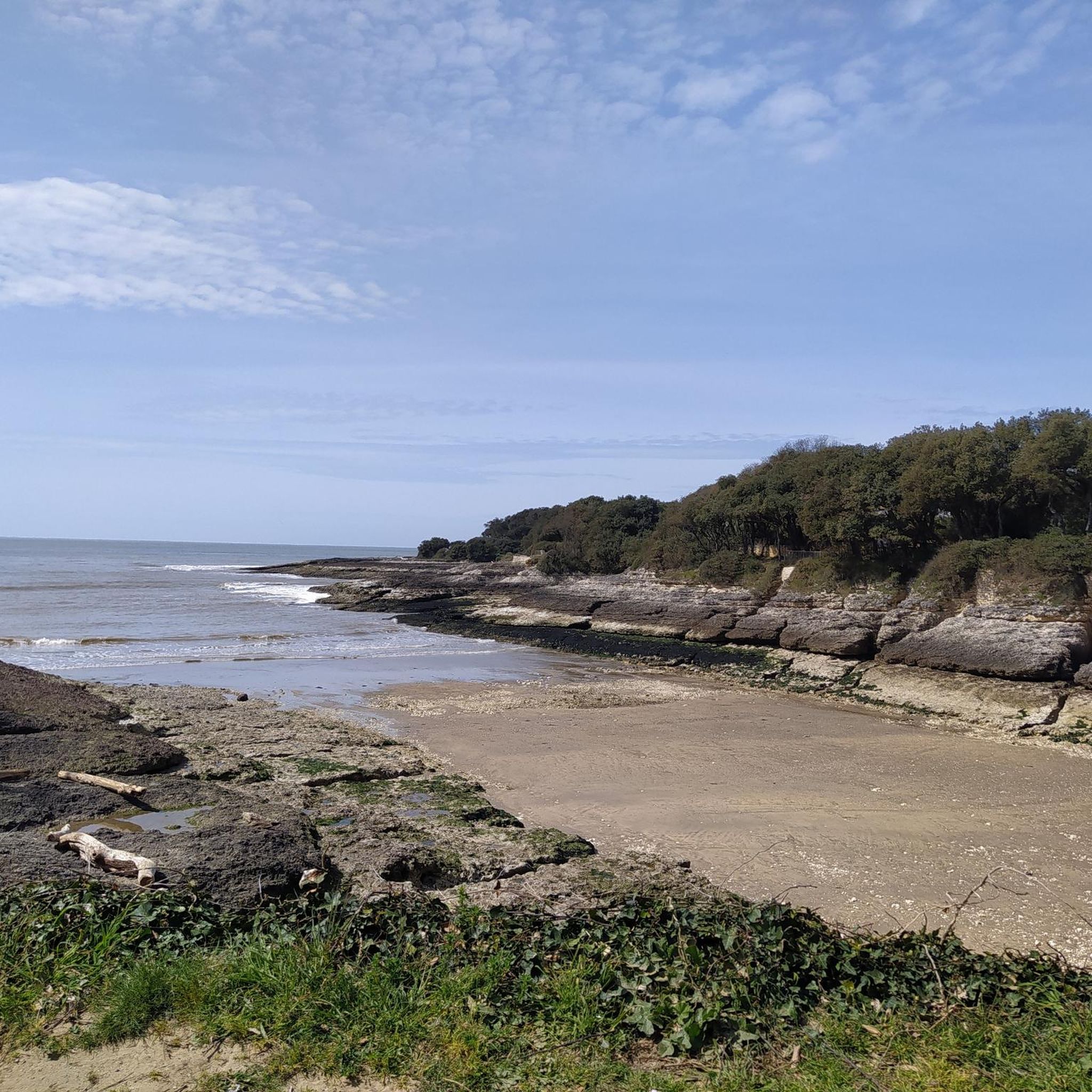
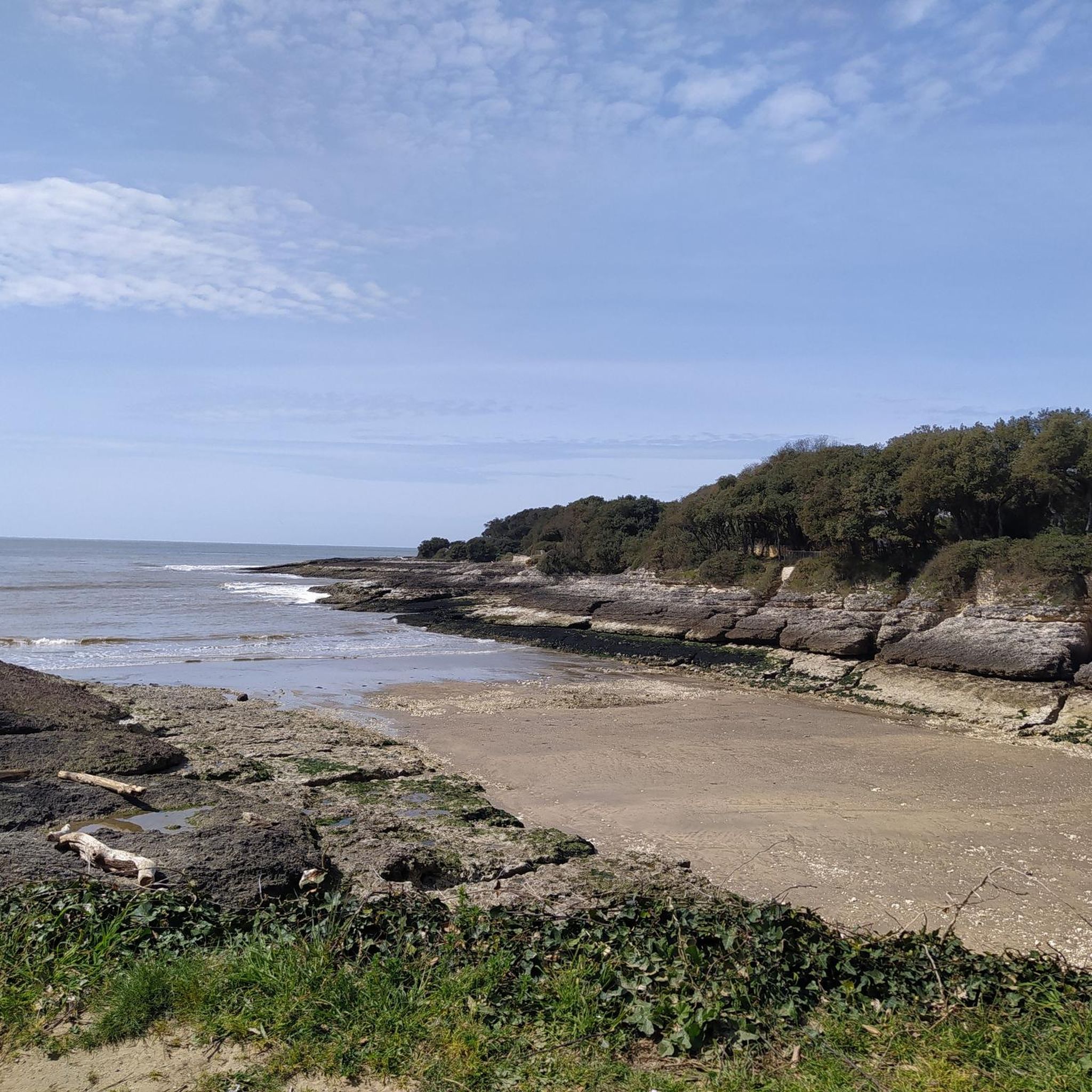
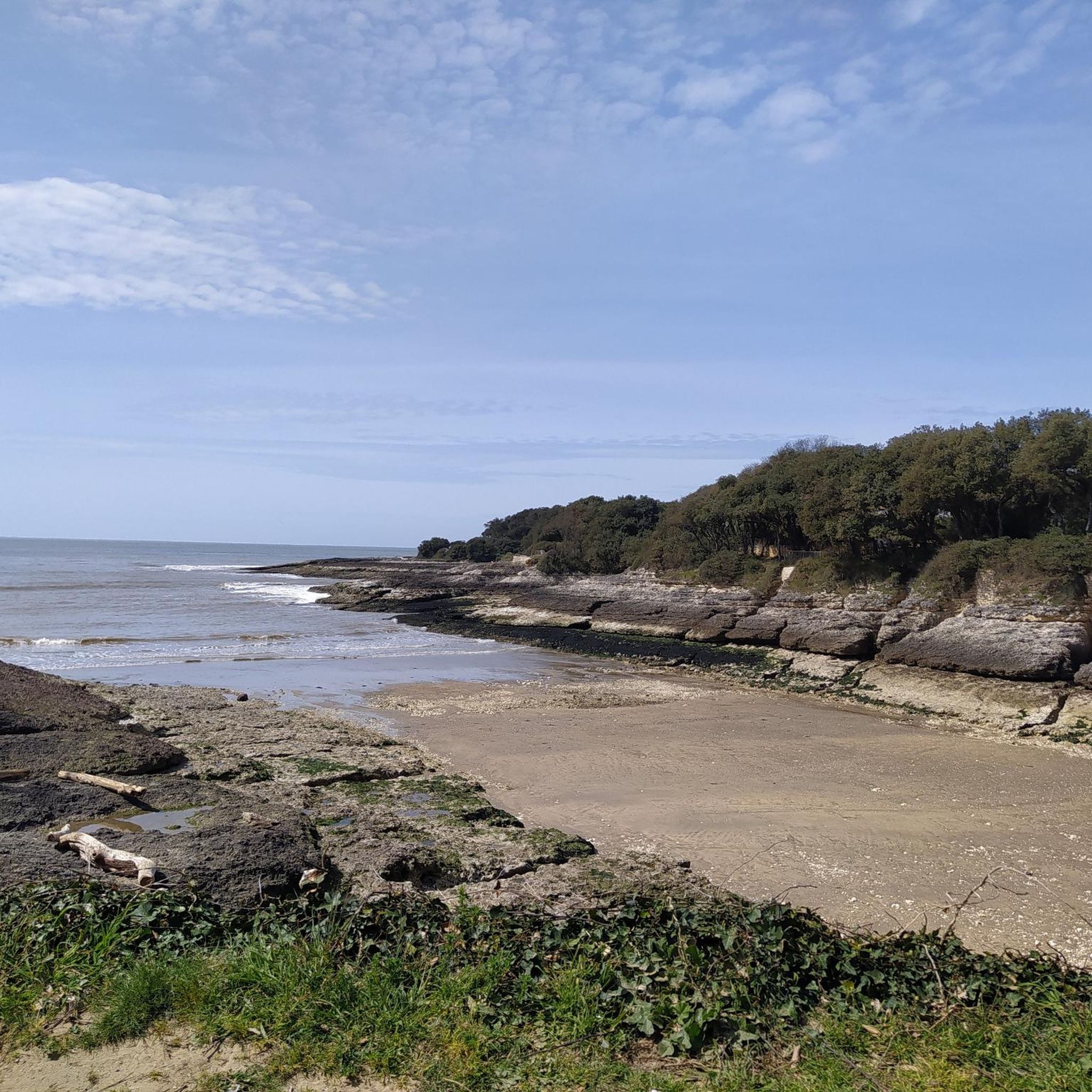
📍 Introducing the Gilet Cove The Gilet Cove is a small, natural beach on the oceanfront, located on Boulevard de la Conche de Gilet / Boulevard de la Falaise, in the town of Vaux-sur-Mer, just before Royan. 🌿 It's a sheltered, rocky cove, appreciated for its tranquility and more intimate setting compared to the larger urban beaches nearby. 🏖️ At high tide, the sea can completely cover this small beach, making the space very limited; at low tide, you can enjoy a patch of sand and rocks for relaxing or swimming. 🧭 Features & Tips 📍 Type of place: small, unsupervised beach, nestled among the rocks with sand and cliffs. 🏖️ Tides: access is best at low tide — at high tide the beach can disappear underwater. 🐶 Animals: prohibited from April 1st to September 30th (subject to municipal regulations). 👣 Access: via stairs from the boulevard above, surrounded by villas with sea views. 🚫 Lifeguard services: no lifeguard station or marked services. 📍 Location La Conche de Gilet is often considered the last small beach in Vaux-sur-Mer before reaching Royan/Pontaillac when following the coastline from Saint-Palais-sur-Mer.
0
0
🏖️ General Overview Chay Beach is a family-friendly, fine sandy beach located in Royan (Charente-Maritime), on the Côte d’Argent promenade between Pigeonnier Beach and Pointe du Chay. It stretches for approximately 200 meters and boasts a pleasant natural setting, with a cove bordered by rocks typical of the Charente coastline. 🏝️ Features • 🌊 Beach type: fine sand, sheltered cove. • 🏄♂️ Atmosphere: relatively calm and family-friendly, ideal for children and vacationers seeking relaxation away from the large urban beaches. • 🐾 Pets: prohibited from April 1st to September 30th. • 🫧 Water quality: excellent (Blue Flag label awarded for 2025). 🧭 Lifeguard and Safety • Swimming is supervised during the season (June to early September), with areas marked by red and yellow flags. • The area is classified as a Category 3 "Supervised Beach" and lifeguards are present during the indicated hours. 🪑 Amenities On-site, you can find: • 🏖️ Sun loungers, parasols, and mattresses for rent. • 🚿 Foot rinse and public restrooms. • 📶 Wi-Fi access, first aid station, and an area accessible to people with reduced mobility (assistance may be required depending on the slope). • 🍴 Beachfront restaurant ("Le Chay" bar-restaurant with sea views). 🚶♂️ Atmosphere and Activities • 🎈 Ideal for families and leisurely strolls. • 🌞 People come here for swimming, playing on the sand, flying kites, or simply relaxing by the ocean. • 🅿️ Parking is available nearby, and the beach is easily accessible on foot or by bike from Royan town center in just a few minutes. 🧭 Practical Tips • 📆 Best time to visit: summer for supervised swimming and full services, but also during the off-season for a more peaceful atmosphere. • ☀️ Arriving early in the morning makes parking easier during peak season. • 🐶 Dogs are not allowed during the summer season; check the signs on site during the off-season.
0
0

Easily accessible place, only the last meters are prohibited for cyclists.
0
0

Frequently Asked Questions
How many running routes are available in Vaux-sur-Mer?
Vaux-sur-Mer offers a good selection of jogging routes, with over 20 trails available for you to explore. These routes cater to various preferences, from coastal paths to shaded woodland trails.
What kind of terrain can I expect on the jogging trails around Vaux-sur-Mer?
You'll find a diverse range of terrain, primarily featuring picturesque coastal paths like the Sentier des Douaniers, sandy beaches (known as 'conches'), and tranquil wooded areas. The routes often combine these elements, offering a mix of flat sections, gentle undulations, and stunning views of the ocean and the Gironde estuary.
Are there running routes suitable for beginners or those looking for an easy jog?
Yes, Vaux-sur-Mer has routes suitable for all levels. While many are moderate, there are 2 easy routes available. These typically feature less elevation gain and shorter distances, perfect for a relaxed run or a warm-up.
Can I find challenging running routes in Vaux-sur-Mer?
Absolutely. For experienced runners seeking a challenge, Vaux-sur-Mer offers 2 difficult routes. An example is the Nice view westwards – The Estuary Park loop from Domaine des Fées, which spans over 33 km with significant elevation changes, providing an invigorating workout and extensive views.
Are there any circular running routes in Vaux-sur-Mer?
Many of the running routes in Vaux-sur-Mer are designed as loops, allowing you to start and finish at the same point. For instance, the Nice view westwards – Conche de Nauzan loop from Vaux-sur-Mer is a popular moderate circular route that takes you through coastal areas and past Conche de Nauzan.
What are some notable landmarks or attractions I might see along the running routes?
The routes often pass by beautiful natural features and points of interest. You might jog past the stunning Conche de Gilet, the expansive Chay Beach, or enjoy the unique perspective from the View of the estuary and white cliffs at Parc de l'Estuaire. Many coastal paths offer breathtaking ocean vistas.
Is Vaux-sur-Mer a good place for dog-friendly running?
Vaux-sur-Mer's natural landscapes, including its coastal paths and wooded areas, are generally welcoming for runners with dogs. However, it's always advisable to check local regulations, especially concerning specific beaches or protected areas, and to keep your dog on a leash where required.
What do other runners enjoy most about jogging in Vaux-sur-Mer?
The area is highly rated by the komoot community, with an average score of 4.5 stars from over 20 reviews. Runners frequently praise the stunning coastal scenery, the variety of terrain from beaches to forests, and the well-maintained paths that make for an enjoyable and invigorating experience.
Are there any routes that offer a mix of coastal and inland scenery?
Yes, many routes provide a blend of landscapes. For example, the Pontaillac loop from Domaine des Fées is a moderate route that features a mix of coastal views and sections through more inland areas, offering varied scenery throughout your run.
What is the best time of year to go running in Vaux-sur-Mer?
Vaux-sur-Mer is pleasant for running for much of the year. Spring and autumn offer mild temperatures, ideal for longer runs. Summer is also popular, especially for coastal jogs in the morning or late afternoon to avoid the midday heat. The diverse landscapes mean you can find shaded trails in wooded areas even on warmer days.
Are there any running routes that are particularly scenic or offer great views?
Many routes in Vaux-sur-Mer are incredibly scenic. The coastal paths, especially sections of the Sentier des Douaniers, offer continuous breathtaking ocean views. Routes like the Nice view westwards – The Estuary Park loop from Domaine des Fées are specifically highlighted for their extensive vistas of the estuary and surrounding landscapes.
How can I find parking near the running routes in Vaux-sur-Mer?
Vaux-sur-Mer, being a popular coastal town, generally offers various parking options near its main attractions and beaches. You can often find parking close to popular starting points like Nauzan beach or near the Domaine des Fées, which serves as a common access point for several routes.
Are there any routes that connect different beaches?
Yes, the coastal paths are excellent for connecting Vaux-sur-Mer's various 'conches' or sandy beaches. For instance, the Conche de Gilet – Conche de Nauzan loop from Royan allows you to experience multiple beaches and coastal sections during your run.
Most popular routes around Vaux-Sur-Mer
Most popular attractions around Vaux-Sur-Mer

Get inspired with the komoot mobile app


Explore more
Browse the best Running Trails & Routes in other regions.
