Attractions and Places To See around Castelnau-Montratier - Top 16
Best attractions and places to see around Castelnau-Montratier, a bastide town in the "Quercy Blanc" region, offers a blend of historical landmarks and natural features. The area is characterized by white limestone rock, rolling countryside, and agricultural fields. Visitors can explore medieval architecture, vineyards, and various cultural sites.
Best attractions and places to see around Castelnau-Montratier
- The most popular attractions is Montcuq Old Town, a historical site featuring a 12th-century keep and medieval houses. This location offers views of…
Last updated: October 11, 2026
Montcuq Old Town
Highlight • Historical Site
Translated by Google •
Tip by

Saint-Hilaire Church of Montcuq
Highlight • Religious Site
Translated by Google •
Tip by

Sign up now to discover places like this
Get recommendations on the best single tracks, peaks, & plenty of other exciting outdoor places.
Labastide-Marnhac
Highlight • Settlement
Translated by Google •
Tip by

Beautiful little church of Rouillac
Highlight • Other
The Romanesque church of Rouillac is located on the Way of Saint James of Compostela, 4 km from Montcuq.
Showing Translation
Tip by

Rouillac Country House
Highlight • Settlement
The Romanesque church of Rouillac is located on the Way of Saint James of Compostela, 4km from Montcuq.
Showing Translation
Tip by
Sign up for free to discover even more attractions around Castelnau-Montratier.
Already have an account?
Start today with a free account
Your next adventure awaits.
Popular around Castelnau-Montratier
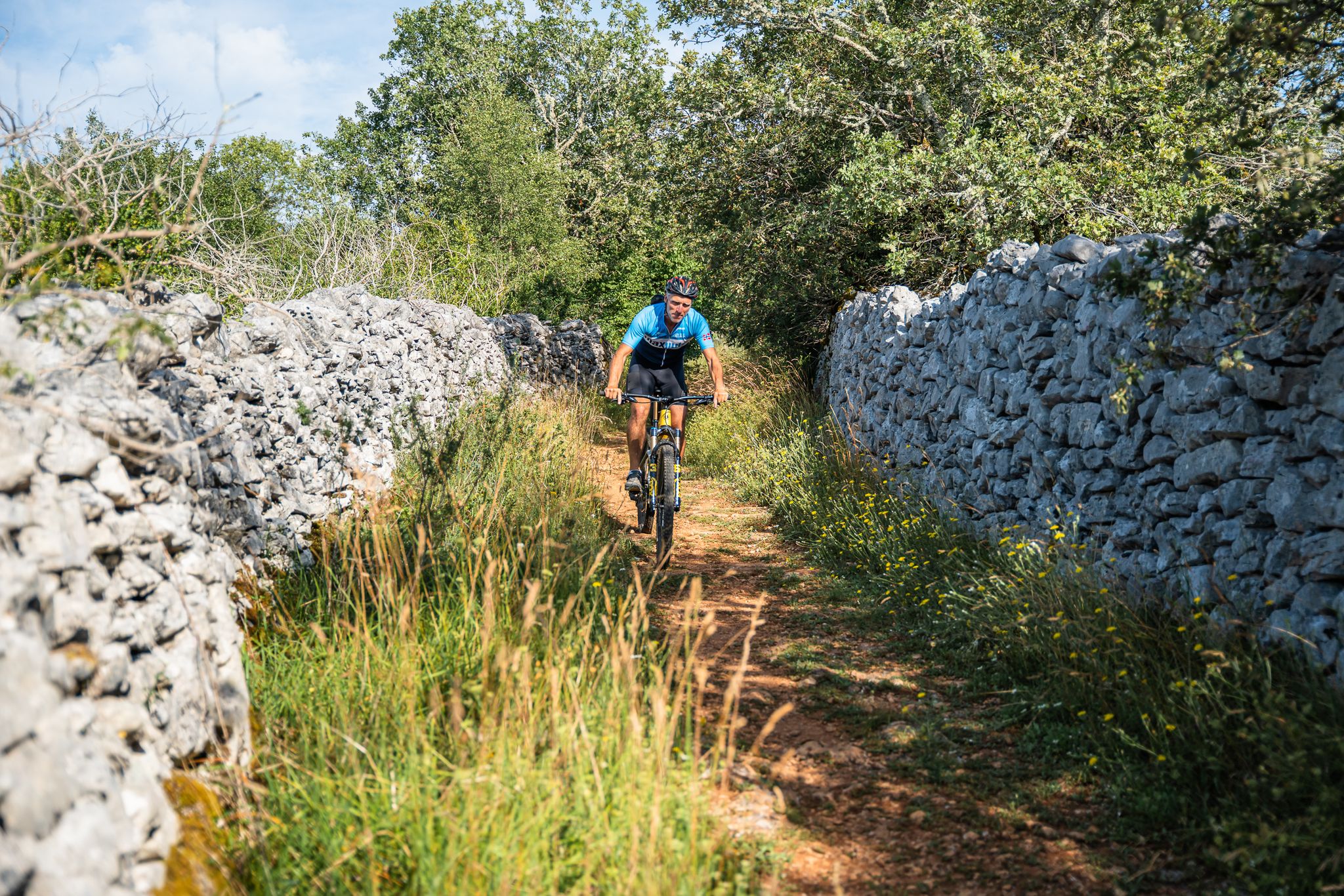
Valleys, the Causses and natural beauty – discover the Lot by MTB
Cycling around Castelnau-Montratier
Hiking around Castelnau-Montratier
Road Cycling Routes around Castelnau-Montratier
MTB Trails around Castelnau-Montratier
Running Trails around Castelnau-Montratier

Gravel biking around Castelnau-Montratier
Other adventures around Castelnau-Montratier

Tips from the Community

Built at the end of the 13th century and remodelled in the 18th century following a fire in 1562, then again in 1881, the village church forms a single-nave stone vessel with a polygonal apse. The choir (Radiant Gothic) is covered. The stained glass windows, in very vivid colour ranges, depict the lives of Christ and Saint-Hilaire.
0
0
Montcuq is a superb medieval hilltop village with a rich heritage in the heart of Quercy Blanc: La Tour de Montcuq: A majestic 12th-century keep that proudly overlooks the village. Built between the late 12th and early 13th centuries under the authority of the Counts of Toulouse.Destruction of the castle: During the Albigensian Crusade and the treaties with the King of France, the local lord had to dismantle the ramparts. Only this keep survived.Particularities: It has a rectangular (or trapezoidal) shape and a square turret housing a unique spiral staircase. Scientifically, the name has nothing lewd about it: it comes from the Occitan Moncuc, which simply means a conical hill or a fortified hill.
0
0
Located in the municipality of Montcuq-en-Quercy-Blanc in the Lot department. The Romanesque church of Rouillac is located on the Way of Saint James of Compostela, 4 km from Montcuq. Its frescoes are a rare testimony to 12th-century mural paintings: they are composed of 5 scenes relating to Christ and the Old Testament. This church has been classified as a Historic Monument since July 1980.
0
0
Located in the commune of Montcuq-en-Quercy-Blanc in the Lot department. The Romanesque church of Rouillac is located on the Way of Saint James of Compostela, 4km from Montcuq. Its frescoes are a rare testimony to 12th-century mural paintings: they consist of 5 scenes relating to Christ and the Old Testament. This church has been classified as a Historic Monument since July 1980.
0
0

A cozy town with many opportunities to stock up on provisions.
0
0

Beautiful church with a bench and drinking water point💦. Unfortunately the church was closed.
2
0

in Montcuq observe the sculptures of the St-Hilaire church, built around 1250/1270 in La COUnco (Conca in written oc, the SHELL) OUTSIDE the first ramparts (it replaced a primitive St-Sernin, located at the foot of the tower , Place del Plàn, west, therefore prior to Charlemagne) The church, said OUTSIDE the WALLS again in 1350, is marked by interior sculptures (transept, choir, apse) of the most esoteric...their hidden meanings are foreign to Christianity. ..Other old medieval houses are also rich in sculptures with secret meanings: house with the sign "Four 4", shortly after the town hall going up towards St-Hilaire, on the right, 13th century house at the bottom and on the right from the rue du Plàn, Very old names have been preserved: Pàtus (= small square) del Potz/Pouttss, Carriéro (= Rue) de l'Aste (de la Lance en oc: Asto), Carriéro Dréytsho (rue Droite) d 'others, known: quarry of the Fourns, fourn nàut é fourn batch, quarry of the Gatsharîo, quarry of the Ribiéyro de Mouncuc, Fîu Soubiràn (Sovereign Fief "or--Sup Latin eranus--- "from the top of the town"), Cantou de Quantard, Cantou de VillaBorgonh--Billobourgounn--, Plàça de la Caminada (from the Old Presbytery after 1450, below the Parish House): under the Mediatheque , Prat del Gassàyrou, Bàrri (district) of Valeta, de Rozet, Camy de Pènn..etc..), have not had the happiness of being formalized, replaced by falsely "occitanizing" names! of Montcuq of the "vanellas (banéllos), empty spaces separate the houses and wide of 75cms, two and a half feet, a distance dating from the Roman Empire! Montcuq was legendaryly founded in the year of the Millennium of Rome, a combe bears the name de Vielha Roma" (Byélyo Roumo) OLD ROME,..the house at the bottom of the Rue du Plàn seems to have been a Jewish house, even of a rabbi and descendant of the tribe of Judah...In the Tower the points of the horizon indicated by the median axes of the openings, windows and door, correspond to places loaded with myths and related to sunrises and sunsets s solar, lunar, stars, constellations, on key dates of the year and therefore of the Old Calendar of the "Old Religion", as said of the secret and mysterious depths of old Quercy, the real one, not the one Tourists, such as "More-Than-Healer" of the Pays de Montcuq..
2
0
The problem is that Montcuq is a village in the OC region and that the pronunciation of the name follows the rules of OCCITAN, and southern French, region (33 departments in the south of France...) and languages ( Occitan and southern French) where ALL the LETTERS are PRONOUNCED!!....in all the Oc countries and in Quercy in particular (White or other!) we therefore pronounce "Monkükkk" by stating very clearly the last consonant.. .and if you want to be, or pass for being, from the country you will even pronounce "Mounnkükk" or even MounKütt"..as for the inhabitants, they are not the Montcuquois but the Mountcuquiols..and Quercy is pronounced Càrci (tonic accent on Cà ,Rroulé) and Quercy Blanc is called, in Oc, Càrci Albènc (albènnkk)...As for Barguelonne, we do not know it under the name of Barguelonnette...but, in Oc, of bargoLOUno...The name de Quercy-Blanc is very recent, it has no historical roots...it is a creation of geographers...the only old name is "Pàis dels Valls" (Country dellss Ballss: Spanish style)Country Valleys...(direct tributaries of the Middle Garonne) in a North-East to South-West direction... The causses are invaded by spontaneous Mediterranean vegetation, wild fig trees, pistachio trees, terebinths, asphodels, wild asparagus, Montpelleier maples, Phillyres (sub-Saharan shrubs!) attest that ..the environment lends itself to it...the great master of the sky in these regions is the Autan Wind..coming from the Balearic Islands...and the culture is all Occitan...
2
0
Frequently Asked Questions
What historical landmarks can I explore in Castelnau-Montratier?
Castelnau-Montratier is rich in history. You can explore the village's main square, Place Gambetta, with its covered arcades and medieval houses. The 13th-century Maison Jacob, the Château de Castelnau-Montratier, and the Town Hall with its Gothic arches are also notable. Don't miss the imposing Church of Saint-Martin, known for its Byzantine-style dome and panoramic views.
Are there any unique natural features to see in the Castelnau-Montratier area?
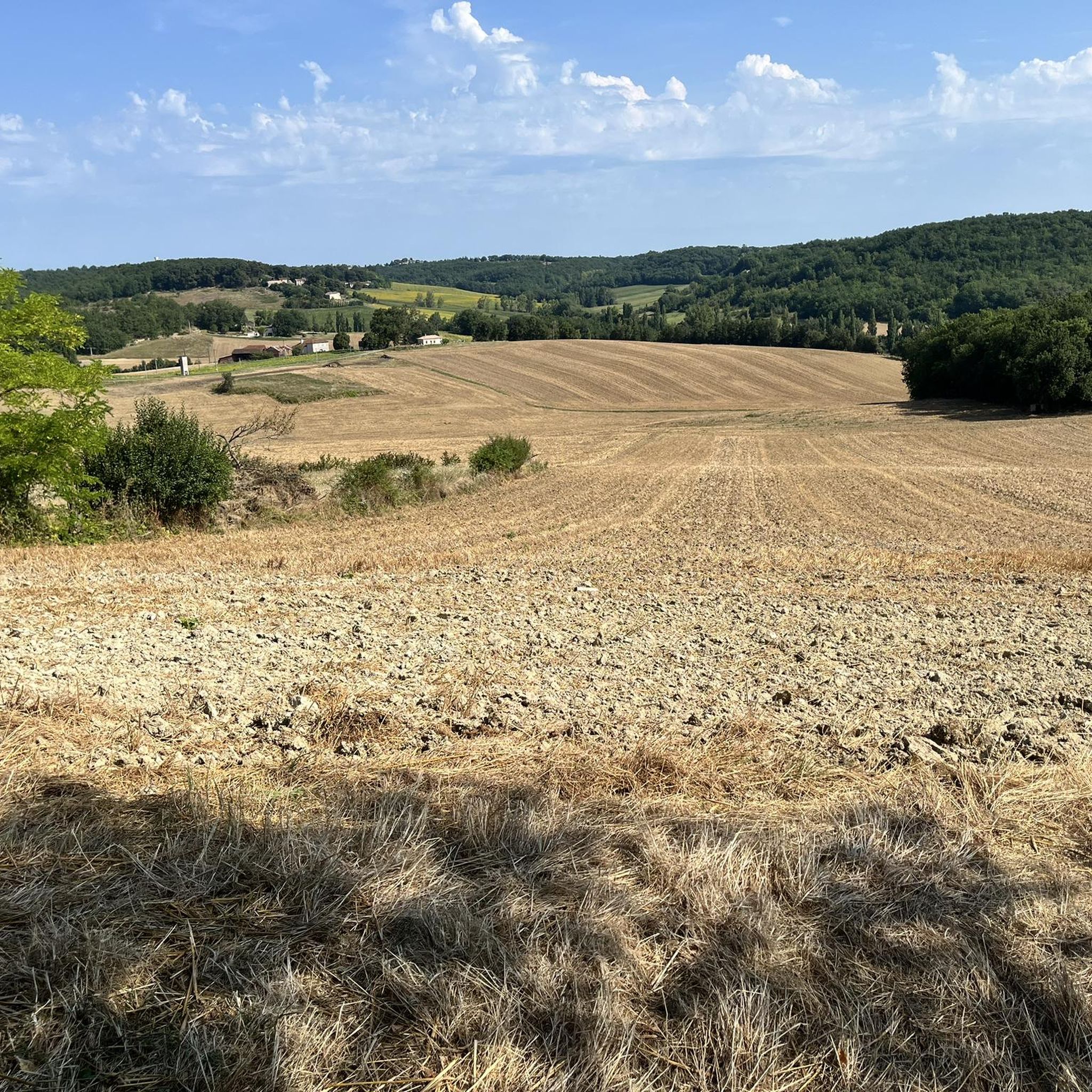
Yes, the region is known as "Quercy Blanc" due to its distinctive white limestone rock, creating a landscape of rolling countryside, ridges, and valleys. You'll find extensive fields of sunflowers, melons, and lavender. The Coteaux du Quercy vineyards are also a prominent feature, and various orchid species thrive along the walking trails.
What cultural sites or points of interest are there around Castelnau-Montratier?
Beyond historical buildings, you can visit several mills, such as the 17th-century Boisse Mill, one of the oldest in Quercy Blanc. The Moulin de Ramps and Moulin de la Mairie (or de la Malaudie) are also significant. The village hosts various artisan workshops and a vibrant Sunday morning market on its main square.
What outdoor activities can I do near Castelnau-Montratier?
The surrounding countryside offers numerous opportunities for hiking, cycling, and gravel biking. You can find various routes, including a 14 km circuit exploring country houses and watermills. For more detailed options, check out the guides for Hiking around Castelnau-Montratier, Gravel biking around Castelnau-Montratier, and MTB Trails around Castelnau-Montratier.
Are there family-friendly attractions in the area?
Many attractions around Castelnau-Montratier are suitable for families. For instance, the Saint-Hilaire Church of Montcuq and the settlement of Labastide-Marnhac are listed as family-friendly. Exploring the medieval streets of Castelnau-Montratier or visiting the local markets can also be enjoyable for all ages.
What is special about Montcuq Old Town?
Montcuq Old Town is a historical site featuring a prominent 12th-century keep and charming medieval houses. It offers views of the Barguelonnette river and hosts a lively market. The town's unique name has also made it famous, adding a touch of humor to its historical appeal.
Where can I find panoramic views in the region?
For excellent panoramic views, visit the Church of Saint-Martin in Castelnau-Montratier, which offers a beautiful vista of the valley. The Montcuq Old Town, with its keep, and the Saint-Hilaire Church of Montcuq are also known for their scenic viewpoints.
What kind of local gastronomy can I expect in Castelnau-Montratier?
The region is renowned for its delicious local products. You can savor specialties like duck, local melons (including the IGP Melon du Quercy), wines from the Coteaux du Quercy vineyards, fresh fruits, and saffron. These products are often available directly from local producers or at the traditional Sunday morning market.
Are there any notable mills to visit in the area?
Yes, the commune boasts three notable mills. The Boisse Mill, dating from 1699, is one of the oldest and still intact. The Moulin de Ramps, known since the 16th century, was restored in 2018. The Moulin de la Mairie (or de la Malaudie), known since the 15th century, is the only one accessible to the public.
What do visitors enjoy most about Castelnau-Montratier?
Visitors appreciate the blend of historical landmarks, picturesque natural features, and vibrant cultural sites. The charm of the bastide town, its medieval architecture, and the distinctive Quercy Blanc landscapes are frequently highlighted. The lively markets and opportunities for outdoor activities also contribute to a rich experience.
What is the significance of Labastide-Marnhac?
Labastide-Marnhac is a small village with a rich architectural heritage dating back to the 13th century. It features a castle from this period and three historic churches within its boundaries: Labastide, Saint-Rémy, and Sagères. It's a great spot for those interested in historical settlements and religious architecture.
Can I find local art and artisan workshops in Castelnau-Montratier?
Yes, Castelnau-Montratier is home to various artist workshops. You can discover local artisans specializing in pottery, ceramics, and even a watchmaker who operates from an old watermill, showcasing the region's creative spirit.
Most popular routes around Castelnau-Montratier

Get inspired with the komoot mobile app


Explore more
Still not found the Highlight you’re looking for? See guides of the top attractions in other regions:
