Attractions and Places To See around Expiremont - Top 15
Best attractions and places to see around Expiremont, a small municipality in the Charente-Maritime department of France, are primarily found within the broader Nouvelle-Aquitaine region. This area is characterized by its natural beauty, rich heritage, and coastal charm. Visitors can explore diverse landscapes, from historic towns to islands and extensive waterways, offering a range of things to do near Expiremont France.
Best attractions and places to see around Expiremont
- The most popular attractions is La voie verte, a cycle…
Last updated: July 7, 2026
La voie verte
Highlight (Segment) • Cycleway
Surprising but …
Translated by Google •
Tip by

Saint Martin Church of Fontaine-d'Ozillac
Highlight • Religious Site
Translated by Google •
Tip by
Sign up now to discover places like this
Get recommendations on the best single tracks, peaks, & plenty of other exciting outdoor places.
Sign up for free
A bell tower rebuilt for the 3rd time
Highlight • Other
Translated by Google •
Tip by
Saint-Christophe Church of Léoville
Highlight • Religious Site
Translated by Google •
Tip by

Church of Rouffignac
Highlight • Religious Site
Translated by Google •
Tip by
Sign up for free to discover even more attractions around Expiremont.
Sign up for free
Already have an account?
Start today with a free account
Your next adventure awaits.
Login or Signup



Tips from the Community

You have to be very careful with the roots of the acacias which lift the bitumen in places as well as the thorns of these trees. Otherwise very pleasant.
0
0

Some sections of the track are damaged by tree roots and dangerous on a road bike. I often prefer to go by road.
1
0

The high octagonal tower of the bell tower consists of two floors. The first is embellished on each side with two high blind bays. The second finished in the Gothic period is added by eight large windows. The inner curve of each is cut into small lobes reminiscent of the Moorish style. During the construction of the facade, the nave was shortened by one bay. In the 14th century ogival style, the arched portal with arches is accompanied by a trefoil window underlined by a checkered cornice. The square chevet has preserved in the masonry old parts of the semi-circular chevet of Romanesque origin: remains of arcades on columns with capitals, remains of cornices and windows. The old bay in front of the choir is remarkable for the quality of the sculptures of the Romanesque capitals. One represents a shrine on an altar guarded by two figures. According to C. Connoué, it is an original subject for Saintonge which would have its similar in the church of Notre-Dame-de-Soulac (Gironde). The shrine represents a church whose two-storey bell tower has a conical roof like that of the Abbaye aux Dames in Saintes or closer to Rouffignac, Nieul-Ie-Virouil. The scene is framed by two large chandeliers, furniture that is rarely represented in Saintonge sculpture. On another capital, Adam and Eve are represented after the original sin in silly niches drawn by small trees, including that of Good and Evil. Another shows birds in leaves, a subject that is also treated in the church of Grézac or in that of Jarnac-Champagne. Outside, the Romanesque chevet is punctuated by engaged columns of decreasing section.
0
0
The church of Saint-Pierre depended in the 14th century on the abbey of La Couronne (Charente). Of Romanesque origin (12th and 13th centuries), it has suffered numerous damages and many restorations have taken place. The gable facade is pierced in its central axis by an early 16th century portal with a grooved arch, framed by prismatic tori and flanked by two blind bays. The whole is surmounted by a rose window. The side walls are perforated with narrow openings, some of which are underlined with a diamond-point cord. The 12th century building has a single nave with a trefoil choir. The semi-circular chevet is decorated with a chamfered cornice decorated with zigzags on brackets engraved with various subjects. Many engraved names accompanied by dates from the 18th century are visible on the bedside wall. The interior of the nave is covered with a semi-circular barrel vault. On the south side, a 16th century crypt is occupied by a tomb decorated in the flamboyant style. The two apsidioles vaulted in cul-de-four give the church a trefoil plan. The square of the transept supported the old bell tower. All that remains are back-to-back columns adorned with claw bases and worked grooves. The sculptures accompanying the pilasters are modern. The bell tower was redone in concrete with an external staircase in place of the previous one, which itself replaced the original bell tower, which fell in the 1950s. Under the modern, octagonal bell tower, there is a mass of columns with ornate capitals and bases (foliage, animals, colorful characters). The choir is barrel-vaulted with a semi-circular arch. The chancel columns are also adorned with claw bases on the north side and flutes on the south side. The cul-de-four apse is openworked with three similar windows with small columns. Paintings of Saint-Pierre and Saint-Paul. Tomb with recumbent in the habit of an ecclesiastic whose head and hands have been destroyed. The Saint-Pierre church was classified as a historical monument in 1970.
0
0
In the second half of the 12th century, a long nave (32 x 8 m) was built, with a west facade with blind arcades and a flat chevet. In the 13th century, the west portal was rebuilt up to date and the nave received perhaps its first ribbed vaults. A Gothic bell tower-porch was built in front of the nave in the 15th century, which lengthened the church by some five metres. The floor surmounted by a spire is pierced with twin bays, underlined by a cord. Its base forms a marthex. On each side of this closed porch are two small chapels with vaults decorated with coats of arms and reproducing corner consoles sculpted with grotesque characters. The 12th century facade is pierced by an ogival portal. The arches fall on the 3 capitals of the torus columns. The door is flanked by 2 blind arched bays with a zigzag band and diamond points. Around the portal, an inscription: “The French recognize the existence of the supreme being and the immortality of the soul”. In the 15th century, the nave was doubled to the north. This vaulting was destroyed during the wars of religion and the ribbed vaults were redone in 1872. The large broken arches which separate the 2 vessels from the nave fall into penetration on large cylindrical piles. On the south wall, a group of 3 columns decorated with large foliage receives the ribs of the vaults. The south side wall from the nave to the chevet was rebuilt with old materials, some of which are carved stones. The large tracery canopy is followed by 3 Romanesque windows decorated with billets and diamond points. The choir with a flat apse is lit by a Romanesque triplet with small columns and polylobed arches. It is a provision that we find rather outside the churches. Outside, these 3 windows have no columns and are surmounted by a cornice shaped like a whistle on brackets and a large half-moon opening. In 1996-1998, a restoration campaign brought to light mural paintings and a funerary liter, a striking portrait of death. Special features to see also: a very beautiful stone pulpit and wrought iron railing from the 19th century as well as an oil on canvas, "Crucifixion", from the beginning of the 19th century.
0
0
A bike path, only for bikes and in the countryside! 35 kms from Barbezieux to Clérac in complete peace of mind on a paved road, a real pleasure! Surprising but very pleasant especially for families with children who can walk there in peace.
1
0
Built in the 12th century on the plan of a Latin cross, the church of Rouffignac was completely rebuilt in the 14th century. All that remains of the Romanesque period is a part of the heart and the stump of the bell tower.
0
0
Around a small church from the end of the 12th century, a larger construction was arranged in the 16th century and the curious facade (classified MH in 1911) presents today, under a single gable, a beautiful composition of Romanesque flowers and on the left, attached to it, an elegant Renaissance ensemble. On the north side, a simple bell tower of the original church at its base, rebuilt in the last century in its upper parts, balances the whole. It is square, without style, covered with a slate pyramid, and has retained a few loophole openings. 3 of its arched windows each house a bell. A semi-circular arched gate with three covings and 2 blind bays with only one, furnish the ground floor. Above, without separation, runs a gallery of 5 arches supported on double columns. Bulky capitals, cords, bands very worked and in strong relief, indicate a novel of the end of time. On the large coving develops a representation, with 6 "knights", of the fight of the Virtues and the Vices. On the intermediate arch, birds, monsters and human beings are tangled in vegetal arabesques. The sculptures of the capitals, abacus included, extend over the eardrums of the false doors and form a wide band. In the Renaissance part on the right, the artist has arranged above a low door and around a large scallop shell, a very beautiful crowning with scrolls, garlands and fleurons. Next to it a corner buttress shows another shell in a pediment. The North wall, which has been modified many times, has however retained a large pointed arch towards its middle and a second one a little more towards the East. Old buildings, Benedictine ones say, existed there. Remains of arches and Romanesque openings stand side by side with ogival windows. The eastern wall of the chevet, largely rebuilt, still shows 2 semicircular arches with ringed columns, nail-head cords and remains of an arcade similar to that which once adorned the north side of this same chevet. Although Romanesque, it therefore seems to have been rectangular from its origin. To the left opens a large window whose central arch is polylobed. This provision is quite rare in Saintonge. The south wall, supported by numerous buttresses, one of which, the first to the west, is decorated with an escutcheon carried by two angels, is pierced with large third-point windows. The square bell tower, without style, covered with a slate pyramid, has retained a few loopholes. 3 of its arched windows each house a bell. The interior, refurbished two centuries ago, comprises 2 naves separated by square pillars. The one on the left, the old one, which has 5 bays, has its ogival vaulted apse on multiple ribs which are lost on the columns after having drawn diamonds adorned with hanging keys. In these lozenges, letters forming a difficult to read inscription, a real rebus with a grid, indicate that this work was made in 1538. Despite its name based on the idea of "fountain" this town which was formerly called Saint-Martin-de-Fontaine, has no fountains, but wells. The shallow one, very close to the church, was perhaps even less deep in the past and was undoubtedly the fountain which gave its name to the parish. The church of Fontaine-d'Ozillac is patronized by Saint Martin.
0
0
Frequently Asked Questions
What are the main types of attractions found around Expiremont?
The area around Expiremont, located in the Charente-Maritime department, offers a blend of natural beauty, rich heritage, and coastal charm. You'll find historic towns, islands, extensive waterways, and various outdoor activities. Key attractions include cycle paths, natural areas like lakes, and historical religious buildings.
Are there any notable cycle paths near Expiremont?
Yes, one of the most popular attractions is La voie verte. This paved bike path stretches for 35 km from Barbezieux to Clérac, offering a peaceful route particularly suitable for families. While some sections may be affected by tree roots, it's generally a very pleasant ride.
Where can I find natural areas or lakes for recreation?
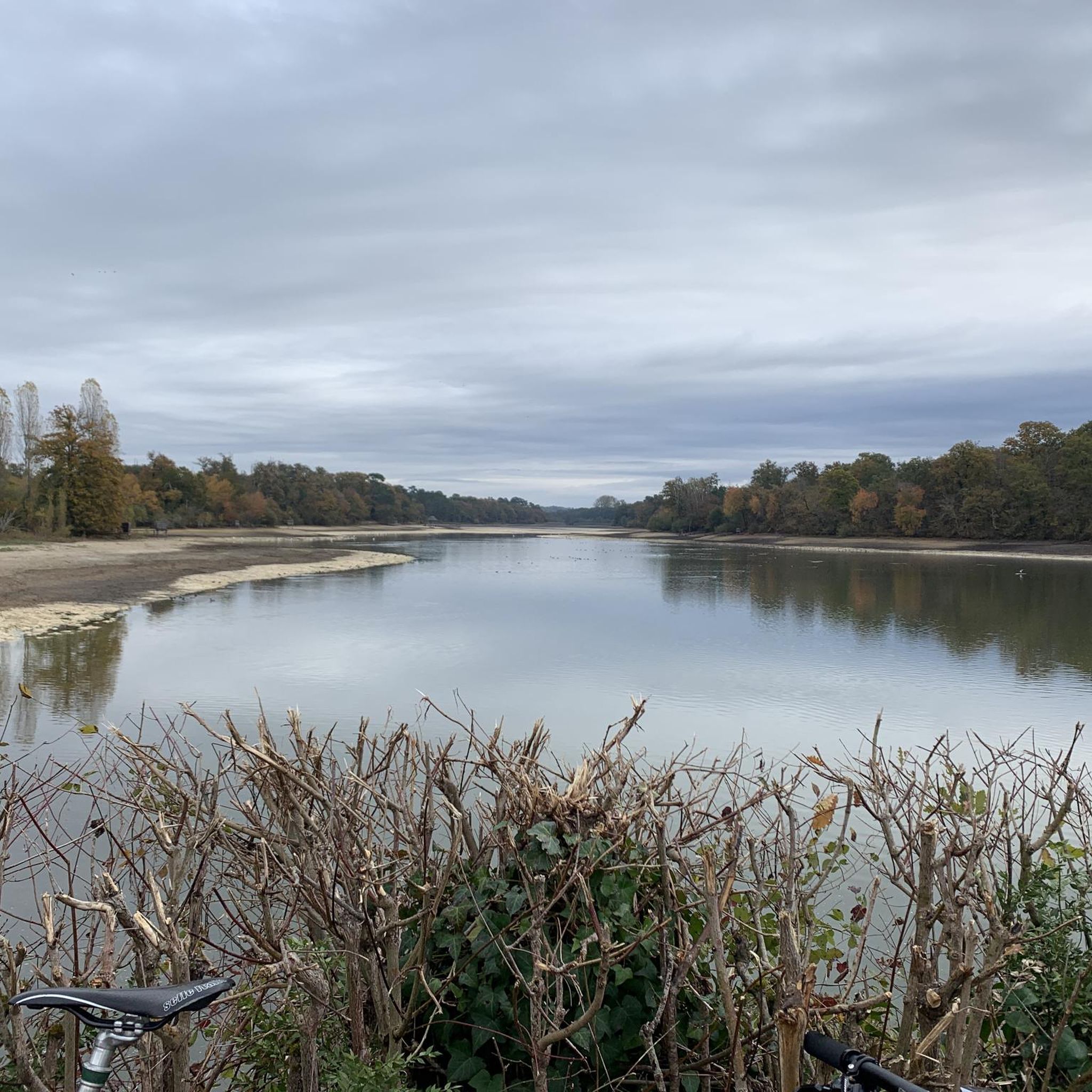
You can visit the View of the Lac de la Blanche. This lake and its surrounding area are recognized for their ecological interest, featuring unique swamp and peat bog vegetation. Visitors can swim, rent boats and kayaks, and observe diverse wildlife, including specific invertebrates, amphibians, and birds.
What historical or religious sites are worth visiting?
The Saint Martin Church of Fontaine-d'Ozillac is a significant religious building with origins dating back to the 12th century. It features a unique facade with Romanesque flowers and an elegant Renaissance ensemble, classified as a historical monument. Another historical church is the Saint-Christophe Church of Léoville, which showcases Romanesque and Gothic architecture, including a 15th-century bell tower-porch and restored mural paintings.
What are some family-friendly activities in the region?
For families, the La voie verte cycle path is ideal for a peaceful bike ride. The Lac de la Blanche offers swimming, boat, and kayak rentals. Further afield, the La Palmyre Zoo on the Arvert peninsula is a popular family attraction with a wide variety of animals.
Are there opportunities for cycling around Expiremont?
Absolutely. Besides La voie verte, there are several cycling routes. You can explore options like the 'Four Churches Loop from Montendre' or the 'Bois des Chevaux – Château de Jonzac loop from Expiremont'. For more detailed routes, check the Cycling around Expiremont and Road Cycling Routes around Expiremont guides.
What are some options for running or jogging trails?
There are various running trails available. You can find routes like the 'Running loop from Montendre' or the 'Lac Baron Desqueyroux loop from Montendre'. For a comprehensive list of options, refer to the Running Trails around Expiremont guide.
What is the best time of year to visit Expiremont and the surrounding region?
The Charente-Maritime region, with its coastal charm and outdoor activities, is generally best visited during the warmer months, from late spring to early autumn (May to September). This period is ideal for enjoying beaches, water sports, cycling, and exploring historic towns in pleasant weather.
What are some major towns or cities to visit in the broader Charente-Maritime region?
Beyond Expiremont, the region boasts several significant destinations. La Rochelle is a historic port city with medieval towers and a large aquarium. Saintes offers Roman and medieval heritage, including an amphitheater. Rochefort is known for its naval history and the Corderie Royale. Royan is a modernist beach resort, and Jonzac features thermal baths and an aquatic complex.
Are there any islands worth visiting nearby?
Yes, the region is home to beautiful islands. Île de Ré, accessible by bridge from La Rochelle, is known for its sandy beaches, picturesque villages, and cycling paths. Île d'Oléron, the second largest island in France, offers wild beaches, pine forests, and oyster farming.
Can I find unique natural landscapes like marshes or forests?
Definitely. The Marais Poitevin, often called 'Green Venice,' is an extensive network of canals and waterways perfect for boat rides and birdwatching. The Coubre Forest, located on the Atlantic coast, features winding trails, maritime pines, and sand dunes, providing a rich habitat for diverse flora and fauna.
What do visitors enjoy most about the attractions around Expiremont?
Visitors particularly appreciate the peacefulness of the La voie verte cycle path, especially for families. The Lac de la Blanche is valued for its recreational opportunities like swimming and boating, as well as its unique ecological interest. The historical depth and architectural beauty of sites like the Saint Martin Church of Fontaine-d'Ozillac also receive high praise.
Most popular routes around Expiremont

Get inspired with the komoot mobile app


Explore more
Still not found the Highlight you’re looking for? See guides of the top attractions in other regions:
