The best walks and hikes around Nieulle-Sur-Seudre
4.4
(221)
1,548
hikers
142
hikes
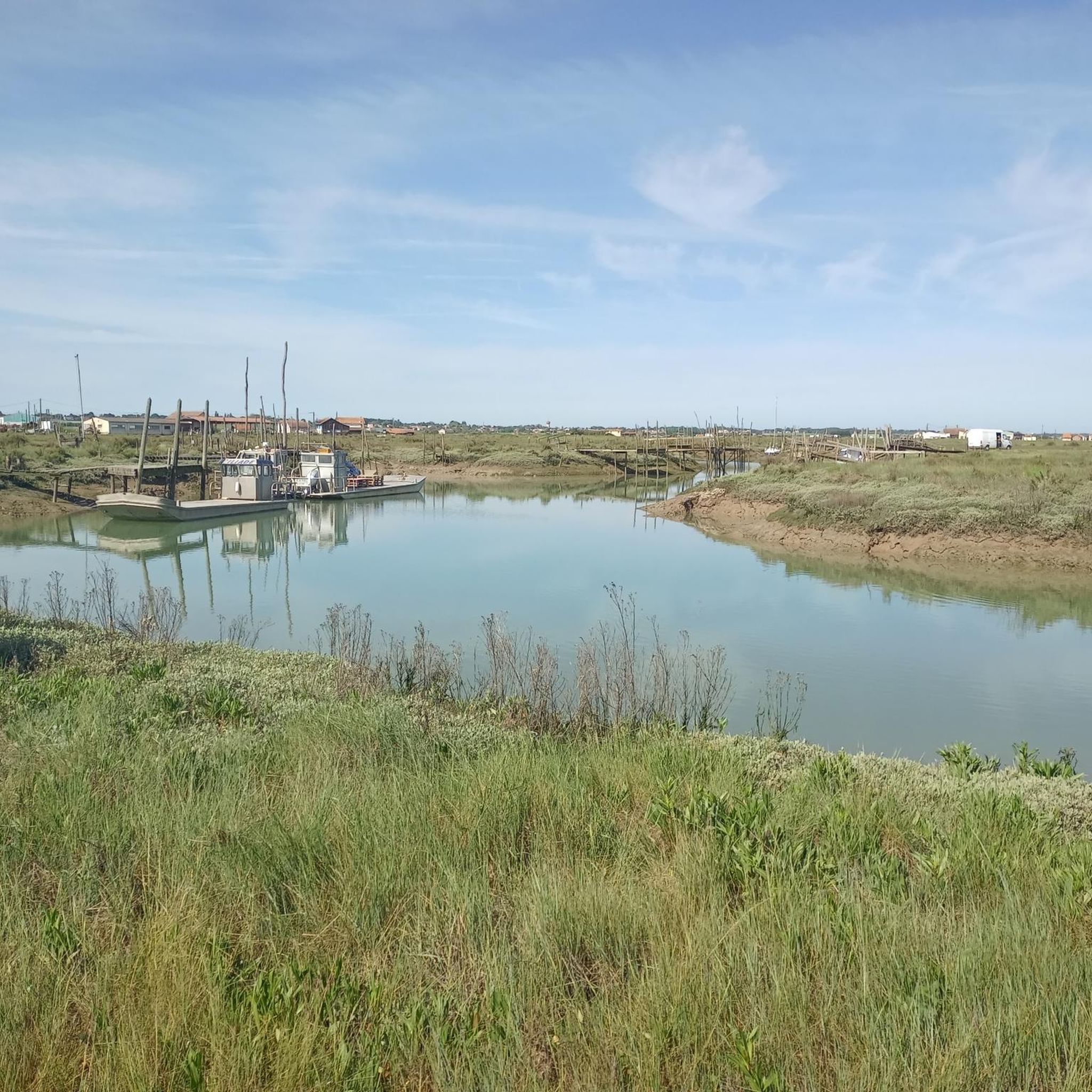
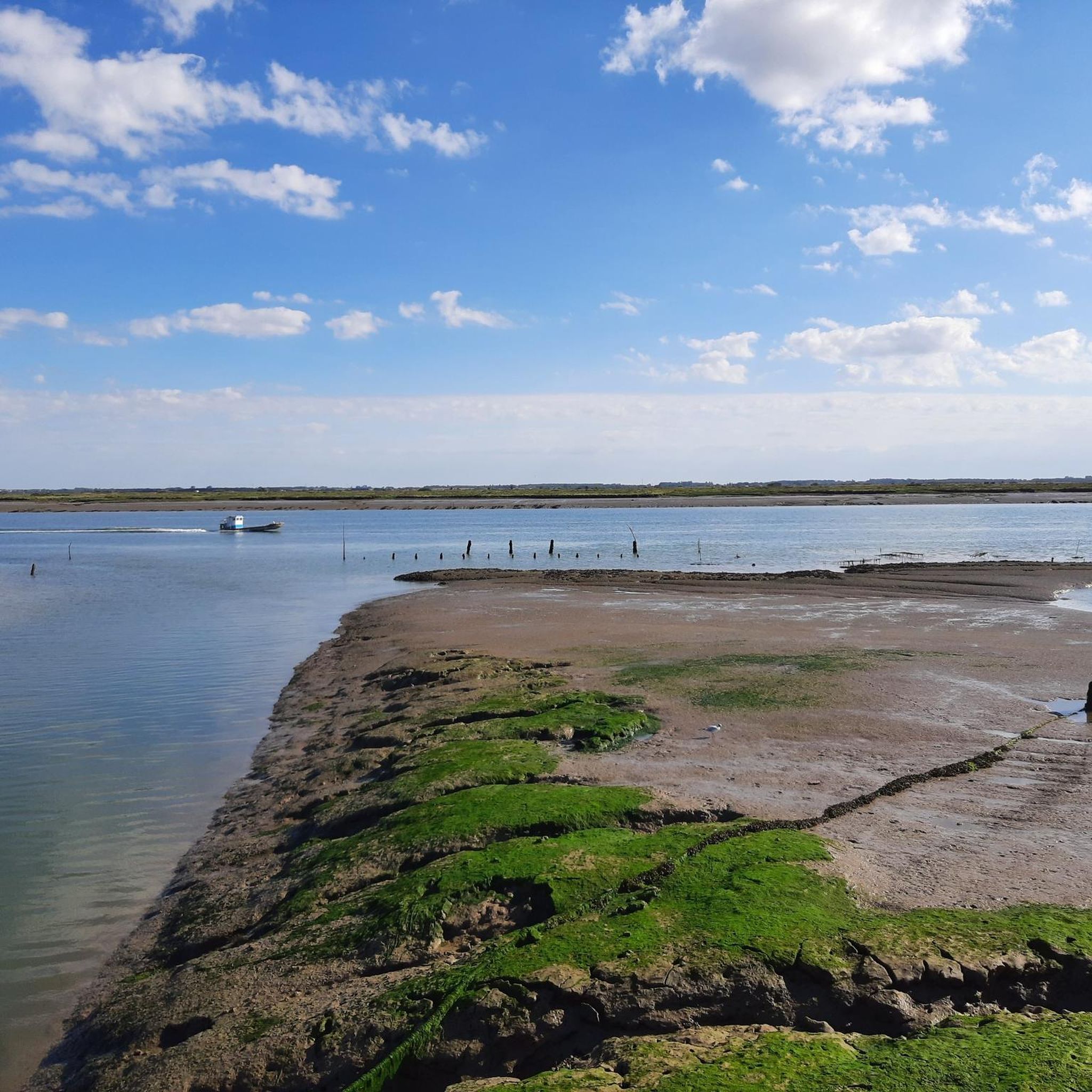
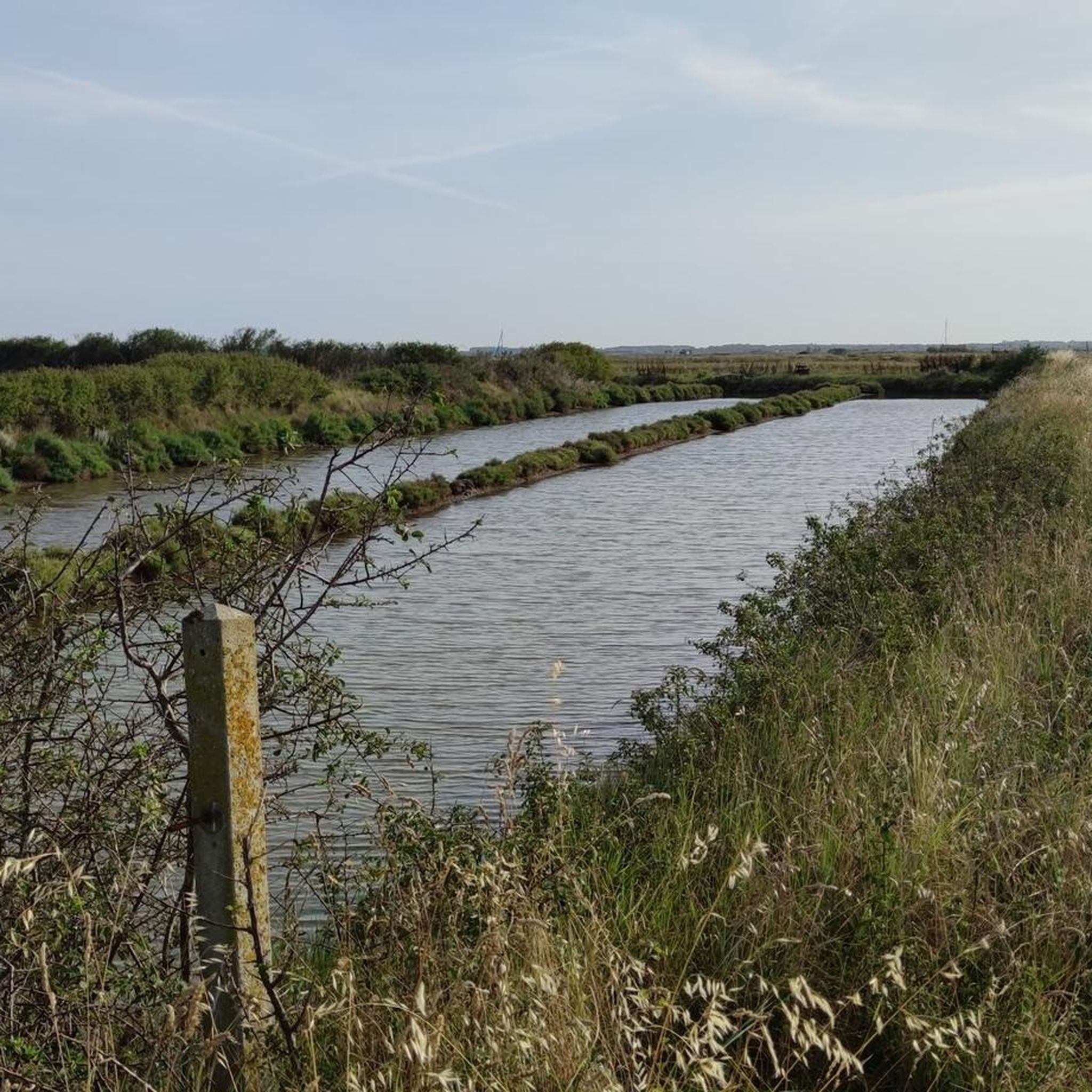
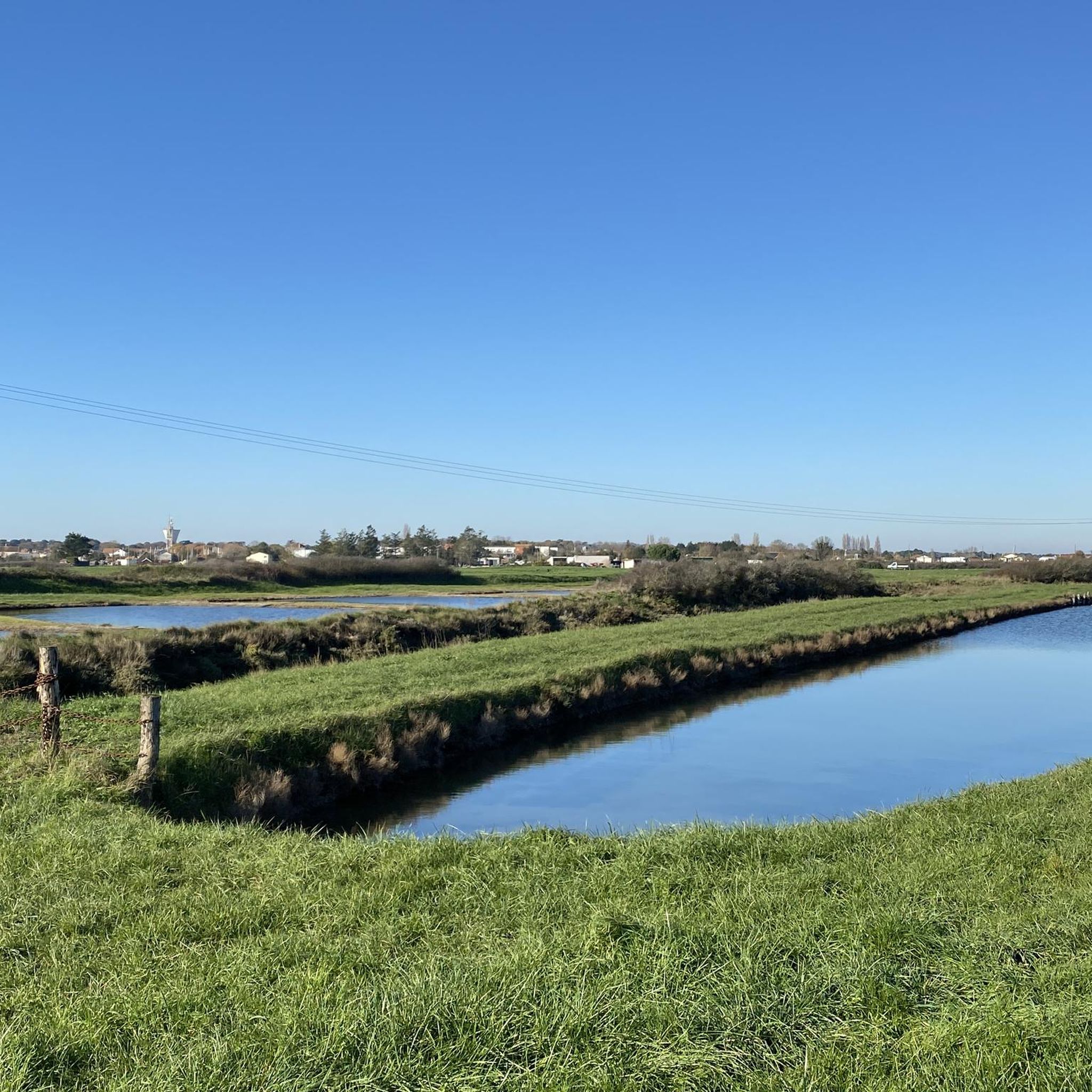
Hiking around Nieulle-Sur-Seudre offers exploration of the vast Seudre marshland, a protected Natura 2000 site characterized by wet meadows, salt marshes, and former salt pans converted into oyster beds. The region's generally flat terrain provides accessible routes through diverse environments rich in flora and fauna. Trails also extend towards the Atlantic coast and through nearby pine forests, offering varied natural features. This area is defined by its wetlands and coastal proximity, providing a unique setting for outdoor activities.
Best hiking…
Last updated: July 1, 2026
4.2
(9)
37
hikers
8.20km
02:05
20m
20m
Moderate hike. Good fitness required. Easily-accessible paths. Suitable for all skill levels.
3.9
(13)
110
hikers
Moderate hike. Good fitness required. Easily-accessible paths. Suitable for all skill levels.

Sign up for free
5.0
(2)
28
hikers
Easy hike. Great for any fitness level. Easily-accessible paths. Suitable for all skill levels.
4.8
(5)
22
hikers
11.6km
02:55
10m
10m
Moderate hike. Good fitness required. Easily-accessible paths. Suitable for all skill levels.
3.8
(5)
22
hikers
6.19km
01:34
10m
10m
Easy hike. Great for any fitness level. Easily-accessible paths. Suitable for all skill levels.
Get access to more routes and recommendations from other explorers.
Sign up for free
Already have an account?
Our route recommendations are based on thousands of hikes, rides, and runs completed by other people on komoot.
Start today with a free account
Your next adventure awaits.
Login or Signup
Tips from the Community

The port of Ribérou is a major heritage site in Saujon, bearing witness to a prosperous maritime past linked to the salt and wine trade. Transformed in the 19th century by ambitious works, it has now been reinvented as a place for living, relaxation, and preserving local history. 🛶 Origins and the Middle Ages The port of Ribérou takes its name from the Latin word ripa ("riverbank") or the Occitan word ribèira ("river"). It is located at the head of the Seudre estuary. It existed as early as the 11th century and became an important river and sea port thanks to its strategic position at the head of the estuary, used particularly for the salt trade—then called "white gold"—a highly sought-after product for preserving food. 🚢 Medieval Period and International Trade With the opening of British markets during the reigns of Eleanor of Aquitaine and Henry II Plantagenet, ships laden with wool, salt, wine, and other goods flocked to Ribérou. In the 16th century, the port exported local wines (such as cognac and pineau) throughout Europe. In 1577, during the Wars of Religion, the port was a strategic site: troops were stationed there, and battles took place. 🏗️ Decline, Reconstruction, and the 19th Century The estuary gradually silted up, making navigation difficult. By 1691, only smaller vessels could dock there. During the French Revolution, the sale of the tidal mill, which helped remove sediment, worsened the silting, leading to the port's decline. A modernization project began in 1822, but it wasn't until 1839 that an ambitious program was launched under the impetus of Jules Dufaure—a native of Saujon and Minister of Public Works—with the construction of sturdy quays, slipways, a lock bridge (marking the boundary between fresh and salt water), and reception facilities. In 1842, the work was completed, and the main quay was named Quai Dufaure in honor of this political support. 📉 Gradual Decline and Modernization The arrival of the railway in 1876 and the persistent problems of silting led to a decline in the port's traditional commercial activity, already facing competition from other transport networks. In the 20th century, the port gradually lost its economic importance but remained active for traditional fishing and became a place for pleasure boating, leisure, and local culture. Urban and tourism development projects (particularly in 2011–2012) modernized the port while preserving its historical charm. 🌊 Today The port of Ribérou is now a small fishing and pleasure port, much appreciated for its walks along the Seudre River, water sports (canoeing, kayaking, paddleboarding, etc.), and seasonal events.
0
0

The port of Ribérou is a fishing and pleasure port located at the end of the Seudre estuary, in Saujon. It is one of the two ports in the city, along with that of Breuil, a little downstream. Active since the 11th century, it took on its current appearance from 1842, under the impetus of the Minister of Public Works at the time, Jules Dufaure, a "local boy", who thus attempted to revive maritime trade and fishing activities, which were then in decline. Ideally located, on the edge of the city center, the La Lande leisure center and the preserved areas of the Seudre marshes (towpaths transformed into walking trails), it has become one of the major tourist attractions in Saujon, where theme evenings and the July 14 fireworks are organized. In 2011, the municipality began a renovation program for the port site, entrusted to the architect-urban planner Sophie Blanchet. It consists of transforming the old car parks into a pedestrian esplanade, a real meeting place with modern street furniture and, in the long term, green spaces. From the quays, lined with bourgeois buildings, small picturesque streets lined with hollyhocks allow you to crisscross the district and reach the city centre. The Ribérou lock bridge, known as the "bridge of opposing waters", was renovated in 2010. It marks the separation between the waters of the estuary (port side: brackish water) and the waters of the river (retention basin side: fresh water). Ribérou is a starting point for certain water sports (canoeing and kayaking). It is approximately 250 metres long and 40 metres wide. From Ribérou, it is possible to reach successively the ports of Breuil (Saujon), L'Éguille, Mornac, Chaillevette, Chatressac (Chaillevette), Grandes Roches and Orivol (Étaules), La Grève in Duret and Coux (Arvert), La Grève (La Tremblade) and La Cayenne (Marennes).
0
0
The SAINT-PIERRE church dominates the village from its fortified bell tower. Original in many ways, the Romanesque building houses a holy water font made of a real shell. From the side, you reach the small garden of the chevet, well hidden. Stone sarcophagi (Merovingian or Carolingian depending on the source) bear witness to the archaeological excavations that the church has undergone. There are many stories in Mornac but that of the fire of August 2, 1943 marked the identity of the village. Indeed, the bell tower has not always had this appearance. It had the more traditional shape of a spire until lightning struck it. Many young students come to Mornac-sur-Seudre to participate in the clearing and the excavations that follow. Seduced by the local atmosphere, many of them stayed and opened the first craft workshops in the village, some of which are still present, such as pottery and leather.
0
0
The line was opened to traffic in 1876 by the Compagnie du chemin de fer de la Seudre, and then extended to the channel of La Grève at La Tremblade. In 1880, the line was bought by the State Railways Administration, which absorbed the bankrupt Compagnie des chemins de fer de l'Ouest in 1908. The State Network, after its merger with the other national railway companies in 1938, became the Société nationale des chemins de fer français (SNCF). In 1939, the line was closed to passenger traffic, but continued its activity for the transport of goods until 1980. Tourist service In 1984, the association of the Seudre Tourist Railway (CFTS) started running a tourist train again but stopped tourist operation in 2002. The infrastructure (track, stations and Chaillevette depot) was then bought by the department of Charente-Maritime. Between 2004 and 2006, the operation of the line was entrusted to CFTA, a subsidiary of Véolia Transport, but ceased in 2007. In 2008, the association Trains & Traction was entrusted with the operation of the line, and has continued the activity since then. Tourist operation takes place from the beginning of May to the end of September with daily traffic in July and August. Some special trains are organized in season or out of season like the "Train des Loupiottes1" or the "Train Éclade de moules". Most recently, the Train des Mouettes has opened up to gastronomy with refined meals with its restaurant train the "Seudre Océan Express", reviving the myth of rail travel for the time of a refined meal (reservation required by telephone). The office is at the Saujon Chemin Vert station, and the workshop is in Chaillevette, in the middle of the line. The following equipment is currently operated by volunteers Steam locomotives • Schneider (no. 2503), 1891 - Arrived at Chaillevette in 1984. In service since 2004. • Henschel, 1912 - Arrived at Chaillevette in 1984. Inaugurated (being heated) on 20 June 2015. • Fives-Lille (no. 3716), 1910 - Out of service (undergoing complete restoration). • Borsig (type T 3 Prussian (de)), 1906 - Out of service (undergoing complete restoration). Diesel locomotives • Decauville, 1960 - Operational • Blanc-Misseron, 1958 - Out of service (undergoing complete restoration). • SACM (no. 10019), 1956 - Operational • Moyse, 1968 – Operational • Brissonneau and Lotz, 1971 - Operational • CFD, 1965 - Operational • CFD, 1965 - Out of service (undergoing complete restoration). • SACM/Alstom/CAFL, 1956 Decauville, 1967 – Out of service (undergoing complete restoration).Baudet, Donon and Roussel – Shunter rebuilt to SACM plans in 1961 with a Baudouin engine. - Operational • Decauville, 1967 – Shunter Operational Accumulator locomotive • Orenstein & Koppel no. 320 13-ton accumulator locomotive, from a foundry in Niederbronn-les-Bains. Railcars • X 5822 - Out of service (undergoing complete restoration). • Billard railcar no. 902, type A 75 D built in 1947, ex-CFD of Indre-et-Loire, entrusted by the FACS; • X 2208 ex-Limoges depot, entrusted under agreement with the SNCF, on loan to the Central Brittany railways; • X 2251 ex-Limoges depot, entrusted under agreement with the SNCF, on loan to the Central Brittany railways.
0
0

Very nice walk where the reward is at the end of the path.
0
0
small round trip between the éguille and Ribérou
0
0
Succeeding a Merovingian church whose remains were discovered in 1951 (as well as a cemetery dating from the 6th century), the foundation of the current church could date back to the 10th or 11th century. with a modernization in the 12th century, where it takes more or less its current appearance. The bell tower was destroyed during the Hundred Years' War and then rebuilt with the facade in the 15th century. A fire due to a violent storm affected the bell tower in 1943. The upper part was reinterpreted by the addition of square bays giving it a defensive character. The slate spire has not gone up. The Saint-Pierre church is a Romanesque building with certain archaic features. The facade, of great severity, dates from the 15th century. Almost devoid of ornamentation, it consists of a broken arched portal with prismatic moldings, confined by a Gothic niche (on the right) and surmounted by a narrow bay. The nave, formerly divided into 5 bays, now has only 4, separated by columns backed by pilasters. The whole was originally covered with ribbed vaults, destroyed in 1837, replaced by an arched vault and subsequently dismantled in turn. The nave is covered with an exposed framework. Large transept arches delimit the square of the transept, covered with a barlong dome on squinches. The crosspieces are covered with a pointed barrel vault, and are extended by apsidioles. Semi-circular arcades, supported by fine columns with capitals decorated with plant or geometric motifs, punctuate the walls of the apse, covered with an oven bottom where traces of frescoes dating from the 12th century are visible, although degraded. century. The walls of the nave, the transept and part of the choir retain traces (from the 17th century) of the funeral liter of a lord of Mornac. The exterior offers, on the north wall, the remains of a Romanesque portal (11th century). The bedside, typical of the Saintongeais Romanesque, is made up of 3 horizontal registers, delimited by cords. The last level is made up of an arcade formed of arched arcades carried by columns with capitals decorated with plant, animal or geometric motifs. The whole is surmounted by a cornice with modillions where animals and human or demonic faces are represented. Buttress columns topped with capitals decorated with interlacing and stylized plants punctuate the walls
0
0
Frequently Asked Questions
What is the general difficulty of hiking trails around Nieulle-Sur-Seudre?
The hiking trails around Nieulle-Sur-Seudre are generally easy to moderate, thanks to the region's flat terrain, especially within the Seudre marshland. Out of 127 available routes, 60 are classified as easy and 65 as moderate, making the area very accessible for most hikers. There are only 2 difficult routes, offering options for those seeking a greater challenge.
What natural features can I expect to see on hikes in Nieulle-Sur-Seudre?
Hikes in Nieulle-Sur-Seudre primarily showcase the expansive Seudre marshland, a protected Natura 2000 site. You'll encounter wet meadows, salt marshes, and former salt pans now used as oyster beds, known as 'claires'. The area is rich in biodiversity, offering opportunities to spot migratory birds and diverse flora. Some trails also extend towards the Atlantic coast and through nearby pine forests like the Forêt des Combots and Forêt de la Coubre.
Are there any interesting landmarks or attractions to discover while hiking?
Yes, several points of interest can be explored. You can visit authentic oyster-farming ports like Port Paradis, nestled on the Pélard channel, offering views of traditional oyster huts. The region also features historical sites such as the two distinct parts of Nieulle, Petit Nieulle and Grand Nieulle, with their wells, a temple, a church, and a town hall. Nearby attractions include the Saint-Pierre Church of Hiers-Brouage, Riberou Port, and the Mornac-sur-Seudre Marshes.
What do other hikers enjoy most about hiking in Nieulle-Sur-Seudre?
The area is highly rated by the komoot community, with an average score of 4.5 stars from over 180 reviews. Hikers often praise the unique marshland landscapes, the tranquility, and the accessibility of the trails. The opportunity to observe local wildlife, especially migratory birds, and to explore traditional oyster farming areas is also frequently highlighted.
Are there any family-friendly hiking options in Nieulle-Sur-Seudre?
Absolutely. The generally flat terrain and numerous easy routes make Nieulle-Sur-Seudre ideal for family outings. Many trails are suitable for all ages and fitness levels. For example, the The market halls in Mornac-sur-Seudre – Mornac-sur-Seudre Town Hall loop from Mornac-sur-Seudre is an easy 4.1 km (2.6 miles) path that takes just over an hour, perfect for a leisurely family stroll.
Can I find circular walks around Nieulle-Sur-Seudre?
Yes, many routes in the area are designed as circular walks, allowing you to start and end at the same point. A popular option is the Mornac-sur-Seudre and its medieval gate — loop, which is 8.2 km (5.1 miles) long and explores the historical charm of Mornac-sur-Seudre. Another great choice is the Pointe de l'eguille loop from L'Éguille, an easy 5.3 km (3.3 miles) route.
Are there opportunities for wildlife spotting on the trails?
The Seudre marshland is a haven for wildlife, making it an excellent area for nature observation. Hikers frequently spot migratory birds, and the region is also home to protected mammal species like the European otter. The diverse flora, including Micheli's clover and sea wormwood, adds to the natural beauty.
What is the best season for hiking in Nieulle-Sur-Seudre?
While hiking is enjoyable year-round, spring and autumn are particularly pleasant. During these seasons, the weather is mild, and the marshlands are vibrant with migratory birds. Summer offers warmer temperatures, ideal for combining hikes with coastal activities, while winter provides a unique, tranquil experience of the wetlands.
Are there any trails that explore the traditional oyster farming areas?
Yes, many trails wind through the heart of the Seudre marsh, where former salt pans have been converted into oyster beds, known as 'claires'. These paths offer a unique insight into the local oyster farming culture. You can experience this on routes that follow the Seudre River, providing a journey into the wild nature of the area and its 'Seudre Salée' (Salty Seudre) basin.
How many hiking trails are available around Nieulle-Sur-Seudre?
There are over 125 hiking trails available around Nieulle-Sur-Seudre, offering a wide variety of options for exploring the region's unique landscapes. This includes routes through marshlands, along the river, and towards coastal areas.
Can I combine hiking with exploring nearby towns or villages?
Absolutely. Nieulle-Sur-Seudre serves as an excellent base for exploring charming nearby locations. You can hike to or through the scenic village of Mornac-sur-Seudre, listed among the 'Most Beautiful Villages in France', or visit the fortified town of Brouage. Many routes, such as the Mornac-sur-Seudre Marshes – Mornac-sur-Seudre Market loop from Le Train des Mouettes - Mornac sur seudre, integrate these cultural highlights into the natural landscape.
Most popular routes around Nieulle-Sur-Seudre
Most popular attractions around Nieulle-Sur-Seudre

Get inspired with the komoot mobile app


Explore more
Browse the best Hikes in other regions.
