The best MTB trails around Saint-Sever-De-Saintonge
4.4
(204)
1,016
riders
93
rides
Mountain bike trails around Saint-Sever-De-Saintonge traverse a predominantly rural and agricultural landscape in the Charente-Maritime department of Nouvelle-Aquitaine, France. The region features the slow-flowing Seugne river and its ecologically important wetlands, offering diverse natural environments for cycling. Riders can expect varied terrain, including agricultural fields, vineyards, and segments of forests, providing a tranquil and scenic backdrop. The broader Haute-Saintonge area is known for its picturesque scenery, which includes both cultivated lands and natural habitats.
Best mountain bike trails around Saint-Sever-De-Saintonge
…Last updated: July 11, 2026
4.3
(4)
12
riders
67.4km
04:28
390m
390m
Moderate mountain bike ride. Good fitness required. Suitable for all skill levels.
4.5
(2)
15
riders
56.4km
03:48
130m
130m
Moderate mountain bike ride. Good fitness required. Suitable for all skill levels.

Sign up for free
4.6
(5)
13
riders
25.4km
01:41
40m
40m
Easy mountain bike ride. Great for any fitness level. Suitable for all skill levels.
4.4
(5)
11
riders
21.1km
01:28
130m
130m
Easy mountain bike ride. Great for any fitness level. Suitable for all skill levels.
3
riders
40.7km
03:11
450m
450m
Moderate mountain bike ride. Good fitness required. Advanced riding skills necessary.
Get access to more routes and recommendations from other explorers.
Sign up for free
Already have an account?
Our route recommendations are based on thousands of hikes, rides, and runs completed by other people on komoot.
Start today with a free account
Your next adventure awaits.
Login or Signup



Tips from the Community

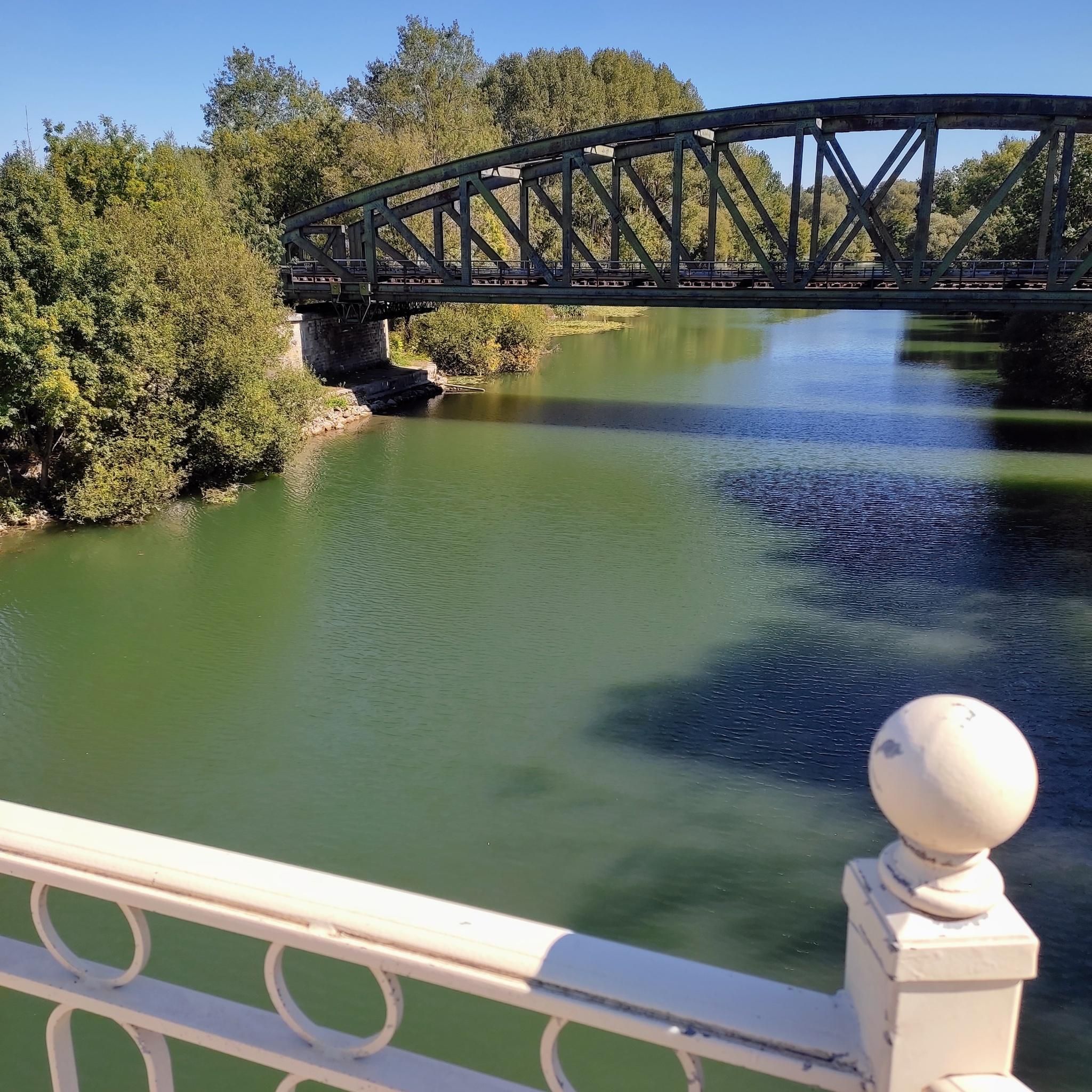
I really enjoyed this ride. I’m 46, I did it on a 40 year old road bike, it’s more suited to a cyclocross bike!
0
0


Magnificent We can also have a picnic
0
0

A must-see visit alongside this abbey on a magnificent circuit
0
0

On the banks of the Charente, the Château de Cognac symbolizes the town's reputation. Today a Cognac House, it welcomes visitors to help them discover its history, but also that of the eaux-de-vie produced there.
0
0

This imposing holm oak is approximately 500 years old. We do not know if it was planted on the occasion of the birth of the future king of France François I in 1494, on the occasion of his coronation in 1515 or on the occasion of his death in 1547. What we do know, however, is that it measures 17 meters high with a trunk circumference of 5.5 meters. Classified as a “remarkable tree”, it was even elected “tree of the year” in 2014 by the National Forestry Office.
0
0

Towards the end of the 12th century, an abbey church was built. At the beginning of the 13th century, attached to the west of the first Romanesque abbey, a Gothic-style cloister was gradually built. The abbey reached its peak from this period: in addition to its priories (la Grainetière in Vendée and la Tenaille near Pons), it owned land within a radius of 100 km, including saltworks on the coast. In the 15th century, Fontdouce obtained the title of royal abbey leading to a profound change in its mode of administration: the abbot was no longer elected by his peers within the community but was appointed by the king. It is often a great layman to whom the king grants the commendation, that is to say 80% of the income of the abbey. Then, the wars of religion, in the 16th century, accelerated its decline. The abbey church is ransacked: it will never be rebuilt. The years following the French Revolution also brought their share of destruction: several buildings, including the refectory, disappeared. The last monks were driven out in 1793 and the following year the site was sold as National Property to serve as agricultural property. The farmer who bought the place then built, on the remains of the conventual buildings, a house in the First Empire style. In the 1820s, Fontdouce entered the family of the current owners who, on December 16, 1986, had the Gothic parts, chapter house and parlor classified as historical monuments2. From 1970, the current owners undertook a series of excavations intended for the restoration of the Abbey of Fontdouce. They are gradually bringing the beautiful chapter house and the Gothic parlor back to life, the two superimposed Romanesque chapels and several other remains. These restoration works earned them third prize in the masterpiece in danger competition in 1979. In 1986, the site was entirely classified as a Historic Monument1. Today, Fontdouce remains a private property, focused on tourist and cultural activities, supported in its development actions by a team of enthusiasts grouped together within the Association Guillaume de Conchamp.
1
0

The Church of Saint-Martin de Coucoury was built around the 11th century. It is a pretty example of a Romanesque church.
1
0
Frequently Asked Questions
How many mountain bike trails are available around Saint-Sever-De-Saintonge?
There are over 90 mountain bike trails around Saint-Sever-De-Saintonge, offering a wide range of options for different skill levels and preferences.
What kind of terrain can I expect on mountain bike trails in Saint-Sever-De-Saintonge?
The terrain around Saint-Sever-De-Saintonge is predominantly rural and agricultural, featuring a mix of fields, vineyards, and segments of forests. You'll also encounter areas near the slow-flowing Seugne river and its ecologically important wetlands, providing varied natural environments and picturesque scenery.
Are there easy mountain bike routes suitable for beginners or families?
Yes, Saint-Sever-De-Saintonge offers a good selection of easy mountain bike routes. Out of the over 90 trails, 29 are classified as easy, making them suitable for beginners or families looking for a more relaxed ride. An example of an accessible option is the "Des Grandes Prairies à Saint-Sever-de-Saintonge" route, which is described as a very easy 9 km mountain biking route starting from the town hall.
Can I find circular mountain bike routes in the area?
Many of the mountain bike routes around Saint-Sever-De-Saintonge are designed as loops, allowing you to start and finish at the same point. Examples include the Mountainbike loop from Chérac, the Chaniers fontdouce – Small bridge loop from Saint-Sauvant, and the Château de La Dixmerie – Lavoir venerand loop from Chaniers.
What natural features or landmarks can I see along the mountain bike trails?
The trails often traverse areas rich in natural beauty, including the Seugne river and its wetlands, which are recognized for their ecological importance. You'll also ride through vineyards and forests characteristic of the Haute-Saintonge area. For historical interest, some routes pass near sites like the Abbaye de Fontdouce or the Saint-Martin Church.
Are there any dog-friendly mountain bike trails in Saint-Sever-De-Saintonge?
While specific regulations for dogs on trails can vary, the rural and natural environments around Saint-Sever-De-Saintonge generally offer opportunities for riding with dogs, especially on less crowded paths. It's always recommended to keep dogs under control and check for local signage regarding pet access, particularly in protected natural zones like the ZNIEFF and ZICO areas along the Seugne river.
What is the best time of year for mountain biking in this region?
The region's climate makes spring and autumn particularly pleasant for mountain biking, with milder temperatures and beautiful scenery. Summer can also be enjoyable, especially in the mornings or late afternoons, though it can get warm. Winter riding is possible, but trails might be muddier after rain.
Are there any specific mountain biking routes that offer significant elevation gain?
While the region is not known for dramatic mountainous terrain, some routes do offer moderate elevation changes. For example, the Château de La Dixmerie – Lavoir venerand loop from Chaniers includes an elevation gain of approximately 460 meters, providing a good workout amidst scenic countryside.
What do other mountain bikers say about the trails in Saint-Sever-De-Saintonge?
The mountain bike trails in Saint-Sever-De-Saintonge are highly rated by the komoot community, with an average score of 4.4 stars from over 190 reviews. Riders often praise the tranquil rural landscapes, the variety of terrain, and the opportunity to explore both natural and historical sites.
Is there public transport access to the mountain bike trails?
Saint-Sever-De-Saintonge is a rural commune, and while public transport options might be limited directly to trailheads, the area is integrated into a network of cycling routes. It's advisable to check local bus services or regional train connections to nearby towns like Saintes, and then plan to cycle or arrange transport to the specific starting points of the trails.
Where can I find parking for mountain biking in Saint-Sever-De-Saintonge?
Parking is generally available in the village center of Saint-Sever-De-Saintonge, often near the town hall or local amenities, which serve as starting points for several routes. For trails beginning outside the village, look for designated parking areas near trailheads or consider parking in nearby hamlets where safe and permissible.
Are there any specific regulations for mountain biking in the forests of Charente-Maritime?
When mountain biking in forested areas, especially those designated as ZNIEFF or ZICO for their ecological importance, it's crucial to stick to marked trails to protect the natural habitats and rare flora and fauna. Always respect private property, close gates, and avoid disturbing wildlife. No specific permits are generally required for recreational mountain biking on public trails.
Most popular routes around Saint-Sever-De-Saintonge
Most popular attractions around Saint-Sever-De-Saintonge

Get inspired with the komoot mobile app


Explore more
Browse the best MTB trails in other regions.
