Attractions and Places To See around Salignac-Sur-Charente - Top 18
Best attractions and places to see around Salignac-Sur-Charente, a commune in Charente-Maritime, France, are situated at the confluence of the Charente and Né rivers. The area is characterized by its natural heritage, including picturesque riverside scenery and vineyards within the Petite Champagne cru. Historical landmarks, such as the 17th-century Château de la Garde, and archaeological sites, like a Gallo-Roman port, contribute to its cultural significance. Visitors can explore a blend of historical sites, natural features, and outdoor activities.
Best attractions…
Last updated: May 1, 2026
Abbaye de Fontdouce
Highlight • Historical Site
Translated by Google •
Tip by

Saint-Césaire Church
Highlight • Religious Site
Translated by Google •
Tip by
Sign up now to discover places like this
Get recommendations on the best single tracks, peaks, & plenty of other exciting outdoor places.
Sign up for free
Gademoulin Castle in Gensac-la-Pallue
Highlight • Castle
Translated by Google •
Tip by

Chêne de François 1er
Highlight • Natural Monument
Translated by Google •
Tip by

Château de Chesnel
Highlight • Castle
Translated by Google •
Tip by

Sign up for free to discover even more attractions around Salignac-Sur-Charente.
Sign up for free
Already have an account?
Start today with a free account
Your next adventure awaits.
Login or Signup




Tips from the Community

Magnificent We can also have a picnic
0
0

A must-see visit alongside this abbey on a magnificent circuit
0
0

Chesnel Castle, which has the appearance of a fortified castle, is intriguing. However, the niches here have a purely decorative function. The architecture of this building, erected in 1610, is therefore rather original. You can visit the castle by making an appointment via this link: https://patrivia.net/visit/chateau-chesnel
0
0
This imposing holm oak is approximately 500 years old. We do not know if it was planted on the occasion of the birth of the future king of France François I in 1494, on the occasion of his coronation in 1515 or on the occasion of his death in 1547. What we do know, however, is that it measures 17 meters high with a trunk circumference of 5.5 meters. Classified as a “remarkable tree”, it was even elected “tree of the year” in 2014 by the National Forestry Office.
0
0

A particularity is located in the gallery of arcature which overhangs the portal. Indeed it has three arched windows on one side of the central window and two semicircular on the other. Note that the two bays on the right occupy the same width as the three on the left. The bell tower, like many others in the region, has a pyramidal roof. Simple columns come to partition the two windows which cover each face. Inside the church, archival documents prove that the nave with two bays was originally vaulted with warheads. Unfortunately, this vault was destroyed during religious wars. Still according to archival documents, it would seem that at the beginning of the 20th century, a narthex, where the catechumens were held, leaned on its facade. Today, it has completely disappeared. The church was classified as a historic monument in 1913. The building underwent a complete restoration in 1935. To admire just next to the church a magnificent and majestic period residence.
0
0
Towards the end of the 12th century, an abbey church was built. At the beginning of the 13th century, attached to the west of the first Romanesque abbey, a Gothic-style cloister was gradually built. The abbey reached its peak from this period: in addition to its priories (la Grainetière in Vendée and la Tenaille near Pons), it owned land within a radius of 100 km, including saltworks on the coast. In the 15th century, Fontdouce obtained the title of royal abbey leading to a profound change in its mode of administration: the abbot was no longer elected by his peers within the community but was appointed by the king. It is often a great layman to whom the king grants the commendation, that is to say 80% of the income of the abbey. Then, the wars of religion, in the 16th century, accelerated its decline. The abbey church is ransacked: it will never be rebuilt. The years following the French Revolution also brought their share of destruction: several buildings, including the refectory, disappeared. The last monks were driven out in 1793 and the following year the site was sold as National Property to serve as agricultural property. The farmer who bought the place then built, on the remains of the conventual buildings, a house in the First Empire style. In the 1820s, Fontdouce entered the family of the current owners who, on December 16, 1986, had the Gothic parts, chapter house and parlor classified as historical monuments2. From 1970, the current owners undertook a series of excavations intended for the restoration of the Abbey of Fontdouce. They are gradually bringing the beautiful chapter house and the Gothic parlor back to life, the two superimposed Romanesque chapels and several other remains. These restoration works earned them third prize in the masterpiece in danger competition in 1979. In 1986, the site was entirely classified as a Historic Monument1. Today, Fontdouce remains a private property, focused on tourist and cultural activities, supported in its development actions by a team of enthusiasts grouped together within the Association Guillaume de Conchamp.
1
0

Home of the Roffignac family, one of whom offered to be executed in place of Louis XVI, the other traveled to the United States and became mayor of New Orleans.
2
0

Construction of the second half of the 19th century, the castle of Gademoulin stands proudly in the town of Gensac-la-Pallue. Neo-Gothic in style, it takes place on the remains of an old medieval castle destroyed in the 16th century during the protests against the salt tax. Sold as national property under the French Revolution, it now houses a luxury accommodation space.
0
0
Frequently Asked Questions
What historical landmarks can I visit in Salignac-Sur-Charente?
Salignac-Sur-Charente is rich in history. You can explore the 17th-century Château de la Garde, a classified historic monument known for its austere Renaissance style. The local parish, Église Saint-Louis, is another significant historical edifice. Additionally, nearby, you can visit Abbaye de Fontdouce, a historical site founded around 1111, and the 12th-century Saint-Césaire Church, a beautiful example of Saintonge Romanesque style.
Are there any ancient archaeological sites in the area?
Yes, an important archaeological discovery was made in 1992: a Gallo-Roman port site at the confluence of the Charente and Né rivers. Findings at this site, including ceramics, jewelry, and coins, indicate significant trade activity from the Augustan era to the early 4th century, possibly being the ancient station of Condate.
What natural attractions are there around Salignac-Sur-Charente?
The commune is beautifully situated in the Charente valley, at the confluence of the Charente and Né rivers, offering picturesque riverside scenery. The area is also part of the Petite Champagne cru, meaning you'll find extensive vineyards. A notable natural monument is the Chêne de François 1er, an imposing 500-year-old holm oak classified as a “remarkable tree”.
What outdoor activities can I do along the Charente River?
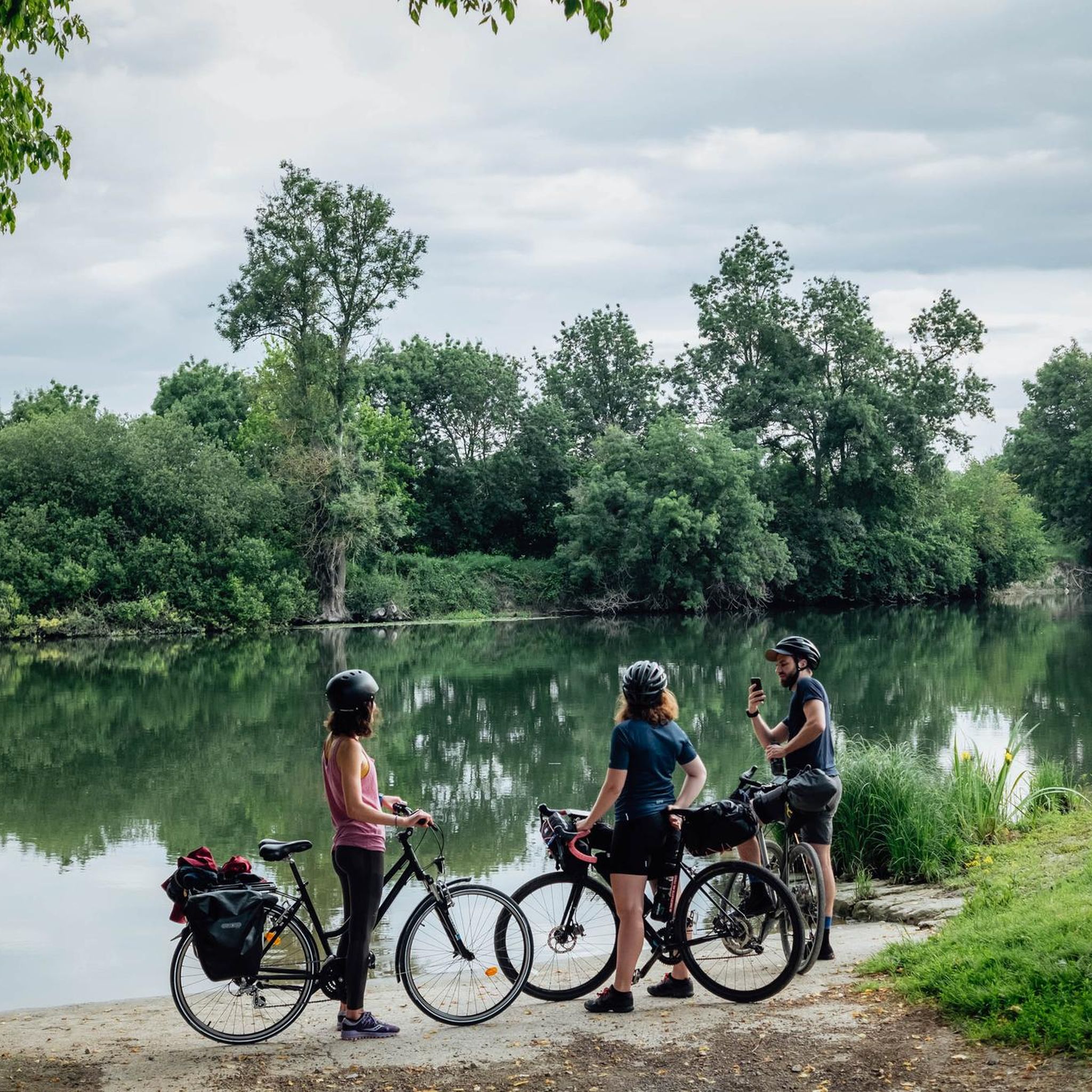
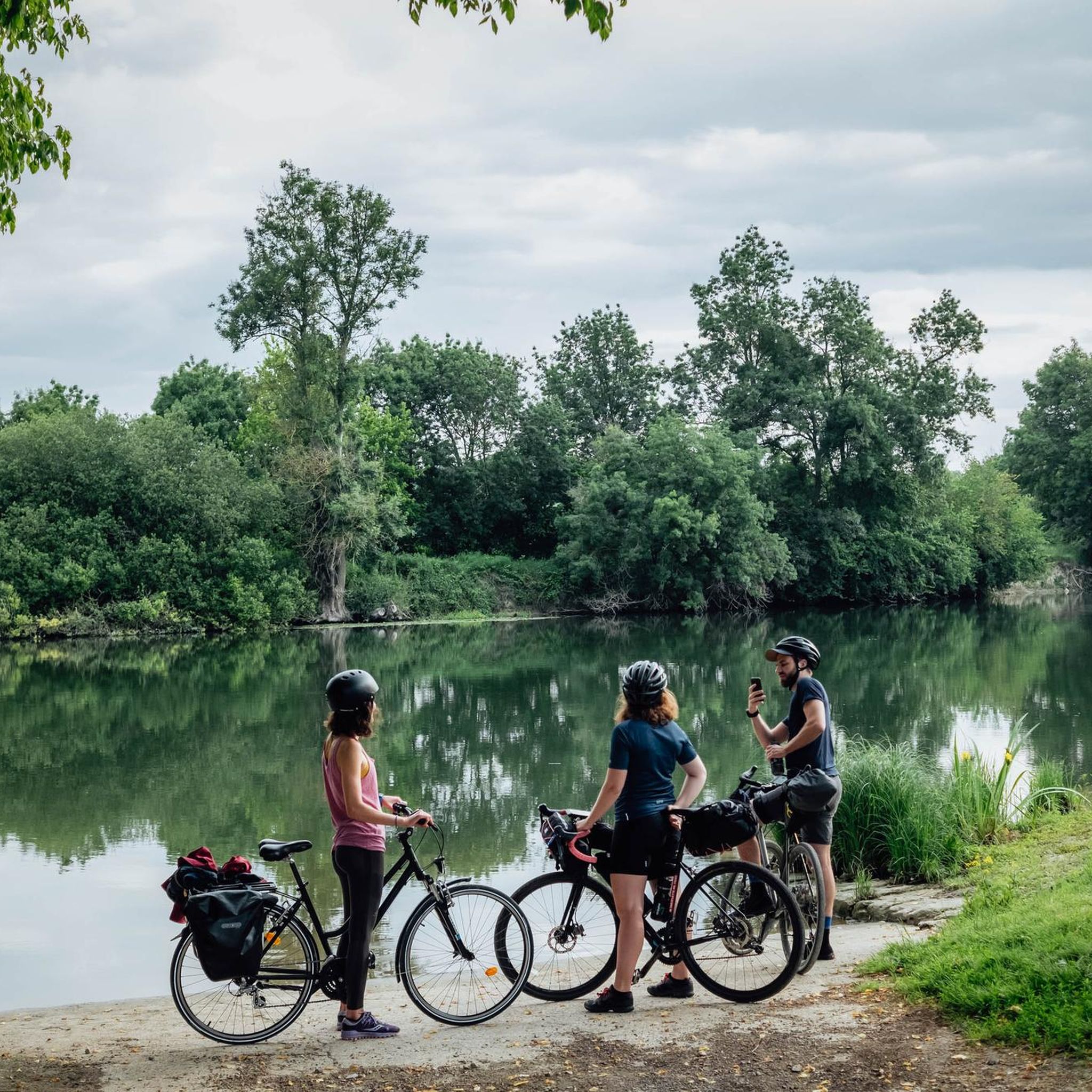
The Charente River and its surroundings offer various outdoor activities. You can enjoy cycling on routes like the 'Flow Vélo' or 'Circuit VTC N°2 - 'Prunelas - Salignac'', which often follow the riverbanks. The area also provides designated fishing routes ('Parcours Pêche') and opportunities for hiking, allowing you to explore the scenic riverside landscapes.
Are there cycling routes suitable for exploring the area?
Absolutely. Salignac-Sur-Charente is a great starting point for cycling. You'll find designated routes such as 'Circuit vélo', 'Flow Vélo', 'Circuit VTC N°2 - 'Prunelas - Salignac'', and 'Circuit VTC N°1 - 'Salignac le bourg''. For gravel biking, you can explore routes like the 'Chaniers chain bin – Port of the Lys loop' or the 'Saint-Brice Castle – The Jarnac Quays loop'. You can find more details on these routes in the Gravel biking around Salignac-Sur-Charente guide.
Where can I find hiking trails near Salignac-Sur-Charente?
The region offers several hiking opportunities to explore its natural landscapes and historical sites. Popular options include the 'Three Villages Trail' and various loops around 'Pont des Gaulois' and 'Moulin de Saint-Laurent'. These trails range from moderate to difficult. For more detailed information and routes, refer to the Hiking around Salignac-Sur-Charente guide.
Are there family-friendly attractions in Salignac-Sur-Charente?
Yes, Abbaye de Fontdouce is a family-friendly historical site that offers tourist and cultural activities. Its extensive grounds and historical context make it an engaging visit for all ages. The natural features like the Charente River and the vineyards also provide pleasant settings for family walks and outdoor exploration.
Can I learn about the local viticultural heritage?
While not directly within Salignac-Sur-Charente, the commune is part of the Petite Champagne cru, a renowned Cognac wine-growing region. This means the local culture is deeply influenced by Cognac production. You'll see vineyards throughout the landscape, and the proximity to Cognac (approximately 8 km away) offers opportunities to explore local producers and learn about this esteemed industry.
What is the best time of year to visit Salignac-Sur-Charente for outdoor activities?
The spring and autumn months generally offer the most pleasant weather for outdoor activities like cycling, hiking, and exploring historical sites. Temperatures are mild, and the landscapes are particularly beautiful, whether with spring blooms or autumn colors in the vineyards. Summers can be warm, ideal for riverside activities, while winters are cooler but still offer opportunities for exploration.
What do komoot users particularly enjoy about the attractions here?
Komoot users appreciate the blend of historical sites, natural beauty, and cultural points of interest. Attractions like Abbaye de Fontdouce and Saint-Brice Castle are highly rated for their historical significance and scenic appeal. The area's picturesque riverside scenery and vineyards also receive positive feedback, making it a popular destination for those seeking both cultural immersion and outdoor adventures.
Are there other notable castles or historical buildings nearby?
Beyond the local Château de la Garde, you can also visit Saint-Brice Castle, constructed around 1550-1560 and known for its splendid facade. Another option is Gademoulin Castle in Gensac-la-Pallue, a Neo-Gothic construction from the second half of the 19th century built on the remains of an older medieval castle.
Most popular routes around Salignac-Sur-Charente

Get inspired with the komoot mobile app


Explore more
Still not found the Highlight you’re looking for? See guides of the top attractions in other regions:
