The best walks and hikes around Naintré
4.3
(191)
787
hikers
84
hikes
Hiking around Naintré offers diverse landscapes, characterized by extensive forests, river valleys, and unique geological formations. The region features the Forêt Domaniale de Châtellerault, providing numerous trails through woodlands. The Vienne river and Lac de la Forêt contribute to scenic routes, while troglodytic sites offer distinctive exploration opportunities. This varied terrain caters to a range of hiking preferences and fitness levels.
Best hiking trails around Naintré
- The most popular hiking route is Châtellerault Forest and Forest, a moderate 7.5…
Last updated: October 5, 2026
4.4
(9)
36
hikers
12.0km
03:07
70m
70m
Moderate hike. Good fitness required. Easily-accessible paths. Suitable for all skill levels.
4.6
(8)
24
hikers
7.77km
02:01
50m
50m
Moderate hike. Good fitness required. Easily-accessible paths. Suitable for all skill levels.

5.0
(3)
22
hikers
11.2km
02:53
50m
50m
Moderate hike. Good fitness required. Easily-accessible paths. Suitable for all skill levels.
3.0
(2)
8
hikers
5.14km
01:19
20m
20m
Easy hike. Great for any fitness level. Easily-accessible paths. Suitable for all skill levels.
5.0
(1)
4
hikers
5.44km
01:24
30m
30m
Easy hike. Great for any fitness level. Easily-accessible paths. Suitable for all skill levels.
Get access to more routes and recommendations from other explorers.
Already have an account?
Our route recommendations are based on thousands of hikes, rides, and runs completed by other people on komoot.
Start today with a free account
Your next adventure awaits.


Tips from the Community

On 30/08/2026, the Francois Mitterand space, right in front of the kiosk, welcomed almost 1400 clarinettists to break the world record held by Hong Kong and entered in the Guinness Book. This has been done and recorded by an official member of the organization who came specifically for this purpose. The objective announced for months by the Poitiers conductor Emmanuel Boulanger has been largely achieved. The old record, set in Hong Kong with 448 clarinettists, has been smashed. Amateurs, music school students and professionals played together, in front of a large audience. The performance should now feature in the Guinness Book of Records. Below is the press article and video published locally. https://share.google/KJQ2WCRdVkkB0aF61
0
0
🏭 1. A museum set up in the former “Manu” Le Grand Atelier - Museum of Art and Industry is located on the site of the former Châtellerault Arms Factory ("Manufacture d’armes"). The Manufacture was created by royal ordinance on July 14, 1819, under Louis XVIII. Construction began in 1820. Its location in Châtellerault was notably due to the presence of the Vienne river, which allowed for the use of hydraulic energy, and the existence of a significant local tradition of cutlery and metallurgy. Initially, it mainly produced edged weapons: sabers, swords, lances, and cuirasses. From the 1830s onwards, production also turned to firearms. The Manufacture gradually became a huge industrial complex, employing several thousand people. It played a considerable role in the economic and social history of Châtellerault. 🔧 2. The museum building The building now occupied by the Grand Atelier is particularly interesting. It is part of the former assembly and finishing workshop, built between 1886 and 1887, notably in the context of the production of the Lebel rifle. It is a characteristic industrial building from the late 19th century, with vast spaces, large glass bays, and saw-tooth roofs allowing for significant natural light. It is now protected as heritage. The Manufacture closed permanently in 1968. 🚗 3. The birth of the automobile museum After the closure of the Manufacture, part of the buildings was reused for cultural purposes. As early as 1969, the site hosted a museum, notably stemming from Bernard de Lassée's vehicle collection. It was first named Musée de la Technique et de l’Automobile, then became Musée Auto-Moto-Vélo. The town of Châtellerault acquired part of Bernard de Lassée's collection and gradually developed the museum. The collections include, in particular, vintage cars, motorcycles, bicycles, engines, posters, and accessories, featuring prestigious brands such as Panhard-Levassor, Delahaye, Talbot, Darracq, or Bugatti. 🏛️ 4. The merger with the former Sully museum This is an important step in understanding why the museum today bears the name “museum of art and industry”. Châtellerault also had another museum, located in the Hôtel Sully, dedicated to the history and heritage of the town: archaeology, fine arts, weapons, cutlery, ethnology, local artists, etc. Gradually, the collections of the two institutions were brought together on the site of the former Manufacture. The Ministry of Culture thus indicates that the collections were regrouped on the Manufacture site, first under the name Musée de la technique et de l’automobile, then Musée Auto-Moto-Vélo, and finally Grand Atelier. 🎭 5. The transformation into “Grand Atelier” After significant renovations, the museum was reorganized and took its current name in 2019: Le Grand Atelier – Musée d’art et d’industrie. It is therefore no longer just a museum dedicated to automobiles. It now offers three main tours: 🚗 Auto-Moto-Vélo: the evolution of transport from the 19th century to the 2000s; 🔫 Manufacture d’armes: the industrial and social history of the “Manu” and its workers; 🎭 Cabaret du Chat Noir: dedicated to Rodolphe Salis, born in Châtellerault and founder of the famous Montmartre cabaret. The museum now covers over 3,000 m² of exhibition space. An important clarification It is therefore necessary to distinguish: - The Arms Factory (“La Manufacture d’armes”) → the large industrial site created in 1819, closed in 1968. - The Grand Atelier building → a former workshop of the Manufacture, built in 1886-1887. - Le Grand Atelier – Museum of Art and Industry → the museum gradually created on this site, whose current name dates from 2019. - And the former Sully museum → a historic museum institution in Châtellerault, part of whose collections have been integrated into the Grand Atelier.
0
0
The history of the Châtellerault dam on the Vienne river, located at the site of the former weapons factory (Manufacture d’armes), is particularly interesting as it is directly linked to the industrialization of the town. 1. A first dam for the Manufacture The first structure was built around 1824, shortly after the creation of the Châtellerault weapons factory in 1819-1822. Its primary objective was not to produce electricity: it was to provide hydraulic power to the Manufacture and to regulate the level of the Vienne necessary for its installations. Administrative sources do indicate a dam built in 1824, intended to supply the Manufacture. The presence of this dam is therefore closely linked to the spectacular industrial development of Châtellerault in the 19th century. 2. The dam then plays a role in water supply The dam also gained importance for the town's water supply. After 1864, when the Manufacture no longer opposed the use of the Vienne's water, the town installed a pumping station near the dam. Hydraulic rams and then, from 1879, a steam engine, made it possible to pump water to the reservoirs and fountains of Châtellerault. It is therefore a site where three stories intersect: - the weapons factory; - water supply; - and then electricity production. 3. Transformation into a hydroelectric power plant The major turning point occurred at the beginning of the 20th century. A hydroelectric power plant was built from 1918 and commissioned in 1921, for the Société des Forces Motrices de la Vienne. The associated dam measures approximately 207 m and creates a head of 11.50 m. The power reached about 10,000 hp in 1926. There are also plans preserved at the Defence Historical Service (Service historique de la Défense) concerning precisely the dam, the spillway, the gates, and the hydroelectric power plant, dated notably from 1916 to 1928. 4. Destruction in 1944 The dam and hydroelectric installations were destroyed in 1944, during the fighting and the withdrawal of German forces. They were then rebuilt in 1952. This reconstruction partly explains why the structure we see today does not exactly correspond to the dam of the 1920s. 5. Since 1967: EDF In 1967, EDF took over the operation of the hydraulic power plant. Since then, the dam has mainly served the function of hydroelectric power production. A point of interest: this dam is not a flood control structure Despite its presence on the Vienne, it should not be equated with a large dam intended to protect Châtellerault against floods. Its storage capacity is relatively small and its role is essentially linked to electricity production and maintaining a water level. PPRI (Flood Risk Prevention Plan) documents specify that its influence is negligible during very large floods, such as those of 1913 or 1944. Simplified chronology -1824: Construction of the first dam for the Manufacture -1864-1879: Use for the water supply of Châtellerault -1918: Start of construction of the hydroelectric power plant -1920-1921: Commissioning of the hydroelectric installation -1926: power of approximately 10,000 hp -1944: The history of the Châtellerault dam on the Vienne river, located at the site of the former weapons factory, is particularly interesting as it is directly linked to the industrialization of the town.
0
0
The Henri IV bridge of Châtellerault: a history of nearly 1,000 years The Henri IV bridge is one of Châtellerault's emblematic monuments. It crosses the Vienne river near its confluence with the Envigne and is today a remarkable work of the Renaissance. 🏰 Before the current bridge The existence of a bridge in Châtellerault is attested as early as the 11th century, around 1065, and again in 1120. It is said to have been initially linked to an old ford allowing crossing the Vienne. In the Middle Ages, several structures followed one another. A stone bridge is said to have been built in the 12th century, parallel to the development of the fortified district of Châteauneuf on the left bank. Around 1350, during the Hundred Years' War, the crossing was fortified with towers placed at the ends of the bridge. In the 16th century, the bridge was badly damaged. A major flood of the Vienne in 1556 notably destroyed the old wooden structure. King Henry II then considered rebuilding it in stone, but his accidental death in 1559 interrupted the project. 👑 The construction of the current bridge It was finally under Charles IX, then Henry III, that the project for a new large stone bridge was relaunched around 1564-1565, at the request of the inhabitants. The construction would be extraordinarily long: over forty years, from 1565 to 1609. Four architects succeeded each other in managing the site, including members of the famous Du Cerceau family, great architects of the Renaissance. The site was finally completed under Henry IV, with the decisive intervention of Sully, his superintendent of buildings and chief surveyor of France. Henry IV himself came to Châtellerault in 1606, while the bridge was not yet finished. It would be delivered in 1609, a year before the king's death. It is therefore important to specify that the bridge was not built "by Henry IV": it was started under Charles IX and completed during his reign. Why does it bear his name? It is even an interesting peculiarity: for several centuries, it was not called "Henri IV bridge". It is found under the names: -Pont-Neuf -Grands-Ponts -Bridge of Châtellerault -then in the 19th century Pont Sully. -It was only around 1900 that it definitively took the name of Henri IV bridge. 🏗️ An exceptional structure The bridge measures approximately 150 m in length and over 21 m in width. It consists of large stone arches. It has a very remarkable feature: two powerful round towers with conical roofs frame the entrance to the bridge on the left bank, on the Châteauneuf side. These towers give the bridge its almost "fortified" appearance. However, contrary to what one might think, they were not essentially military structures. They could notably be used to control the entrance to the town, especially during periods of unrest or epidemics. The towers formerly located at the other end, on the town side, have now disappeared. ⚔️ The bridge during the Second World War The bridge also played a dramatic role in August 1944. As German troops were withdrawing, the bridge was threatened with destruction. On August 31 and September 1, 1944, the action of police commissioner and FFI lieutenant Charles Bichat, as well as the negotiations of sub-prefect Pierre-Marcel Wiltzer, prevented its destruction. This is a particularly important episode in the contemporary history of the monument. 🏛️ Historic Monument The Henri IV bridge has been classified as a historic monument since 1913. Today it belongs to two owners: -the Department of Vienne for the bridge, arches, and roadway; -the City of Châtellerault for the two towers. 🔨 The major recent restoration An in-depth diagnosis carried out in 2017 revealed the importance of the necessary work. A first phase of restoration was launched in 2022: waterproofing of the deck, restoration of the buried parts, and then progressive restoration of the arches. After 16 months of work, the bridge was reopened to traffic on April 21, 2023, and the work was officially inaugurated on May 27, 2023. The overall cost of restoring the masonry had been estimated at over 7.5 million euros including tax, to which were added the works concerning the roadway. A particularly interesting architectural detail The Henri IV bridge belongs to the same generation of structures as the Pont-Neuf in Paris and the Pont-Neuf in Toulouse. However, it has a remarkable characteristic: great regularity and highly advanced architectural symmetry, with particularly sophisticated stonework.
0
0


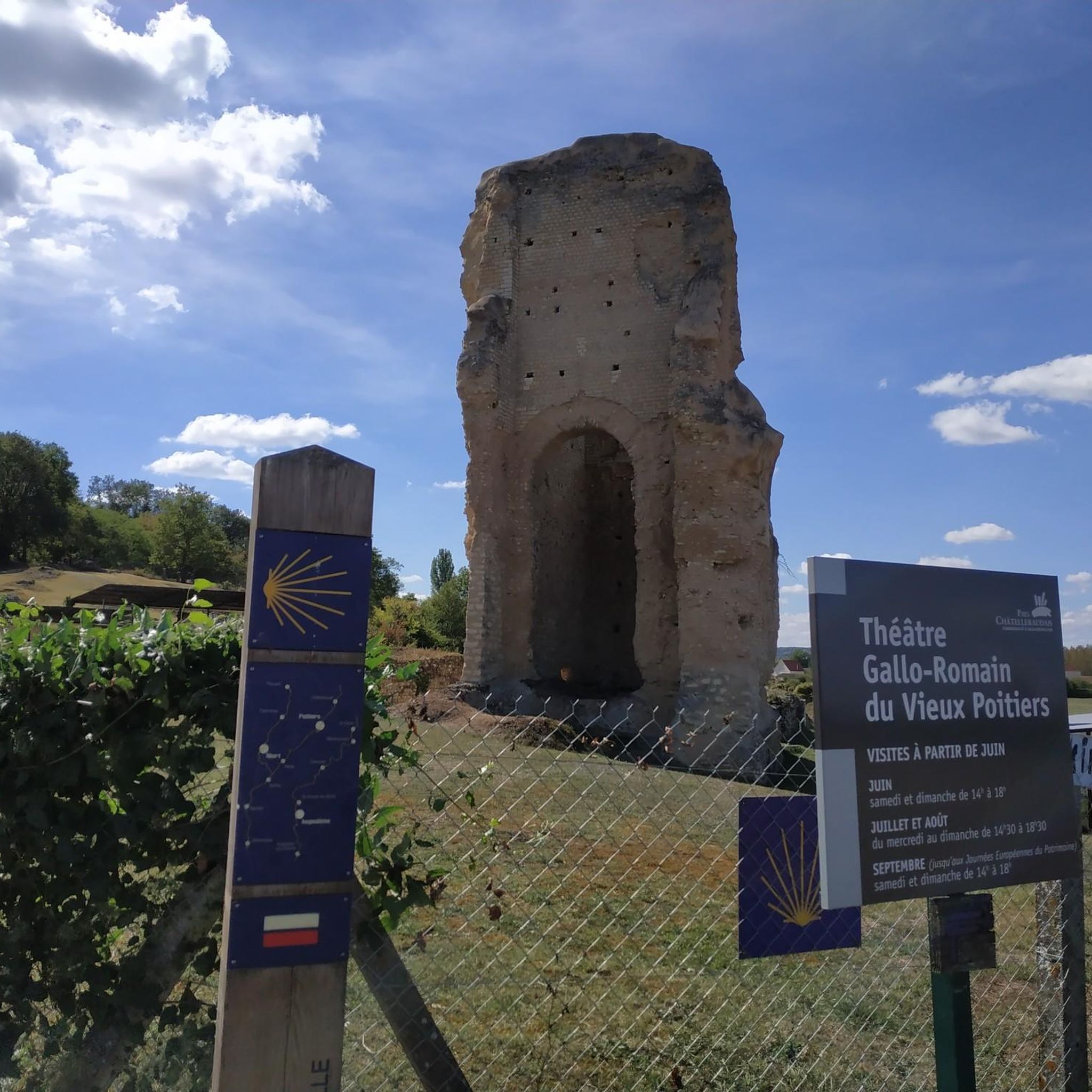
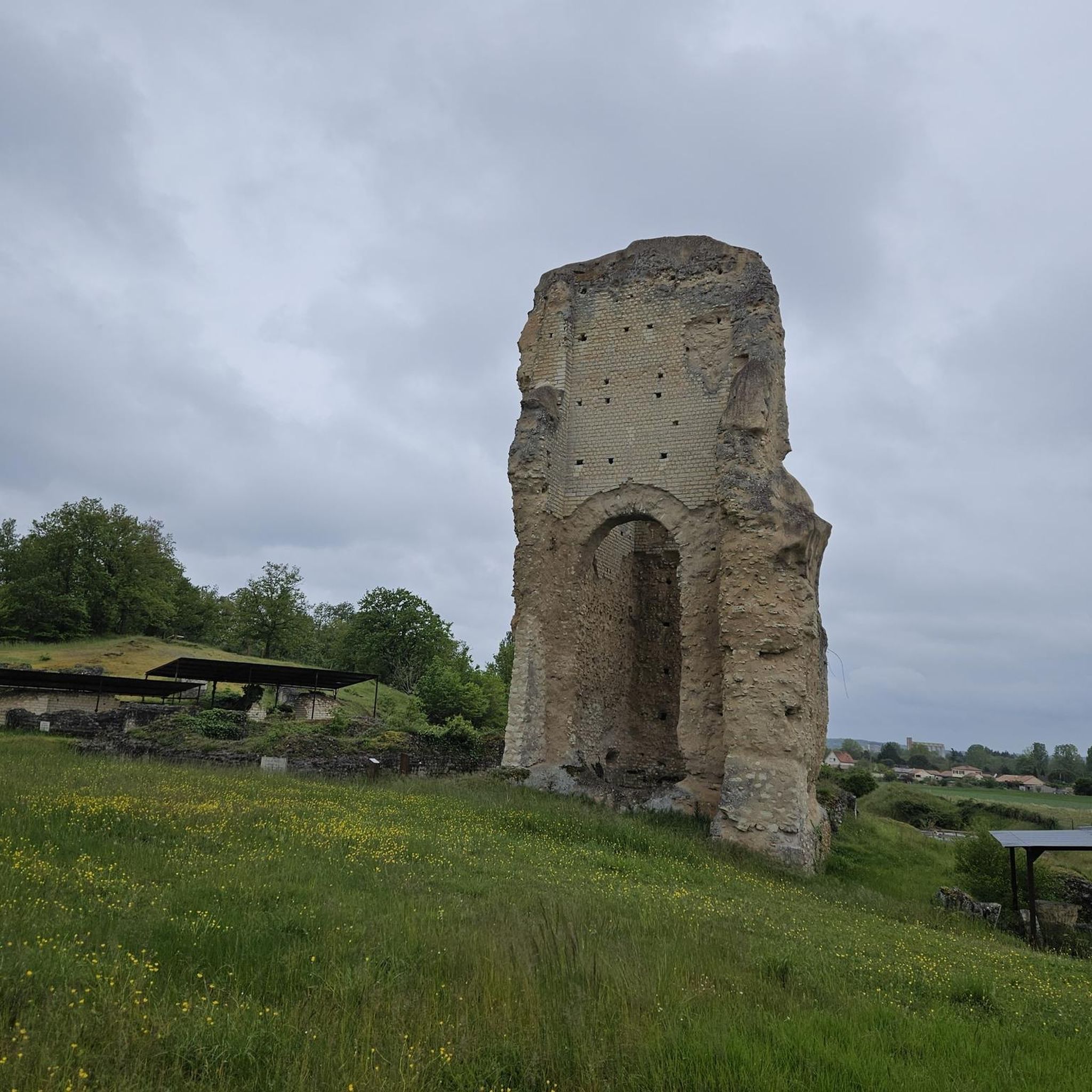
The Gallo-Roman Theatre of Old Poitiers is a major archaeological site located in the Vienne department, in the Nouvelle-Aquitaine region. This ancient theatre is one of the remains of the Gallo-Roman period in France. Cultural Importance Heritage: The Gallo-Roman Theatre of Old Poitiers is a precious testimony to Roman civilisation in Gaul and is part of the city's rich historical heritage. It offers insights into cultural and social life in Roman times. Education: The site also serves as an educational tool to understand Roman architecture and ancient theatrical practices, enriching visitors' knowledge of ancient history. The Gallo-Roman Theatre of Old Poitiers is therefore a must-see site for ancient history enthusiasts and visitors interested in Gallo-Roman heritage, offering a fascinating journey into the past. Guided tours possible by appointment.
3
0

It does not seem to me that the castle of targé is to be visited 🤔
0
0
Frequently Asked Questions
How many hiking trails are available around Naintré?
The Naintré region offers a wide variety of hiking experiences, with over 80 routes available. These trails cater to different fitness levels, including 37 easy routes and 45 moderate routes.
What types of landscapes will I encounter on hikes near Naintré?
Hiking around Naintré provides diverse landscapes. You'll find extensive forests, notably the Forêt Domaniale de Châtellerault, picturesque river valleys along the Vienne, and unique geological formations such as troglodytic sites. Some trails also traverse agricultural plains and vineyards, offering a glimpse into the local heritage.
Are there any easy, family-friendly hikes in the area?
Yes, there are several easy and family-friendly options. For instance, the Menhir-polissoir de Souhé loop from Naintré is a 3.2-mile trail that takes about 1 hour 19 minutes, leading past a historic landmark. Another easy option is the Hiking loop from Cenon-sur-Vienne, which is 3.4 miles long.
What do other hikers say about the trails in Naintré?
The hiking routes in Naintré are highly regarded by the komoot community, holding an average rating of 4.4 stars from over 140 reviews. Hikers often praise the varied terrain, the tranquility of the woodlands, and the well-marked paths.
Are there any circular hiking routes around Naintré?
Many of the trails in the Naintré area are designed as circular routes, allowing you to start and end at the same point. An example is the Châtellerault Forest and Forest route, which is a moderate 7.5-mile loop through dense woodlands and past the Lac de la Forêt.
Can I explore historical sites or landmarks while hiking?
Absolutely. Several hiking routes incorporate historical and cultural landmarks. For example, the region features troglodytic sites, which you can explore on circuits like the Circuit des Troglodytes de Jaunay-Marigny. You can also visit the Château de Dissay or the Gallo-Roman Theatre of Old Poitiers, which are near some trails.
Are there any trails that offer views of lakes or rivers?
Yes, the region's natural features include the river Vienne and the Lac de la Forêt. The Châtellerault Forest and Forest trail, for instance, winds past the scenic Lac de la Forêt. Many routes also offer picturesque views of the Vienne river valley.
What is the best time of year for hiking in Naintré?
The region is suitable for hiking across multiple seasons. Spring and autumn offer pleasant temperatures and vibrant natural colors, while summer provides lush greenery. The extensive forests also offer shade during warmer months.
Are there any specific attractions or points of interest near the hiking trails?
Beyond the trails themselves, you can find several points of interest. These include historical castles like the Haut-Clairvaux Keep, and natural areas such as the St-Cyr Lake. The unique troglodytic sites are also a significant draw.
Are there any longer, more challenging hikes available?
While most routes are easy to moderate, some trails offer longer distances. For example, the Le Grand Atelier – Châtellerault loop from Grand Châtellerault is a moderate 6.8-mile path that explores the Châtellerault area, providing a good option for those seeking a longer excursion.
Is it possible to reach hiking trails using public transport?
While specific public transport links directly to every trailhead may vary, the town of Naintré and nearby Châtellerault are generally accessible. For detailed public transport information to specific starting points, it's advisable to check local transport schedules.
Where can I find parking for hiking trails in the Naintré area?
Many popular trailheads, especially those in and around the Forêt Domaniale de Châtellerault and near towns like Naintré, typically have designated parking areas. It's recommended to check the specific route details on komoot for parking information related to your chosen trail.
Most popular attractions around Naintré

Get inspired with the komoot mobile app


Explore more
Browse the best Hikes in other regions.
