Attractions and Places To See around Saint-Julien-Lès-Russey - Top 20
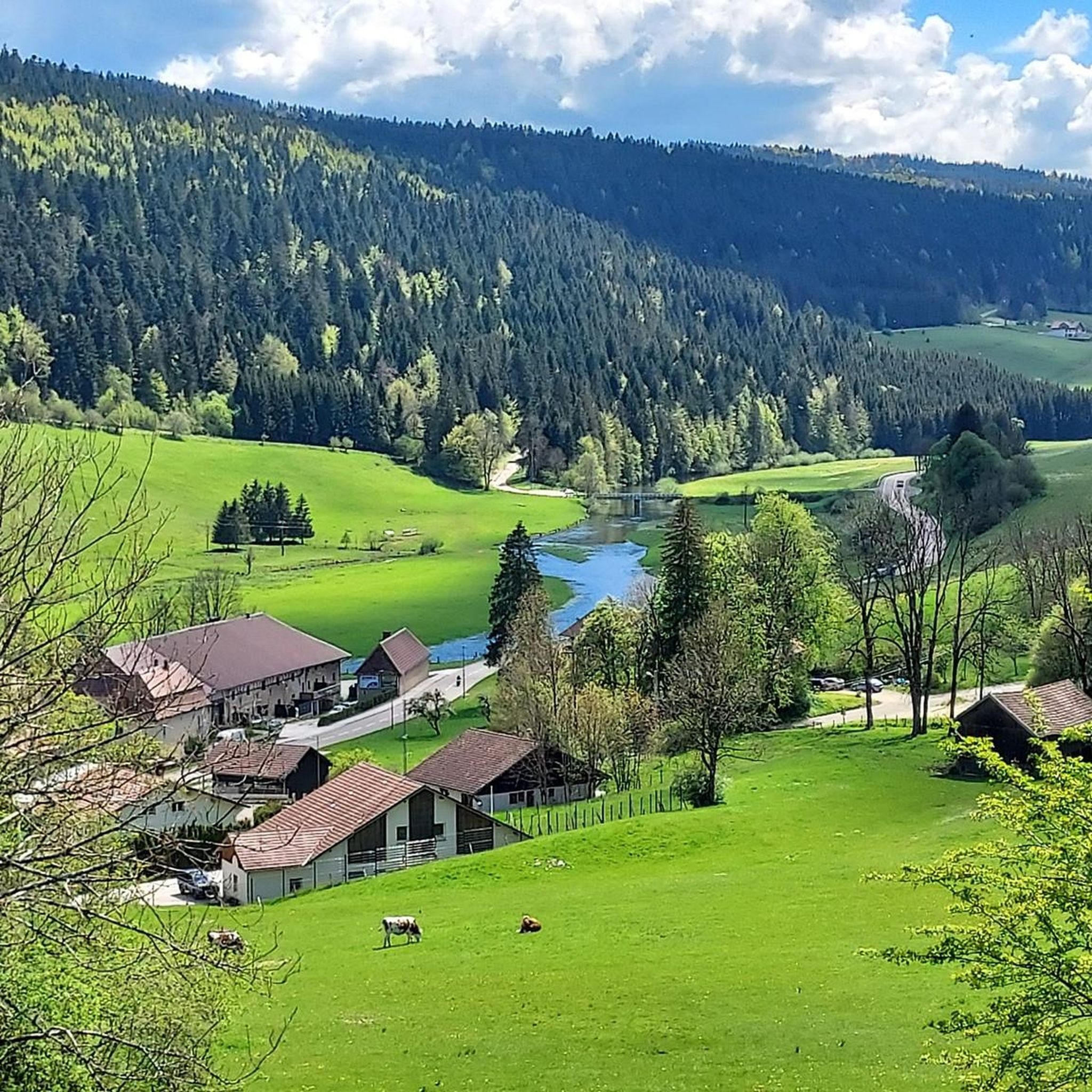
Best attractions and places to see around Saint-Julien-Lès-Russey include a blend of historical sites and natural landscapes within the Doubs department. Situated on the northern edge of a plateau, the area offers viewpoints over the Dessoubre valley. Visitors can explore remnants of a feudal castle, traditional farms, and unique geological features like peat bogs and gorges. The region provides opportunities for outdoor activities, with numerous hiking trails leading to various points of interest.
Best attractions and places to see around…
Last updated: October 9, 2026
Lançot Waterfall
Highlight • Waterfall
Translated by Google •
Tip by

The Ladders of Death
Highlight • Gorge
Translated by Google •
Tip by

Sign up now to discover places like this
Get recommendations on the best single tracks, peaks, & plenty of other exciting outdoor places.
Consolation Cirque
Highlight • Gorge
Translated by Google •
Tip by
Girardot Mill
Highlight • Other
Translated by Google •
Tip by

La Rasse Bridge over the Doubs River
Highlight • Bridge
Translated by Google •
Tip by

Sign up for free to discover even more attractions around Saint-Julien-Lès-Russey.
Already have an account?
Start today with a free account
Your next adventure awaits.


Tips from the Community

Please note that most of the photos associated with the route are photos of the via ferrata and the names of the ladders themselves, which are very solid stairs and not rope bridges! It is perfectly feasible for hiking, even if the height can be disconcerting.
4
1

Everything is in good working order. A beautiful experience, thank you to whomever keeps this maintained and safe!
1
0

This small bridge takes you through the 'green' border over the Doubs.
0
0
This border crossing is more for hikers or mountain bikers.
0
0

along the DESSOUBRE
1
0

This 500 meters long via ferrata with a 100 meters positive difference in altitude takes place on the French-Swiss border, in the grandiose and vertiginous setting of the Doubs gorges which for a long time sheltered the smuggling activities between these two countries. Very playful and vertiginous with ladders, footbridges, a zip line, cable and Nepalese bridges, it is certainly one of the most beautiful and impressive via ferrata of the region. After a few minutes of walking on a path, the course begins in the beautiful vertical limestone cliff by a first ladder soon followed by a Nepalese bridge, a beam and a slightly overhanging dihedral. This is the most physical part of the route, and it precedes the first escape route that leads to the Cendrée lookout. The next section offers a short, slightly overhanging passage, then a Tibetan bridge made of logs and a 42-meter-long "3-strand" cable bridge, both of which test your balance. The itinerary continues across a ledge (second possible escape route), takes a descending ladder, crosses a new cable bridge ("2 strands" this time), then goes up vertically by exploiting the weaknesses of the wall. The ladder and the beam that follow announce the long 60 meter zip line that can be avoided via the third escape route (but that would be a shame!). A last beam and a steep and original rope ladder bring you to the end of the via ferrata. A safe path follows the cliff, passes by the belvedere where you can still admire the superb landscapes, then follows the route of the smugglers of yesteryear before bringing you back to the parking lot. (https://www.directmountain.com/en/activities/807-via-ferrata-charquemont/)
4
0

Mill of which we find traces from the 15th century which has had the name of Laval mill and Fauvel mill throughout its history. There were then several buildings there. The flour mill was destroyed after a fire in 1989. The sawmill, which still exists, closed in 1988 then was restored in 2016 following its inclusion in the historic monuments two years earlier. Only the transmissions are still there, the rest of the equipment having been dismantled when it closed. The adjoining house which accommodated the owners is today a gîte.
1
0

Because of the profiteroles ;)
0
0
Frequently Asked Questions
What natural features can I explore around Saint-Julien-lès-Russey?
The region offers diverse natural beauty. You can admire the picturesque Dessoubre valley from various viewpoints. To the south, discover the unique communal lands characterized by peat bogs. A must-see is the Lançot Waterfall, known for its wild romantic basin and spring. Another significant natural landscape is the Consolation Cirque, a Jura rock basin with several karst springs and a 47-meter-high waterfall after heavy rains. The area of Les Deux Combes also provides rich, preserved nature with opportunities to observe chamois.
Are there historical or cultural sites to visit in Saint-Julien-lès-Russey?
Yes, Saint-Julien-lès-Russey is rich in history. You can visit the historic Saint-Julien Church, founded in 1024, which features a remarkable organ. The Notre-Dame-de-Lourdes Chapel, with its square bell tower, is another notable religious site. Explore the vestiges of a medieval feudal castle overlooking the Dessoubre, which was destroyed in 1474. The village also has two notable fountains and a restored ancient cemetery, the "Cimetière des Bossus," where plague victims were buried. Don't miss the Girardot Mill, with traces dating back to the 15th century, offering a glimpse into the region's industrial past.
What kind of hiking trails are available near Saint-Julien-lès-Russey?
The commune is crisscrossed with many hiking trails suitable for various levels. You can find routes leading to historical sites like the ruins of the medieval castle. For more challenging options, consider the trails around the Doubs gorges. Komoot offers several running trails, such as the "View of the Étang du Moulin loop from Saint-Julien-lès-Russey," which is a moderate 10.7 km route. You can explore more options on the Running Trails around Saint-Julien-Lès-Russey guide.
Are there any challenging outdoor activities for adventurers?
Absolutely! For those seeking an adrenaline rush, The Ladders of Death is a must-try. This route features three metal ladders and a via ferrata course suspended between the cliffs of the Doubs gorges, offering a breathtaking and vertiginous experience. It's a 500-meter-long course with a 100-meter positive difference in altitude, including ladders, footbridges, and even a zip line.
Can I find family-friendly attractions or activities in the area?
While specific 'family-friendly' categories aren't highlighted, many natural attractions can be enjoyed by families, depending on the children's age and ability. The Lançot Waterfall offers an easy walk to a magnificent natural setting. Exploring the traditional farms with their unique 'tuyés' (large chimneys for smoking meat) can also be an interesting cultural experience for families. Many hiking trails are suitable for various skill levels, so you can choose easier paths for a family outing.
What are the options for cycling or mountain biking around Saint-Julien-lès-Russey?
The region provides excellent opportunities for both cycling and gravel biking. You can find challenging gravel biking routes like "On old smugglers' paths" (39.8 km) or "Sans dessus Dessoubre" (49.3 km). For general cycling, there are routes such as the "View of the Doubs Valley – Crampoulotte Viewpoint loop from Les Fontenelles" (104.7 km). Explore more options on the Gravel biking around Saint-Julien-Lès-Russey guide and the Cycling around Saint-Julien-Lès-Russey guide.
Where can I find scenic viewpoints in the region?
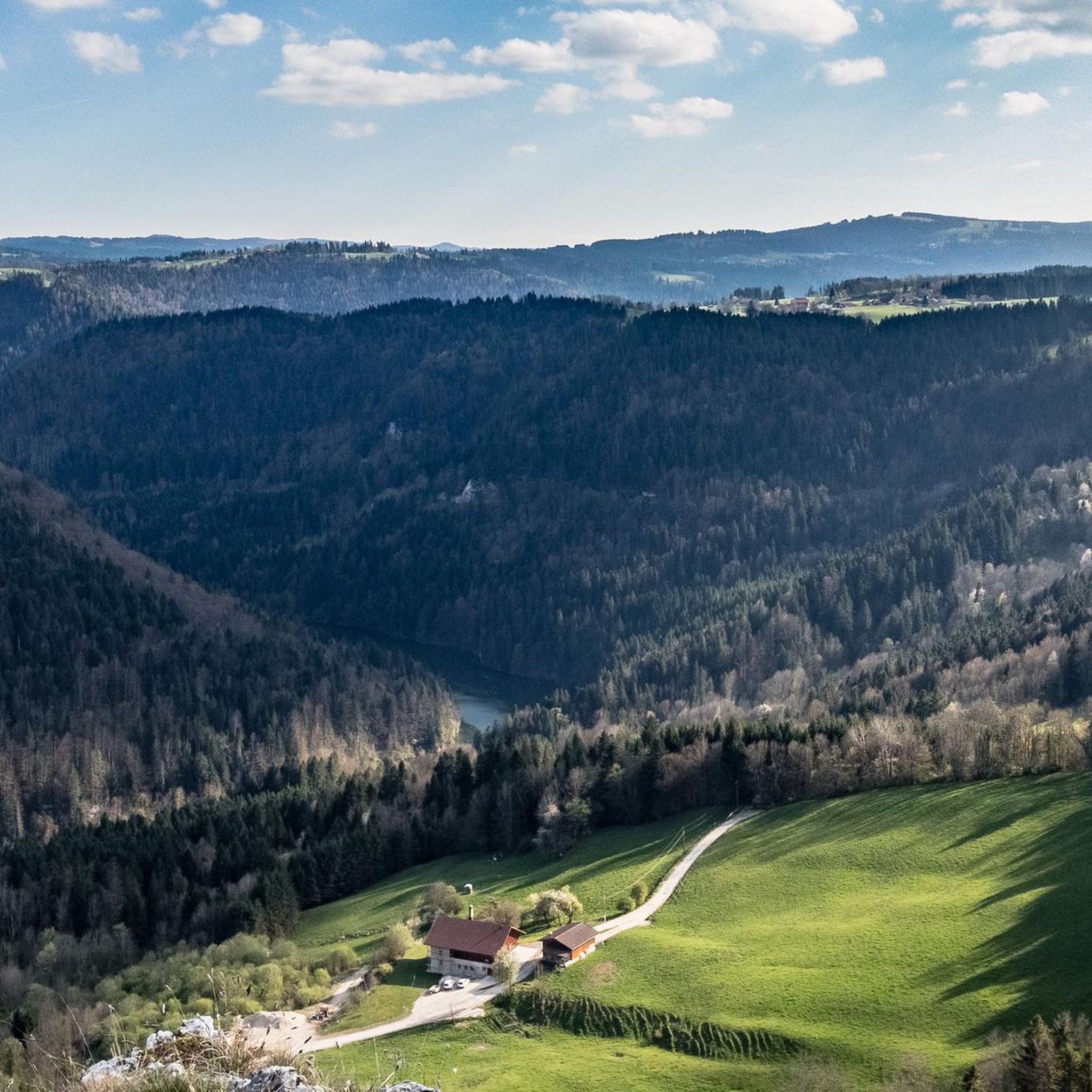
Saint-Julien-lès-Russey is situated on the northern edge of a plateau, offering numerous viewpoints to admire the picturesque Dessoubre valley. The Ladders of Death route also provides breathtaking views along the Doubs gorges. Additionally, the Consolation Cirque is a natural landscape park offering stunning vistas.
What is the best time of year to visit Saint-Julien-lès-Russey for outdoor activities?
The best time to visit Saint-Julien-lès-Russey for outdoor activities is generally during the spring, summer, and early autumn months. During these periods, the weather is most favorable for hiking, cycling, and exploring natural sites like the Dessoubre valley and waterfalls. Some attractions, like the Lançot Waterfall, are particularly impressive after heavy rains, which can occur in spring or autumn.
What do visitors particularly enjoy about the attractions around Saint-Julien-lès-Russey?
Visitors appreciate the blend of historical exploration and natural beauty. The Lançot Waterfall is loved for its wild romantic setting, even when the water flow is low. The Ladders of Death are highly rated for the breathtaking and vertiginous experience they offer. The Consolation Cirque is praised as a top landscape for hiking, especially after heavy rains when its waterfall is active. The komoot community has shown its appreciation with over 90 upvotes and 14 shared photos for the attractions in the area.
Are there any traditional local features or architecture to see?
Yes, the region is known for its distinctive traditional farms, many of which feature 'tuyés.' These are large, traditional chimneys used for smoking meat, offering a unique glimpse into the local agricultural heritage and a specific architectural style of the Bourgogne-Franche-Comté region.
Are there any short walks or easy hikes suitable for a quick outing?
While specific 'easy' or 'short' routes are not detailed in the data, many of the hiking trails around the commune can be adapted for shorter walks. The path to the Lançot Waterfall is described as a very easy walk. You can also explore the village's two fountains or the restored ancient cemetery for a leisurely stroll. For more options, check the Running Trails around Saint-Julien-Lès-Russey guide, which includes routes like the "View of the Étang du Moulin loop from Les Fontenelles" at 5.7 km, though it's rated difficult for running, it might be a moderate walk.
Is public transport available to reach attractions around Saint-Julien-lès-Russey?
Information regarding specific public transport links directly to individual attractions is not readily available. It is generally recommended to use a personal vehicle or bicycle to explore the various sites around Saint-Julien-lès-Russey, as many natural and historical points of interest are spread across the rural landscape.
Are there any specific rules for dog-friendly trails in the area?
While the region offers many outdoor trails, specific rules regarding dogs (e.g., leash requirements, restricted areas) are not detailed in the provided information. It is always advisable to keep dogs on a leash, especially in natural areas where wildlife may be present, and to respect local signage or regulations you may encounter on site.
Most popular routes around Saint-Julien-Lès-Russey
Most popular attractions around Saint-Julien-Lès-Russey

Get inspired with the komoot mobile app


Explore more
Still not found the Highlight you’re looking for? See guides of the top attractions in other regions:
