The best cycling routes around Messemé
4.2
(7)
55
riders
34
rides
Touring cycling routes around Messemé traverse a landscape characterized by gentle hills, river valleys, and agricultural plains. The region features a mix of open countryside and historical sites, offering varied terrain suitable for cycling. Elevations are generally moderate, with no significant mountain passes. The area is well-suited for exploring by bike, with routes often connecting villages and points of interest.
Best touring cycling routes around Messemé
- The most popular touring cycling route is Château de la Mothe Chandeniers – loop…
Last updated: July 5, 2026
6
riders
48.3km
02:55
370m
370m
Moderate bike ride. Good fitness required. Mostly paved surfaces. Suitable for all skill levels.
8
riders
101km
07:22
1,010m
1,010m
Hard bike ride. Very good fitness required. Mostly paved surfaces. Suitable for all skill levels.

Sign up for free
3.0
(1)
5
riders
49.0km
03:54
400m
400m
Moderate bike ride. Good fitness required. Mostly paved surfaces. Suitable for all skill levels.
5.0
(1)
5
riders
44.8km
02:41
180m
180m
Moderate bike ride. Good fitness required. Mostly paved surfaces. Suitable for all skill levels.
5.0
(1)
4
riders
45.2km
02:39
200m
200m
Moderate bike ride. Good fitness required. Mostly paved surfaces. Suitable for all skill levels.
Get access to more routes and recommendations from other explorers.
Sign up for free
Already have an account?
Our route recommendations are based on thousands of hikes, rides, and runs completed by other people on komoot.
Start today with a free account
Your next adventure awaits.
Login or Signup


Tips from the Community


The Royal Abbey of Fontevraud is one of the largest monastic communities in Europe dating back to the Middle Ages. It is a place with a rich history, located in the heart of the Loire Valley and listed as a UNESCO World Heritage Site. The abbey is a unique cultural site! An abbey with a royal destination, a formidable prison is today a place of creation (museum of modern art).
3
0
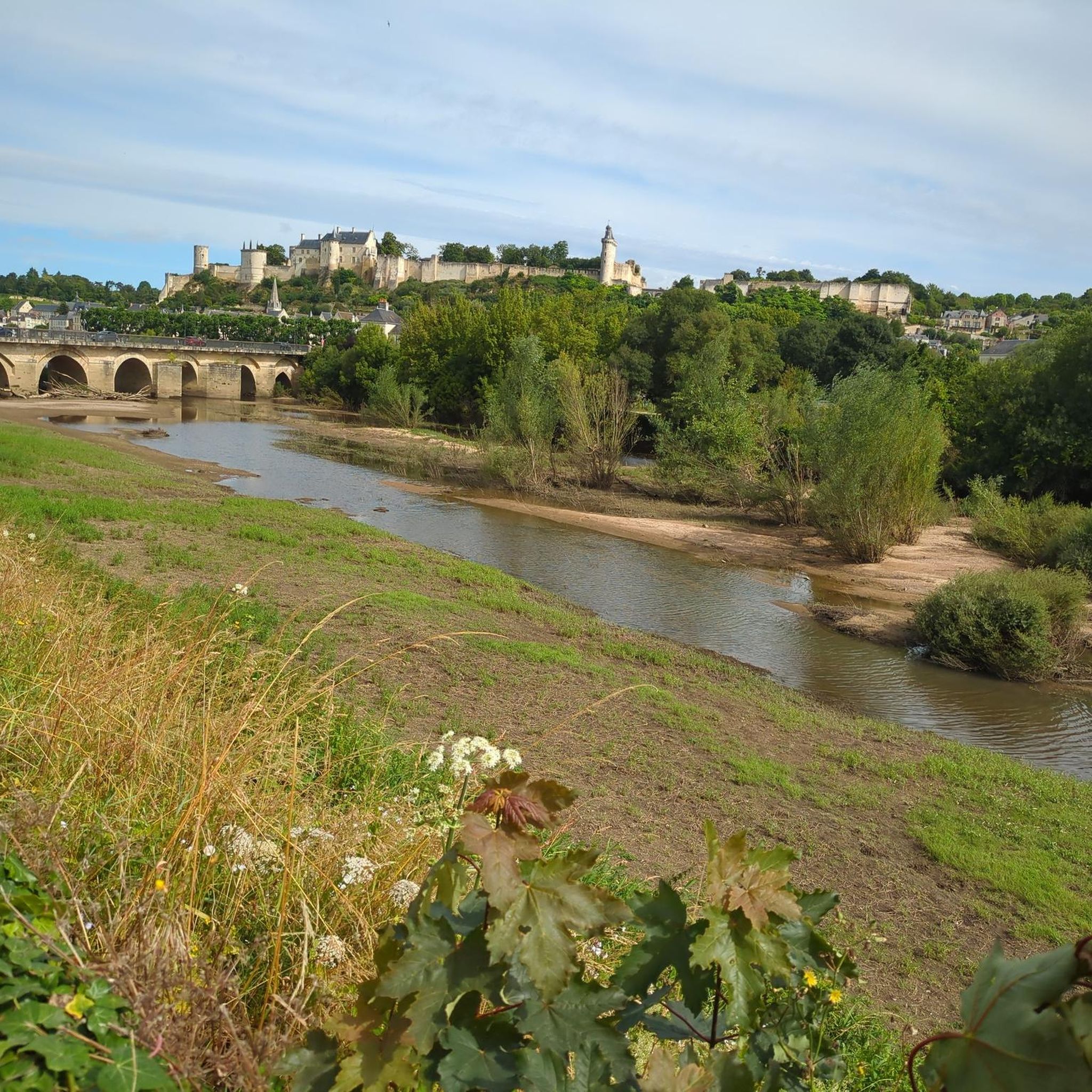
History in brief Antiquity: the site is strategically located on a promontory and has been inhabited for 3,000 years. It was not fortified until the end of the Roman Empire. Middle Ages: in 1154, the new King of England, Henry II Plantagenet, became ruler of an empire stretching from Scotland to the Pyrenees and made Chinon his continental capital. He had a large palace built next to the fortress, which has now disappeared. In 1189, abandoned by his sons, Richard the Lionheart and John Lackland, and fleeing from the King of France, he eventually died there. Philippe Auguste had the defensive Tour du Coudray built there after the siege of 1205. Renaissance: in 1454, the fortress became the main residence of Queen Marie d'Anjou, who lived there without her husband. She spent lavishly on decorating the house to her taste. From the 16th century onwards, the fortress was gradually abandoned and fell into disrepair. Despite the dangerous nature of the terrain, it became a public promenade in 1824 and was listed as a monument in 1840. The restoration of the estate began in 1854 thanks to the efforts of the writer Prosper Mérimée. Source: https://loirelovers.fr/en/visit-royal-fort-chinon/
6
0
Nice location to take a break here. Picnic benches are set up in the shaded area. The terrace of the summer bar La Guinguette has a nice view of the river Vienne and the Royal Fort of Chinon.
5
0
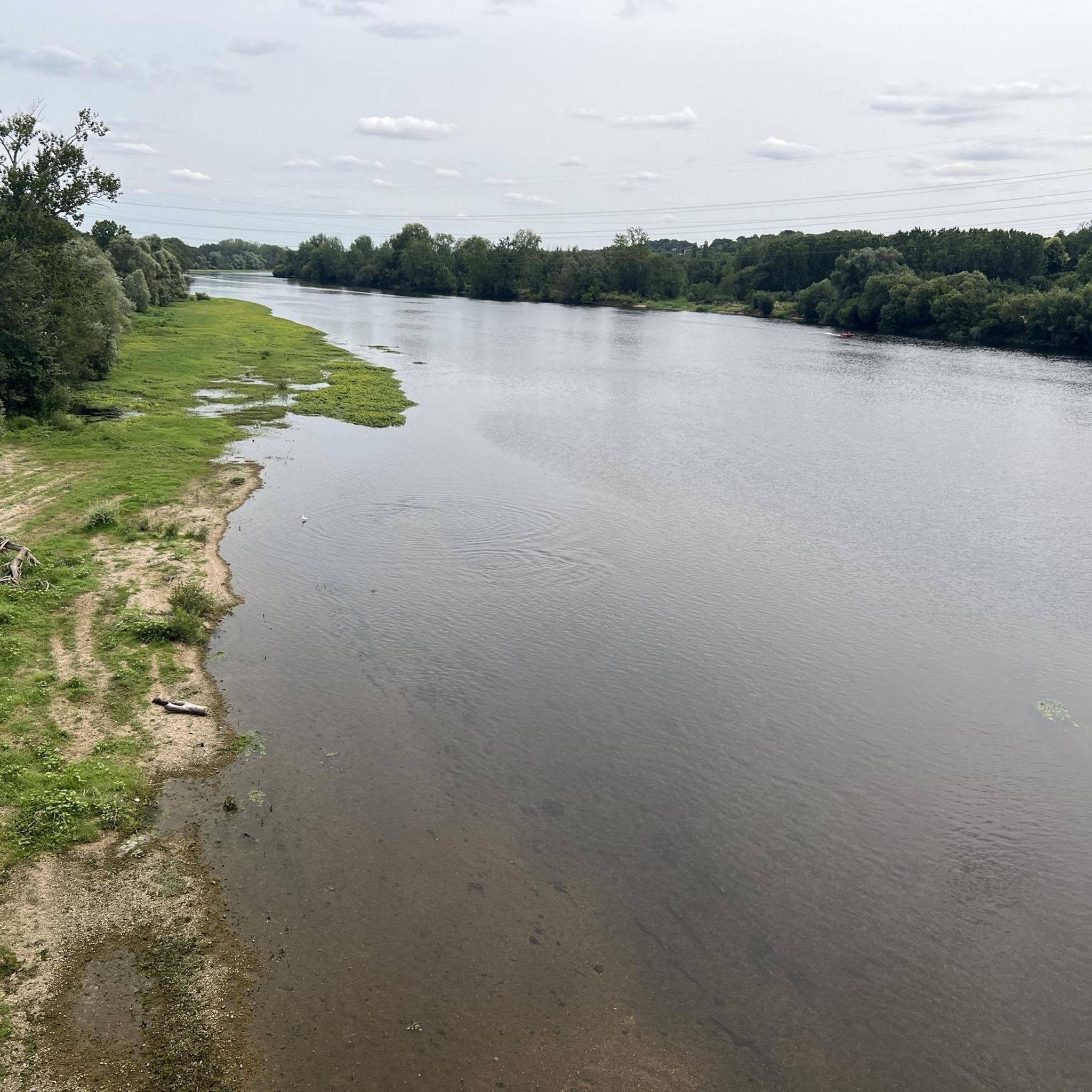
On this bridge over the La Vienne you have a nice view of the skyline of Candes-Saint-Martin. This cozy village is located near the confluence of the Vienne and the Loire.
4
0
Tough calf biter. Here you know why there are gears on your bike.
0
0
Fontevraud-l'Abbaye is located in the natural region of the Loire Valley, listed as a "living cultural landscape" by UNESCO. As its name suggests, the history and present of the municipality are closely linked to the Abbey of Notre-Dame, founded in 1099. The abbey presents the originality of being part of a mixed order, but led by abbesses until the Revolution. was the necropolis of the Plantagenet dynasty. The recumbent figures of Richard the Lionheart, Henry II and Eleanor of Aquitaine are still preserved there. The vast abbey complex was transformed by Napoleon I into a penal colony and then into a "central house". This extraordinary prison closed its doors in 1963. While the abbey church and the various monastic sites were rehabilitated, the entire old abbey has since housed a prestigious cultural centre with, among other things, a renowned art museum, welcoming meetings and artists in residence. Art, history and heritage are highlighted throughout the year.
4
0
Located at the crossroads of Anjou, Touraine and Poitou, welcome to the Fontevraud-l'Abbaye Tourist Office, our travel advisors will welcome you in front of the Saint-Michel church to help you discover the destination. Let us advise you and discover a village full of charm. Formed around the famous royal abbey, the Plantagenets necropolis, it is today a lively village, rich in numerous monuments, shops and craftsmen. The Tourist Office offers you: a privileged welcome - a free wifi hotspot - a shop with a wide choice of regional products, gifts, books and souvenirs - good tips to visit more and spend less when buying your entrance tickets - a complete tourist guide - a website - but also to travel light, by leaving your luggage with us. More information and opening hours at https://www.ot-saumur.fr/nl/sheets/vvv-kantoor-fontevraud-labbaye-5404626/
5
0
Frequently Asked Questions
How many touring cycling routes are available around Messemé?
There are over 30 touring cycling routes in the Messemé region, offering a variety of options for different skill levels. These include 4 easy routes, 19 moderate routes, and 7 more challenging trails.
What kind of terrain can I expect on touring cycling routes in Messemé?
The Messemé region features a landscape of gentle hills, river valleys, and agricultural plains. Routes often traverse open countryside and connect historical sites, with generally moderate elevations and no significant mountain passes.
Are there any long-distance touring cycling routes in the area?
Yes, for those seeking a longer challenge, the Chinon Fortress – Fontevraud loop from Les Chevaux Blancs is a difficult 63.5-mile (102.1 km) path with significant elevation gain, connecting two prominent historical landmarks.
What are some notable places to explore along the cycling routes?
Many routes pass by interesting sites. For example, the Château de la Mothe Chandeniers – loop in Haut Loudunais takes you past the historic Château de la Mothe Chandeniers. Other attractions in the wider region include the town of Richelieu and the Chinon–Richelieu Greenway.
Are there any circular touring cycling routes around Messemé?
Yes, many routes are designed as loops, allowing you to start and finish in the same location. An example is the Bike loop from Basses, which guides you through rural landscapes.
What is the best time of year for touring cycling in Messemé?
The temperate climate of the region makes spring (April-June) and autumn (September-October) ideal for touring cycling. During these seasons, the weather is generally mild, and the natural scenery is particularly beautiful.
What do other touring cyclists enjoy most about cycling in Messemé?
The komoot community rates the routes around Messemé highly, with an average score of 4.2 stars. Cyclists often praise the quiet country roads, the rolling agricultural land, and the opportunity to discover historic châteaux.
Are there family-friendly touring cycling options in Messemé?
While specific 'family-friendly' routes aren't explicitly categorized, the region offers 4 easy routes that are generally suitable for less experienced riders or families. These routes typically have less elevation gain and cover shorter distances.
Can I find routes that follow old railway lines?
Yes, you can explore routes like the Fietspad op een oude spoorlijn loop from Le Carroir, which utilizes an old railway path. These often provide flat, scenic stretches ideal for touring.
Are there routes with views of historical castles?
Absolutely. The View of Château de Chinon – Ascent to the Fortress loop from Beuxes offers scenic vistas, including views of the historic Château de Chinon.
What should I consider regarding parking for bike trails in Messemé?
While specific parking areas for each trailhead are not detailed, most villages and towns in the Messemé region offer public parking facilities. It's advisable to check local parking options near your chosen starting point.
Is public transport available to reach the trailheads?
Public transport options in rural areas like Messemé can be limited. It's recommended to check regional bus schedules or consider driving to your starting point, especially if you're carrying bikes.
Most popular attractions around Messemé

Get inspired with the komoot mobile app


Explore more
Browse the best Cycling routes in other regions.
