The best cycling routes around Chantecorps
4.4
(18)
124
riders
29
rides
Touring cycling routes around Chantecorps are situated within the Deux-Sèvres department of Nouvelle-Aquitaine, characterized by the Gâtine Poitevine's preserved landscape. This area features rolling farmland, wooded paths, and a bocage countryside with dense hedgerows and numerous streams and ponds. The region offers a network of signposted trails, including greenways, and is traversed by the Vélo Francette, providing diverse terrain for touring cyclists.
Best touring cycling routes around Chantecorps
- The most popular touring cycling route is Ricou Quarry loop from Saint-Maixent-l'École…
Last updated: August 25, 2026
5
riders
13.9km
00:54
110m
110m
Easy bike ride. Great for any fitness level. Mostly paved surfaces. Suitable for all skill levels.
4.0
(1)
6
riders
26.5km
01:35
190m
190m
Moderate bike ride. Good fitness required. Mostly paved surfaces. Suitable for all skill levels.

Sign up for free
6
riders
52.5km
03:11
420m
420m
Moderate bike ride. Good fitness required. Mostly paved surfaces. Suitable for all skill levels.
4.0
(1)
4
riders
27.4km
01:39
200m
200m
Moderate bike ride. Good fitness required. Mostly paved surfaces. Suitable for all skill levels.
3.0
(1)
5
riders
Moderate bike ride. Good fitness required. Mostly paved surfaces. Suitable for all skill levels.
Get access to more routes and recommendations from other explorers.
Sign up for free
Already have an account?
Our route recommendations are based on thousands of hikes, rides, and runs completed by other people on komoot.
Start today with a free account
Your next adventure awaits.
Login or Signup




Tips from the Community

top on the pebble path that runs along the lambon. A must-do!
0
0

Picturesque walk: Strolling along the bridge at the foot of the walls, with the tranquil waters of the Thouet River and the reflections of the arches, is a moment of pure bliss. Historical immersion: Walk in the footsteps of medieval pilgrims, protected by this powerful military structure, all in a still-authentic setting. Iconic photo: The view from the bridge—or from the banks slightly downstream—offers a perfect frame to capture the gate and its towers reflected in the river.
1
0
The fortified Saint-Jacques bridge (or “citadel bridge”) in Parthenay is a masterpiece of medieval architecture, bordered by its high walls and almond-shaped towers, offering an exceptional setting when the Thouet is reflected in the water.
1
0
Things to See & Do Ramparts: With approximately 30 semicircular towers, the granite walls symbolize medieval urban robustness. Ruined Castle: All that remains of the castle is a round tower (perhaps the keep) and sections of walls restored since the 1980s. Panoramic Walk: The rampart path offers splendid views of the Thouet Valley and the Saint-Paul district.
1
0
History & Architecture Medieval Construction: Built in the early 13th century under the aegis of John Lackland, the citadel rests on a natural promontory reinforced by three defensive walls, towers, and ramparts. Castle and Bastion: Its original, isolated castle included towers such as the Powder Tower and the Harcourt Tower. In the 15th century, Arthur de Richemont added the bastille and an artillery boulevard. Citadel Gate (or Clock Gate): The gatehouse is flanked by two almond-shaped towers and topped with a clock tower. A granite staircase provides access to the guardroom and the patrol path.
1
0
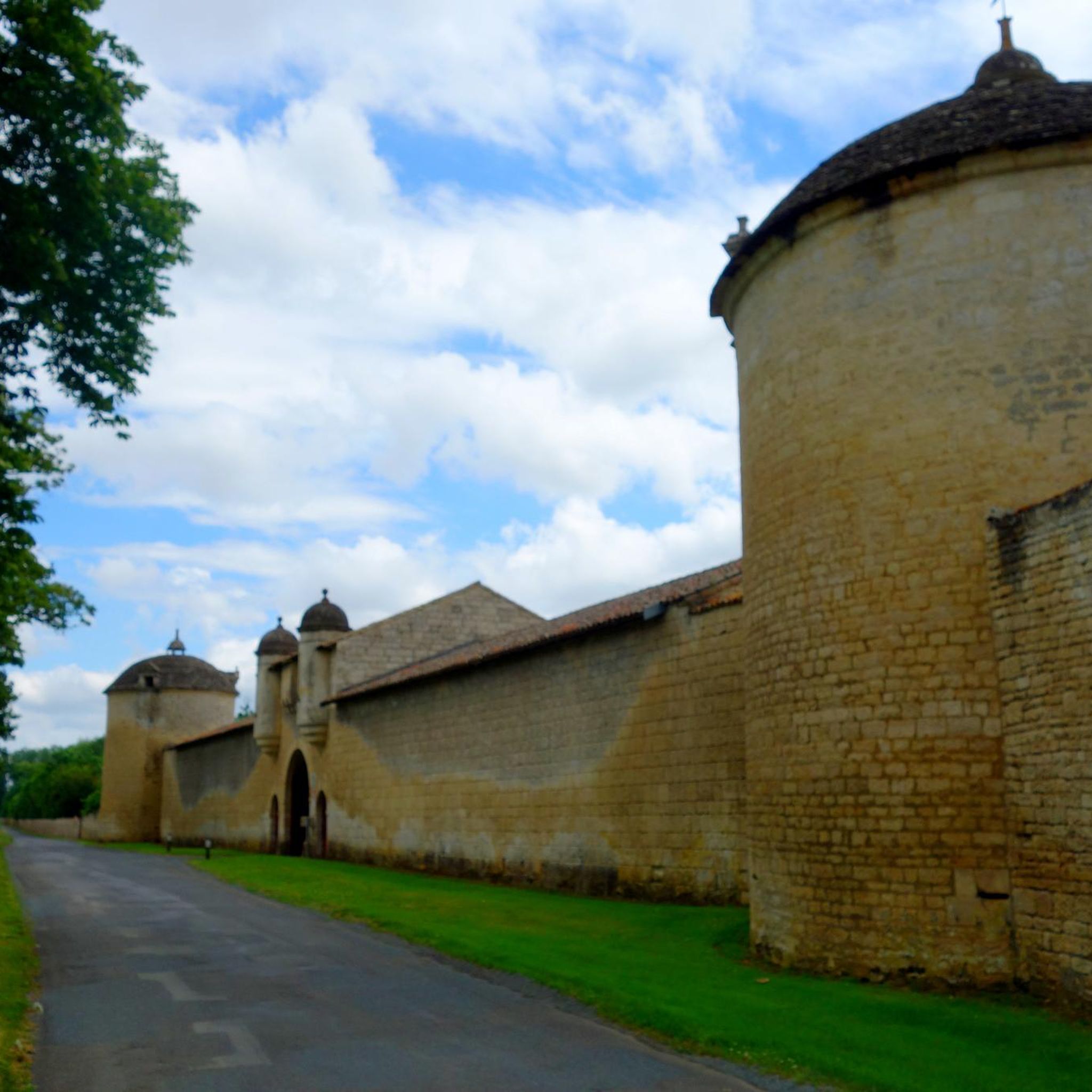
The citadel of Parthenay, nicknamed the "little Carcassonne of the West", is one of the city's heritage jewels, perched on a rocky spur overlooking the bend of the Thouet River.
1
0

The old road called "Chemin Chevaleret" connected Poitiers to the sea. The Roman bridge is a witness to this trade route at the time of Roman Gaul. It is an idyllic place to take a break or cool off with your feet in the water.
1
0

Frequently Asked Questions
How many touring cycling routes are available around Chantecorps?
There are over 20 touring cycling routes available around Chantecorps, offering a variety of options for different skill levels and preferences.
What kind of terrain can I expect on touring cycling routes near Chantecorps?
The region around Chantecorps, part of the Gâtine Poitevine, is characterized by rolling farmland, wooded paths, and a 'bocage' countryside with dense hedgerows. You'll find routes along streams and ponds, and the wider Deux-Sèvres department also features 'voies vertes' (greenways) on disused railway lines or canal towpaths, providing flatter, car-free options. The Saint-Maixent Abbey Church loop from Saint-Maixent-l'École, for example, leads through varied terrain.
Are there any easy touring cycling routes suitable for beginners or families?
Yes, Chantecorps offers several easy touring cycling routes. For instance, the Ricou Quarry loop from Saint-Maixent-l'École is an easy 8.7-mile (13.9 km) trail. Another great option is the Ricou Quarry – Saint-Maixent Abbey Church loop from Saint-Maixent-l'École, an easy 11.9-mile (19.1 km) path that combines natural landscapes with a historical landmark. The region's 'voies vertes' (greenways) are also ideal for leisurely exploration and families.
What notable landmarks or natural features can I see along the cycling routes?
Cycling routes around Chantecorps offer views of the Gâtine Poitevine's preserved landscapes, including its characteristic 'bocage' countryside. You can also explore historical sites like the Saint-Maixent-l'École area, which features an Abbey Church. Natural features include the Le Puits d'Enfer waterfall, La Touche Poupard Dam, and Étang de Bois Pouvreau. The broader region also includes the unique Marais Poitevin Regional Natural Park, known as 'Green Venice', with its network of canals and charming marshland villages.
Are there any longer or more challenging touring cycling routes?
Yes, for those seeking a longer ride, the Parthenay Old Town – View of the Citadel loop from Le Bois Senis is a moderate 32.6-mile (52.4 km) route. This trail offers a more extensive exploration of the area, including the medieval town of Parthenay. Overall, there are 11 moderate and 2 difficult routes available in the region.
What do other touring cyclists enjoy most about cycling in Chantecorps?
The area is highly rated by the komoot community, with an average score of 4.2 stars from more than 10 reviews. Reviewers often praise the varied terrain, which includes rolling farmland and wooded paths, and the opportunity to explore charming villages and historical sites like the Saint-Maixent Abbey Church.
Can I find circular touring cycling routes around Chantecorps?
Yes, many of the touring cycling routes around Chantecorps are designed as loops, allowing you to start and end at the same point. Examples include the Ricou Quarry loop from Saint-Maixent-l'École and the Lac du Dijon loop from Les Forges, which is a moderate 17-mile (27.4 km) route.
What is the best time of year to go touring cycling in Chantecorps?
The Deux-Sèvres department, where Chantecorps is located, generally offers pleasant cycling conditions from spring through early autumn. These seasons provide mild temperatures and vibrant natural scenery, making it ideal for exploring the rolling farmland and wooded paths. Checking local weather forecasts before your trip is always recommended.
Are there options for bike rental or repair services in the Chantecorps area?
While specific services in Chantecorps itself might be limited, the broader Deux-Sèvres department, especially areas like the Marais Poitevin, offers 'Accueil Vélo' branded services. These guarantee quality services for cyclists, including bike rental, repair facilities, and valuable route information at various points. It's advisable to check in nearby larger towns like Saint-Maixent-l'École or Parthenay for specific rental and repair shops.
Are there any places to eat or stay along the cycling routes?
The region is dotted with charming villages and towns where you can find local amenities. Many towns in Deux-Sèvres hold weekly markets, offering opportunities to sample regional produce. Larger towns like Parthenay, Airvault, and Saint-Loup-Lamairé, which are accessible by bike, will have cafes, restaurants, and accommodation options. It's a good idea to plan your route to pass through these towns for refreshment stops.
Is it possible to combine cycling with public transport in the Deux-Sèvres region?
The Deux-Sèvres department is generally well-equipped for cyclists. While specific public transport options for bikes directly in Chantecorps might be limited, the region's focus on cycling, including the Vélo Francette, suggests that public transport services in larger towns may accommodate bikes. It's best to check with local transport providers in advance for their specific policies regarding bicycles.
Where can I find parking for touring cycling routes near Chantecorps?
Many touring cycling routes in the region start from towns or villages like Saint-Maixent-l'École or Les Forges, where public parking is typically available. When planning your route, look for starting points in these larger communities or near specific attractions, as they often provide designated parking areas for visitors.
Most popular routes around Chantecorps
Most popular attractions around Chantecorps

Get inspired with the komoot mobile app


Explore more
Browse the best Cycling routes in other regions.
