Attractions and Places To See around Bretteville-L'Orgueilleuse - Top 20
Best attractions and places to see around Bretteville-L'Orgueilleuse, a commune in the Calvados department of France, include a mix of historical sites, cultural venues, and access to natural landscapes. Located within Thue et Mue, the area provides opportunities to explore its historical significance and engage with local culture. The surrounding region offers further points of interest, making it a base for wider exploration.
Best attractions and places to see around Bretteville-L'Orgueilleuse
- The most popular attractions is Men's Abbey (Saint Stephen), Caen, a religious building that was founded by William the Conqueror in Caen. This former Benedictine abbey features the monastery church of Saint-Étienne, with construction beginning in 1060.
- Another must-see spot is Bazenville British War Cemetery, a historical site. This World War II military cemetery was established shortly after the Gold Beach landings and contains 979 graves, primarily British soldiers.
- Visitors also love Lou by Jaume Plensa, a man-made monument. This impressive artistic work is one of several by Jaume Plensa found in various locations.
- Bretteville-L'Orgueilleuse is known for its historical sites, cultural venues, and outdoor activities. Visitors can explore ancient churches, monuments, and cultural halls, alongside opportunities for hiking and cycling in the surrounding countryside.
- The attractions around Bretteville-L'Orgueilleuse are appreciated by the komoot community, with over 230 upvotes and 170 photos shared by visitors.
Last updated: July 6, 2026
Men's Abbey (Saint Stephen), Caen
Highlight • Religious Site
Translated by Google •
Tip by

Bazenville British War Cemetery
Highlight • Historical Site
Translated by Google •
Tip by

Sign up now to discover places like this
Get recommendations on the best single tracks, peaks, & plenty of other exciting outdoor places.
Sign up for free
Lou by Jaume Plensa
Highlight • Monument
=> “Laurelle” in Bonn (North Rhine-Westphalia, Germany)
see komoot.com/de-de/highlight/6685486
=> “Seele?” in Erkrath (Mettmann district, North Rhine-Westphalia, Germany)
see komoot.com/de-de/highlight/4183261
=> “Love” in Leeuwarden (Friesland, Netherlands)
see komoot.com/de-de/highlight/3906357
=> “Sanna” in Bordeaux (New Aquitaine, France)
see komoot.com/de-de/highlight/5784432
=> “Julia” in Madrid (Spain)
see komoot.com/de-de/highlight/6131314
The following two groups of figures by the artist offer a different perspective:
=> “Air-Earth” in Bamberg (Bavaria, Germany)
see komoot.com/de-de/highlight/2559580
=> “Seven Poets” in Andorra la Vella (Andorra)
see komoot.com/de-de/highlight/4741064
Translated by Google •
Tip by

Town Hall
Highlight • Historical Site
Tip by

Route des Marais
Highlight (Segment) • Cycleway
Ideal route to reach the seaside.
Translated by Google •
Tip by

Sign up for free to discover even more attractions around Bretteville-L'Orgueilleuse.
Sign up for free
Already have an account?
Start today with a free account
Your next adventure awaits.
Login or Signup
Popular around Bretteville-L'Orgueilleuse




Tips from the Community

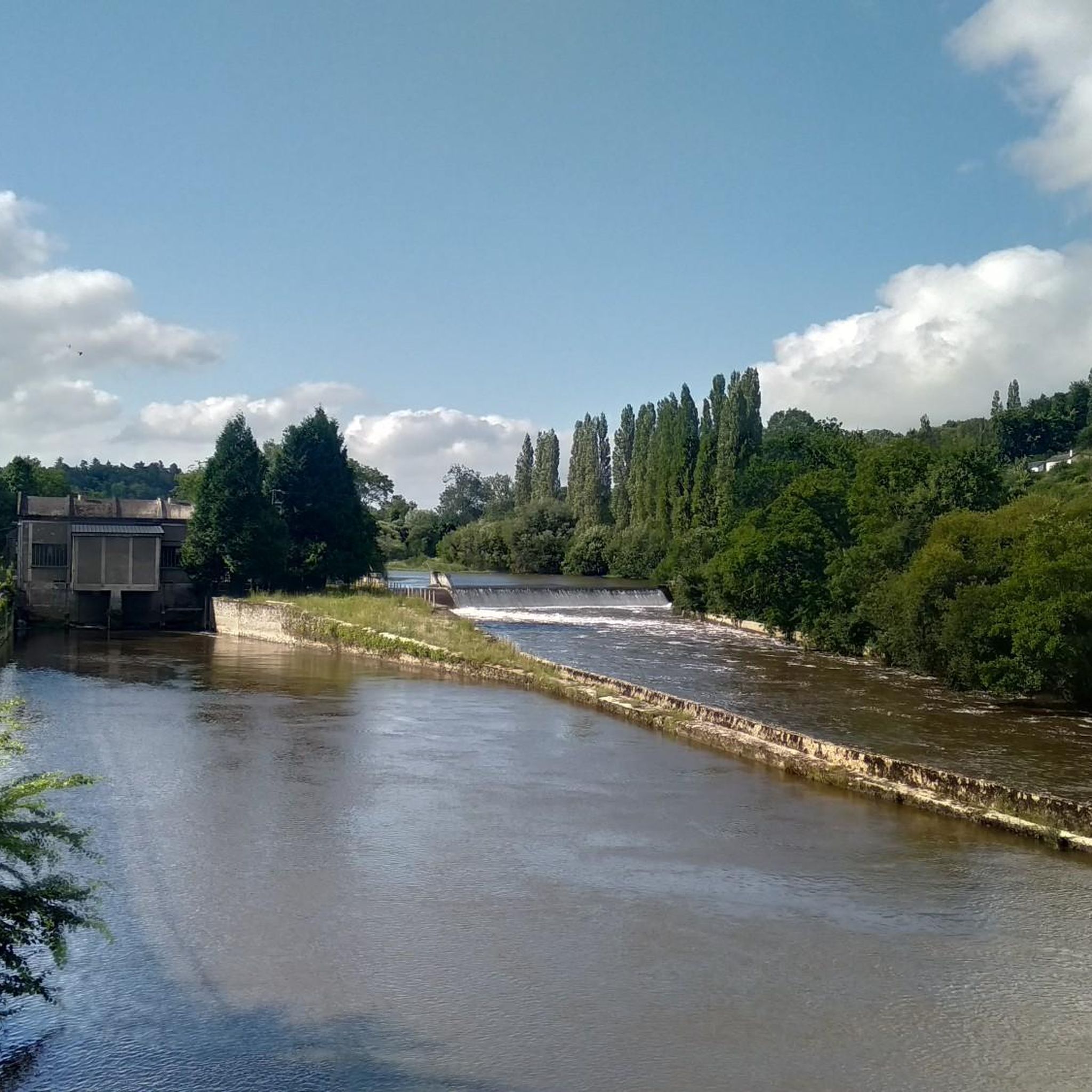
Very pretty little road that winds between Reviers and Fontaine-Henry, bordered in places by the river "La Mue". Very beautiful bucolic place with the arrival in Fontaine-Henry and its old stones including the castle.
0
0

Wonderful section to drive through beautiful nature
0
0

Quiet country roads lead to this small cemetery for approximately 630 British soldiers who died in WWII.
0
0

Totally impressive. You should stop by.
0
0

Caen, first mentioned in documents in 1027, experienced rapid urban development in the 11th century. It was called a burgus (bourg), was the centre of an extensive ducal domain, lay at the crossroads of important roads and had markets and a port. It first developed as an important city in the Duchy of Normandy under William the Conqueror. He had a strong fortress built in Caen and around 1059 an abbey for women (Abbaye aux dames) and one for men (Abbaye aux hommes), in which he was also buried. Later, during the Huguenot Wars (1562), his grave was destroyed and his bones were lost. William's gravestone can still be seen in the church today. He had the monasteries built to atone for his marriage to his cousin Mathilde, which was disapproved of by the Pope. Both monasteries are among the most important monuments in Normandy and are today – by the monks and nuns during the French Revolution
2
0
Caen is a port city and capital of the Calvados department in Normandy, northern France. At its centre is the Château de Caen, a castle built around 1060 by William the Conqueror. It is located on a hill surrounded by the Romanesque abbey churches of Saint-Étienne and Sainte-Trinité, which date from the same period. The multimedia museum Le Mémorial is dedicated to the Second World War and the invasion of Normandy in 1944.
2
0

As a memorial to the countless war dead, such a "Cimetiere militaire" - in German they are usually referred to as "war graves" or "soldiers' cemetery" - is still very important today. "Now, Lord, you let your servant depart in peace, as you have said..." it says in the so-called "Hymn of Simeon" (Luke's Gospel, Chapter 2, Verse 29). However, the many people buried here did not depart in peace, but became victims of war and an inhuman tyranny. The most important and at the same time everlasting function of soldiers' cemeteries or cemeteries of honor or war graves is therefore to keep the memory of this suffering alive and to remind each generation anew (!) of the need to maintain lasting peace.
0
1
Some other impressive testimonies to the artistic work of Jaume PLENSA (born 1955) can be found in the following places and are also documented here in the komoot system as hiking highlights: => “Laurelle” in Bonn (North Rhine-Westphalia, Germany) see https://www.komoot.com/de-de/highlight/6685486 => “Seele?” in Erkrath (Mettmann district, North Rhine-Westphalia, Germany) see https://www.komoot.com/de-de/highlight/4183261 => “Love” in Leeuwarden (Friesland, Netherlands) see https://www.komoot.com/de-de/highlight/3906357 => “Sanna” in Bordeaux (New Aquitaine, France) see https://www.komoot.com/de-de/highlight/5784432 => “Julia” in Madrid (Spain) see https://www.komoot.com/de-de/highlight/6131314 The following two groups of figures by the artist offer a different perspective: => “Air-Earth” in Bamberg (Bavaria, Germany) see https://www.komoot.com/de-de/highlight/2559580 => “Seven Poets” in Andorra la Vella (Andorra) see https://www.komoot.com/de-de/highlight/4741064
1
1
Frequently Asked Questions
What historical sites can I visit in and around Bretteville-l'Orgueilleuse?
Bretteville-l'Orgueilleuse and its surroundings are rich in history. Within the commune, you can explore the historic Église Saint-Germain, dating back to the 13th and 14th centuries, and the notable Château de la Motte from the 17th and 18th centuries. Nearby, significant historical attractions include the Men's Abbey (Saint Stephen), Caen, founded by William the Conqueror, and the Town Hall in Caen. The wider region also offers the Caen Memorial Museum, Caen Castle, and the Bayeux Tapestry Museum.
Are there any significant World War II memorials or museums nearby?
Yes, the area around Bretteville-l'Orgueilleuse played a crucial role in World War II. You can visit the Bazenville British War Cemetery, established shortly after the Gold Beach landings, which contains 979 graves. Another important site is the Radar Battery Museum Douvres-la-délivrance, housed in refurbished bunkers, showcasing the history of radar and the station's life during the war. Additionally, the Monument Regina Rifle Regiment in Bretteville-l'Orgueilleuse commemorates Canadian soldiers who liberated the town in June 1944.
What cultural venues are available in Bretteville-l'Orgueilleuse?
Bretteville-l'Orgueilleuse features Le Studio, a cultural and associative hall that hosts various community activities, including concerts, shows, exhibitions, and cinema. It can accommodate up to 260 people in retractable seating or 600 for standing concerts. The facility also provides meeting rooms and a youth space, serving as a hub for local cultural life.
Are there any unique artistic monuments to see?
Yes, you can discover Lou by Jaume Plensa, an impressive artistic work located in the area. This monument is one of several by the renowned artist Jaume Plensa found in various locations, offering a unique contemporary art experience.
What outdoor activities can I do near Bretteville-l'Orgueilleuse?
The surrounding countryside of Bretteville-l'Orgueilleuse offers ample opportunities for outdoor activities. You can enjoy hiking and cycling routes that explore the valleys of nearby rivers like the Thue and the Mue. For specific routes, consider exploring the Road Cycling Routes, Running Trails, and Cycling routes available in the region.
Are there hiking or walking trails suitable for beginners?
Yes, the area around Bretteville-l'Orgueilleuse provides various walking and hiking opportunities through its countryside. While specific beginner trails are not detailed, many routes exploring the local valleys and ancient roads like the Chemin Haussé can be adapted for different fitness levels. You can find several running and walking loops, including an easy 4.5 km loop around Château de la Motte, which are suitable for those new to hiking or looking for a relaxed stroll.
Can I find cycling routes around Bretteville-l'Orgueilleuse?
Absolutely. Bretteville-l'Orgueilleuse is a great starting point for cycling. You'll find a variety of routes, from moderate to difficult, exploring the scenic landscapes. Options include road cycling routes like the 'Beuvron-en-Auge – Cabourg Beach loop' or the 'Pegasus Bridge – Cinéma Le Cobieu loop'. For touring, consider routes such as 'Landing Beaches 06/06 – Lion-sur-Mer loop' or 'Creully Castle – Route des Marais loop'. More details and specific routes can be found in the Road Cycling Routes and Cycling around Bretteville-L'Orgueilleuse guides.
Are there family-friendly attractions around Bretteville-l'Orgueilleuse?
Yes, several attractions in the vicinity are suitable for families. The Men's Abbey (Saint Stephen), Caen and the Bazenville British War Cemetery are listed as family-friendly historical sites. For more active fun, Parc Festyland, an amusement park located in Bretteville-sur-Odon, is a popular choice for families with children.
What is the best time of year to visit Bretteville-l'Orgueilleuse?
The region is generally pleasant to visit from spring through autumn (April to October) when the weather is milder and ideal for outdoor activities like hiking and cycling. Historical sites and museums are typically open year-round, but checking specific opening hours for individual attractions is always recommended. The lush countryside is particularly beautiful in spring and summer.
What do visitors enjoy most about the attractions in this area?
Visitors frequently appreciate the rich historical significance of the area, particularly the World War II sites and ancient landmarks like the Men's Abbey. The artistic monument Lou by Jaume Plensa is often described as 'totally impressive'. The blend of historical exploration with opportunities for outdoor activities in the scenic countryside also receives positive feedback from the komoot community.
Are there any ancient roads or archaeological points of interest?
Yes, the area has a rich ancient past. The Chemin Haussé is an ancient road that connected Bretteville-l'Orgueilleuse to Jort, used throughout the Middle Ages and sometimes referred to as the 'Chemin du Duc Guillaume'. Archaeological findings in the region also indicate evidence of ancient occupation persisting until the late 4th century, highlighting its long historical significance.
Most popular routes around Bretteville-L'Orgueilleuse
Most popular attractions around Bretteville-L'Orgueilleuse

Get inspired with the komoot mobile app


Explore more
Still not found the Highlight you’re looking for? See guides of the top attractions in other regions:
