The best road cycling routes around Coinces
4.0
(65)
696
riders
55
rides
Road cycling routes around Coinces traverse a predominantly flat landscape, characterized by open agricultural fields and occasional forested sections. The region's terrain offers minimal elevation changes, making it suitable for sustained road cycling. Roads often follow gentle contours, providing smooth surfaces for riders. This area is defined by its rural setting, with routes connecting small villages and offering views of the local countryside.
Best road cycling routes around Coinces
- The most popular road cycling route is Route Forestière des Chapelles…
Last updated: July 15, 2026
3.0
(1)
33
riders
Easy road ride. Great for any fitness level. Mostly well-paved surfaces and easy to ride.
5.0
(1)
28
riders
60.5km
02:24
150m
150m
Moderate road ride. Good fitness required. Mostly well-paved surfaces and easy to ride.

Sign up for free
4.9
(7)
22
riders
28.9km
01:07
60m
60m
Easy road ride. Great for any fitness level. Mostly well-paved surfaces and easy to ride.
10
riders
47.5km
01:48
110m
110m
Easy road ride. Great for any fitness level. Mostly well-paved surfaces and easy to ride.
8
riders
79.9km
03:12
320m
320m
Moderate road ride. Good fitness required. Mostly well-paved surfaces and easy to ride.
Get access to more routes and recommendations from other explorers.
Sign up for free
Already have an account?
Our route recommendations are based on thousands of hikes, rides, and runs completed by other people on komoot.
Start today with a free account
Your next adventure awaits.
Login or Signup

Tips from the Community

The church consists of a single nave, extended by a single-bay choir, and a semicircular apse. Two canted chapels, forming a false transept, were added during this renovation. The church is dominated by a timber-framed bell tower that rises above the first bay of the nave. The gable of the western facade was rebuilt in the last century, an external wooden porch removed. The central axis of the current facade is punctuated by a semicircular door surmounted by an archivolt, a circular opening on the first level and a small window pierced in the upper part of the gable. On the north side, a highly raised stringcourse forming a cornice, resting on simple modillions, still survives in the upper part of the wall. Additional openings were added to the old, narrow, and uneven openings in the last century, in the nave, as well as in the choir and apse, to allow more daylight to enter the building. The interior of the church is covered with a paneled roof structure: the one covering the nave is believed to date from the 16th century. The entire structure has been given a coherent decoration, from the faux-stone plasterwork to the paneled vault, the furnishings, and the statuary. The church also boasts a 17th-century polychrome wooden statue of Saint Barbara. The Prunelé coat of arms appears at the bottom of the stained-glass window of Saint Louis and, outside, on a medallion on the apse wall. The Sauvegarde de l'Art Français (French National Art Protection Agency) granted €5,000 in grants in 2004 for masonry and roof repairs and the installation of drainage.
0
0
Saint-Pierre Church dates back to the 14th century. It is located in Nottonville itself, opposite the town hall. Its 17th-century timber-framed bell tower was restored following the 1999 storm.
0
0

Please note, road condition is very poor for road bikes.
0
0
The Saint-André church burned down in the middle of the 19th century. The priest, forced to celebrate mass in a barn, opened a subscription in 1864, the church was rebuilt in 1865, according to the original plan, plus a transept. Bell tower-porch.
0
0
The Sainte Christine church represents a heritage of the rural and religious world characteristic of Beauce, the "breadbasket" of France since the Middle Ages. The Romanesque nave dates from the 12th century and was given a bell tower in the 18th century. The spire then peaked at 28 meters high, visible from afar from the surrounding countryside. In 1835, a hurricane damaged the roof of the bell tower. In 1893, lightning ignited the spire which burned almost entirely. The traces are still visible today. It would take almost 25 years for the church to regain its bell tower, reduced by half to 17 meters in height. The heritage to be restored is in line with the many religious buildings in this area such as the Saint Sébastien church in Baignolet, listed as a Historic Monument.
0
0
Saint-Pierre-et-Saint-Paul Church is a Romanesque building that underwent some modifications following the partial destruction of the village during the war of 1870. The oriented nave ends with a semi-circular apse and adjoins, to the north, a side aisle. Access is located in the southwest part of the nave, protected by a long canopy. A sacristy was built outside the work and communicates directly, to the south, with the apse. The aisle opens onto the nave by two large arcades. At the entrance to the choir, stand two columns with primitive capitals intended to receive an arch that was probably never built. The nave and the choir are covered with a paneled vault. Two pointed arch bays light the nave to the south. The windows of the apse and the aisle are semicircular. The west gable also includes a semicircular bay. On this side of the church, the arch of the old portal, now walled up, is still visible. An oculus has been pierced in its upper part. The roof is made of slate, as is the bell tower, erected on the western part of the roof. Inside, the decor is especially remarkable for the wall paintings from the 12th and 13th centuries that were discovered in 1939, behind the altarpiece of the sanctuary, by Father Moriceau, the parish priest. Some of them are illegible, others have been perfectly identified. These are the scenes depicting the Descent from the Cross, the Holy Women at the Tomb, the Baptism of Christ, and the Meal at Herod's. Like those in the church of Lutz-en-Dunois and the chapel of Yron in Cloyes, these wall paintings are characteristic of the artistic creation of the upper Loir Valley in the Romanesque period. For the restoration of the plaster and the renovation of the south facade of the church and the porch, the Sauvegarde de l’Art français granted a subsidy of 35,000 F in 1998.
0
0
The Saint-Martin church dates from the 11th century. It was ravaged and burned by the Protestants, then restored at the end of the 16th century. It still retains remains of the Romanesque style, particularly in the nave which was rebuilt on the same plan, with stones and other debris from the fire.
0
0
After an unrealized project by the architect Plisson in 1861, church built in 1866, based on plans by Ricard, diocesan architect; with reuse of the previous 13th century building (bell tower)
0
0
Frequently Asked Questions
How many road cycling routes are available around Coinces?
There are over 50 road cycling routes around Coinces, offering a variety of options for different skill levels and preferences.
Are there easy road cycling routes suitable for beginners in Coinces?
Yes, Coinces offers a good selection of easy routes, with 28 trails specifically rated as easy. The predominantly flat landscape and quiet country roads make it ideal for beginners. For instance, the Saint-Sulpice Church loop from Sougy is a gentle 17.9-mile ride through rural farmland.
What kind of terrain can I expect on road cycling routes in Coinces?
Road cycling routes around Coinces traverse a predominantly flat landscape, characterized by open agricultural fields and occasional forested sections. The region's terrain offers minimal elevation changes, providing smooth surfaces for sustained road cycling.
Are there any challenging road cycling routes in Coinces for experienced riders?
While Coinces is known for its generally flat terrain, there are moderate routes that offer slightly more varied landscapes and longer distances for experienced riders. The Saint Martin Church – Saint-Sulpice Church loop from Patay, for example, is a moderate 37.6-mile path with gentle undulations.
What are the typical lengths of road cycling routes in Coinces?
Route lengths in Coinces vary, with options ranging from shorter, leisurely rides to longer, moderate distances. You can find trails like the Saint-Sulpice Church loop from Sougy at 17.9 miles, up to routes like the Saint Martin Church – Saint-Sulpice Church loop from Patay at 37.6 miles.
Are there circular road cycling routes available in Coinces?
Yes, many of the road cycling routes in Coinces are designed as loops, allowing you to start and finish at the same point. Examples include the Route Forestière des Chapelles – Saint-Sulpice Church loop from Boulay-les-Barres and the Aerotrain test track – Saint-Sulpice Church loop from Bricy.
What can I see along the road cycling routes in Coinces?
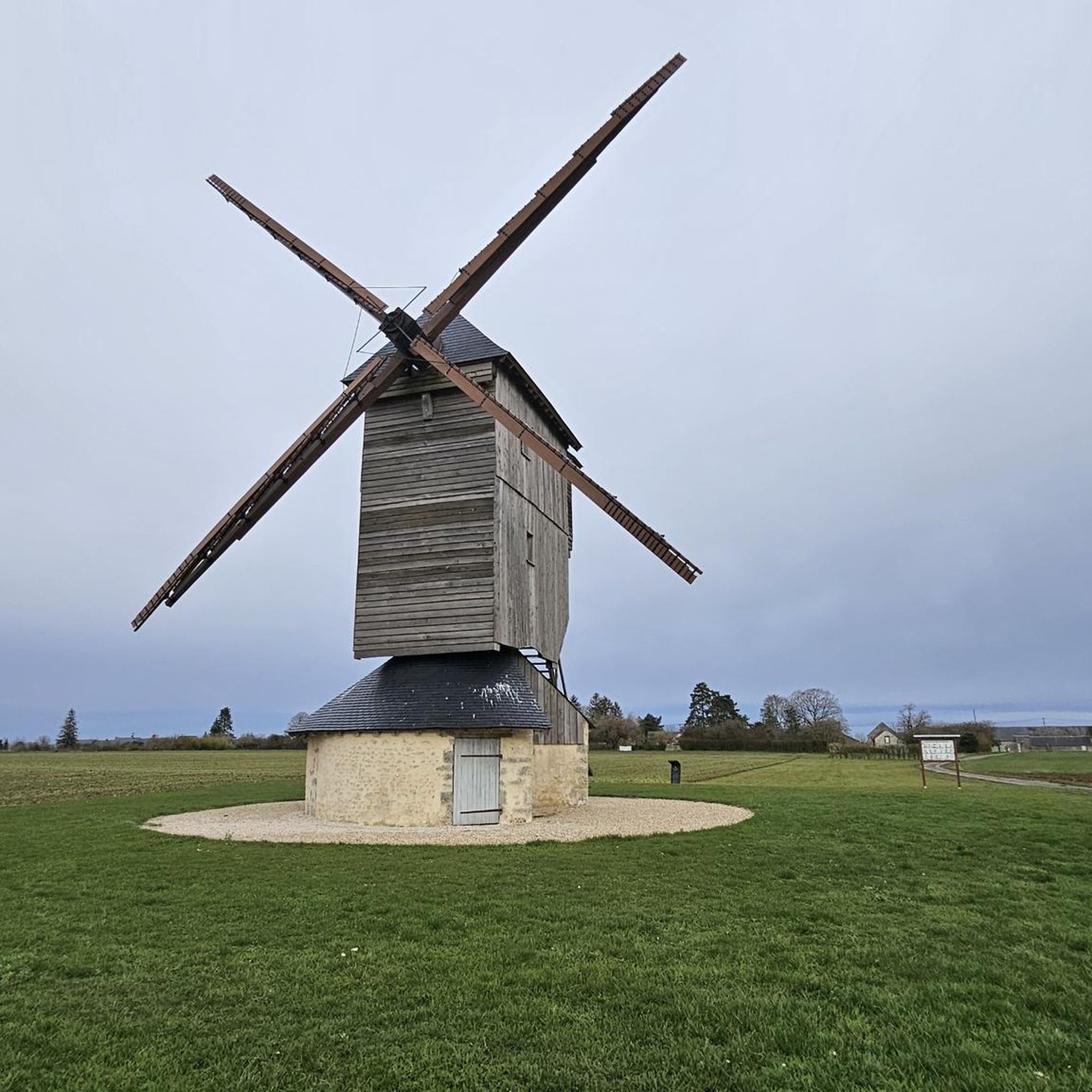
Along the routes, you'll encounter rural scenery, agricultural fields, and small villages. For specific points of interest, consider visiting landmarks like the Lignerolles Mill or the Saint-André Church of Patay. The Artenay Mill is another notable man-made monument in the area.
What do other road cyclists enjoy most about road cycling in Coinces?
The area is highly rated by the komoot community, with an average score of 4.0 stars from over 60 reviews. Reviewers often praise the quiet country roads, the flat agricultural plains, and the occasional small forest sections that define the region's cycling experience.
Are there any less crowded road cycling routes in Coinces?
Coinces is generally characterized by quiet country roads, especially those connecting smaller villages and traversing agricultural areas. Routes like the Saint Martin Church – Saint-Sulpice Church loop from Boulay-les-Barres offer a peaceful experience away from busier thoroughfares.
What is the best season for road cycling in Coinces?
The best season for road cycling in Coinces is typically spring through early autumn, when the weather is mild and the agricultural landscapes are vibrant. During these months, conditions are generally favorable for enjoying the flat terrain and open views.
Are there any viewpoints or scenic spots along the road cycling routes?
While Coinces is predominantly flat, the open agricultural plains offer expansive views of the countryside. Specific viewpoints might include elevated sections near villages or along the occasional forested paths. The Lignerolles Mill is also noted as a viewpoint highlight.
Most popular attractions around Coinces

Get inspired with the komoot mobile app


Explore more
Browse the best Road cycling routes in other regions.
