The best road cycling routes around Cerny-En-Laonnois
4.2
(29)
1,296
riders
115
rides
Road cycling routes around Cerny-En-Laonnois offer a diverse landscape for cyclists, characterized by varied topography, quiet country lanes, and a mix of fields and forests. The region features both gentle, flat sections and more demanding hilly terrain, providing engaging climbs and descents. Cyclists can explore the scenic surroundings of the Ailette Lake and navigate routes that pass through charming villages, often with panoramic views. The area also incorporates historical significance, particularly along the Chemin des Dames, allowing for rides that…
Last updated: October 9, 2026
185
riders
19.1km
00:56
200m
200m
Moderate road ride. Great for any fitness level. Some segments of this route may be unpaved and difficult to ride.
12
riders
Moderate road ride. Good fitness required. Mostly well-paved surfaces and easy to ride.

3.0
(1)
15
riders
33.1km
01:31
280m
280m
Easy road ride. Great for any fitness level. Mostly well-paved surfaces and easy to ride.
15
riders
42.1km
02:07
560m
560m
Moderate road ride. Good fitness required. Some segments of this route may be unpaved and difficult to ride.
14
riders
76.8km
03:27
730m
730m
Moderate road ride. Good fitness required. Some segments of this route may be unpaved and difficult to ride.
Get access to more routes and recommendations from other explorers.
Already have an account?
Our route recommendations are based on thousands of hikes, rides, and runs completed by other people on komoot.
Start today with a free account
Your next adventure awaits.


Tips from the Community

The Vauclair Abbey near Bouconville-Vauclair in the Aisne department was founded in 1134 by Bernard of Clairvaux as a Cistercian monastery. In the Middle Ages, it developed into an important monastic complex; it was significantly expanded, particularly in the 13th century. During the First World War, Vauclair was located directly in the combat zone of the Chemin des Dames and was almost completely destroyed by artillery fire in 1917. The ruins visible today have been archaeologically investigated, excavated, and partially secured since the 1960s. Directly next to the ruins, there is now a medicinal herb garden with around 400 species and a conservation orchard. This verger conservatoire preserves old regional apple and pear varieties; according to the French Garden Association, there are about 84 different varieties represented there. Together with the monastery ruins, the site thus commemorates not only the history of the Cistercians but also their close connection to agriculture, horticulture, and botany.
1
0

In 1914, the peasant village of Ailles covered about 340 hectares, one third of which was forest. 61 houses were grouped around the church of Saint-Martin. The population was declining: in the 1901 census there were still 147 inhabitants, while in 1911 there were only 118. In honor of the Battle of Craonne, a magnificent elm had been planted on March 7, 1814. A century later, it witnessed a new battlefield as French and German shells wiped the village off the map...
1
0
Hidden in the middle of the forest, this Cistercian abbey, founded in 1134 by Bernard of Clairvaux, appears like a mirage. Its majestic ruins bear witness to a turbulent past. From the Hundred Years' War and the French Revolution to the First World War, the abbey suffered considerable destruction. In the 1960s, the site was overgrown with brambles and forgotten. Thanks to the archaeological excavation group "Sources" led by Father Courtois, it experienced a rebirth.
2
0

Beautiful quiet place for a walk
0
0

An Art Deco church, particularly representative of the revival of sacred art in the 1920s. A masterpiece among the churches of the Reconstruction period, visitors will be captivated by the frescoes, mosaics, stained-glass windows and superb bell tower supported by angels. Built between 1928 and 1932 under the direction of architect Paul-Albert Müller, the church is both modern and back to basics. The use of reinforced concrete, a material already used by some architects before the war, is combined with early Christian symbols such as the fish or the pelican
0
0

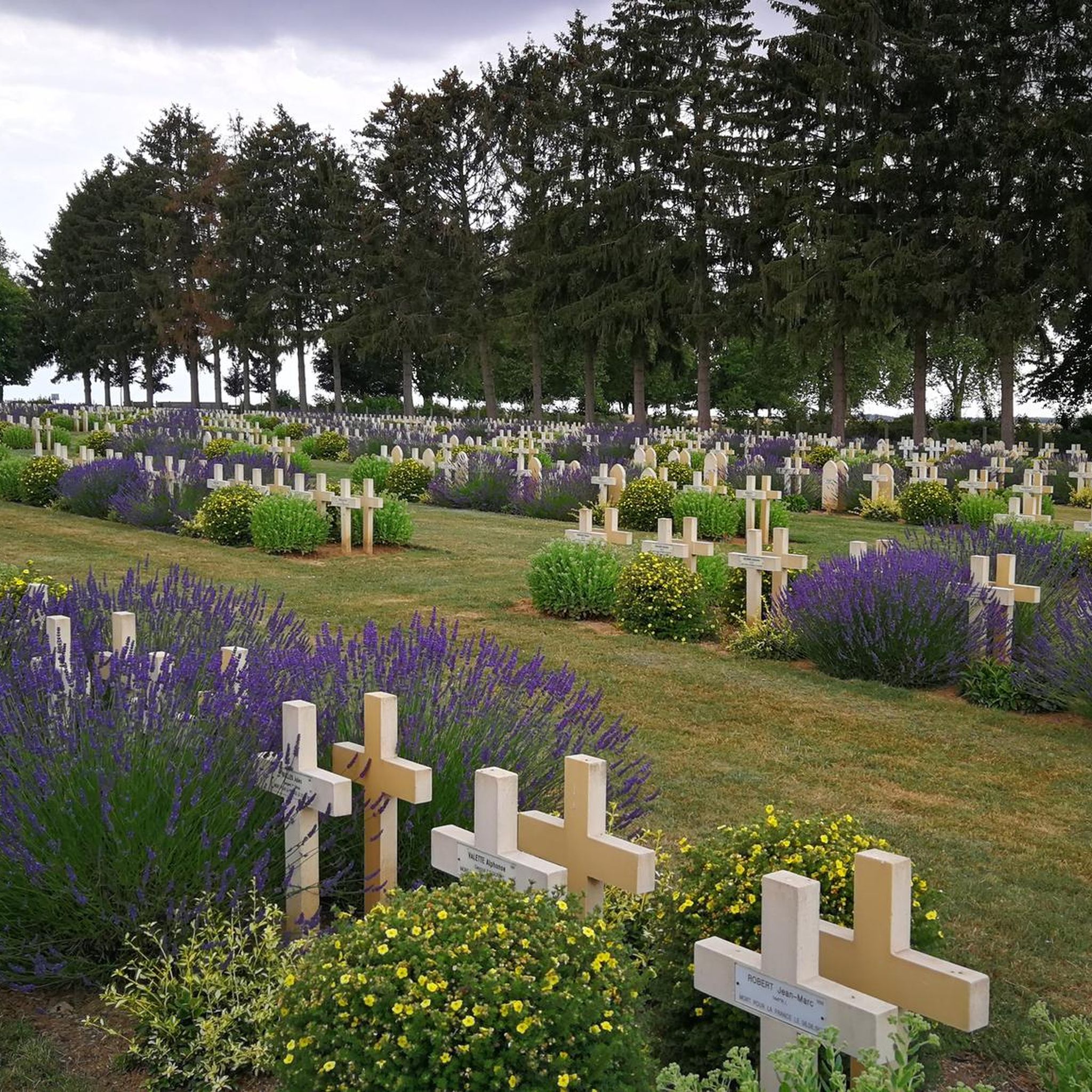
During the First World War, Cerny-en-Laonnois was a strategic point along the Chemin des Dames, a ridge fiercely contested by French and German troops. In September 1914, the village was taken by the Germans, who used it as a defensive post. They dug deep underground networks in the limestone, which served as shelters and munitions stores. In the spring of 1917, the area became the scene of the Nivelle Offensive, a large-scale French attack that resulted in heavy losses and eventually led to mutinies within the French army. Cerny-en-Laonnois was completely destroyed by artillery fire and fighting. After the war, the village was rebuilt a little further south. Today, the military cemeteries, the memorial chapel and the “Lanterne des Morts” bear witness to the immense human suffering that took place here.
6
0

A remarkable remnant of what was once a large and important abbey. Caesar, Napoleon and German troops are said to have passed through this area during the First World War.
3
0

From here you have a nice view of the area
0
0
Frequently Asked Questions
How many road cycling routes are available in Cerny-en-Laonnois?
There are over 115 road cycling routes around Cerny-en-Laonnois, offering a wide range of options for different skill levels. You'll find everything from gentle rides to more challenging routes with significant elevation changes.
What kind of terrain and scenery can I expect while road cycling in Cerny-en-Laonnois?
The region offers a diverse landscape, characterized by varied topography, quiet country lanes, and a mix of fields and forests. You can expect both gentle, flat sections and more demanding hilly terrain with engaging climbs and descents. A prominent feature is the scenic Ailette Lake, around which many routes meander, providing beautiful views.
Are there road cycling routes suitable for beginners or families?
Yes, Cerny-en-Laonnois offers options for all skill levels. While many routes feature hilly terrain, there are also easier, flatter sections, particularly around the Ailette Lake. The Lake Ailette – Vauclair Abbey loop from Chamouille is a moderate route that offers scenic views and is a good starting point. The region also features the traffic-free "Voie Verte de l'Ailette," which is ideal for leisurely tours and families.
Can I combine road cycling with visiting historical sites in the area?
Absolutely. Cerny-en-Laonnois holds deep historical significance, particularly related to World War I. Many cycling routes, especially along the Chemin des Dames, allow you to combine physical activity with cultural exploration. You can visit poignant sites like the Chapelle-Mémorial de Cerny-en-Laonnois and various WWI cemeteries.
What historical landmarks can I visit along road cycling routes?
The area is rich in history. Along your rides, you can encounter sites such as the Vauclair Abbey Ruins, the Ferme d'Hurtebise War Memorial, and the Chapelle-Mémorial de Cerny-en-Laonnois. The Caverne du Dragon, a significant WWI subterranean quarry, is also accessible via routes around Lac de l'Ailette.
Are there any loop road bike routes in Cerny-en-Laonnois?
Yes, many road cycling routes in the region are designed as loops, allowing you to start and end in the same location. Popular options include the Lake Ailette – Vauclair Abbey loop from Chamouille and the Lake Ailette – Lake Ailette loop from Neuville-sur-Ailette, which offers a longer ride around the lake.
What do other road cyclists enjoy most about road cycling in Cerny-en-Laonnois?
The road cycling routes in Cerny-en-Laonnois are highly rated by the komoot community, with an average score of 4.3 stars from over 20 reviews. Cyclists often praise the varied countryside, the scenic beauty of the Ailette Lake, and the opportunity to explore historical sites along the way.
Are there specific routes that offer panoramic views?
Yes, the hilly terrain around Cerny-en-Laonnois ensures a mix of climbs and descents that often reward cyclists with panoramic views of the surrounding countryside, especially along the Chemin des Dames and routes that traverse higher ground.
Where can I find parking for road cycling routes in Cerny-en-Laonnois?
Many routes start from villages or popular attractions, where parking is generally available. For example, routes around Ailette Lake often begin near Chamouille or Neuville-sur-Ailette, which have facilities for visitors. It's advisable to check the starting point of your chosen route for specific parking information.
Are there any traffic-free cycling paths suitable for road bikes in the region?
Yes, the "Voie Verte de l'Ailette" is a notable traffic-free cycle path in the region. This shaded 20km route runs along the Ailette river and passes by two lakes, including Lac de l'Ailette, offering an easy, paved surface ideal for road bikes and leisurely rides.
What is the longest road cycling route available?
One of the longer routes is the Vauclair Abbey – Military cemetery loop from Chamouille, which covers approximately 77 kilometers (47.9 miles) and includes significant elevation gain, offering a challenging and rewarding experience.
Most popular routes around Cerny-En-Laonnois
Most popular attractions around Cerny-En-Laonnois

Get inspired with the komoot mobile app


Explore more
Browse the best Road cycling routes in other regions.
