The best road cycling routes around Haimps
4.5
(2)
140
riders
75
rides
Road cycling routes around Haimps traverse a gentle, rural landscape in the Charente-Maritime department of Nouvelle-Aquitaine, France. The region is characterized by low elevations, typically ranging from 41m to 100m, making it suitable for varied fitness levels. Green spaces like Le Parvet and nearby forests such as Forêt de Pons and Forêt de la Lande provide scenic backdrops for rides. The area features a network of country roads connecting small communes and historical sites.
Best road cycling routes around Haimps
…Last updated: July 1, 2026
13
riders
82.9km
03:27
440m
440m
Moderate road ride. Good fitness required. Mostly well-paved surfaces and easy to ride.
4
riders
45.4km
01:55
310m
310m
Moderate road ride. Good fitness required. Mostly well-paved surfaces and easy to ride.

Sign up for free
3
riders
37.4km
01:31
210m
210m
Easy road ride. Great for any fitness level. Mostly well-paved surfaces and easy to ride.
2
riders
89.4km
03:40
390m
390m
Moderate road ride. Good fitness required. Mostly well-paved surfaces and easy to ride.
3
riders
39.9km
01:42
300m
300m
Moderate road ride. Good fitness required. Mostly well-paved surfaces and easy to ride.
Get access to more routes and recommendations from other explorers.
Sign up for free
Already have an account?
Our route recommendations are based on thousands of hikes, rides, and runs completed by other people on komoot.
Start today with a free account
Your next adventure awaits.
Login or Signup



Tips from the Community


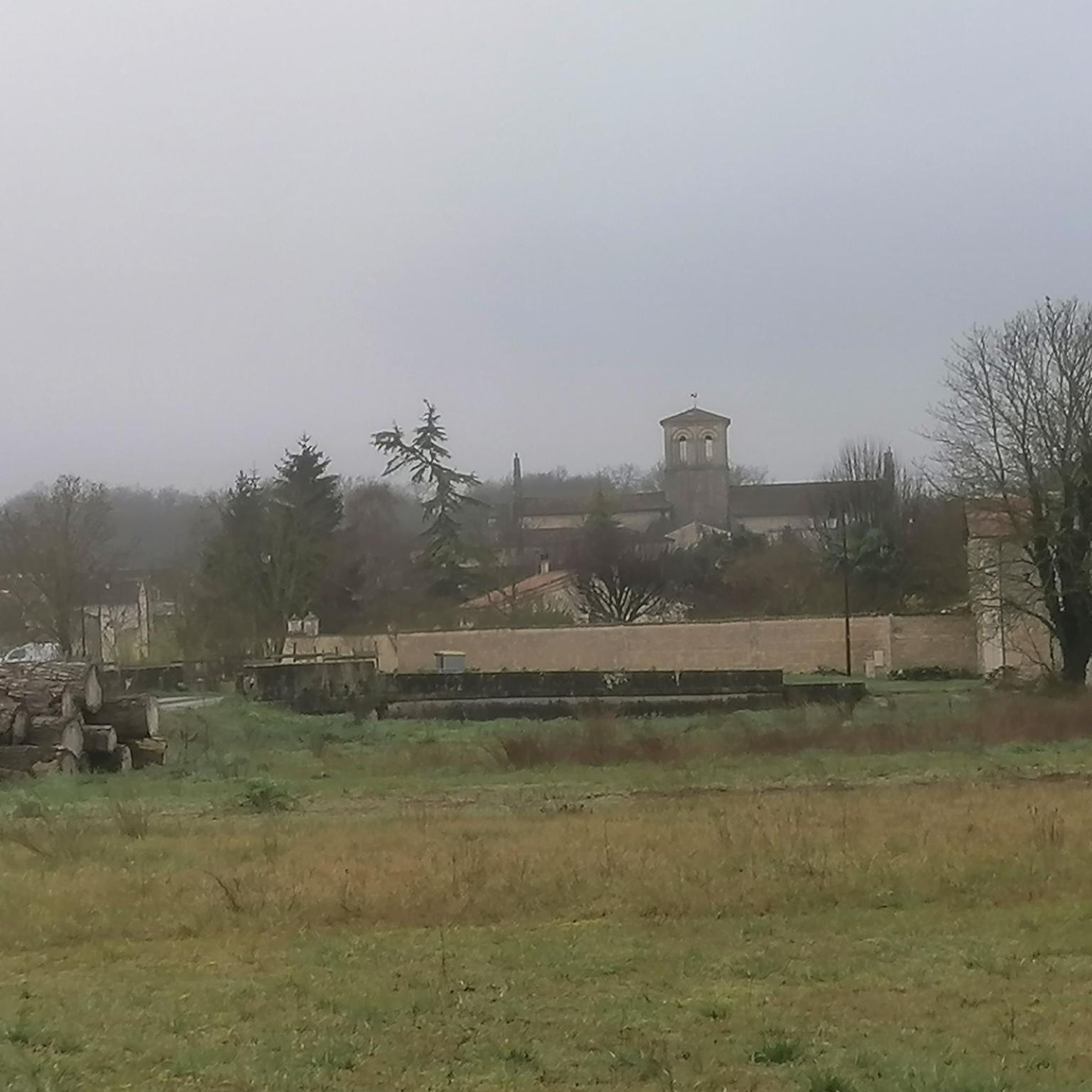
A beautiful church with beautiful houses hidden in an ancient but romantic village, it's worth a stop. The Saint-Étienne church in Brives-sur-Charente is recent. It was consecrated in 1868 and reflects the 14th-century Gothic style. It replaced an older church, of which only a baptismal font, listed as a historic object in 1922, and a capital remain. This font, square and made of a single block of siliceous limestone, is a rare specimen of 12th-century sculpture and symbolism. Certain characteristic features, such as the draperies, allow it to be dated to the 1150s. On three sides, we discover the Annunciation made to Mary, then on the main face of the font, Christ officiating in heaven, and finally Christ descending into hell, savior of souls.
0
0

HISTORY OF THE HOUSE OF HINE In 1791, Thomas Hine (1775-1822), then aged 16, left his native land on the south coast of England to go to France… in the middle of the French Revolution. He went to Jarnac, Charente, where he was hired as a clerk in the Ranson et Delamain trading house, which produced his father’s favourite cognac. James Delamain (1738-1800), a Huguenot who had emigrated from Ireland, founded the trading house in 1763 with his father-in-law Jean-Isaac Ranson. On 3 October 1797 (13 Brumaire Year VI), Thomas Hine married Françoise Élisabeth Delamain, daughter of James Delamain and Marie Ranson. In 1817, the Ranson et Delamain house was liquidated, the heirs having been unable to agree on the succession. The eponymous son-in-law founded Thomas Hine & Co, and his cousins Paul Roullet and Henri Delamain (James' grandson) founded the Maison Roullet et Delamain seven years later, which would become Delamain et Cie. The links between the two Protestant Jarnac families remained close, and Thomas Hine's great-granddaughter, Adrienne Hine (1850-1922) married Philippe Delamain (1847-1902) - they had sons Jacques and Robert Delamain. Today, as in Thomas Hine's time, the Hine establishments line the banks of the Charente in Jarnac. The logo is inspired by Hine's speaking arms, hind meaning doe in Old English. He is lying down, his head turned backwards, symbolically looking towards England2. In 1962, Hine was granted the Royal Warrant of Her Majesty Queen Elizabeth II, and became the official supplier of cognac to the Court of England. In 1987, the company was bought by Moët Hennessy. In 2003, it became the property of the CL Financial group, which emerged from the Angostura group. The House was bought in 2013 by the Edv company. TYPOLOGY OF HINE EAUX DE VIE The House of HINE is located on the banks of the Charente, in the heart of the Cognac region. In the cellars, which ensure the protection of the precious vintages under seal, little has changed in more than 260 years. From the neighboring quays once began the journey of HINE cognacs around the world. This house is one of the oldest in Jarnac. Cognacs exclusively from the Grande and Petite Champagne vintages, a distillation with the lees, and an aging in fine grains with a light to moderate heating. Here, every manufacturing detail will be revealed to you. > To find out more: - https://hine.com/fr - Address: 16 quai Orangerie 16200 Jarnac - 05 45 35 59 59 - Visits, Tasting and Purchases possible - Opening periods: From 01/04 to 31/12 Monday, Tuesday, Wednesday, Thursday and Friday from 9 a.m. to 5:30 p.m. Excluding public holidays. Full price: from €20. Free for children under 18. (Subject to change)
0
0

Located on a rocky spur overlooking the Charente, Taillebourg has one of the oldest castles in the province of Saintonge. It was also one of the most important in the region in the Middle Ages. This stronghold will allow the city to assert its power and prosper thanks to its port and control of trade throughout the Middle Ages. According to a chronicler, the Château de Taillebourg hosted the wedding night of Louis, future king of France under the name Louis VII, with Duchess Eleanor of Aquitaine. Louis IX (future Saint Louis) made the castle his fortress to launch the attack against the King of England, Henry III. This victorious battle of July 21, 1242 became famous and was represented several centuries later by Delacroix, whose painting can be seen in the Battles gallery at the Palace of Versailles. The castle which had endured all the sieges during the Hundred Years' War and the Wars of Religion was taken and destroyed during the Fronde in 1652. During the Revolution, it was sold in lots as national property. Having suffered from lack of maintenance, the building was the victim of a fire in 1822 and was largely destroyed. All that remains now are the ruins with the ramparts and a tower standing like an emaciated being. It now houses a park which is a haven of peace. To access it from the banks of the Charente, you have to take a small detour through the town.
0
0

Built in the 11th and 12th centuries, this church, listed as a historic monument in 1912, is a spectacular work of art. Well worth the drive past when crossing town!
0
0
This small town of less than 400 inhabitants is located in a hilly and wooded area. It is part of one of the stages of the GR 360 long-distance footpath. It is worth going past the abbey and the church while crossing the town! Both were built at the beginning of the 12th century.
2
0
Small picturesque town of about 700 inhabitants. The 12th century Saint-Martial church and the castle are worth the detour!
1
0

Bourg-Charente castle is a 17th century mansion. Nestled on a rocky promontory, it is located a few kilometers from Cognac. It also houses the remains of a medieval fortress. Acquired in the 20th century, this château houses cellars for producing Grand Marnier. It can be visited from Monday to Friday from 8 a.m. to 5 p.m.
0
0
Frequently Asked Questions
How many road cycling routes are available around Haimps?
There are over 75 road cycling routes available around Haimps, offering a variety of options for different skill levels and preferences.
What is the typical terrain like for road cycling in Haimps?
The terrain around Haimps is generally gentle and rural, characterized by low elevations ranging from 41m to 100m. This makes it suitable for leisurely rides without significant climbs, perfect for enjoying the picturesque French countryside.
Are there road cycling routes suitable for beginners in Haimps?
Yes, Haimps offers several easy road cycling routes. For instance, the Roadbike loop from Gourvillette is an easy 37.4 km path that provides a pleasant experience for those new to road cycling.
What kind of scenery can I expect on road cycling routes near Haimps?
You can expect scenic rides through green spaces, alongside rivers like the Briou, and through nearby forests such as Forêt de Pons and Forêt de la Lande. The routes often connect small communes and offer views of the tranquil, rural landscape of Charente-Maritime.
Are there any circular road cycling routes around Haimps?
Yes, many routes around Haimps are circular, allowing you to start and end in the same location. Popular options include the View of the Charente River – Le Moulin de la Baine loop from Matha, the Ecomuseum loop from Matha, and the Bois d'Aumagne loop from Matha.
What are some interesting points of interest or landmarks to see while cycling near Haimps?
While cycling, you can discover various cultural and historical sites. Nearby churches like Eglise de Saint Pierre and Eglise de Saint Hérie in Matha, or Eglise de Saint Vivien in Bagnizeau, make for interesting stops. Further afield, but accessible, are the Abbaye de Fontdouce and the Abbaye aux Dames de Saintes, offering rich historical context to your ride.
What do other road cyclists enjoy the most about road cycling in Haimps?
The area is highly rated by the komoot community, with an average score of 4.3 stars. Cyclists often praise the gentle terrain, quiet rural roads, and the beautiful green spaces and forests that provide a peaceful backdrop for their rides.
Are there any longer distance road cycling routes for experienced riders?
Yes, for those seeking longer rides, Haimps offers several moderate routes. The View of the Charente River – Le Moulin de la Baine loop from Matha is a substantial 82.9 km route, and the View of Saint-Simeux – Vibrac Bridge loop from Macqueville covers 72.7 km, both offering a good challenge.
When is the best time of year for road cycling in Haimps?
The gentle climate of the Nouvelle-Aquitaine region generally makes spring and autumn ideal for road cycling, with pleasant temperatures and less extreme weather. Summer can also be enjoyable, especially in the mornings or late afternoons, taking advantage of shaded routes through forests.
Are there places to stop for refreshments or food along the road cycling routes?
While Haimps itself is a small commune, the routes often pass through or near other small towns and villages. Towns like Matha, Cognac, and Jarnac (which are within cycling distance) offer cafes, restaurants, and local amenities where cyclists can refuel and relax.
Is Haimps a good base for exploring the wider region by road bike?
Absolutely. Haimps's central location in Charente-Maritime, with its network of country roads, makes it an excellent base for exploring the wider region. You can easily cycle to renowned towns like Cognac and Jarnac, famous for their distilleries and cultural attractions, combining your ride with local gastronomy and history.
What is the elevation gain like on road cycling routes in Haimps?
Given the region's gentle topography, elevation gains on routes around Haimps are generally moderate. For example, a 63.7 km route like the Ecomuseum loop from Matha has an elevation gain of approximately 241 meters, making it manageable for most cyclists.

Get inspired with the komoot mobile app


Explore more
Browse the best Road cycling routes in other regions.
