The best cycling routes around Samoussy
4.1
(68)
635
riders
132
rides
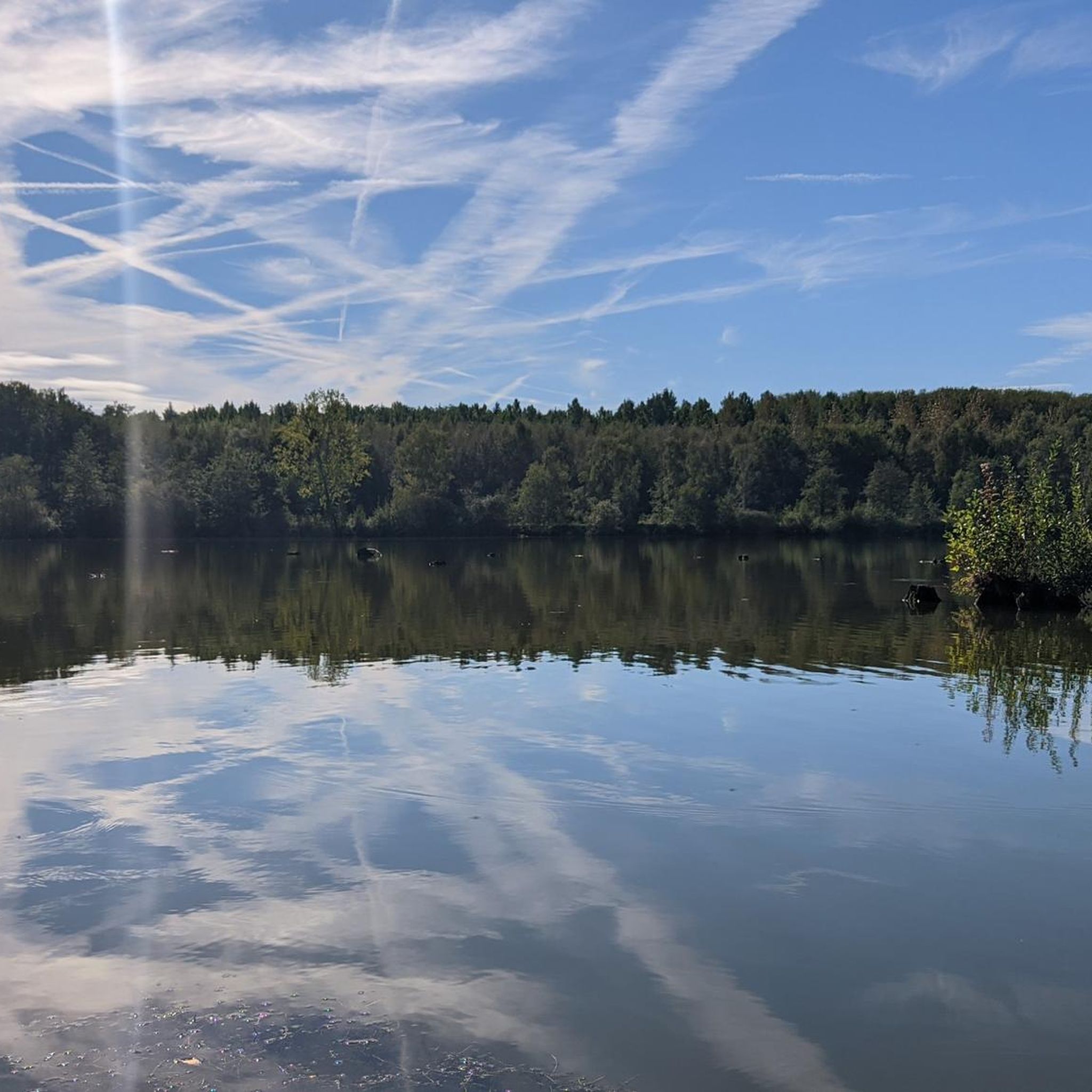
Touring cycling routes around Samoussy are characterized by a landscape rich in natural features and historical context. The commune is significantly forested, with forests and semi-natural environments covering over 65% of its land, providing extensive opportunities for scenic rides on varied terrain. The local hydrographic network includes the Ruisseau des Barentons and the Buze, alongside a small lake, offering picturesque routes. Samoussy's proximity to Laon, with its historical sites and elevated position, adds cultural exploration to cycling routes.
Best touring…
Last updated: October 16, 2026
5.0
(5)
24
riders
30.3km
02:01
320m
320m
Moderate bike ride. Good fitness required. Mostly paved surfaces. Suitable for all skill levels.
4.0
(2)
6
riders
25.0km
02:01
60m
60m
Moderate bike ride. Good fitness required. Mostly paved surfaces. Suitable for all skill levels.

5.0
(2)
7
riders
20.3km
01:18
200m
200m
Moderate bike ride. Good fitness required. Mostly paved surfaces. Suitable for all skill levels.
5
riders
Moderate bike ride. Good fitness required. Mostly paved surfaces. Suitable for all skill levels.
4
riders
Moderate bike ride. Good fitness required. Mostly paved surfaces. Suitable for all skill levels.
Get access to more routes and recommendations from other explorers.
Already have an account?
Our route recommendations are based on thousands of hikes, rides, and runs completed by other people on komoot.
Start today with a free account
Your next adventure awaits.

Tips from the Community

Due to the geological conditions of the hill of Laon, this tower was literally built on sand, which however only became apparent in the years after construction. The sand gave way and the tower began to lean.
1
0
You have a beautiful view over Chambry and the Picardy plain north of Laon.
1
0

The Carolingian origins of the abbey are obscure. Julia Fritsch, heritage curator, interim head of the nationally competent department of the museum of the Middle Ages, thermal baths and hotel of Cluny, in Paris, writes that on the site of a former Carolingian collegiate church, the bishop of Laon, Barthélemy de Jur, installed Norbert of Xanten in 1119 to bring the canons back to respect the canonical rules. Faced with the failure of this operation, Norbert of Xanten, with a few companions, founded the order of the Premonstratensians in 1121. The bishop expelled the canons and replaced them with twelve regular canons from the abbey of Prémontré in 1124[3]. This abbey is one of the primarii inter pares of the Premonstratensian order, along with Cuizy and Florette. The abbey is said to have had five hundred brothers in 1136, which necessitated increasing the dimensions of the church to accommodate them during the office they were to hold together at least once a day[4]. The construction of the church by the Premonstratensians began with the two-level nave and the side aisles, built between 1135 and 1150, covered by an exposed timber frame, and ending in a low transept. It continued with the vaulted choir, built between 1150 and 1160. Altar niches were then added in the second bay of the choir. The vaults of the nave and side aisles were built between 1190 and 1200. The construction of the nave vaults required adding a column flanked by two ringed colonnettes to each pier to support the transverse arch and the ribs. The additional thrust from the vaults required larger flying buttresses. At the transept level, the thrust from the vaults led to an increase in height. The facade of the south arm of the transept was raised. Construction continued with the towers at the level of the last bay of the side aisles, at the junction with the transept, until the end of the 13th century; the spires that topped them were removed in 1737. The western facade is later. It is sometimes attributed to the 14th century. Its construction did not begin until around 1270. One element confirms this dating: the arrival at the abbey of an important relic of Saint Lawrence, around 1230. His martyrdom is depicted on the tympanum of the north portal of the facade[5]. In 1340, Abbot Jean de Bruyères was ordered to fortify his monastery to protect it against potential attackers. In 1728, Joseph Étienne de La Fare obtained on August 23, 1728, a royal patent authorizing him, after the agreement of the abbot of Prémontré and the religious of Saint-Martin, to proceed with the Pope for the reunion of the abbey of Saint-Martin with the bishopric of Laon. The agreement of the Roman Curia was quickly obtained, but the death of Benedict XIII necessitated waiting for the election of the new pope. Clement XII, once elected, issued his bulls in accordance with what had been decided by his predecessor on July 16, 1730. The Pope extinguished the title of regular abbot of Saint-Martin and incorporated the abbey into the bishopric of Laon with the abbatial mensal benefice, but with the obligation to increase the annates of the bishopric of Laon by 1,500 gold florins and that 6,000 livres would be paid annually and in perpetuity by the bishop of Laon and his successors to the college of the order of Prémontré in Paris. The bulls were then published in Laon by the official of Reims on March 17, 1731. The bishop of Laon took possession of the abbey the next day. The king approved the extinction of the abbey of Saint-Martin by letters patent and its incorporation into the episcopal mensal benefice in May 1731. They were registered by the Parliament of Paris on September 6, 1731[6].
0
0
The charming Romanesque chapel of the Templars is located in the museum park. The Order of the Temple was founded in 1128 and the bishop of Laon favored their installation in the city on land belonging to the king of France, located south of the canons' enclosure. The Saint-Jean-Baptiste chapel was erected around 1140: the octagon and the choir are the oldest parts; the porch was added a few decades later.
1
0
This austere church, contemporary with the cathedral, is a fine example of 12th-century monastic architecture. With its two historiated side tympana, the façade is later, dating from around 1270. Inside, the 17th- and 18th-century woodwork and some elements of medieval funerary sculpture are noteworthy.
0
0

View over Laon Region
0
0

Due to its high location, you can enjoy beautiful views of the surrounding area from various places.
0
0

Frequently Asked Questions
How many touring cycling routes are available around Samoussy?
Samoussy offers a wide selection of touring cycling routes, with over 120 options to explore. These routes cater to various skill levels, ensuring there's something for everyone.
What are the difficulty levels of the touring cycling routes in Samoussy?
The routes around Samoussy are diverse in difficulty. You'll find 47 easy routes, 50 moderate routes, and 32 more challenging routes, providing options for cyclists of all experience levels.
Are there any family-friendly touring cycling routes in the Samoussy area?
Yes, Samoussy offers several easy routes suitable for families. These often traverse the extensive forested areas and tranquil landscapes, providing a pleasant and safe cycling experience. For example, the Basilica of Our Lady of Liesse loop from Liesse-Notre-Dame is an easy 15.3-mile ride through flatter areas.
What kind of scenery can I expect on a touring cycling route near Samoussy?
You can expect a rich blend of natural beauty and historical landscapes. The region is significantly forested, with over 65% covered by forests and semi-natural environments, offering scenic rides through woodlands. You'll also encounter tranquil water features like the Ruisseau des Barentons and the Buze, and routes often lead to historical towns like Laon, perched on a 'witness mountain' with panoramic views.
Are there any circular touring cycling routes available?
Yes, many of the touring cycling routes around Samoussy are designed as loops, allowing you to start and finish at the same point. A popular example is the Porte d'Ardon – Notre-Dame Cathedral loop from Athies-sous-Laon, which takes you through historic Laon.
What historical sites or attractions can I see along the touring cycling routes?
Many routes incorporate historical exploration. You can cycle to Laon to see the impressive Notre-Dame Cathedral, medieval city gates like Porte d'Ardon and Porte de Soissons, and the Saint-Martin Abbey. Further afield, sites like Chateau Coucy and Reims Cathedral are also accessible.
What do other touring cyclists enjoy most about cycling in Samoussy?
The touring cycling routes in Samoussy are highly rated by the komoot community, with an average score of 4.0 stars from over 60 reviews. Cyclists often praise the varied terrain, the extensive forested areas, and the opportunity to combine nature rides with visits to significant historical sites.
When is the best time of year to go touring cycling in Samoussy?
The spring and autumn months generally offer the most pleasant conditions for touring cycling in Samoussy, with mild temperatures and beautiful natural scenery. Summer is also popular, though it can be warmer. The forested routes provide good shade during hotter days.
Are there any routes for more advanced touring cyclists seeking a challenge?
Yes, for experienced cyclists looking for a challenge, there are 32 difficult routes available. An example is the German cemetery of Montaigu loop from Coucy-lès-Eppes, a demanding 32.5-mile path that explores the wider region with significant elevation changes.
Can I find routes that pass by water features or natural reserves?
Absolutely. The local hydrographic network, including the Ruisseau des Barentons and the Buze, offers picturesque routes. While specific routes passing directly through them aren't detailed, the region is close to natural reserves like the Réserve naturelle du marais de Vesles-et-Caumont and the Réserve naturelle des Landes de Versigny, which can be incorporated into longer rides.
Are there any VTT (mountain biking) trails near Samoussy?
While this guide focuses on touring cycling, the Forêt de Samoussy itself is known to feature a 10km VTT trail with 'very clean paths' and a 'quite pleasant' forest environment, suitable for those looking for less strenuous, immersive nature rides on a mountain bike.
Where can I find parking for the touring cycling routes?
Many touring cycling routes around Samoussy start from towns and villages like Athies-sous-Laon, Coucy-lès-Eppes, or Liesse-Notre-Dame. These locations typically offer public parking facilities, making it convenient to access the trails. It's advisable to check local parking options for your chosen starting point.
Most popular attractions around Samoussy

Get inspired with the komoot mobile app


Explore more
Browse the best Cycling routes in other regions.
