The best cycling routes around Nieul-Le-Virouil
4.2
(44)
208
riders
68
rides
Touring cycling around Nieul-Le-Virouil benefits from its location within the Charente-Maritime department, known for its extensive cycle paths and varied landscapes. The region features rolling countryside, vineyards, and dedicated greenways that offer accessible routes. While Nieul-Le-Virouil itself is inland, the wider area provides access to coastal routes and the Marais Poitevin Regional Natural Park. The terrain generally presents minimal elevation changes, making it suitable for diverse cycling preferences.
Best touring cycling routes around Nieul-Le-Virouil
- The most popular touring cycling route…
Last updated: June 30, 2026
4.3
(3)
8
riders
48.6km
03:01
350m
350m
Moderate bike ride. Good fitness required. Mostly paved surfaces. Suitable for all skill levels.
5.0
(3)
33
riders
45.8km
03:11
280m
280m
Moderate bike ride. Good fitness required. Mostly paved surfaces. Suitable for all skill levels.

Sign up for free
4.2
(9)
16
riders
21.1km
01:25
120m
120m
Easy bike ride. Great for any fitness level. Mostly paved surfaces. Suitable for all skill levels.
4.0
(2)
22
riders
34.4km
02:28
210m
210m
Moderate bike ride. Good fitness required. Mostly paved surfaces. Suitable for all skill levels.
4.5
(2)
7
riders
25.6km
01:36
190m
190m
Moderate bike ride. Good fitness required. Mostly paved surfaces. Suitable for all skill levels.
Get access to more routes and recommendations from other explorers.
Sign up for free
Already have an account?
Our route recommendations are based on thousands of hikes, rides, and runs completed by other people on komoot.
Start today with a free account
Your next adventure awaits.
Login or Signup

Tips from the Community

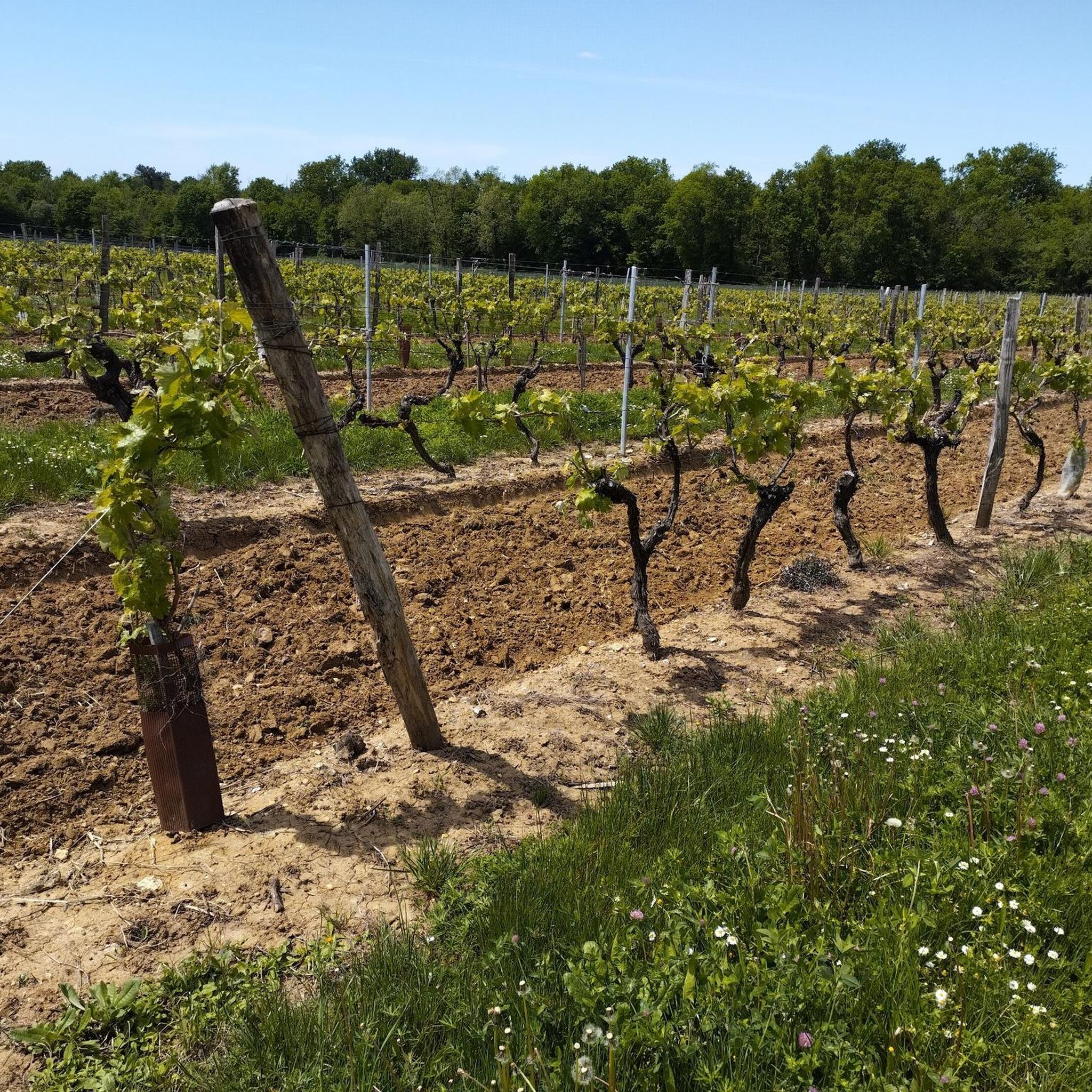
A beautiful section of gravel of about 2km which crosses the vines. You can get off the roads a bit and the gravel is quite compact.
1
0

This Templar chapel was built in the 12th century and renovated in 1706. It was acquired in 1949 by Mr. and Mrs. Frédéric, the current owners, who completely restored it. Since 1986, on August 15 of each year, a mass has been celebrated there.
2
0

There is a great children's park
0
0

Charming little piece of nature. The chapel (above) can be visited when it is open. A skeleton welcomes you but don't worry, it is very discreet!
0
0

A pleasant visit with a passionate guide.
0
0

Hilaire de Poitiers (in Latin Hilarius Pictaviensis) is the first bishop of Poitiers actually attested, born around 315 and died in 367. He is also one of the first Latin Christian writers. A fourth-century theologian, he was a great defender of Nicene orthodoxy against Arianism and Sabellianism. He was designated by the title of "Athanasius of the West" because of his energetic and pastoral action in the promotion of Christian orthodoxy. It is a pretty little church that bears his name, and which is in the heart of the village. It presents a most interesting example of a primitive novel. The facade is a tripartite composition with two superimposed registers, without any sculpture, except for the two herringbone cords which frame the second register. At ground level, the 2 blind side bays are narrow and higher than the gate. The upper arcade has five arches resting on columns with bare capitals. The central arch is pierced by a small bay. The simple nave leads to the square under the bell tower. Barrel vaulted, it has a most archaic Romanesque base. The side walls are composed of two levels of arcades of equal height. The lower register is made of two arches on columns, the upper register of three, of which the middle one is pierced by a bay. Some colonens have disappeared. The bell tower is supported on its north face by a staircase. Each side of the staircase is pierced with twin trilobed bays. The whole is topped with a slate spire. The flat chevet is surmounted by a very steep gable rebuilt in the 19th century. It includes an ogival bay, walled from the inside, underlined by a sculpted cordon. Its perimeter is highlighted by a cornice decorated with a frieze with geometric patterns reminiscent of the arches of Guitinières, a neighboring town. As for the modillions that accompany it, some are not lacking in originality, others are very refined. The choir, rebuilt in the Gothic period, occupies two bays with ogival vaults with formers and keys. The ribs fall on groups of small columns with capitals adorned with large ivy leaves. We will notice on the perimeter of the church some old stones engraved with escutcheons and a boat.
0
0
The city gate, called 'Porte de ville vieille', which gives access to the old town was built between the 13th and 15th centuries and allows you to reach the very typical houses of the town center of Jonzac. It was classified as a historical monument in 1926.
1
0
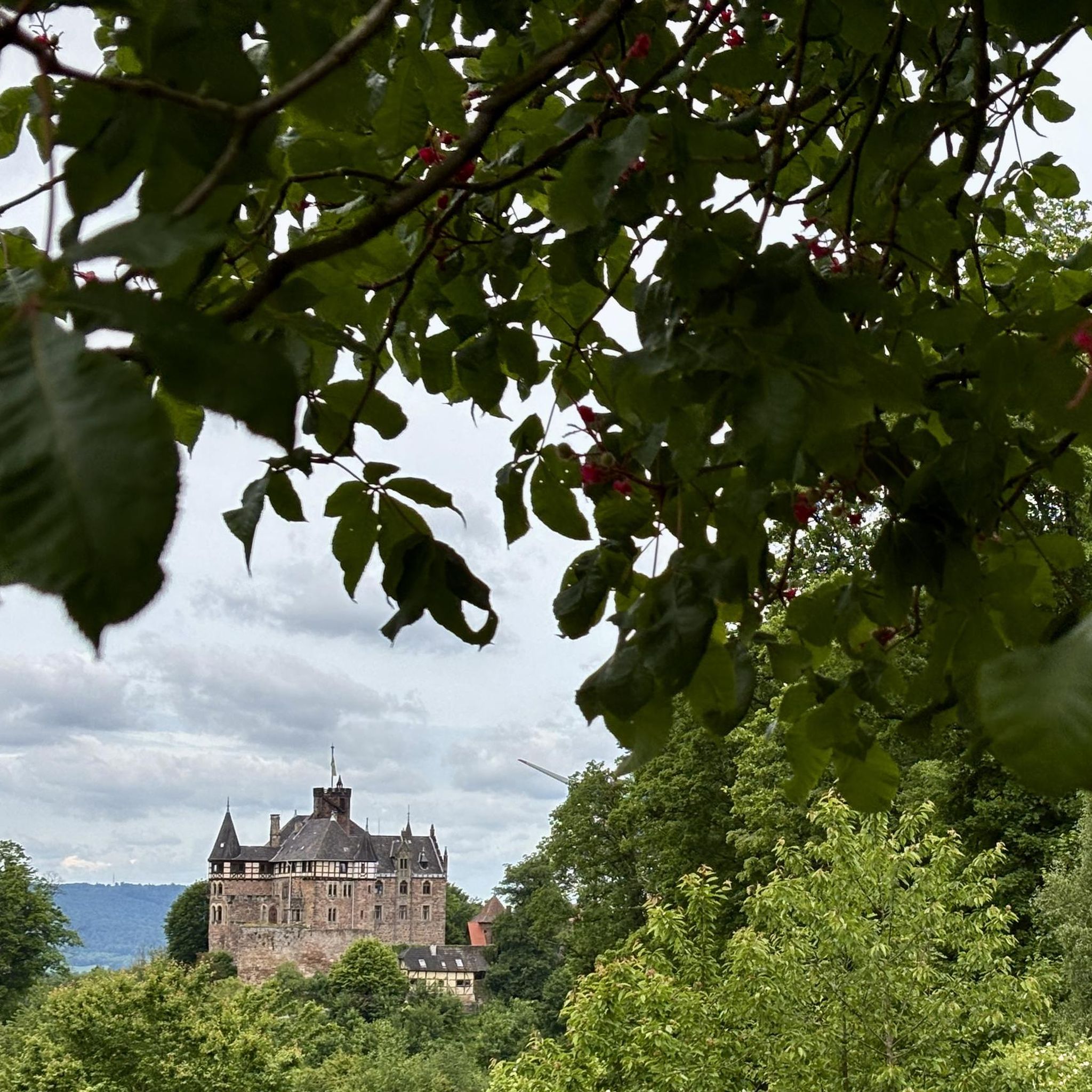
In 1073, the castle already exists; the first known lord was Guillaume de la Rochandry at the beginning of the 12th century. The 1449 inscription on the castle attests to its reconstruction following the destruction caused by the Hundred Years War. In 1505, Jean de Sainte-Maure, lord of Jonzac, founded the Carmelite monastery on the remains of an old chapel dedicated to Saint Nicolas. The cloister was built in 1657. The young Louis XIV, the Queen Mother and Mazarin stayed at the castle in 1659. The castle remained at Sainte-Maure until the end of the 17th century, then passed through marriage to Espardes de Lussan, which transformed the fortress in beautiful stately home with neat ornamentation and guard until the Revolution. Currently the north wing of the castle houses the buildings of the Town Hall (restored in the 19th century), and the south wing, those of the sub-prefecture. The cloister was restored between 1976 and 1978, and now houses a cultural center, with exhibition halls and an archaeological museum. The towers, postern and fountain in the basement date from the 12th century. Of the old feudal castle, only the postern and an isolated tower remain, connected to the main body by a large hall. The moat in front of the drawbridge was filled was filled in the 19th century. It was reopened at the beginning of the 21st century. The imposing gatehouse is marked 1549 and therefore dates from the 16th century, a period of work including the north-west tower, while the south-west tower, of a smaller diameter, is from the 17th century. The towers flanking the postern have retained their defenses. At each, the loopholes have been retained or enlarged. Stone stairs serve each floor and access the walkway. This passage seems to have been discovered, as evidenced by the gargoyles. The crenellation includes machicolations with archers in the middle of the merlons. The slate roofs are high pepperboxes on the towers, and a curious set with two sides connecting two pepperboxes for the gatehouse The fountain located in the basement of the sub-prefecture, has a niche and a niche frame decorated with sculptures imitating stalactites. Carved mask. The fountain was probably built by Léon de Sainte-Maure, Count of Jonzac, who enlarged and embellished the castle in the middle of the 12th century. In a former courtyard of the castle, a theater was built in the 19th century. It is a round building with approximately 300 seats.
0
0
Frequently Asked Questions
How many touring cycling routes are available around Nieul-Le-Virouil?
There are over 70 touring cycling routes around Nieul-Le-Virouil, offering a wide range of options for exploring the Charente-Maritime region. These routes cater to various skill levels, with many being easy or moderate.
What is the typical terrain like for touring cycling in the Nieul-Le-Virouil area?
The terrain around Nieul-Le-Virouil and the wider Charente-Maritime region is generally characterized by rolling countryside and picturesque vineyards, with minimal elevation changes. This makes it suitable for leisurely touring. You'll also find dedicated greenways (Voies Vertes) and cycle routes (Véloroutes) that often follow old railway lines or towpaths, providing smooth and safe surfaces.
Are there any easy touring cycling routes suitable for beginners or families?
Yes, the region offers numerous easy routes perfect for beginners or family outings. Many of the greenways and Véloroutes are designed for non-motorized traffic, ensuring a safe and enjoyable experience. For example, the Saint Paul Chapel – Jonzac Castle loop from Jonzac is an easy 13.2-mile (21.2 km) trail that takes you through historical landmarks and rural scenery.
What kind of historical landmarks or attractions can I see along the cycling routes?
As you cycle through the area, you can discover various historical landmarks. Near Nieul-Le-Virouil, you might encounter local heritage sites like a communal wash house or an ancient cross. Further afield, routes can lead you to significant points of interest such as Jonzac Castle or the Saint Paul Chapel. The Saint Paul Chapel – Jonzac Castle loop from Jonzac specifically highlights these attractions.
Are there any circular touring cycling routes available?
Yes, many of the touring cycling routes in the region are designed as loops, allowing you to start and end at the same point. A popular moderate option is the Jonzac and Archiac Loop, which covers 30.2 miles (48.6 km) and connects towns through the Charente-Maritime countryside. Another great choice is the Forest Trail loop from Guitinières, winding through local woodlands.
What do other touring cyclists enjoy most about cycling in Nieul-Le-Virouil?
The area is highly rated by the komoot community, with an average score of 4.3 stars from over 40 reviews. More than 200 touring cyclists have explored Nieul-Le-Virouil's varied terrain using komoot. Reviewers often praise the tranquil countryside, the well-maintained cycle paths, and the blend of natural beauty with charming villages and historical sites.
What is the best time of year for touring cycling in the Charente-Maritime region?
The Charente-Maritime region generally offers pleasant cycling conditions from spring through early autumn. The weather is typically mild, making it ideal for exploring the vineyards, coastal paths, and greenways. Summer can be warm, but coastal breezes and shaded routes provide relief. Spring and autumn offer comfortable temperatures and beautiful scenery.
Are there options for more challenging or advanced touring cycling routes?
While much of the terrain is gentle, the extensive network allows for longer, more challenging rides by combining routes or exploring further afield. The region's diverse landscapes, from the flat Marais Poitevin to routes through vineyards, can be linked to create more extensive journeys. You'll find a few difficult routes among the 70+ available, though the majority are easy or moderate.
Can I find bike-friendly cafes or places to stop for refreshments along the routes?
Yes, as you cycle through the charming villages and towns of Charente-Maritime, you'll find various cafes, bakeries, and local establishments where you can stop for refreshments. Many routes pass through or near communities that cater to visitors, offering opportunities to experience local cuisine and take a break.
Is it possible to access cycling routes using public transport in the Nieul-Le-Virouil area?
While Nieul-Le-Virouil itself is a smaller inland commune, the wider Charente-Maritime department has a developing public transport network. For accessing major cycling hubs or starting points for longer tours, it's advisable to check regional bus or train services that connect to larger towns like Jonzac or Mirambeau, which are often starting points for many routes. Always verify bike carriage policies with the specific transport provider.
Are there any specific routes that offer views of natural features like the Marais Poitevin?
While Nieul-Le-Virouil is inland, its location within Charente-Maritime means that the unique natural scenery of the Marais Poitevin Regional Natural Park is within reach for day trips or multi-day tours. This vast labyrinth of canals, waterways, and wet meadows offers distinct natural views. You would typically need to cycle towards the western part of the department to fully immerse yourself in this landscape.
What are some other notable cycling routes in the broader Charente-Maritime region?
Beyond the immediate vicinity of Nieul-Le-Virouil, the Charente-Maritime region is crisscrossed by major cycling routes. These include sections of the Vélodyssée, which follows the Atlantic coast, and the Flow Vélo, which traces the Charente River. These routes offer extensive networks of safe cycle paths through diverse landscapes, including coastal areas, islands like Île de Ré and Île d'Oléron, and the unique Marais Poitevin.
Most popular attractions around Nieul-Le-Virouil

Get inspired with the komoot mobile app


Explore more
Browse the best Cycling routes in other regions.
