The best walks and hikes around Saint-Germain-De-Lusignan
4.4
(50)
233
hikers
36
hikes
Hiking around Saint-Germain-De-Lusignan offers diverse landscapes, including sprawling vineyards, dense woods, and agricultural areas. Several rivers like the Tort, Rochette, Maine, and Seugne meander through the countryside, often providing scenic routes along their banks. Hikers can discover historical sites such as the Château de la Tenaille and various traditional mills. The varied terrain features a mix of plains, wetlands, and gentle foothills.
Best hiking trails in Saint-Germain-De-Lusignan
- The most popular hiking route is Donkey Bridge and Saint Paul Chapel Loop…
Last updated: June 30, 2026
4.2
(10)
57
hikers
5.17km
01:21
30m
30m
Easy hike. Great for any fitness level. Easily-accessible paths. Suitable for all skill levels.
4.6
(5)
30
hikers
4.73km
01:12
10m
10m
Easy hike. Great for any fitness level. Easily-accessible paths. Suitable for all skill levels.

Sign up for free
17
hikers
3.19km
00:50
20m
20m
Easy hike. Great for any fitness level. Easily-accessible paths. Suitable for all skill levels.
4.5
(2)
4
hikers
3.50km
00:54
10m
10m
Easy hike. Great for any fitness level. Easily-accessible paths. Suitable for all skill levels.
3
hikers
5.30km
01:21
20m
20m
Easy hike. Great for any fitness level. Easily-accessible paths. Suitable for all skill levels.
Get access to more routes and recommendations from other explorers.
Sign up for free
Already have an account?
Our route recommendations are based on thousands of hikes, rides, and runs completed by other people on komoot.
Start today with a free account
Your next adventure awaits.
Login or Signup


Tips from the Community

Lovers of old stones and countryside: go for it!! Possibility to shorten or increase the size of the circuit easily. At sunrise, a treat!!
0
0

Next to the museum there is a kiosk with cold drinks etc.
0
0
Below the church a spring rises and flows into an old washing place - wonderful for refreshment on a hot day
0
1

This Templar chapel was built in the 12th century and renovated in 1706. It was acquired in 1949 by Mr. and Mrs. Frédéric, the current owners, who completely restored it. Since 1986, on August 15 of each year, a mass has been celebrated there.
2
0
This Romanesque church was built in the 12th century, but all that remains of the original building is the bell tower. It was modified in the 15th and 16th centuries. A Renaissance style facade replaces the original facade and the square bell tower was built in the 12th century.
2
0

Charming little piece of nature. The chapel (above) can be visited when it is open. A skeleton welcomes you but don't worry, it is very discreet!
0
0

A pleasant visit with a passionate guide.
0
0

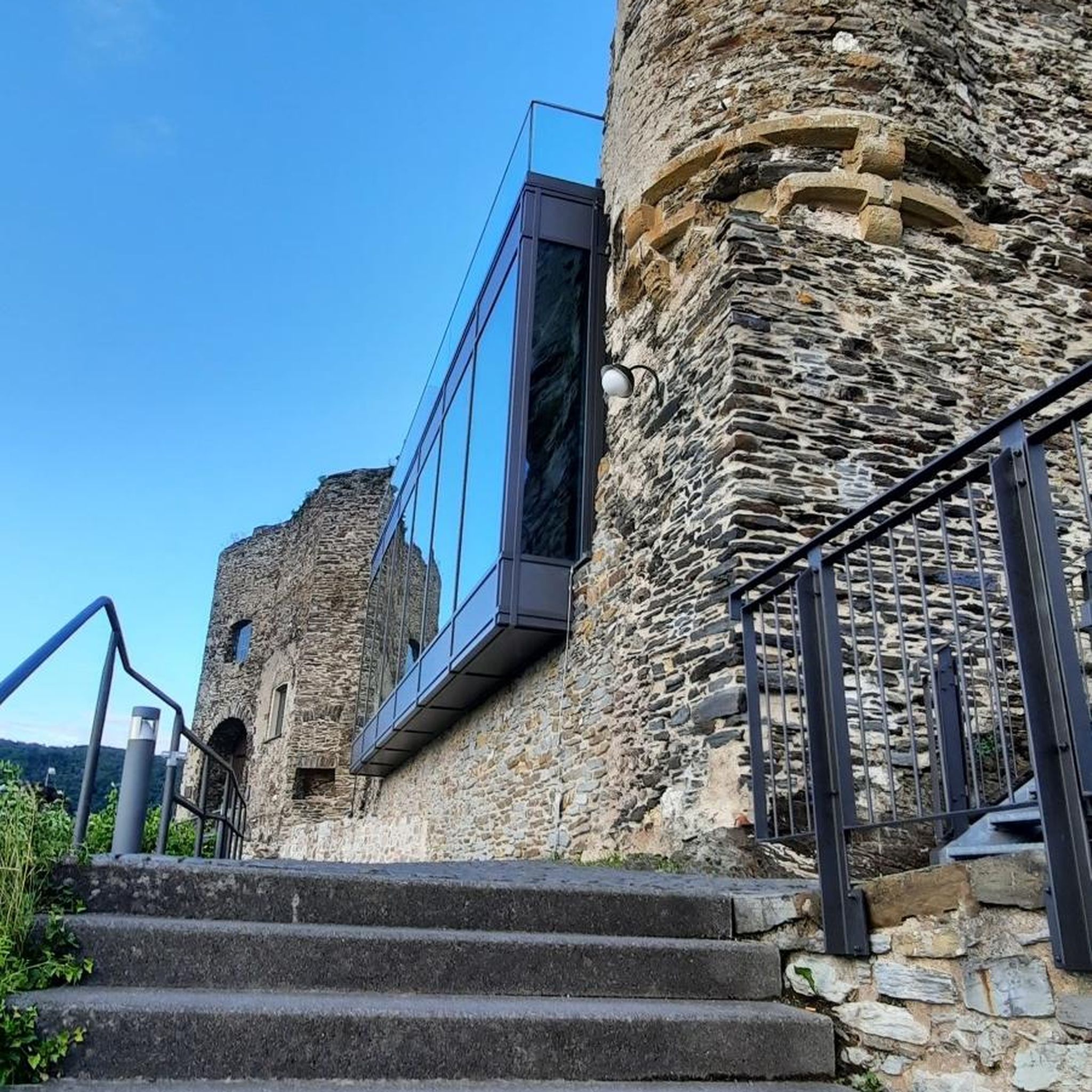
In 1073, the castle already exists; the first known lord was Guillaume de la Rochandry at the beginning of the 12th century. The 1449 inscription on the castle attests to its reconstruction following the destruction caused by the Hundred Years War. In 1505, Jean de Sainte-Maure, lord of Jonzac, founded the Carmelite monastery on the remains of an old chapel dedicated to Saint Nicolas. The cloister was built in 1657. The young Louis XIV, the Queen Mother and Mazarin stayed at the castle in 1659. The castle remained at Sainte-Maure until the end of the 17th century, then passed through marriage to Espardes de Lussan, which transformed the fortress in beautiful stately home with neat ornamentation and guard until the Revolution. Currently the north wing of the castle houses the buildings of the Town Hall (restored in the 19th century), and the south wing, those of the sub-prefecture. The cloister was restored between 1976 and 1978, and now houses a cultural center, with exhibition halls and an archaeological museum. The towers, postern and fountain in the basement date from the 12th century. Of the old feudal castle, only the postern and an isolated tower remain, connected to the main body by a large hall. The moat in front of the drawbridge was filled was filled in the 19th century. It was reopened at the beginning of the 21st century. The imposing gatehouse is marked 1549 and therefore dates from the 16th century, a period of work including the north-west tower, while the south-west tower, of a smaller diameter, is from the 17th century. The towers flanking the postern have retained their defenses. At each, the loopholes have been retained or enlarged. Stone stairs serve each floor and access the walkway. This passage seems to have been discovered, as evidenced by the gargoyles. The crenellation includes machicolations with archers in the middle of the merlons. The slate roofs are high pepperboxes on the towers, and a curious set with two sides connecting two pepperboxes for the gatehouse The fountain located in the basement of the sub-prefecture, has a niche and a niche frame decorated with sculptures imitating stalactites. Carved mask. The fountain was probably built by Léon de Sainte-Maure, Count of Jonzac, who enlarged and embellished the castle in the middle of the 12th century. In a former courtyard of the castle, a theater was built in the 19th century. It is a round building with approximately 300 seats.
0
0
Frequently Asked Questions
What types of hiking trails can I find in Saint-Germain-De-Lusignan?
Saint-Germain-De-Lusignan offers a diverse network of over 35 hiking trails. You'll find a mix of easy strolls and moderate excursions, with 25 routes classified as easy and 13 as moderate, catering to various fitness levels. The trails often traverse vineyards, dense woods, and follow picturesque river valleys.
Are there any family-friendly hiking routes in the area?
Yes, many of the trails are suitable for families. For an easy and scenic walk, consider the Jonzac Castle – Jonzac Castle loop from Jonzac, which is 3.2 miles (5.2 km) long and offers views of the historic castle. Another gentle option is the Roman-Era Dam loop from Jonzac, a 2.8 miles (4.5 km) trail.
What kind of natural scenery will I encounter on the hikes?
The region is rich in natural beauty, featuring sprawling vineyards, dense woods like Le Plantis and Bois du Pinier, and agricultural landscapes with orchards. You'll often find trails meandering along rivers such as the Tort, Rochette, Maine, and the picturesque Seugne, known as the 'jewel of Charente-Maritime'. The varied terrain includes wetlands, plains, and gentle foothills.
Are there any historical or cultural landmarks to see along the trails?
Absolutely. Hikers can discover quaint farms and traditional Saintonge architecture. Notable historical sites include the remnants of the Abbey of Tenaille, such as the Saint Paul Chapel, and several historic mills like Moulin de la Rochette and Moulin du Val de Seugne. Some trails even follow ancient Roman roads. The Donkey Bridge and Saint Paul Chapel Loop is a great option to explore historical landmarks.
Can I find circular hiking routes in Saint-Germain-De-Lusignan?
Yes, many of the trails are designed as circular loops, allowing you to start and end at the same point. For example, the Saint-André Church of Clion – Saint Paul Chapel loop from Clion offers a pleasant 5.2 km circular walk. The region also features a 'Circuit pédestre N°1 - 'Les Moulins'' which is a 10.7 km circular walk highlighting historical mills.
What is the best time of year to go hiking in this region?
The Charente-Maritime region is generally pleasant for hiking for much of the year. Spring and autumn offer mild temperatures and beautiful scenery, with blooming wildflowers or vibrant fall foliage. Summer can be warm, but riverside trails and wooded areas provide shade. Winter hiking is also possible, especially on clear, crisp days.
Are there opportunities for wildlife spotting on the trails?
Yes, particularly in the wooded areas around Antignac, you might have the chance to spot local wildlife such as deer. The diverse landscapes, including dense woods and river valleys, provide habitats for various birds and other small animals, making for interesting wildlife observation opportunities.
What do other hikers say about the trails in Saint-Germain-De-Lusignan?
The hiking routes in Saint-Germain-De-Lusignan are highly rated by the komoot community, with an average score of 4.4 stars from over 40 reviews. Hikers often praise the varied terrain, the peaceful atmosphere of the vineyards and woods, and the historical points of interest found along the paths.
Are there any longer-distance hiking options or pilgrimage routes nearby?
For those seeking a longer and more historically significant journey, sections of the legendary Ways of Saint-Jacques de Compostelle pass through Charente-Maritime. These routes offer a unique blend of medieval religious heritage, vineyards, and agricultural plains, providing a more extensive hiking experience.
Where can I park my car when accessing hiking trails?
While specific parking details vary by trailhead, many villages and popular starting points for trails in the Saint-Germain-De-Lusignan area offer designated parking. It's advisable to check local signage or trail information for the most convenient parking options near your chosen route.
Are there any trails that pass by the Seugne River?
Yes, the Seugne River, often called the 'jewel of Charente-Maritime', offers several scenic routes along its banks and valleys. You can find hikes west of the Seugne, connecting villages like Clion to Breuillet, which provide picturesque views of varied landscapes and built heritage along the river.
Most popular routes around Saint-Germain-De-Lusignan
Most popular attractions around Saint-Germain-De-Lusignan

Get inspired with the komoot mobile app


Explore more
Browse the best Hikes in other regions.
