The best cycling routes around Saint-Georges-Antignac
4.2
(59)
335
riders
74
rides
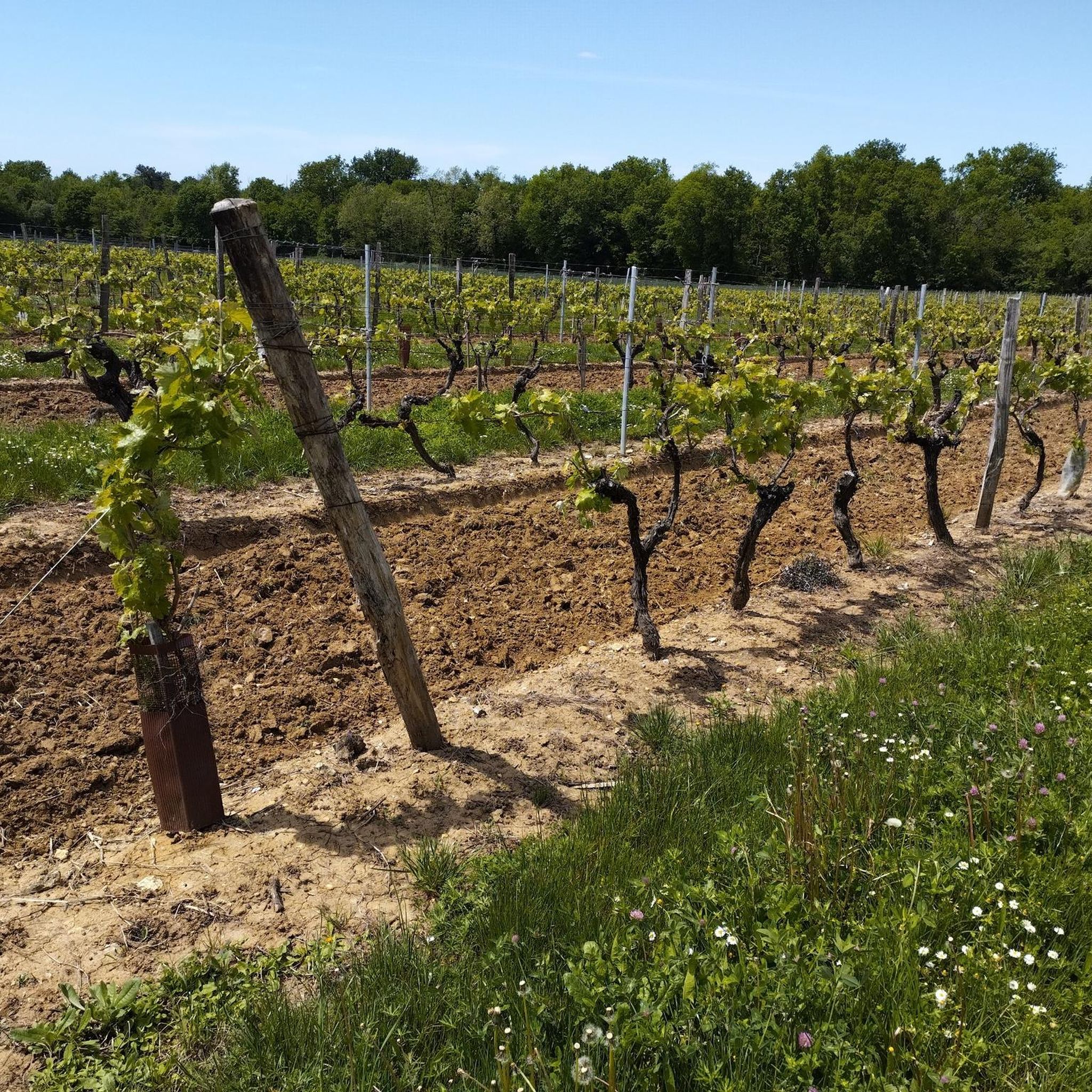
Touring cycling routes around Saint-Georges-Antignac traverse a rural landscape in the Charente-Maritime department of southwestern France. The area features gentle undulations, with an average elevation of 40 meters, making it suitable for touring cyclists seeking enjoyable rides without overly challenging ascents. Routes often follow small roads through woodlands, meadows, and vineyards, with the Seugne river forming part of the commune's western border.
Best touring cycling routes around Saint-Georges-Antignac
- The most popular touring cycling route is Forest Trail loop from Guitinières…
Last updated: October 16, 2026
4.8
(4)
36
riders
45.8km
03:11
280m
280m
Moderate bike ride. Good fitness required. Mostly paved surfaces. Suitable for all skill levels.
4.4
(5)
9
riders
33.5km
01:59
220m
220m
Moderate bike ride. Good fitness required. Mostly paved surfaces. Suitable for all skill levels.

5.0
(1)
20
riders
11.0km
00:45
40m
40m
Easy bike ride. Great for any fitness level. Mostly paved surfaces. Suitable for all skill levels.
3.0
(1)
11
riders
45.4km
02:45
340m
340m
Moderate bike ride. Good fitness required. Mostly paved surfaces. Suitable for all skill levels.
3.0
(1)
9
riders
Moderate bike ride. Good fitness required. Mostly paved surfaces. Suitable for all skill levels.
Get access to more routes and recommendations from other explorers.
Already have an account?
Our route recommendations are based on thousands of hikes, rides, and runs completed by other people on komoot.
Start today with a free account
Your next adventure awaits.

Tips from the Community

This Templar chapel was built in the 12th century and renovated in 1706. It was acquired in 1949 by Mr. and Mrs. Frédéric, the current owners, who completely restored it. Since 1986, on August 15 of each year, a mass has been celebrated there.
2
0

There is a great children's park
0
0

Charming little piece of nature. The chapel (above) can be visited when it is open. A skeleton welcomes you but don't worry, it is very discreet!
0
0

A pleasant visit with a passionate guide.
0
0

The city gate, called 'Porte de ville vieille', which gives access to the old town was built between the 13th and 15th centuries and allows you to reach the very typical houses of the town center of Jonzac. It was classified as a historical monument in 1926.
1
0
In 1073, the castle already exists; the first known lord was Guillaume de la Rochandry at the beginning of the 12th century. The 1449 inscription on the castle attests to its reconstruction following the destruction caused by the Hundred Years War. In 1505, Jean de Sainte-Maure, lord of Jonzac, founded the Carmelite monastery on the remains of an old chapel dedicated to Saint Nicolas. The cloister was built in 1657. The young Louis XIV, the Queen Mother and Mazarin stayed at the castle in 1659. The castle remained at Sainte-Maure until the end of the 17th century, then passed through marriage to Espardes de Lussan, which transformed the fortress in beautiful stately home with neat ornamentation and guard until the Revolution. Currently the north wing of the castle houses the buildings of the Town Hall (restored in the 19th century), and the south wing, those of the sub-prefecture. The cloister was restored between 1976 and 1978, and now houses a cultural center, with exhibition halls and an archaeological museum. The towers, postern and fountain in the basement date from the 12th century. Of the old feudal castle, only the postern and an isolated tower remain, connected to the main body by a large hall. The moat in front of the drawbridge was filled was filled in the 19th century. It was reopened at the beginning of the 21st century. The imposing gatehouse is marked 1549 and therefore dates from the 16th century, a period of work including the north-west tower, while the south-west tower, of a smaller diameter, is from the 17th century. The towers flanking the postern have retained their defenses. At each, the loopholes have been retained or enlarged. Stone stairs serve each floor and access the walkway. This passage seems to have been discovered, as evidenced by the gargoyles. The crenellation includes machicolations with archers in the middle of the merlons. The slate roofs are high pepperboxes on the towers, and a curious set with two sides connecting two pepperboxes for the gatehouse The fountain located in the basement of the sub-prefecture, has a niche and a niche frame decorated with sculptures imitating stalactites. Carved mask. The fountain was probably built by Léon de Sainte-Maure, Count of Jonzac, who enlarged and embellished the castle in the middle of the 12th century. In a former courtyard of the castle, a theater was built in the 19th century. It is a round building with approximately 300 seats.
0
0
Located on the edge of town, at the crossroads of 2 roads of ancient origin, the church is on an elevated position. The openings pierced in the upper part of the walls of the nave (reminiscent of the Languedoc "mirandes") are the most remarkable feature of the monument and seem to attest that the church was, if not fortified, at least fitted out as a refuge. The church has a cruciform plan which was not to be the case originally, because the arms of the transept, whose vaults are very low compared to that of the nave, are connected rather awkwardly to the latter by a incoherent molding system. It is not excluded that these transepts, very wide and each lit, to the north as to the south, by a large oculus obviously late, replaced a transept of more modest size. The fact that the cupola on squinches, decorated in the lower part with modillions in the shape of heads, and surmounted, on the outside, by a beautiful bell tower whose lower part is from the Romanesque period, was not placed according to the use at the crossing, but was moved above the right bay preceding the semi-circular apse, does not plead in favor of this hypothesis. It is more likely that the church originally only had a single nave. A partial collapse profoundly altered, at an early date, the external appearance of the apse by causing the disappearance of 3 of the 5 veneered arches which reinforced it on the outside. However, if we judge by the 2 arches still in place on the south side as well as by the beginning of the arch remaining on the north side, the whole of the apse included a very neat decoration of capitals and corbels ( with a very beautiful female head on the south side and an astonishing bearded head in the northeast corner). The relative abundance and quality of the carved decoration is one of the interesting aspects of the church of Guitinières. The western portal has 3 bare arches, between which are inserted decorative cords, and a 4th arch decorated with "honeycombs". If the capitals of the 3 bays of the nave are of good quality (one of them was recut at the end of the Middle Ages and shows 2 figures of angels), those of the bedside are remarkable: we see men surrounded of monstrous animals caught in vegetal intertwining and an image of Lust. Stylistically, these capitals are very similar to those of the nave of Saint-Eutrope de Saintes. and the intervention of a sculptor from this workshop, the third active on this particularly important site, seems very likely, with however, on the south side and in an inconspicuous location, the unexpected presence of a capital decorated with bare palmettes but very prominent, rather reminiscent of the capitals of the southwest. The furniture of the church of Guitinières is rather poor; at the base of one of the engaged columns of the nave, on the north side, an inscription preserves the memory of the repair of the paving in 1732. The neo-Romanesque altar fits quite well into the volume of the apse; but it is especially necessary to note the presence, in the north crosspiece of 2 Angels Worshipers in stone, which could date from the beginning of the 19th century. and which are most likely the remains of a rather ambitious altar decoration.
0
0
From its construction in the 12th century, when Jonzac depended on the parish of Saint-Germain-de-Lusignan, the church only retains its Romanesque bell tower and its apse. For the rest, it is the result of considerable alterations which took place first after the Hundred Years War in the 15th century, where the church was very mutilated, and especially at the end of the 19th century, in a neo-Gothic style. , where it took its current configuration. It is dedicated to Saint Germain. Saint Germain, bishop of Paris (496-576), was probably born in that part of Gaul which is for us now Burgundy, near Autun. It is reported that he studied extensively in Gaul, then in Rome. There, the Emperor Honorius would have conferred on him high offices for his region of origin. He would have lived there for fifteen years with a priest uncle, before being ordained himself and becoming abbot of the Saint Symphorien monastery in Autun. It was from there that he was called to be bishop of Paris. His zeal to call his people to conversion and holiness was illustrated, in particular, by the conversion of King Childebert, son of Clovis and Clotilde. The latter, following the example of Germain, called the "Father of the poor", put order at court, had the church and monastery of Saint Germain des Prés built and distributed abundant alms. He died at the age of 80, in 576. It should be noted that there is another Saint Germain, born around 378 in Auxerre, of which he was the bishop, and died in 448 in Ravenna, thus well before the birth of Germain of Paris. It is to him that the church near the Louvre is dedicated: Saint Germain l'Auxerrois... It is also he who is said to have laid hands on the young Geneviève (v. 422 - v. 502). Four communes in Charente-Maritime bear the name of Saint Germain, and the churches of Beaugeay and Varaize are also under his patronage. His feast day is May 28. its construction in the 12th century, at the time when Jonzac depended on the parish of Saint-Germain-de-Lusignan, the church retains only its Romanesque bell tower and its apse. For the rest, it is the result of considerable alterations which took place first after the Hundred Years War in the 15th century, where the church was very mutilated, and especially at the end of the 19th century, in a neo-Gothic style. , where it took its current configuration. It is dedicated to Saint Germain. Saint Germain, bishop of Paris (496-576), was probably born in that part of Gaul which is for us now Burgundy, near Autun. It is reported that he studied extensively in Gaul, then in Rome. There, the Emperor Honorius would have conferred on him high offices for his region of origin. He would have lived there for fifteen years with a priest uncle, before being ordained himself and becoming abbot of the Saint Symphorien monastery in Autun. It was from there that he was called to be bishop of Paris. His zeal to call his people to conversion and holiness was illustrated, in particular, by the conversion of King Childebert, son of Clovis and Clotilde. The latter, following the example of Germain, called the "Father of the poor", put order at court, had the church and monastery of Saint Germain des Prés built and distributed abundant alms. He died at the age of 80, in 576. It should be noted that there is another Saint Germain, born around 378 in Auxerre, of which he was the bishop, and died in 448 in Ravenna, thus well before the birth of Germain of Paris. It is to him that the church near the Louvre is dedicated: Saint Germain l'Auxerrois... It is also he who is said to have laid hands on the young Geneviève (v. 422 - v. 502). Four communes in Charente-Maritime bear the name of Saint Germain, and the churches of Beaugeay and Varaize are also under his patronage. His feast day is May 28.
0
0
Frequently Asked Questions
How many touring cycling routes are available around Saint-Georges-Antignac?
There are over 80 touring cycling routes available around Saint-Georges-Antignac. These routes cater to various skill levels, with 36 easy, 41 moderate, and 4 difficult options, ensuring there's a suitable ride for everyone.
What kind of terrain can I expect on the touring cycling routes in this region?
The terrain around Saint-Georges-Antignac is characterized by gentle undulations, with an average elevation of 40 meters, making it generally favorable for touring cyclists. Routes often follow small roads through tranquil woodlands, lush meadows, and picturesque vineyards, offering enjoyable rides without overly challenging ascents.
Are there any family-friendly or easy cycling routes in Saint-Georges-Antignac?
Yes, Saint-Georges-Antignac offers many family-friendly and easy cycling routes. With 36 routes classified as easy, you'll find plenty of options for a relaxed ride. A great example is the Bike loop from Clion, which is 6.7 miles (10.9 km) long and leads through gentle rural paths.
What natural features can I explore along the cycling routes?
Cycling routes in Saint-Georges-Antignac often traverse beautiful rural and woodland scenery, including woods, meadows, and vineyards. The village itself lies on the right bank of the Seugne river, and some routes, like the "Rayonnantes de Haute-Saintonge N°3" Véloroute, lead towards the Gironde estuary, offering scenic views as the landscape transitions.
Are there any circular touring cycling routes available?
Yes, many touring cycling routes around Saint-Georges-Antignac are designed as loops, allowing you to start and finish at the same point. Examples include the popular Forest Trail loop from Guitinières and the Bike loop from Saint-Martial-de-Vitaterne, both offering diverse scenery.
What historical or cultural landmarks can I visit while cycling?
The region offers several interesting historical and cultural landmarks. You can cycle to nearby towns like Jonzac and Pons, which host markets and historical sites. Notable attractions include the Pons Donjon and Jonzac Castle. The Jonzac Castle – Pons loop from Marignac is a great route to explore these areas.
What do other touring cyclists enjoy most about cycling in Saint-Georges-Antignac?
The touring cycling experience around Saint-Georges-Antignac is highly rated by the komoot community, with an average score of 4.2 stars from over 40 reviews. Cyclists often praise the tranquil rural scenery, the well-maintained paths through woodlands and vineyards, and the variety of routes suitable for different fitness levels.
Can I find long-distance touring options near Saint-Georges-Antignac?
While Saint-Georges-Antignac itself offers routes up to 30 miles, the broader Charente region provides access to longer-distance networks. The famous "Flow Vélo" route, a 350 km cycle path along the Charente river, can be joined at nearby points like Jarnac, offering opportunities for extended excursions through picturesque landscapes.
Is public transport available to access the cycling routes?
Information on specific public transport links directly to trailheads in Saint-Georges-Antignac is limited. However, the region is well-integrated into broader cycling networks, and nearby towns like Jonzac and Pons may offer regional transport options that could facilitate access to the area's cycling routes.
Are there any specific viewpoints or scenic spots along the routes?
The routes frequently pass through scenic rural landscapes, offering views of the Charente countryside, including vineyards and riverbanks. The "Rayonnantes de Haute-Saintonge N°3" Véloroute, for instance, provides picturesque vistas as it approaches the Gironde estuary, showcasing the transition from hinterland to coastal influences.
What is the best time of year for touring cycling in Saint-Georges-Antignac?
The region generally offers pleasant cycling conditions for much of the year. Spring and autumn are often ideal, with mild temperatures and beautiful natural scenery. Summer can also be enjoyable, though it's advisable to cycle during cooler parts of the day. Winter cycling is possible, but conditions may vary.
Most popular routes around Saint-Georges-Antignac
Most popular attractions around Saint-Georges-Antignac

Get inspired with the komoot mobile app


Explore more
Browse the best Cycling routes in other regions.
