The best cycling routes around Neulles
4.1
(45)
206
riders
70
rides
Touring cycling around Neulles, located in Haute-Saintonge, Charente-Maritime, offers routes through diverse landscapes. The area is characterized by rolling Cognac vineyards, peaceful countryside, and shaded forests. Cyclists can explore verdant valleys and agricultural fields, with some routes following historical paths.
Best touring cycling routes around Neulles
- The most popular touring cycling route is Jonzac and Archiac Loop, a 30.2 miles (48.6 km) trail that takes 3 hours 0 minutes to complete. This route traverses vineyards and open countryside.
- Another…
Last updated: June 29, 2026
4.3
(4)
9
riders
33.5km
01:59
220m
220m
Moderate bike ride. Good fitness required. Mostly paved surfaces. Suitable for all skill levels.
5.0
(1)
16
riders
10.9km
00:45
40m
40m
Easy bike ride. Great for any fitness level. Mostly paved surfaces. Suitable for all skill levels.

Sign up for free
3.0
(1)
8
riders
45.4km
02:45
340m
330m
Moderate bike ride. Good fitness required. Mostly paved surfaces. Suitable for all skill levels.
3.0
(1)
9
riders
Moderate bike ride. Good fitness required. Mostly paved surfaces. Suitable for all skill levels.
5
riders
Moderate bike ride. Good fitness required. Mostly paved surfaces. Suitable for all skill levels.
Get access to more routes and recommendations from other explorers.
Sign up for free
Already have an account?
Our route recommendations are based on thousands of hikes, rides, and runs completed by other people on komoot.
Start today with a free account
Your next adventure awaits.
Login or Signup


Tips from the Community

The name of Saint-CHRISTOPHE, to whom this imposing church is dedicated, means "Christ-bearer". According to the legend of the saint, he was a gigantic man and carried people across a river. One day a small child called to him and he carried it on his shoulders to the other bank. Amazingly, the child became heavier and he said he felt as if the weight of the whole world was on his shoulders. Then the child revealed himself to him as Jesus Christ, Savior and Redeemer of the world.
3
0

This Templar chapel was built in the 12th century and renovated in 1706. It was acquired in 1949 by Mr. and Mrs. Frédéric, the current owners, who completely restored it. Since 1986, on August 15 of each year, a mass has been celebrated there.
2
0

There is a great children's park
0
0

Charming little piece of nature. The chapel (above) can be visited when it is open. A skeleton welcomes you but don't worry, it is very discreet!
0
0

A pleasant visit with a passionate guide.
0
0

Large homogeneous massive church from the 12th century built on a classical Latin cross plan. (single nave, transept with apsidioles, apse), having undergone alterations around the 13th century (west facade, vaulting of the nave). The Wars of Religion caused serious damage to it in 1574. Restorations in the 18th and 19th centuries changed its appearance: leveling then heightening of the choir, replacement of the bell tower (which must have been on the crossing) by a campanile, addition of buttresses. The repairs are carried out in cut stone over the Romanesque walls that have been spared. In the 19th century, the vaulting and pillars of the nave, the crossing and the choir were strongly reworked. The penultimate restoration campaign in 1996-1997 allowed the total repair of the roofing, of the comforting masonry work. The last in 2014 allowed the repair of the bell and the operating mechanism of the movement, the resumption of the masonry of the campanile, the drainage and the reorganization of the rain flows and the installation of a lightning rod. The building has a Latin cross plan. The west facade, divided into three registers by horizontal cords, opens with a large portal with columns and three semi-circular scrolls. A small bell tower with one bay, from the Classical period, is built between the nave and the crossing. The apse has a hexagonal apse. The interior of the nave has isolated neo-Romanesque columns which carry a vaulting of brick ribs. The choir and the crossing are also covered with 19th century vaults. Only the arms of the transept retain their stone cradle and the apsidioles their bottom of the oven. This church is one of the few in Saintonge to have kept its transept with apsidioles intact. The church is listed as a historic monument in its entirety (ie AI 9) by order of July 23, 2003. To note Balustrade of the 18th century wooden choir. 18th century sculpted, painted and gilded wooden altarpiece, with statues of angels and Renaissance rings (Saint-Jean and Saint-Christophe). 18th century wooden statue of Sainte-Emérance Contemporary stained glass windows by Jean Moret. Bronze bell, 1525. A Romanesque inscription from 1205, on the southeast plane of the apse. "The year 1270 died, Louis King of France, handing over his soul to the august King of Kings". To the east of the apse, an engraving of a horseman similar in style to the church of Moings.
1
0
The city gate, called 'Porte de ville vieille', which gives access to the old town was built between the 13th and 15th centuries and allows you to reach the very typical houses of the town center of Jonzac. It was classified as a historical monument in 1926.
1
0
In 1073, the castle already exists; the first known lord was Guillaume de la Rochandry at the beginning of the 12th century. The 1449 inscription on the castle attests to its reconstruction following the destruction caused by the Hundred Years War. In 1505, Jean de Sainte-Maure, lord of Jonzac, founded the Carmelite monastery on the remains of an old chapel dedicated to Saint Nicolas. The cloister was built in 1657. The young Louis XIV, the Queen Mother and Mazarin stayed at the castle in 1659. The castle remained at Sainte-Maure until the end of the 17th century, then passed through marriage to Espardes de Lussan, which transformed the fortress in beautiful stately home with neat ornamentation and guard until the Revolution. Currently the north wing of the castle houses the buildings of the Town Hall (restored in the 19th century), and the south wing, those of the sub-prefecture. The cloister was restored between 1976 and 1978, and now houses a cultural center, with exhibition halls and an archaeological museum. The towers, postern and fountain in the basement date from the 12th century. Of the old feudal castle, only the postern and an isolated tower remain, connected to the main body by a large hall. The moat in front of the drawbridge was filled was filled in the 19th century. It was reopened at the beginning of the 21st century. The imposing gatehouse is marked 1549 and therefore dates from the 16th century, a period of work including the north-west tower, while the south-west tower, of a smaller diameter, is from the 17th century. The towers flanking the postern have retained their defenses. At each, the loopholes have been retained or enlarged. Stone stairs serve each floor and access the walkway. This passage seems to have been discovered, as evidenced by the gargoyles. The crenellation includes machicolations with archers in the middle of the merlons. The slate roofs are high pepperboxes on the towers, and a curious set with two sides connecting two pepperboxes for the gatehouse The fountain located in the basement of the sub-prefecture, has a niche and a niche frame decorated with sculptures imitating stalactites. Carved mask. The fountain was probably built by Léon de Sainte-Maure, Count of Jonzac, who enlarged and embellished the castle in the middle of the 12th century. In a former courtyard of the castle, a theater was built in the 19th century. It is a round building with approximately 300 seats.
0
0
Frequently Asked Questions
What types of landscapes can I expect to see while touring cycling around Neulles?
Touring cycling around Neulles offers a diverse range of landscapes. You'll primarily ride through picturesque Cognac vineyards, peaceful countryside, and shaded forests. The region also features verdant valleys and expansive agricultural fields, providing a constantly changing and scenic backdrop for your rides.
Are there any easy or family-friendly cycling routes near Neulles?
Yes, the Haute-Saintonge region, where Neulles is located, is known for its 'Bouclettes' – easy, family-friendly cycling circuits. For example, the Saint Paul Chapel – Jonzac Castle loop from Jonzac is an easy 13.2 miles (21.2 km) path, suitable for a relaxed family outing. The area's greenways, like sections of the Scandibérique, also offer secure and often shaded routes ideal for families.
What historical sites or attractions can I visit along the cycling routes?
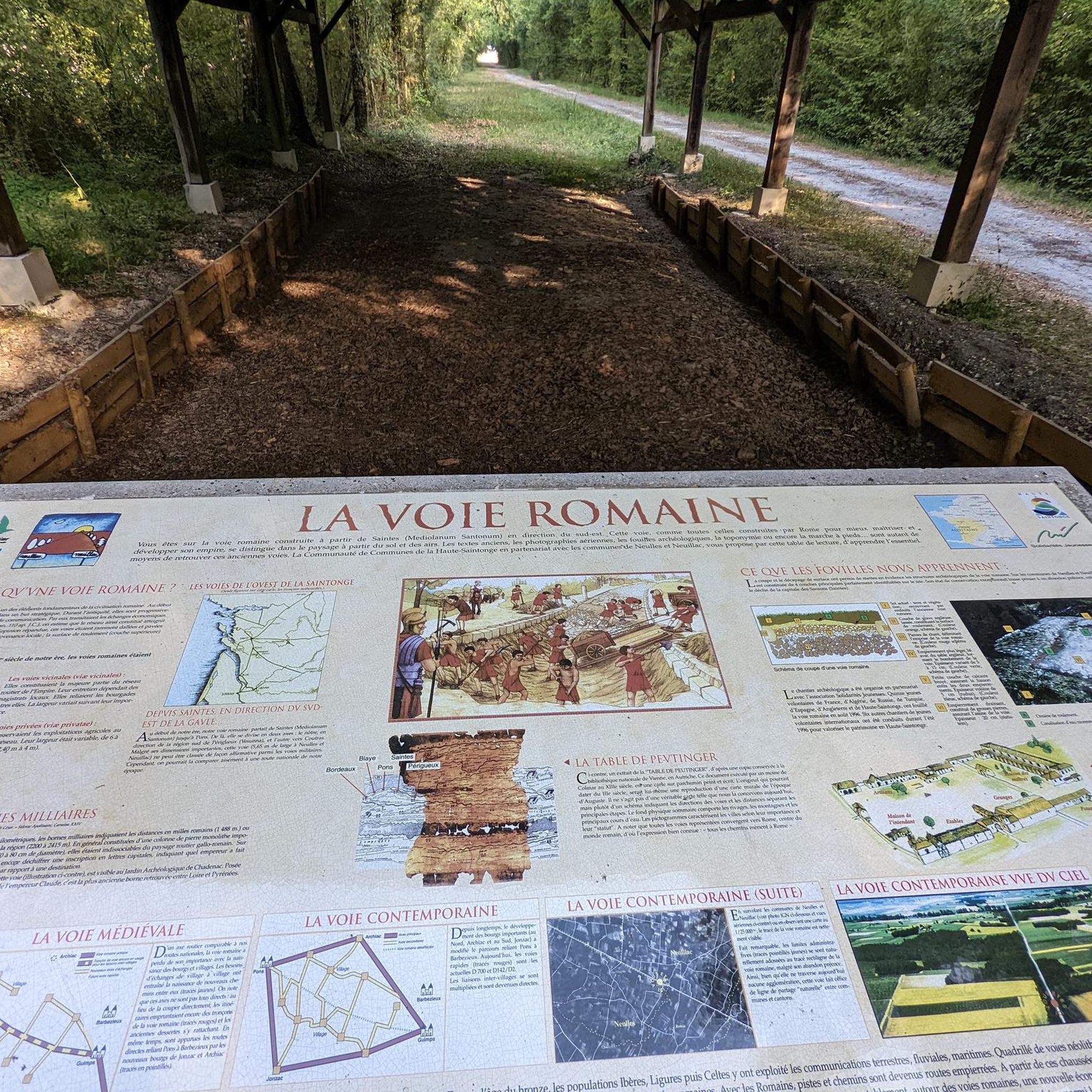
Several routes offer access to interesting landmarks. For instance, the Saint Paul Chapel – Jonzac Castle loop from Jonzac provides views of historical sites such as Jonzac Castle and Saint Paul Chapel. You might also encounter Romanesque churches and other points of interest along paths that sometimes follow ancient 'Voie Romaine' sections.
Are there any long-distance cycling routes or greenways accessible from Neulles?
While Neulles isn't directly on major national routes, it's within reach of significant cycling infrastructure. The Scandibérique (EuroVelo 3) greenway passes through Haute-Saintonge, offering a secure and often shaded route. Additionally, the Flow Vélo, a national cycling route, has sections that traverse the Cognac vineyards in the broader region, providing further touring opportunities.
What is the best time of year for touring cycling in Neulles?
The region's pleasant climate generally makes spring and autumn ideal for touring cycling, with milder temperatures and beautiful scenery as vineyards change color. Summer can also be enjoyable, especially when cycling through shaded forests or along river valleys, though it can be warmer. Winter cycling is possible, but some routes might be less accessible or require more appropriate gear.
How many touring cycling routes are available around Neulles?
There are over 75 touring cycling routes available around Neulles. These routes cater to various skill levels, with approximately 30 easy, 41 moderate, and 4 difficult options to choose from.
What do other touring cyclists enjoy most about cycling in Neulles?
The area is highly rated by the komoot community, with an average score of 4.2 stars from over 40 reviews. Reviewers often praise the peaceful countryside, the scenic Cognac vineyards, and the varied terrain that offers options for all abilities. The routes provide a great way to explore the charming rural villages and natural beauty of Haute-Saintonge.
Are there any circular cycling routes around Neulles?
Yes, many of the cycling routes in the region are designed as loops, allowing you to start and end in the same location. Examples include the popular Jonzac and Archiac Loop, which is 30.2 miles (48.6 km), and the Bike loop from Jonzac, covering 21.3 miles (34.3 km).
Where can I find information about local cycling maps or additional routes?
The local tourism office for Haute-Saintonge, particularly around Jonzac, actively promotes cycling and provides information on various circuits, including the 'Bouclettes'. While komoot offers a comprehensive selection of routes, local offices can sometimes provide additional detailed maps or specific event information.
Are there options for public transport or parking near the cycling routes in Neulles?
While Neulles itself is a small commune, nearby towns like Jonzac, a hub for the region, offer better access to public transport and parking facilities. Many cycling routes start from or pass through these towns, making them convenient points for parking your vehicle or accessing the area via regional transport options.
Can I find places to eat or drink along the cycling trails?
Cycling through the villages and towns of Haute-Saintonge, especially near Jonzac, you will find various cafes, restaurants, and local producers. While not every trail will have amenities directly on the path, planning your route to pass through these settlements will provide opportunities for refreshments and meals.
Are there any specific routes that showcase the Cognac vineyards?
Absolutely. The area around Neulles is characterized by the picturesque Cognac vineyards, and many local cycling loops traverse this vine-laden countryside. The Jonzac and Archiac Loop is a prime example, taking you directly through these iconic vineyards and open countryside.
Most popular attractions around Neulles

Get inspired with the komoot mobile app


Explore more
Browse the best Cycling routes in other regions.
