Attractions and Places To See around Notre-Dame-De-Monts - Top 20
Best attractions and places to see around Notre-Dame-De-Monts include a diverse range of landmarks, natural features, and cultural sites. This seaside town in Vendée, France, is characterized by its extensive sandy beaches, pine forests, and marshlands. The region offers opportunities to explore coastal environments, historical architecture, and unique natural phenomena. Visitors can find a mix of outdoor activities and cultural experiences.
Best attractions and places to see around Notre-Dame-De-Monts
- The most popular attractions is Bicycle path - Pays-de-Monts national forest…
Last updated: October 9, 2026
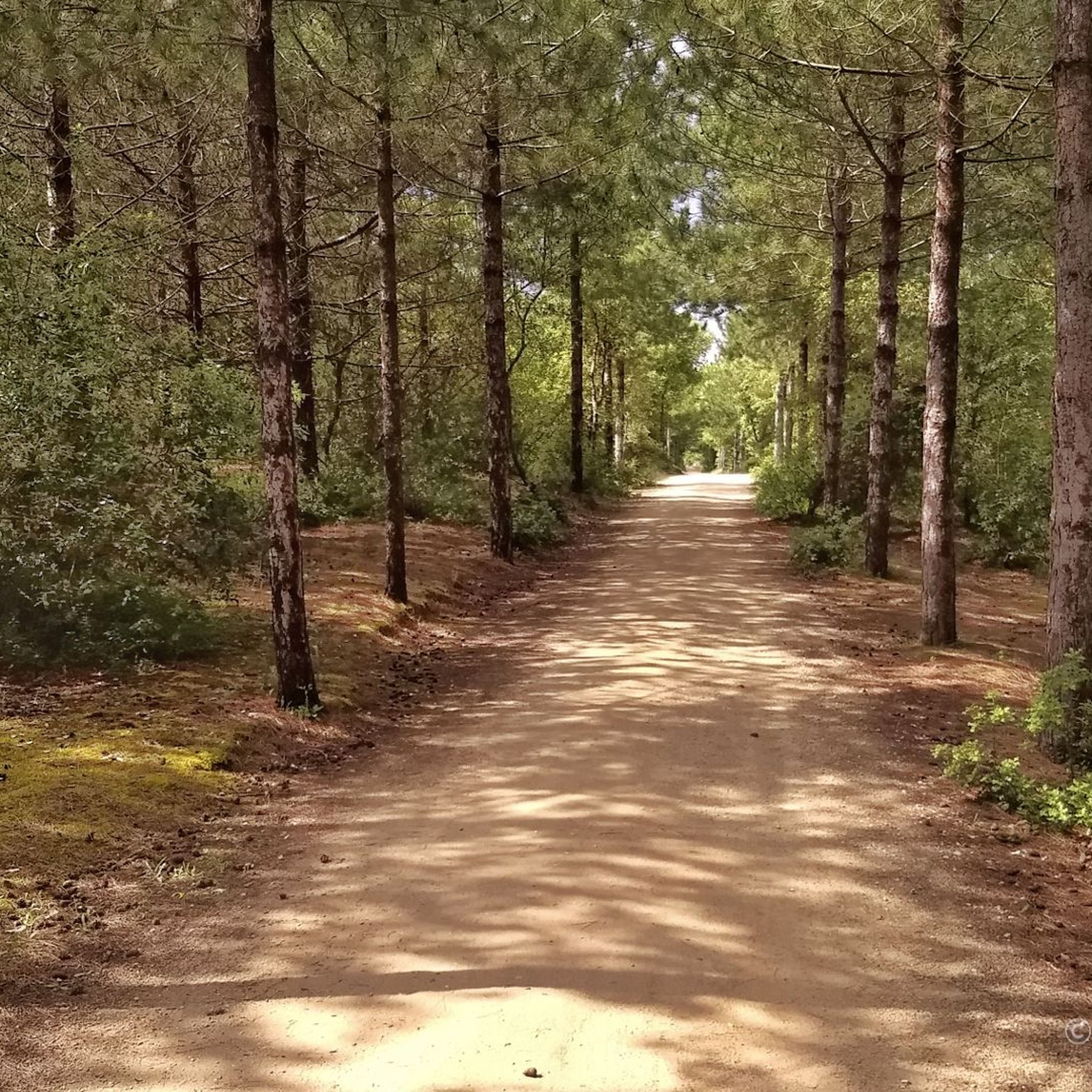
Bicycle path - Pays-de-Monts national forest
Highlight • Cycleway
Translated by Google •
Tip by

Noirmoutier Bridge
Highlight • Bridge
Translated by Google •
Tip by

Sign up now to discover places like this
Get recommendations on the best single tracks, peaks, & plenty of other exciting outdoor places.
Passage du Gois
Highlight • Structure
Translated by Google •
Tip by

Sallertaine
Highlight • Religious Site
The Romanesque church, the artisan island, the garden of Vaulieu, the old mill and the mill of Rairé make it an exceptional site.
Translated by Google •
Tip by

Old Saint Martin Church
Highlight • Religious Site
Translated by Google •
Tip by

Sign up for free to discover even more attractions around Notre-Dame-De-Monts.
Already have an account?
Start today with a free account
Your next adventure awaits.
Popular around Notre-Dame-De-Monts

Other adventures around Notre-Dame-De-Monts

Tips from the Community

Trail in the middle of the pine forest... It's so nice!!
0
0

Small village worth a detour, especially for its beautiful, perfectly preserved medieval church and the Rairé mill.
0
0

The Saint-Martin church is a 11th and 12th century church located in Sallertaine, France. It belongs to the diocese of Luçon. It is dedicated to Saint Martin. This church is the remnant of an old priory founded at the beginning of the 11th century, dependent on the abbey of Marmoutier. Some masonry from the primitive church remains in the walls. The current state of the building is the result of a major reconstruction carried out at the end of the 12th century. The church was consecrated in 1173 by the bishop of Poitiers. The vaulting of the crossing of the transept presents a unique curiosity in the West of France. Clearly seeking to imitate the so-called Plantagenet Gothic style, the master mason, who does not seem familiar with this new technique, created a Romanesque dome, sufficient in itself, which he adorned with ribs, without structural necessity, but which gives it an appearance evoking the Angevin vaults. Some elements of frescoes remain in the nave, which was once entirely covered, particularly an exceptional crucifixion where Christ still has his eyes open. Part of the nave was demolished. The church suffered damage in 1568 during the Wars of Religion. Major restorations took place from 1617 onwards. The narrow Romanesque windows were enlarged, the crossing is surmounted by a timber spire. Three altarpieces adorn the apse and the transepts, leading to the destruction of the south absidiole and the installation of the sacristy in the south one, separated from the transept by a wall supporting the new altar. Damaged during the revolution, becoming too narrow in the 19th century, it was replaced by a new parish church in 1906. It should then have been destroyed, but Father Grelier, an archaeology enthusiast, managed to have it classified as a historical monument in 1910 and 1912. However, the classification did not include the western end of the nave, which the municipality had demolished in 1915. https://fr.wikipedia.org/wiki/Ancienne_%C3%A9glise_Saint-Martin_de_Sallertaine
0
0
The Saint-Martin church is an 11th and 12th century church located in Sallertaine, France[1]. It belongs to the diocese of Luçon. It is dedicated to Saint Martin. This church is the remainder of an old priory founded at the beginning of the 11th century, dependent on the abbey of Marmoutier. Some masonry from the primitive church remains in the walls. The current state of the building is the result of a major reconstruction carried out at the end of the 12th century. The church was consecrated in 1173 by the bishop of Poitiers. The vaulting of the crossing of the transept presents a unique curiosity in Western France. Clearly seeking to imitate the so-called Plantagenet Gothic style, the master mason, who does not seem familiar with this new technique, created a Romanesque dome, sufficient in itself, which he adorned with ribs, without structural necessity, but which gives it an appearance evoking the Angevin vaults. Some elements of frescoes remain in the nave, which was once entirely covered, particularly an exceptional crucifixion because Christ still has his eyes open. Part of the nave has been demolished. The church suffered damage in 1568 during the Wars of Religion. Major restorations took place from 1617. The narrow Romanesque windows were enlarged, the crossing is surmounted by a timber spire. Three altarpieces adorn the apse and the transepts, leading to the destruction of the south absidiole and the installation of the sacristy in the southern one, separated from the transept by a wall supporting the new altar. Damaged during the revolution, becoming too narrow in the 19th century, it was replaced by a new parish church in 1906. It should then have been destroyed, but Abbot Grelier, passionate about archaeology, managed to have it classified as a historical monument in 1910 and 1912. However, the classification only included the western end of the nave, which the municipality had demolished in 1915. https://fr.wikipedia.org/wiki/Ancienne_%C3%A9glise_Saint-Martin_de_Sallertaine
0
0


Open to traffic 1.5 hours before low tide and until 1.5 hours after low tide. https://www.horaire-maree.fr/maree/Passage%20du%20gois/
1
0

When the sea recedes, it reveals a spectacular road here.
0
0

Magnificent Romanesque church from the 11th and 12th centuries 😍
0
0
Frequently Asked Questions
What natural features can I explore around Notre-Dame-De-Monts?
Notre-Dame-De-Monts is rich in natural beauty. You can explore the extensive Forêt Domaniale des Pays de Monts, a maritime pine forest perfect for cycling and walking. The town also boasts long, sandy beaches like Plage du Murier and Plage du Pont d'Yeu. Further inland, the Marais Breton Vendéen offers unique marshland landscapes, and the Passage du Gois provides an extraordinary experience of a submersible causeway.
Are there any unique cultural or historical sites to visit?
Yes, Notre-Dame-De-Monts offers several unique cultural and historical sites. The village of Sallertaine features a pretty Romanesque church and an artisan island. You can also visit the Église Notre-Dame de l'Assomption in the village heart, or the unique Jardin du Vent (Garden of Wind) by the dunes, which combines art, nature, and wind-powered sculptures.
What outdoor activities are popular in the area?
The region is ideal for outdoor enthusiasts. Cycling is very popular, with over 60km of cycle paths, including the scenic Bicycle path - Pays-de-Monts national forest. Water sports are also a highlight at the Pôle Nautique, offering catamaran sailing, sand yachting, surfing, stand-up paddleboarding, and sea kayaking. For more cycling adventures, you can find various routes in the Cycling around Notre-Dame-De-Monts guide.
Are there family-friendly attractions or activities?
Absolutely! Many attractions are suitable for families. The Bicycle path - Pays-de-Monts national forest is a family-friendly cycle way. The Jardin du Vent offers interactive workshops and wind-powered sculptures that children often enjoy. Biotopia, an interpretation center, provides a 40-hectare course to discover the Vendée environment, which can be an engaging educational experience for all ages. The sandy beaches are also perfect for family fun.
Where can I find the best panoramic views?
For breathtaking panoramic views, head to Kulmino, a water tower located north-east of the town. Its 70-meter-high platform offers a 360-degree vista of the entire region. Additionally, the Noirmoutier Bridge provides great views of the Noirmoutier national forest, and the Passage du Gois offers a unique perspective of the sea and land at low tide.
What is the Passage du Gois and how can I experience it?
The Passage du Gois is an extraordinary submersible causeway that connects the island of Noirmoutier to the mainland. It is only accessible at low tide for a few hours each day. You can cross it by car or bicycle, but it's crucial to check the tide times beforehand to ensure a safe crossing. It offers a unique experience, feeling like an 'air of the end of the world' at high tide.
What are some popular cycling routes in the area?
Notre-Dame-De-Monts offers numerous cycling opportunities. A popular choice is the Bicycle path - Pays-de-Monts national forest, which takes you through pines and by the sea. For more options, consider routes like the 'Breton Marsh Loop' or the 'Île de Noirmoutier – Passage du Gois loop' which are detailed in the Cycling around Notre-Dame-De-Monts guide.
Are there any nearby islands worth visiting for a day trip?
Yes, two popular islands are easily accessible for day trips. Île de Noirmoutier is a short distance to the north and can be reached via the Noirmoutier Bridge or the unique Passage du Gois at low tide. Île d'Yeu is located about 20 kilometers off the coast, and boat trips are a popular option to visit this charming island.
What kind of forest can I explore near Notre-Dame-De-Monts?
You can explore the Forêt Domaniale des Pays de Monts, an extensive maritime pine forest covering over 2,200 hectares. It was originally established to combat coastal silting. Within this forest, you'll find the Arboretum de la Parée Farfadets, which offers a path to discover various plant species. It's a fantastic spot for cycling and walking.
What do visitors enjoy most about the attractions in Notre-Dame-De-Monts?
Visitors particularly enjoy the diverse natural landscapes and the unique experiences offered. The scenic cycling routes through the pine forests and along the coast, like the Bicycle path - Pays-de-Monts national forest, are highly praised. The extraordinary Passage du Gois is often cited as a must-do experience, especially for its unique tidal access. The panoramic views from the Noirmoutier Bridge are also a favorite.
Are there any specific places to learn about the local environment?
Yes, Biotopia is an interpretation center and local nature museum that provides a 40-hectare course to discover the Vendée environment. Additionally, the Maison de la Dune et de la Forêt serves as a starting point for exploring the Arboretum de la Parée Farfadets within the Forêt Domaniale des Pays de Monts, offering insights into the local flora and fauna.
What are some other lively towns or resorts nearby for a visit?
Just about 7 km away, Saint-Jean-de-Monts is a livelier resort town known for its expansive sandy beaches. Another nearby beach resort is Saint-Hilaire-de-Riez. For an attractive and traditional port town that is very lively during the summer, consider visiting Saint-Gilles-Croix-de-Vie.
Most popular routes around Notre-Dame-De-Monts

Get inspired with the komoot mobile app


Explore more
Still not found the Highlight you’re looking for? See guides of the top attractions in other regions:
