The best road cycling routes around Javené
4.3
(36)
1,432
riders
41
rides
Road cycling routes around Javené traverse the rolling landscapes of Brittany, offering a mix of terrains suitable for various fitness levels. The region is characterized by its rural countryside, dotted with historical landmarks such as Fougères Castle and Château de Vitré. Cyclists will encounter scenic water bodies like the Plan d'Eau de la Cantache and the Couesnon River, contributing to a verdant and varied cycling experience.
Best road cycling routes around Javené
- The most popular road cycling route is Vitré…
Last updated: July 5, 2026
5.0
(1)
44
riders
48.9km
02:06
420m
420m
Moderate road ride. Good fitness required. Mostly well-paved surfaces and easy to ride.
5.0
(1)
15
riders
67.3km
02:56
600m
600m
Moderate road ride. Good fitness required. Mostly well-paved surfaces and easy to ride.

Sign up for free
16
riders
72.3km
03:03
580m
580m
Moderate road ride. Good fitness required. Mostly well-paved surfaces and easy to ride.
10
riders
36.6km
01:32
290m
290m
Easy road ride. Great for any fitness level. Mostly well-paved surfaces and easy to ride.
4.0
(1)
8
riders
75.3km
03:20
730m
730m
Moderate road ride. Good fitness required. Mostly well-paved surfaces and easy to ride.
Get access to more routes and recommendations from other explorers.
Sign up for free
Already have an account?
Our route recommendations are based on thousands of hikes, rides, and runs completed by other people on komoot.
Start today with a free account
Your next adventure awaits.
Login or Signup

Tips from the Community

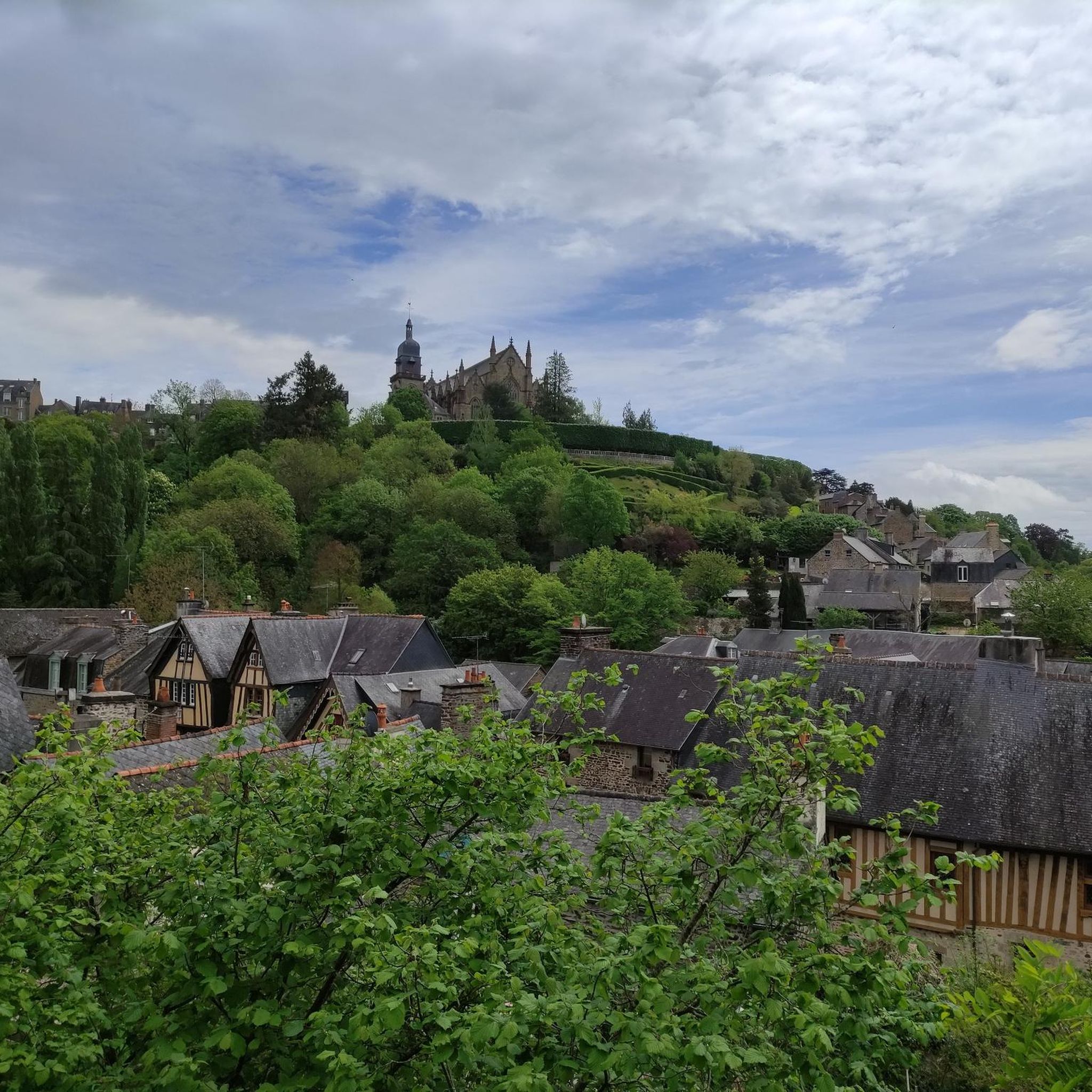
The Église Saint-Léonard was built in the 12th century and acquired its present form in the flamboyant Gothic style in the 15th and 16th centuries. During the French Revolution, the church was deprived of its sacred function, but in the 19th century, under architects such as Aristide Tourneux, it underwent extensive renovations, including a new main façade with a large rose window. Inside, 19th-century stained-glass windows depicting episodes from the life of Saint Léonard can be seen.
1
0
The cadastral records of the Château Fort de Fougères mention two towers—the Tour Raoul and the Tour Surienne (also called "tour de Surienne")—dated between 1480 and 1485. The tower was part of the fortifications that were reinforced or rebuilt in the 15th century.
1
0

A prosperous trading town since the Middle Ages, Vitré has preserved its well-preserved heritage. With its fortified castle, cobbled streets, and half-timbered houses, the town offers plenty to see and do, making it perfect for a stroll. It's the perfect place to soak up the Breton atmosphere.
0
0

Bird watching possible!
0
0

The Tour Surienne was named after Françoise de Surienne. In March 1449, in the midst of a truce between France and England, François de Surienne, a Spanish mercenary in the pay of the English, attacked in the dead of night with his 600 men. The inhabitants were slaughtered and the city plundered. In 1450, Surienne settled there and entrenched himself. Only after a two-month siege by Francis I, Duke of Brittany, who was aided by a plague epidemic, did Surienne surrender.
0
0
The largest fortress in Europe, the castle of Fougères stands on a rocky outcrop surrounded by marshland. The first castle of Fougères was built around the turn of the millennium to defend the north-eastern part of the border area of the Duchy of Brittany. Built at the crossroads of important trade routes, this primitive fortress had the main objective of monitoring the powerful neighbors and preventing their raids on Breton lands. To the north, Normandy belonged to the kings of England at the time.
4
1
The church tower can be visited in high season, where you can discover an incredible panorama of Fougères as well as its monuments and the surrounding countryside. Here you will have the opportunity to discover the secret interior of its tower, its impressively large bell and of course... a spectacular 360° view of the city, the castle and the valley!
1
0
The beautiful stained glass windows are definitely worth seeing. The three-panel stained glass window above the south portal is the only completely preserved window from the time the church was built. It depicts Jesus' entry into Jerusalem and is marked with the year 1537. Fragments of older panes have been preserved in two other windows. In the tracery of one window, a crucifixion scene from around 1500 can be seen. On another pane, a section of an Annunciation scene, which was probably executed in 1473, the Archangel Gabriel is depicted.
0
0
Frequently Asked Questions
How many road cycling routes are available around Javené?
There are over 35 road cycling routes around Javené, offering a diverse range of experiences for cyclists. These routes are highly rated by the komoot community, with an average score of 3.8 stars from more than 10 reviews.
What historical landmarks can I see while road cycling near Javené?
The region around Javené is rich in history. Many routes incorporate impressive historical sites such as the medieval Fougères Castle, one of the largest in Europe. You can also pass by the historic Château de Vitré and the Saint Léonard Church, adding a cultural dimension to your ride.
Are there any scenic natural features or water bodies along the cycling routes?
Yes, the routes often feature picturesque natural landscapes. For instance, the Plan d'Eau de la Cantache – Cantache Pond loop from Javené offers tranquil stretches and scenic views around the Cantache Pond. The region's hydrography also includes the Couesnon River and several streams, contributing to a verdant countryside.
What is the general difficulty level of road cycling routes in Javené?
The road cycling routes around Javené cater to various fitness levels. While there are a few difficult routes, the majority (30 out of 35) are classified as moderate, featuring rolling landscapes and elevation gains suitable for those with good fitness. There are also a couple of easier options available.
When is the best time of year for road cycling in Javené?
Javené experiences an oceanic climate with mild summers, making the warmer months ideal for road cycling. The generally favorable conditions for outdoor activities mean spring, summer, and early autumn offer pleasant temperatures and lush scenery.
Are there family-friendly road cycling options around Javené?
While the guide focuses on road cycling, the region is known for its pleasant environment for outdoor pursuits, including 'Balades et randonnées' (walks and hikes). For road cycling specifically, the easier routes available could be suitable for families with older children or those looking for a less strenuous ride.
Where can I find parking for road cycling routes around Javené?
While specific parking locations for each route are not detailed, Javené is a peaceful commune, and parking is generally available in and around the village. For routes visiting Fougères or Vitré, parking facilities are typically available near major attractions like Fougères Castle or in the town centers.
Are the road cycling routes around Javené typically circular?
Yes, many of the popular road cycling routes around Javené are designed as loops, allowing you to start and finish in the same location. Examples include the Vitré – Chapelle de Taillis loop from Javené and the Fougères Castle – Saint Léonard Church loop from Javené.
Are there places to stop for refreshments or find accommodation near the cycling routes?
Javené and nearby towns like Fougères and Vitré offer amenities for visitors. You can find cafes and pubs in these areas to refuel during your ride. For longer stays, accommodation options are available, catering to cyclists exploring the region.
What are the elevation gains like on the road cycling routes near Javené?
The routes around Javené feature rolling landscapes, meaning you can expect varied elevation gains. For example, the Vitré – Chapelle de Taillis loop has an elevation gain of approximately 430 meters, while the Vitré – Notre-Dame Church loop involves around 730 meters of ascent.
Are there more challenging or longer road cycling routes available?
Yes, for experienced cyclists seeking a greater challenge, there are more difficult and longer routes. The Saint Léonard Church – Fougères Castle loop from Javené, for instance, is classified as difficult, covering nearly 90 km with an elevation gain of over 920 meters.
What do other road cyclists appreciate about the routes in Javené?
The area is highly rated by the komoot community, with an average score of 3.8 stars. Cyclists often praise the picturesque Breton countryside, the mix of terrains, and the opportunity to combine physical activity with cultural exploration of historical sites like Fougères Castle.
Most popular attractions around Javené

Get inspired with the komoot mobile app


Explore more
Browse the best Road cycling routes in other regions.
