The best road cycling routes around Combes
4.6
(129)
2,751
riders
96
rides
Road cycling routes around Combes feature diverse landscapes, including challenging climbs and scenic mountain passes. The terrain is characterized by significant elevation changes, with routes often traversing through valleys and ascending to cols. Many of these routes offer well-paved surfaces, making them ideal for road bikes. The region provides varied options for road cyclists seeking both endurance challenges and picturesque rides.
Best road cycling routes around Combes
- The most popular road cycling route is Vision – Fontfroide Pass loop from…
Last updated: August 18, 2026
4.5
(4)
90
riders
68.5km
03:34
1,170m
1,170m
Hard road ride. Very good fitness required. Mostly well-paved surfaces and easy to ride.
4.0
(2)
74
riders
Moderate road ride. Good fitness required. Some segments of this route may be unpaved and difficult to ride.

Sign up for free
5.0
(2)
63
riders
49.2km
02:56
1,260m
1,260m
Hard road ride. Very good fitness required. Mostly well-paved surfaces and easy to ride.
4.0
(4)
48
riders
65.1km
03:01
800m
800m
Moderate road ride. Good fitness required. Mostly well-paved surfaces and easy to ride.
4.5
(4)
43
riders
49.6km
02:50
1,140m
1,140m
Hard road ride. Very good fitness required. Mostly well-paved surfaces and easy to ride.
Get access to more routes and recommendations from other explorers.
Sign up for free
Already have an account?
Our route recommendations are based on thousands of hikes, rides, and runs completed by other people on komoot.
Start today with a free account
Your next adventure awaits.
Login or Signup
Tips from the Community

The former Saint-Pons Cathedral It is difficult to understand Saint-Pons-de-Thomières without stopping here. The building is the former abbey church of a Benedictine monastery founded in 936, around which the town developed. In 1318, the abbey became the seat of a new bishopric: the church then took on the status of a cathedral, which it retained until the Revolution. The Romanesque building, most of which dates back to the second half of the 12th century, still bears the traces of this turbulent history. Fortified in the Middle Ages, the cathedral was heavily damaged in 1567 during the Wars of Religion. Then, in the 18th century, its appearance was profoundly transformed: in 1716, the orientation of the choir was reversed and a new classical facade was built to the east. The medieval remains are particularly remarkable: the two crenellated towers on the north facade recall the defensive character of the building, while the former west facade preserves precious Romanesque reliefs depicting, in particular, the Last Supper, the Washing of the Feet, the Ascension and the Crucifixion. Inside, there are also marble decorations, choir stalls and an organ dating from 1772.
1
0
The landscape opens onto the hamlet of Ceps, nestled on the banks of the Orb river. This village boasts a Romanesque church from the 12th century, a testament to ancient human presence in this enclosed area. Behind it, the wooded reliefs of the Haut-Languedoc form a natural backdrop that seems to protect the village.
0
0
In the heart of the old village, the Saint-Jean-l'Évangéliste church bears witness to the history of Le Poujol-sur-Orb. For several centuries, the inhabitants depended on the old priory of Saint-Pierre-de-Rhèdes, located on the other side of the valley, in present-day Lamalou-les-Bains. In 1646, by decision of the bishop, a new church was built in Le Poujol to bring the place of worship closer to the inhabitants. Remodeled over the centuries, it notably retains beautiful 19th-century frescoes depicting saints and prophets.
0
0
In the heart of Lamalou-les-Bains, the Saints-Pierre-et-Paul church bears witness to the village's transformation into a major spa resort. Built at the beginning of the 20th century, it accompanies the rise of a town that welcomed numerous spa-goers eager to benefit from the renowned waters of the Orb valley. Before its construction, parish life was organized around the old sanctuaries of Saint-Pierre-de-Rhèdes and then Notre-Dame de Villecelle.
2
0
Located at the entrance to the village, it occupies a site steeped in memory: the current building, dating from the 16th century, was built on the traces of a Romanesque chapel mentioned as early as 966. It thus bears witness to the continuity of a place of life and gathering that has spanned the centuries. Caussiniojouls developed around its ancient castrum, a fortified nucleus organized around the castle and the church. Here, the religious and the seigneurial once formed the heart of the medieval village: two essential landmarks that structured daily life and the organization of the territory. The Saint-Étienne church also bears the marks of time: its bell tower, destroyed by lightning in 1920, was rebuilt and then restored with local materials, recalling the village's attachment to its heritage.
0
0
Clinging to a rocky outcrop almost encircled by the Jaur, Olargues is a remarkable fortified village whose medieval organization is still perfectly legible. At the summit, the former keep of the castle, transformed into a bell tower in the 17th century after the fortress was destroyed on Cardinal Richelieu's orders, still dominates the valley. Below, the Devil's Bridge, built in the 12th century, has spanned the Jaur for nearly nine centuries. Between the two, "calades" (cobbled alleyways) and old houses invite you to step back in time. It is easy to understand why Olargues is among the Most Beautiful Villages in France!
0
0
Located in the Jaur valley, in the heart of the Hauts cantons of the Hérault, Riols is a vast rural village typical of the Haut-Languedoc. The village is intimately linked to the history of the abbey of Saint-Pons-de-Thomières, founded in the 10th century, on which it long depended. From the Middle Ages onwards, Riols was part of a network of monastic possessions. Even today, the old center retains its valley setting, crossed by the Jaur, around which the main routes and activities developed. The Pont-Vieux and several structures on the river bear witness to this close relationship between the village and its watercourse.
0
0
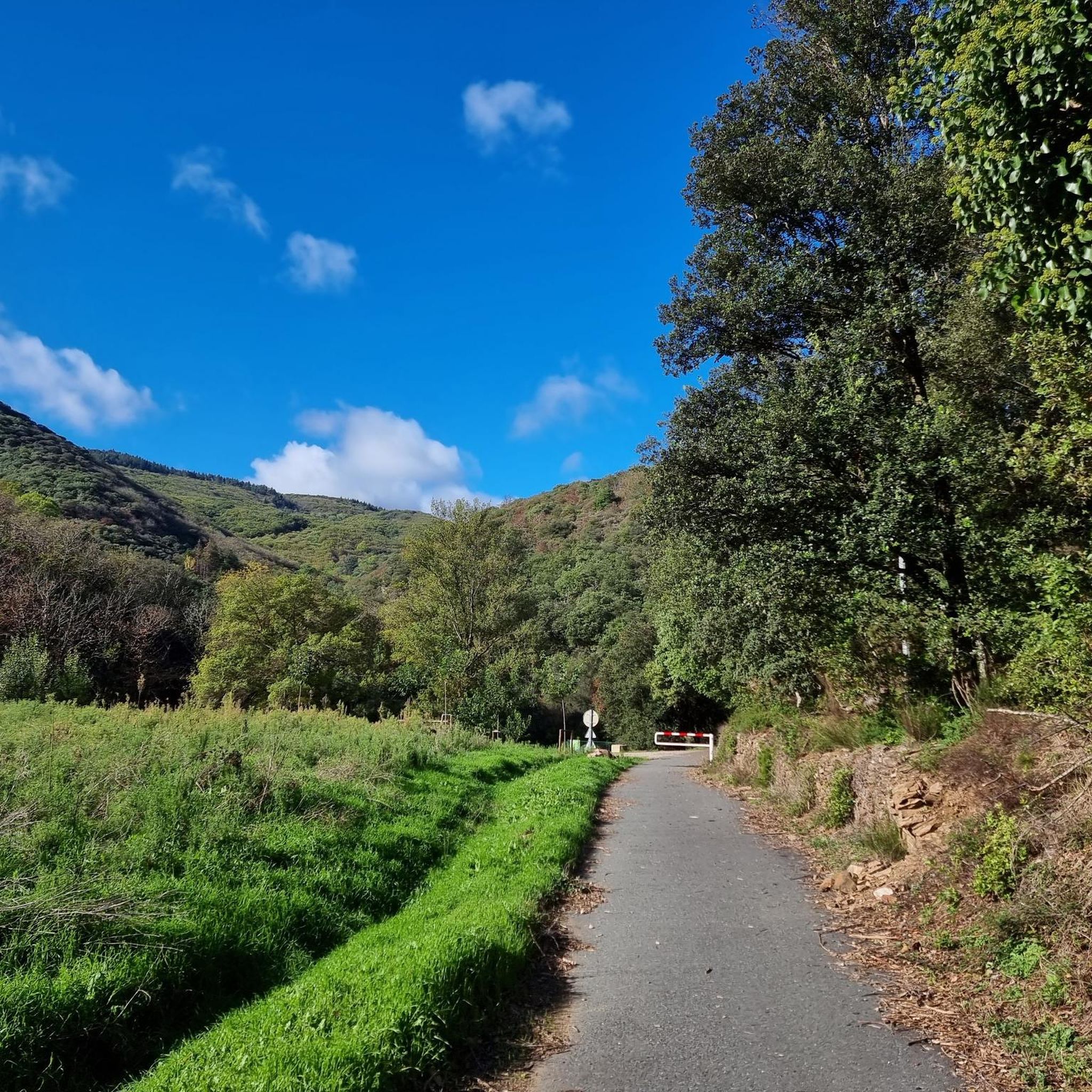
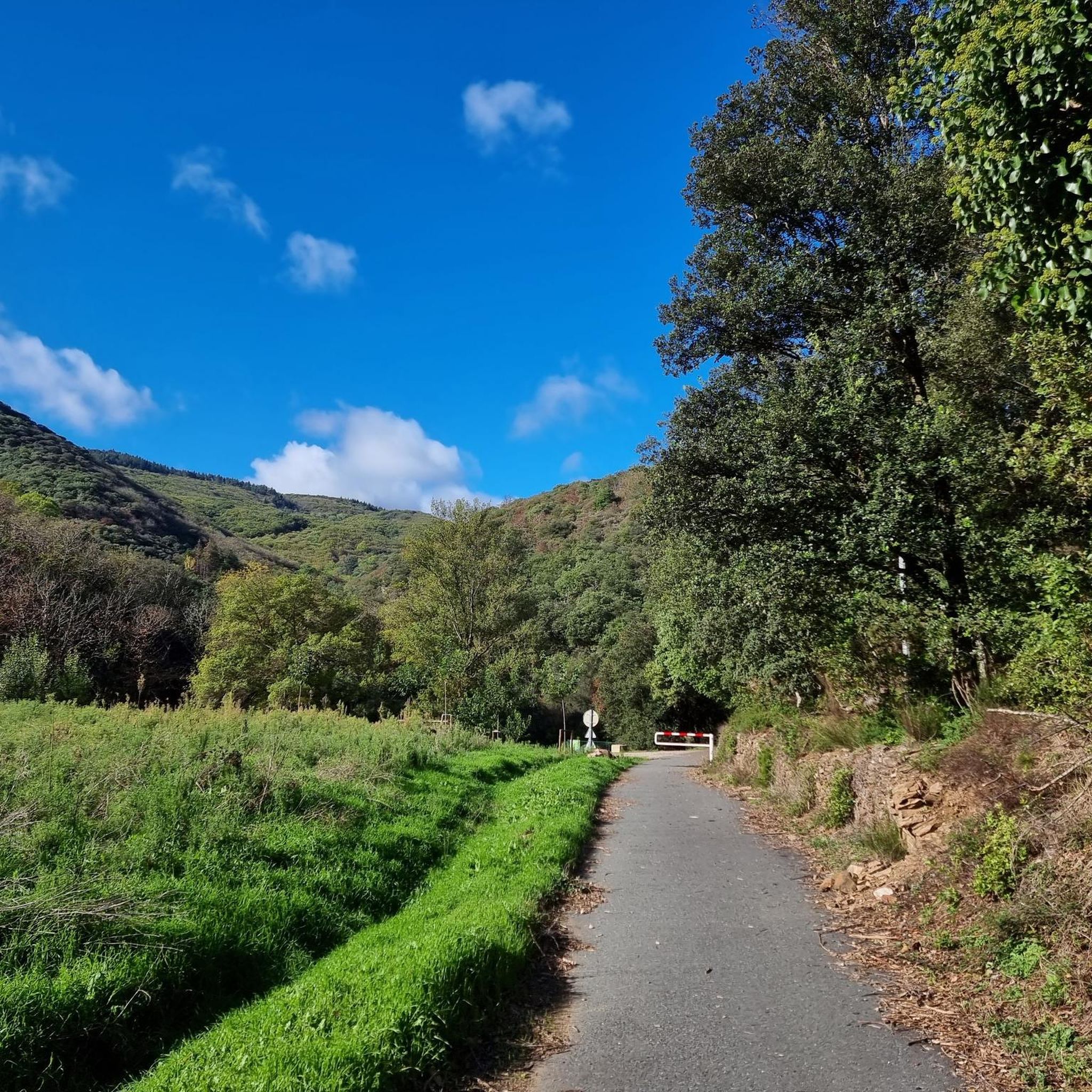
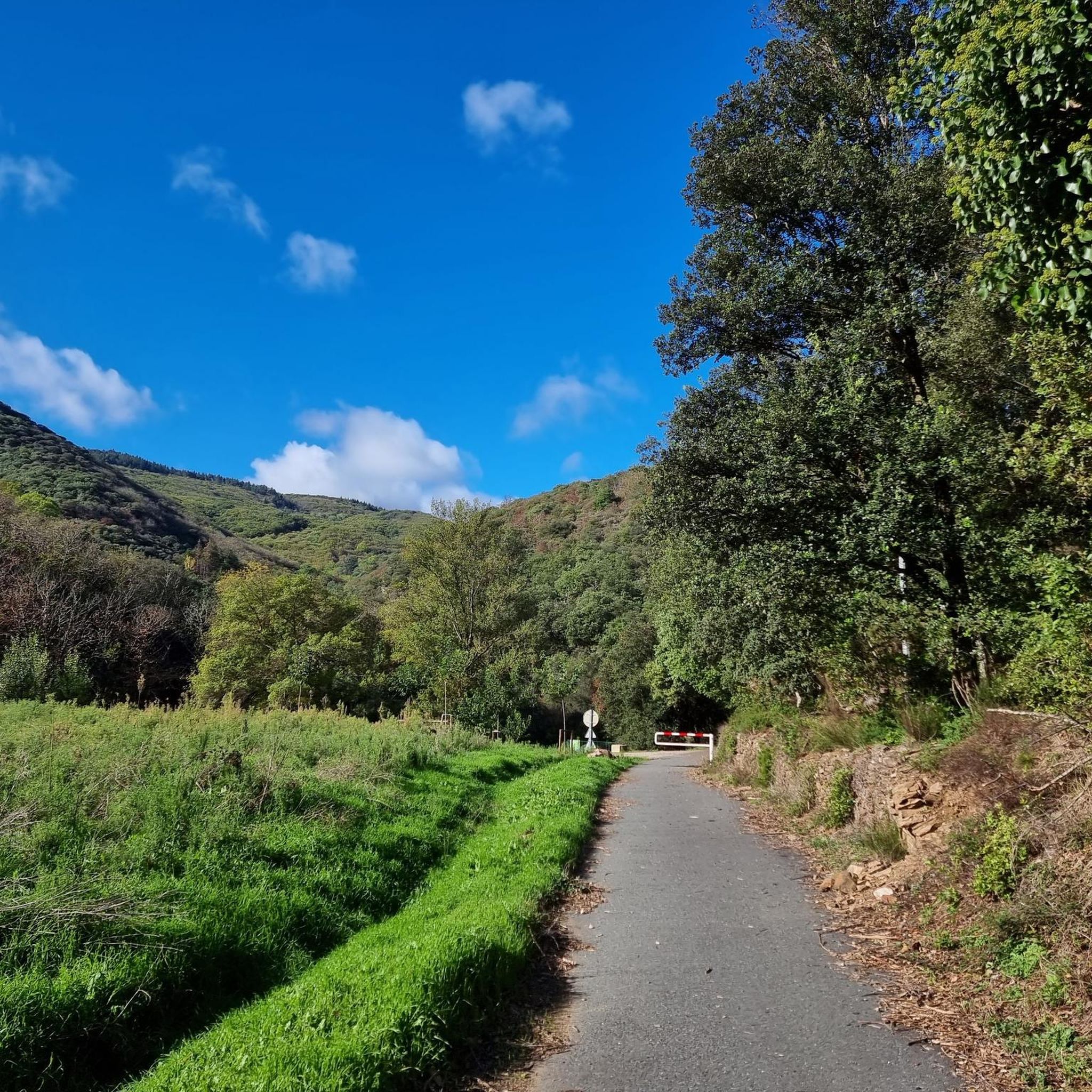
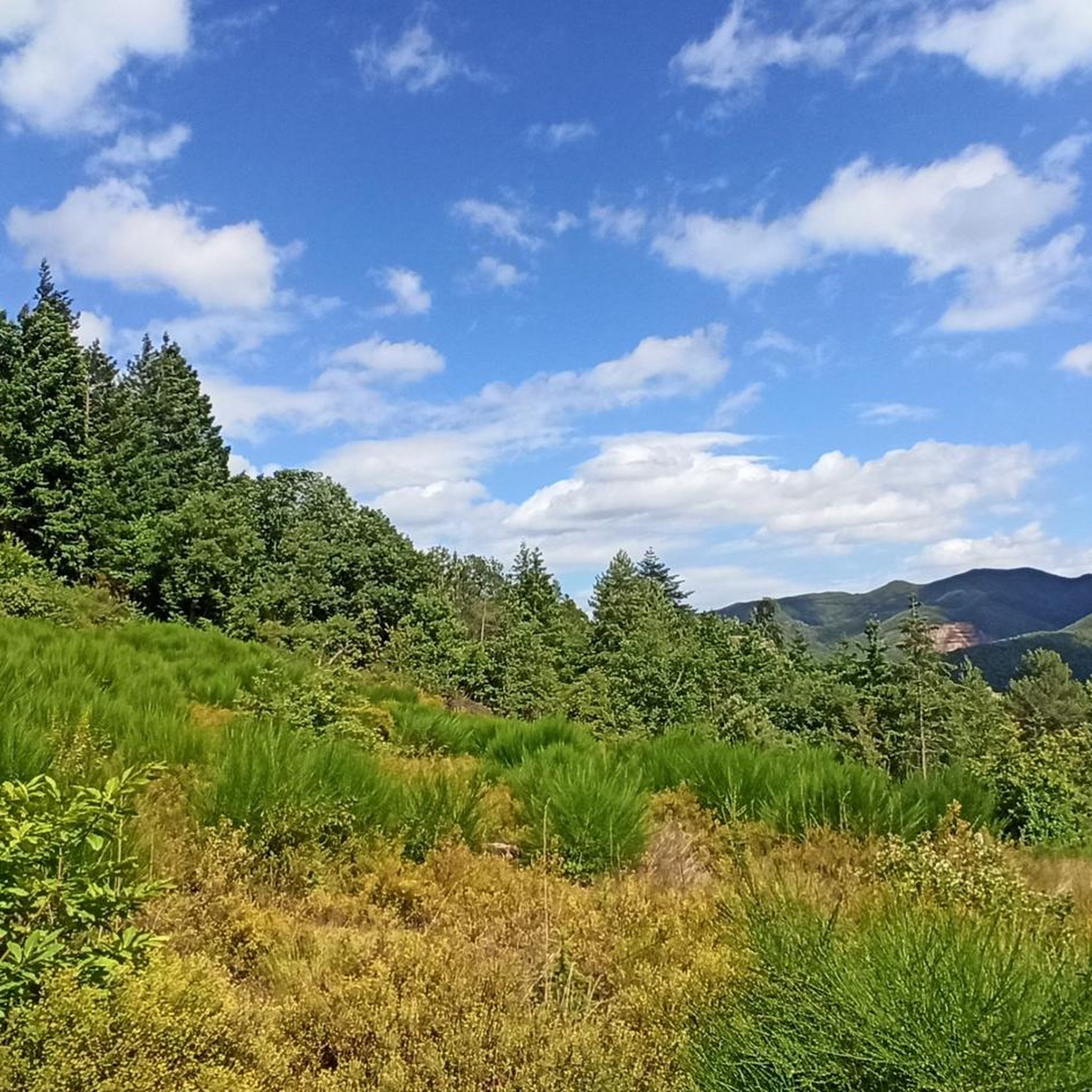
Magnificent viewpoint over the reliefs of the Haut-Languedoc. From this bend in the D180, the landscape suddenly opens up to the east, offering a striking view of the valleys and ridges of the Espinouse. An unmissable photo stop on the way to the pass.
1
0
Frequently Asked Questions
How many road cycling routes are available around Combes?
Combes offers a wide selection of road cycling routes, with nearly 100 different tours to explore. These routes cater to various fitness levels, from moderate rides to challenging ascents, ensuring there's something for every road cyclist.
What kind of terrain can I expect on road cycling routes in Combes?
The terrain around Combes is diverse, featuring challenging climbs, scenic mountain passes, and river valleys. You'll find mostly well-paved surfaces ideal for road bikes, with significant elevation changes that provide both endurance challenges and picturesque rides through classic English country lanes and open vistas.
Are there routes suitable for beginners or those looking for an easier ride?
Yes, while Combes is known for its challenging climbs, there are 7 easy routes and 40 moderate routes available. These options provide a less strenuous experience while still allowing you to enjoy the region's beautiful scenery.
What are some notable landmarks or scenic viewpoints along the road cycling routes?
The region is rich with scenic viewpoints and landmarks. You can experience expansive views of the village of Ceps and the Pont de Vieussan on routes like the View of the village of Ceps – Pont de Vieussan loop from Lamalou-les-Bains. The area also features several significant mountain passes, such as L'Espinouse Pass (1,124 m) and Col de la Croix de Mounis, offering breathtaking panoramic vistas.
Are there any routes that feature waterfalls or gorges?
Yes, the Combes area is home to beautiful natural features. You can find stunning gorges like the Héric Gorge and the Gorges de Colombières Trail. Additionally, the Gouffre du Cerisier Natural Pool and Waterfall is a highlight worth exploring.
What do other road cyclists say about the routes in Combes?
The road cycling routes in Combes are highly rated by the komoot community, with an average score of 4.6 stars from over 120 reviews. Cyclists often praise the diverse landscapes, challenging climbs, and the well-maintained surfaces that make for an excellent road biking experience.
Are there any challenging mountain passes for experienced road cyclists?
Absolutely. Combes is known for its significant climbs and mountain passes. Routes like the Vision – Fontfroide Pass loop from Lamalou-les-Bains feature over 4,398 feet (1,340 meters) of elevation gain, including the demanding Fontfroide Pass. Another challenging option is the Col de la Pierre Plantée – Col des 13 Vents loop from Lamalou-les-Bains, which includes over 1,240 meters of climbing.
Can I find circular road cycling routes in Combes?
Many of the road cycling routes around Combes are designed as loops, offering circular journeys that bring you back to your starting point. Examples include the In Graissessac – Mare River Crossing loop from Le Poujol-sur-Orb and the L'Espinouse Pass (1,124 m) loop from Le Poujol-sur-Orb, providing convenient and varied cycling experiences.
What is the best time of year for road biking in Combes?
The diverse landscapes of Combes make it suitable for road cycling across various seasons. While specific weather conditions can vary, generally spring and autumn offer pleasant temperatures and beautiful scenery. Summer can be excellent, especially for higher elevation routes, but always check local forecasts for optimal riding conditions.
Are there any routes that cross rivers or feature river valleys?
Yes, several routes in Combes traverse river valleys and include river crossings. For instance, the In Graissessac – Mare River Crossing loop from Le Poujol-sur-Orb specifically highlights a crossing of the Mare River, offering a different scenic element to your ride.
Are there options for longer, more endurance-focused road cycling tours?
Combes is an excellent destination for endurance road cycling. Many routes are designed for longer distances and significant elevation gain. The Vision – Fontfroide Pass loop from Lamalou-les-Bains, for example, is 45.2 miles (72.7 km) long with over 4,398 feet (1,340 meters) of climbing, making it a substantial challenge for experienced riders.
Most popular attractions around Combes

Get inspired with the komoot mobile app


Explore more
Browse the best Road cycling routes in other regions.
