The best road cycling routes around Ferrières-Poussarou
4.6
(152)
2,705
riders
64
rides
Road cycling routes around Ferrières-Poussarou are situated in the tranquil hamlet of Ferrières-Poussarou, nestled in the Hérault department at an altitude of approximately 530 meters. The region offers diverse landscapes, featuring undulating roads that ascend towards the heights of the Cévennes, Larzac, and the Haut-Languedoc. Cyclists can find routes winding through vineyards and varied natural scenery, providing options for different skill levels.
Best road cycling routes around Ferrières-Poussarou
- The most popular road cycling route is Pont de Vieussan – View…
Last updated: October 22, 2026
4.9
(11)
285
riders
98.9km
05:23
1,870m
1,870m
Hard road ride. Very good fitness required. Some segments of this route may be unpaved and difficult to ride.
4.4
(5)
73
riders
47.0km
02:15
590m
590m
Moderate road ride. Good fitness required. Mostly well-paved surfaces and easy to ride.

5.0
(3)
66
riders
29.5km
01:23
310m
310m
Moderate road ride. Good fitness required. Mostly well-paved surfaces and easy to ride.
5.0
(1)
36
riders
65.7km
03:45
1,520m
1,520m
Hard road ride. Very good fitness required. Mostly well-paved surfaces and easy to ride.
3.0
(1)
32
riders
37.4km
01:50
600m
600m
Moderate road ride. Good fitness required. Mostly well-paved surfaces and easy to ride.
Get access to more routes and recommendations from other explorers.
Already have an account?
Our route recommendations are based on thousands of hikes, rides, and runs completed by other people on komoot.
Start today with a free account
Your next adventure awaits.

Tips from the Community

The church of the Nativity of Saint John the Baptist bears witness to the gradual shift of the religious heart of Saint-Jean-de-Minervois. For centuries, parish life was linked to the Saint-Jean de Dieuvaille chapel, now nicknamed "the church of the Hole", isolated in a canyon between the hamlets of Gimios and Barroubio. At the beginning of the 18th century, the current village became the new center of the community, around this current parish church.
2
0
Much more than a simple village church, Notre-Dame-de-l'Assomption was originally the chapel of the seigniorial castle of Villespassans. Built between the 12th and 16th centuries, it has the particularity of housing two superimposed naves, testifying to the different phases of its evolution. Its massive square tower, built of dressed stone, still dominates the heart of the old medieval village, where remains of the ramparts also still exist. Villespassans developed on a ridge of Hettangian dolomites, limestone rocks about 200 million years old that mark the early Jurassic period. These extensive terrains offer a solid base on which the village was established and partly explain its dominant position in the landscape. Nicknamed the "village of a thousand and one stones", Villespassans is also renowned for its remarkable dry stone heritage: *capitelles*, low walls, dolmens, and old agricultural constructions dot the surroundings.
2
0
The landscape opens onto the hamlet of Ceps, nestled on the banks of the Orb river. This village boasts a Romanesque church from the 12th century, a testament to ancient human presence in this enclosed area. Behind it, the wooded reliefs of the Haut-Languedoc form a natural backdrop that seems to protect the village.
2
0
Roquebrun is much more than a pretty village on the banks of the Orb. Occupied since the Neolithic period, it is dominated by a Carolingian tower built around 900 to watch over the valley. But what makes it truly unique is its microclimate: sheltered from the north winds, it hosts orange, lemon, palm, and cactus trees in the open ground, a very rare phenomenon in the Hérault hinterland. This mildness has earned it the nickname of the "Nice of the Hérault" and has allowed the creation of a remarkable Mediterranean Garden on the terraces overlooking the village. An essential detour, as much for its history as for its atmosphere.
1
0

One of the 3 magnificent lakes in the South-East of Tarn. Although artificial, it catches the eye with its wild appearance. Worth seeing on sunny days or to escape the heatwave
0
0
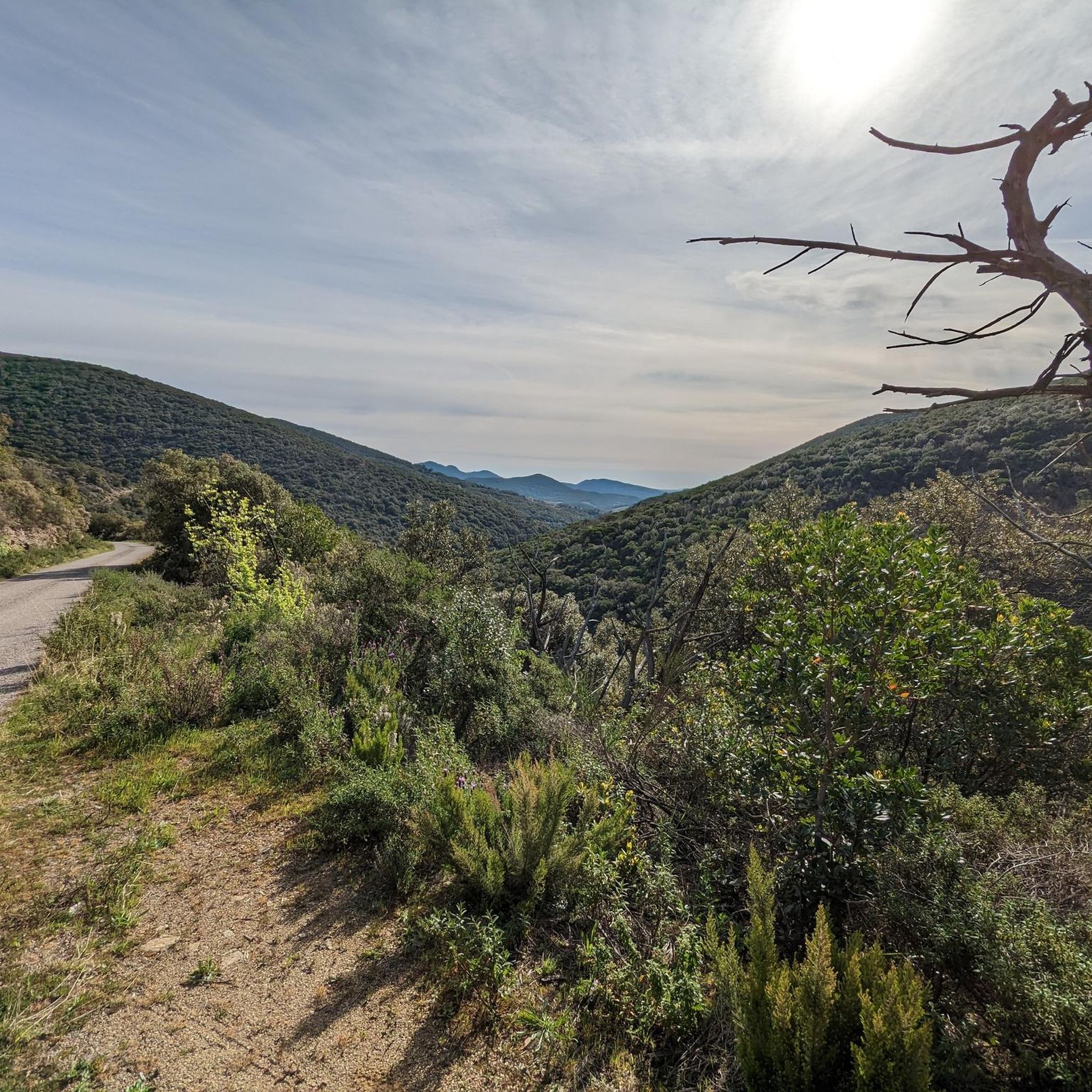
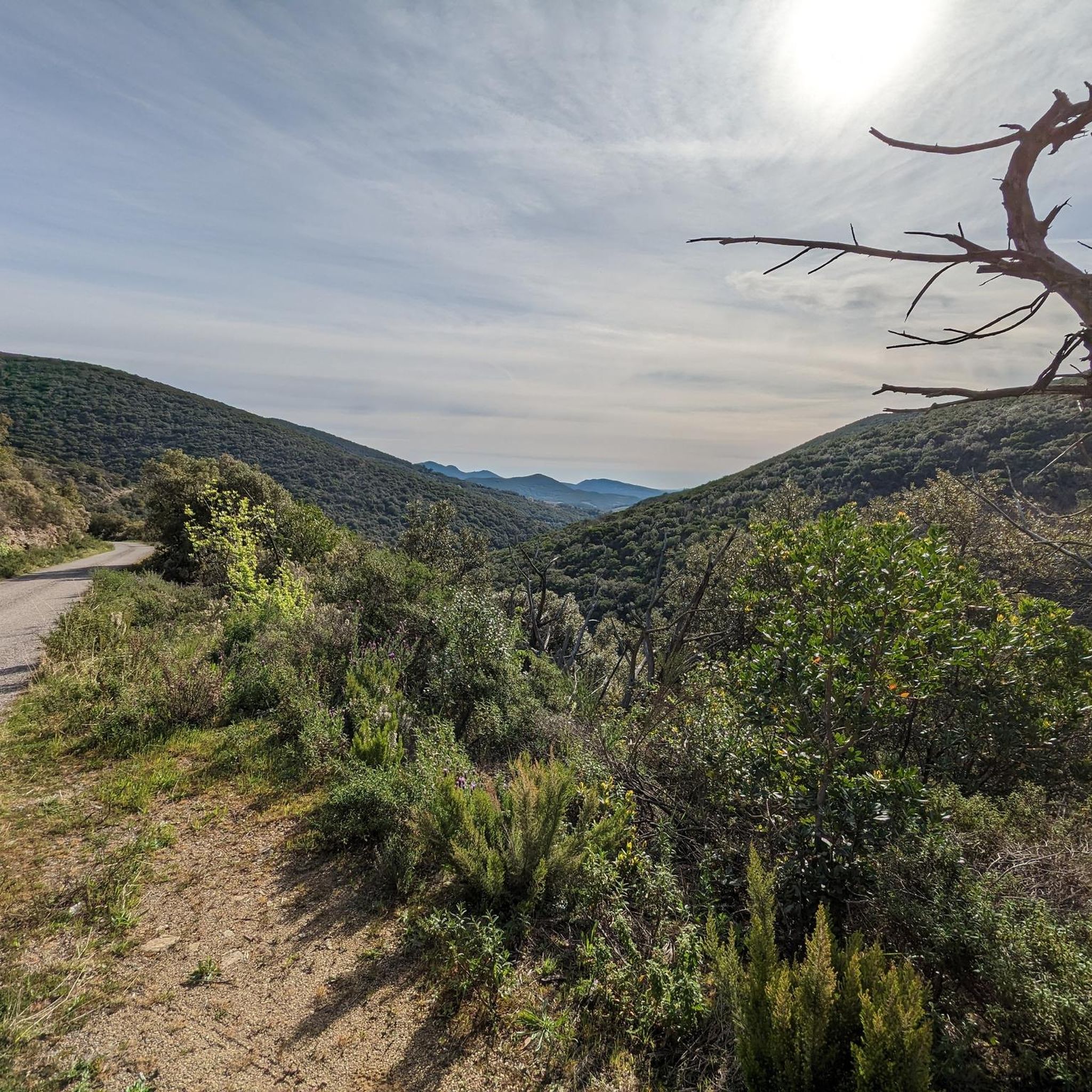
This wide turn reveals a superb panorama of the mountain. In the foreground, the D14 winds up the slope with beautifully drawn switchbacks. Further on, several characteristic reliefs of the Haut-Languedoc stand out, succeeding each other to the horizon. One of the most beautiful panoramas of the ascent!
2
0


On the way to Assignan, a beautiful road to a lovely village. I wouldn't miss a cup of coffee here.
0
0
Frequently Asked Questions
How many road cycling routes are available around Ferrières-Poussarou?
There are over 75 road cycling routes around Ferrières-Poussarou, offering a wide range of options for different skill levels and preferences. The region is known for its diverse landscapes, from undulating roads through vineyards to challenging climbs into the Haut-Languedoc.
What kind of terrain can I expect on road cycling routes in Ferrières-Poussarou?
You can expect varied terrain, including undulating roads that ascend towards the heights of the Cévennes, Larzac, and the Haut-Languedoc. Many routes wind through vineyards and diverse natural scenery, offering both tranquil sections and more challenging climbs.
Are there routes suitable for beginners or those looking for an easy ride?
Yes, Ferrières-Poussarou offers several easier road cycling routes. For instance, the Roquebrun – Roquebrun Bridge on the Orb loop from Prades-sur-Vernazobre is a moderate option with less elevation gain, providing a pleasant ride through the landscape.
Are there challenging road cycling routes for experienced cyclists?
Absolutely. For experienced cyclists seeking a challenge, routes like the L'Espinouse Pass (1,124 m) – Fontfroide Pass loop from Prémian offer significant elevation gain and ascend to the heights of the Haut-Languedoc. The small road from Riols to the Col du Cabarétou is also known as a 'real challenge'.
What do other cyclists say about the routes in Ferrières-Poussarou?
The road cycling routes around Ferrières-Poussarou are highly rated by the komoot community, with an average score of 4.7 stars from over 130 reviews. Cyclists often praise the superb views of vineyards, the diverse natural scenery, and the variety of routes available for different ability levels.
Are there any scenic routes with notable landmarks or viewpoints?
Many routes offer superb views of vineyards and diverse natural scenery. You can find routes that pass by the historic Olargues Railway Bridge or offer views of charming villages like Olargues. The Balconies of Saint-Chinian also provide excellent panoramic views.
Can I find routes that pass by waterfalls or natural pools?
Yes, the region is rich in natural water features. You can cycle routes that lead near the spectacular Vésoles Waterfall, especially vibrant in spring, or the Gouffre du Cerisier Natural Pool and Waterfall, known for its splendid setting. The Héric Gorge also features crystal-clear waters for swimming.
Are there any historical or charming villages to explore along the routes?
The area is dotted with charming villages. The village of Riols, with its historical Banasse bridge and the Church of Saint Peter and Paul, lies along the popular Passa Païs Greenway. The 'beautiful village' of Olargues offers a charming medieval center, and the majestic Chapel Notre-Dame-de-Trédos is also accessible by bike.
Are there circular road cycling routes in the area?
Yes, many routes around Ferrières-Poussarou are designed as loops. For example, the Pont de Vieussan – View of the village of Ceps loop from Saint-Chinian and the Pont de Vieussan – View of the village of Ceps loop from Olargues are popular circular options, allowing you to start and end in the same location.
What is the best time of year for road cycling in Ferrières-Poussarou?
The region is generally pleasant for cycling from spring through autumn. Spring is particularly vibrant, with waterfalls at their fullest. The varied terrain and natural beauty make it an enjoyable destination for road cycling across multiple seasons.
Are there quiet road cycling routes with minimal car traffic?
Yes, many routes in the Haut-Languedoc Regional Natural Park, which encompasses Ferrières-Poussarou, are described as tranquil roads with minimal car traffic, especially those winding through vineyards. This allows for a more peaceful and immersive cycling experience.
Most popular routes around Ferrières-Poussarou
Most popular attractions around Ferrières-Poussarou

Get inspired with the komoot mobile app


Explore more
Browse the best Road cycling routes in other regions.
