Attractions and Places To See around Cescau - Top 18
Attractions and places to see around Cescau, a commune in the Pyrénées-Atlantiques department of the Nouvelle-Aquitaine region, primarily involve exploring the surrounding area. This small locality serves as a starting point for discovering nearby historical sites, cultural points of interest, and natural landscapes. The region offers a variety of experiences, from ancient religious architecture to scenic viewpoints and local markets.
Best attractions and places to see around Cescau
- The most popular attractions is Lescar Cathedral (Cathedral of Our Lady of…
Last updated: October 10, 2026
Caubin Chapel
Highlight • Religious Site
Showing Translation
Tip by

Église Saint Pierre
Highlight • Other
During the formation of the Principality of the Pyrenees, around the 10th …
Showing Translation
Tip by
Sign up now to discover places like this
Get recommendations on the best single tracks, peaks, & plenty of other exciting outdoor places.
Lescar Cathedral (Cathedral of Our Lady of the Assumption)
Highlight • Other
You will indeed find within its walls …
Translated by Google •
Tip by

Moulin de Louvigny
Highlight • Other
Translated by Google •
Tip by

Translated by Google •
Tip by

Sign up for free to discover even more attractions around Cescau.
Already have an account?
Start today with a free account
Your next adventure awaits.


Tips from the Community

The Romanesque chapel was built on the orders of the Viscount of Béarn, Gaston IV, known as the Crusader (1090-1130), upon his return from the First Crusade. It was entrusted to the Knights of Saint John of Jerusalem and experienced its heyday until the mid-16th century, when the Wars of Religion broke out. Inside, behind the beautiful Gothic arches, we can see the tomb with the figure of a medieval knight. On the outside, the details of the capitals are worth seeing.
2
0
The site of the abbey of Saint-Pierre de LARREULE was of great importance in the history of Béarn. During the formation of the Principality of the Pyrenees, around the 10th century, monks organized the large-scale clearing and development of the land; their abbeys were economic units. Only part of the Romanesque abbey church, built in the 12th century and rebuilt in the 16th century after significant destruction by Protestant troops, remains of the abbey. Three Romanesque capitals as well as several listed statues from the 17th and 18th centuries can still be seen there. As the nave (oriented East-West) was never rebuilt, the old Romanesque transept (oriented North-South) served as the nave from the 17th century onwards, when the west wall was erected to complete the church.
2
0
The Romanesque chapel was built on the orders of the Viscount of Béarn, Gaston IV, known as the Crusader (1090-1130), upon his return from the First Crusade. It was entrusted to the Knights of Saint John of Jerusalem and experienced its heyday until the mid-16th century, when the Wars of Religion broke out. Inside, behind the beautiful Gothic arches, we can see the tomb with the figure of a medieval knight. On the outside, the details of the capitals are worth seeing. 'La petite église' can be read framed at the entrance of the church.
2
0

Louvigny (in Béarn Lobinhèr of Loubignè) is a French commune, located in the Pyrénées-Atlantiques department in the Nouvelle-Aquitaine region.
5
0

A 12th-century historical monument, the chapel was saved by the association "Les Amis de Caubin" in 1966, who completed its restoration in 1974. Musical events have been held there since. Note that picnic tables and an oratory are located on the other side of the road.
1
0
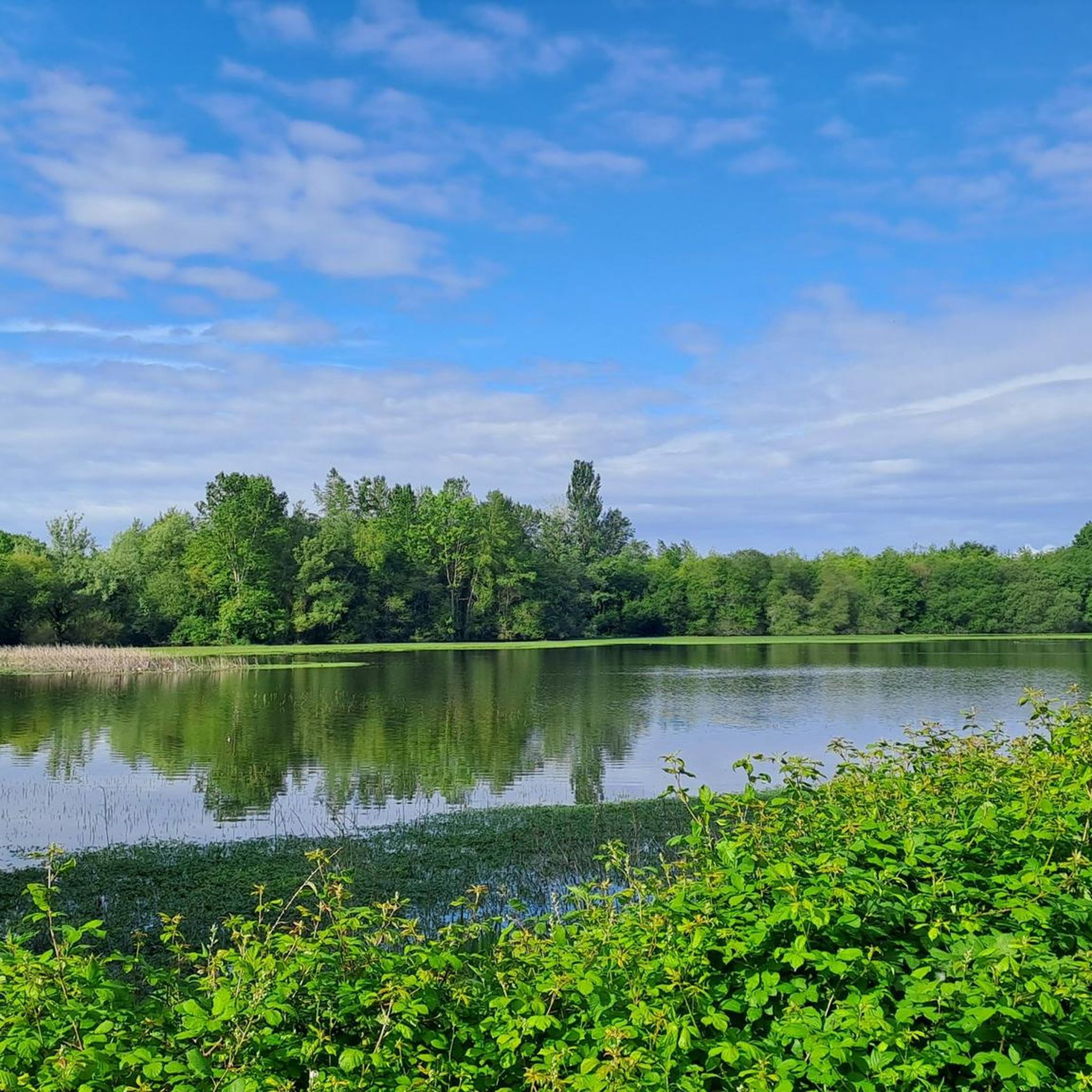
Educational place providing information on the Gave, its fauna and flora. Picnic tables are available. A raised pontoon is present, ideal for naturalist observations (many species of birds are present: swallows, ducks, grebes, cormorants, herons, etc.).
3
1
Recent route exclusively reserved for cyclists going from Bésingrand to the Artix bridge. The route runs along the Gave de Pau and a photovoltaic park.
2
1

This magnificent church, which is attached to the diocese of Bayonne, Lescar and Oloron, is just as superb inside as it is outside. You will indeed find within its walls a baroque altarpiece dating from the end of the 17th century, as well as a mosaic dating from the 12th century. Also enjoy the meditation and the view of the Pyrenees.
6
0
Frequently Asked Questions
What historical and architectural sites can I visit near Cescau?
The area around Cescau is rich in history. You can explore the impressive Lescar Cathedral (Cathedral of Our Lady of the Assumption), known for its 17th-century baroque altarpiece and 12th-century mosaic. The medieval town of Lescar itself offers Gallo-Roman remains, 12th-century ramparts, and a 14th-century prison tower. Another notable site is the Saint Martin Church, rebuilt in 1955 using stones from an older ruin.
Are there any natural attractions or scenic viewpoints around Cescau?
Yes, you can enjoy several natural spots and scenic views. The Panorama of Lescar offers a great perspective of the medieval town and the Pyrenees. There's also an educational cycle path along the Gave de Pau, featuring picnic tables and a raised pontoon for observing local fauna and flora, including various bird species like swallows, ducks, and herons.
What outdoor activities are available near Cescau?
The region offers diverse outdoor activities, particularly cycling. You can find numerous routes for mountain biking, road cycling, and touring. For example, explore the 'Labastide-Cézéracq Church – Doazon VTT 9 loop' for MTB, or the 'Plateau du Bénou – Marie-Blanque Pass loop' for a challenging road cycling experience. Many routes offer panoramic views of the Pyrenees. You can find more details on specific routes in the MTB Trails around Cescau, Road Cycling Routes around Cescau, and Cycling around Cescau guides.
Are there any family-friendly activities or places to visit?
While Cescau itself is small, the surrounding area offers options for families. The educational cycle path along the Gave de Pau, mentioned earlier, is a great spot for families to enjoy nature, observe birds, and have a picnic. Exploring the medieval town of Lescar can also be an engaging experience for children interested in history and old architecture.
Where can I find local markets near Cescau?
You can experience local markets in nearby towns. Artix hosts markets on Wednesdays and Sundays, while Mourenx has markets on Wednesdays and Saturdays. These markets are great places to discover local produce and crafts.
What are some unique or hidden gems to discover?
A unique spot is the Moulin de Louvigny, a privately owned historical mill located directly on the GR65 route. While not open for tours, its historical structure and natural setting make it a beautiful sight. The small village of Laas, west of Cescau, also features a castle and a Roman-style church, offering a glimpse into local heritage.
Are there any notable gardens or parks in the vicinity?
Yes, the region boasts several remarkable gardens. You can visit the Jardin du château de Momas, the Jardins du château de Viven, or venture a bit further to the Palmeraie du Sarthou and Parc du Sarrat. These offer beautiful landscapes and a peaceful environment.
What do visitors enjoy most about the attractions around Cescau?
Visitors particularly appreciate the blend of historical heritage and natural beauty. The architectural details of sites like Lescar Cathedral, the panoramic views of the Pyrenees, and the peaceful atmosphere of the local churches are frequently highlighted. The opportunity to engage with nature along the Gave de Pau and explore the medieval charm of Lescar also receives positive feedback.
Can I find places for rest or amenities near the attractions?
Yes, for instance, the Saint Martin Church provides benches outside for a quiet rest, and behind the 'mairie' nearby, you can find drinking water and public toilets. The educational cycle path along the Gave de Pau also offers picnic tables.
What kind of cycling routes are available for different skill levels?
The area caters to various cycling preferences and skill levels. For mountain biking, you'll find moderate routes like the 'Lake Ayguelongue – Sailing ducks loop'. Road cyclists can choose from moderate routes such as 'Gave de Pau (Pau River) – View of the Pyrenees loop' to more difficult ones like 'Plateau du Bénou – Marie-Blanque Pass loop'. Touring cyclists also have options ranging from moderate to difficult, including routes that pass by historic wells or offer panoramic views. Consult the specific komoot guides for detailed route information.
Are there any specific religious sites worth visiting?
Beyond the Lescar Cathedral, which is a significant religious site with historical importance, the region of Pyrénées-Atlantiques is part of the French Pilgrim Routes. Other notable churches in nearby towns include the Church Sainte-Croix and the Cathedral Saint-Marie in Oloron-Sainte-Marie, both featuring remarkable Roman-style architecture.

Get inspired with the komoot mobile app


Explore more
Still not found the Highlight you’re looking for? See guides of the top attractions in other regions:
