The best road cycling routes around Saussay
4.5
(42)
763
riders
161
rides
Road cycling routes around Saussay are situated within the Eure-et-Loir department, offering diverse landscapes for cyclists. The region features the flat, expansive plains of the Beauce to the east, contrasting with the undulating hills of the Perche natural regional park to the west. Cyclists can also find picturesque routes along the banks of the River Eure and through the Loir Valley. This varied terrain provides options ranging from gentle rides to more challenging ascents.
Best road cycling routes around Saussay
…Last updated: July 2, 2026
5.0
(1)
43
riders
64.8km
02:33
230m
230m
Moderate road ride. Good fitness required. Mostly well-paved surfaces and easy to ride.
44
riders
74.6km
03:24
610m
610m
Moderate road ride. Good fitness required. Mostly well-paved surfaces and easy to ride.

Sign up for free
5.0
(1)
23
riders
87.7km
04:10
850m
850m
Moderate road ride. Good fitness required. Some segments of this route may be unpaved and difficult to ride.
4.5
(2)
17
riders
60.3km
02:24
250m
250m
Moderate road ride. Good fitness required. Mostly well-paved surfaces and easy to ride.
4.0
(2)
15
riders
47.9km
01:59
280m
280m
Easy road ride. Great for any fitness level. Mostly well-paved surfaces and easy to ride.
Get access to more routes and recommendations from other explorers.
Sign up for free
Already have an account?
Our route recommendations are based on thousands of hikes, rides, and runs completed by other people on komoot.
Start today with a free account
Your next adventure awaits.
Login or Signup



Tips from the Community


Built in the 16th century and constructed from white stone from the Boncourt quarry, the church has a brown tile roof, accompanied by a bell tower and a belfry covered in slate. A small canopy, a vestibule, protects the sanctuary door, rebuilt in 1789. The bell was cast in the 17th century.
0
0
The nave and aisles were built in the mid-16th century, probably at the same time as the funerary chapel of Diane de Poitiers. The apse belongs to a 12th or 13th century building, the interior of which was restored in the 16th century.
0
0
The construction of the original church of Sorel dates back to the 10th century. In 1113, this church was destroyed during the siege of the fortress of Sorel by the troops of Henry VIII of England coming from Normandy. Its identical reconstruction was unfortunately halted by a fire in 1134. The current church was rebuilt starting in the 13th century, with the chevet completed in the 15th century, and the first two bays of the nave and the northern seigneurial chapel in the 16th century. The bell tower was built in the 17th century by blinding a window. The building is constructed of flint, lime, and white stone on a sandstone base. The upper part is made of Vernon stone. The tiled roof is supported by a beautiful rafter frame whose tie beams are decorated with chimera heads, also called "howling devils." In the choir, the 19th-century altar recalls medieval sculptures. An interesting collection of stained-glass windows dating from 1850. After extensive renovations, masses have been celebrated again since 2007.
0
0
The first mention of the existence of the Church of Saint-Martin de Nonancourt is a 12th-century charter, but the original building probably dates back to the 7th or 8th century. The bell tower that now occupies the middle of the façade dates from the reconstructions of 1204. During the Hundred Years' War, the church was largely destroyed, like many buildings in the region. The side aisles, nave, and choir were rebuilt in the 16th century. The Chapel of the Virgin, also known as the Chapel of the Rosary, was also added. The Church of Saint-Martin contains numerous works of art, some of which are listed: neo-Gothic and Renaissance furnishings, including the centerpiece, the pulpit, a veritable wooden lacework; a variety of statuary, a 16th-century organ case and finally an enigmatic fresco discovered during recent works in 2001. The stained-glass windows of the church constitute a truly remarkable collection, both in terms of their number (26 in total) and their quality. The lower windows of the nave are the oldest pieces, dating from the 1500s, while the upper windows date from the 1520s and 1530s.
0
0


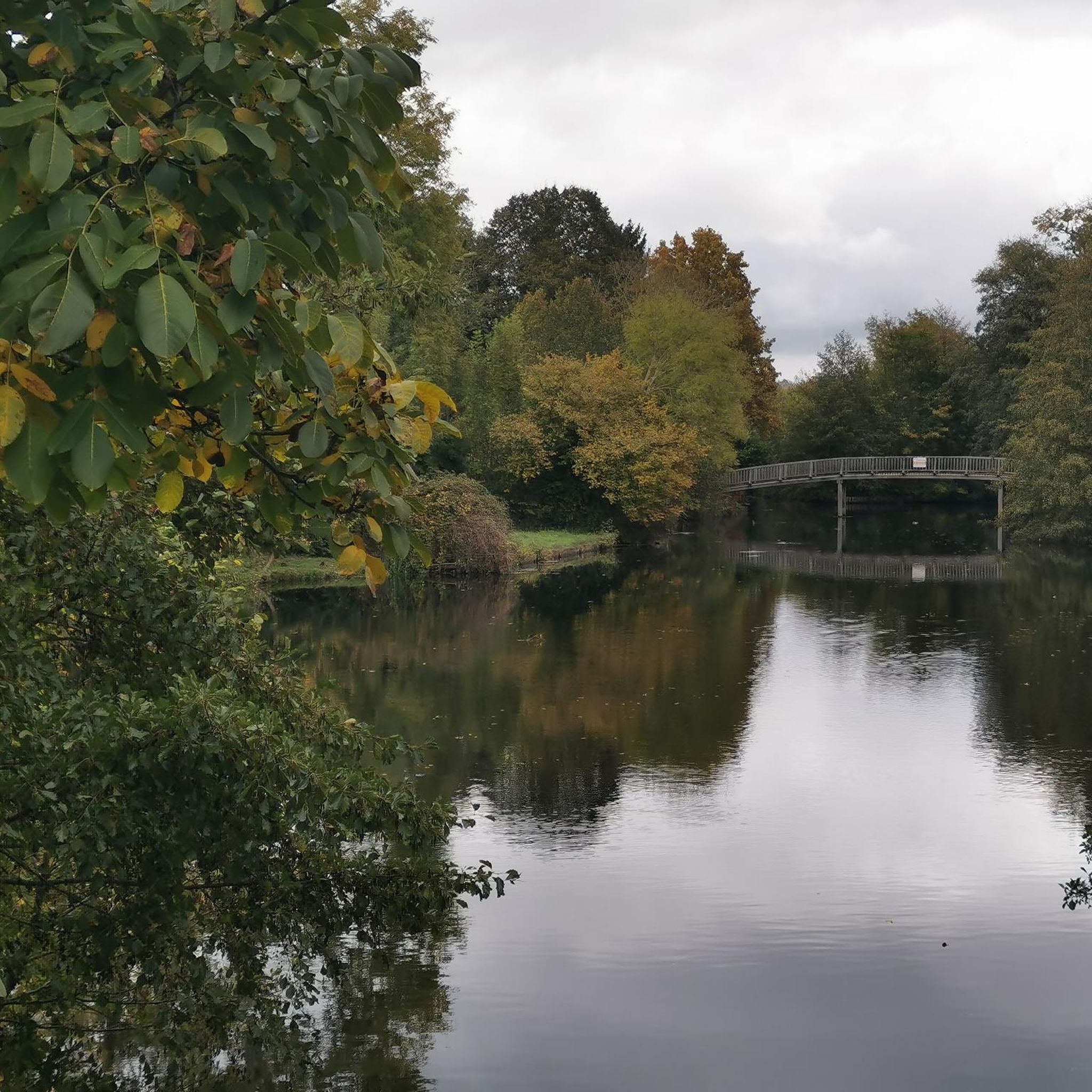
A very beautiful greenway It's an old railway line that has been covered over; it used to go all the way to Dreux. We love going there for cycling, and it's also ideal for walking and rollerblading.
0
0

A village full of character with a rich industrial past. Visit its church and the ruins of its castle. If you're interested in Calvados, a guided tour of the Morin winery is a must.
0
0
Frequently Asked Questions
What kind of terrain can I expect when road cycling near Saussay?
Road cycling around Saussay, located in the Eure-et-Loir department, offers a diverse landscape. You'll find the flat, expansive plains of the Beauce to the east, contrasting with the undulating hills of the Perche natural regional park to the west. There are also picturesque routes along the banks of the River Eure and through the Loir Valley, providing a mix of challenging ascents and leisurely rides.
How many road cycling routes are available around Saussay?
There are over 160 road cycling routes available around Saussay on komoot, catering to various skill levels. This includes 69 easy routes and 94 moderate routes, ensuring options for both casual riders and those seeking more of a challenge.
Are there routes suitable for beginners or less experienced road cyclists?
Yes, Saussay offers numerous options for beginners. There are 69 easy-rated road cycling routes. For example, the Eure Valley Greenway – Avre Aqueduct loop from Ézy-sur-Eure is an easy 27.3-mile (44.0 km) path that follows the Eure Valley Greenway, offering scenic views without significant climbs.
What are some notable landmarks or attractions I can see along the road cycling routes?
Many routes pass by historical and natural attractions. You can cycle past impressive structures like Anet Castle, a significant Renaissance château. Other routes might take you along the scenic Eure Valley Greenway or near other historical castles such as Château de Louye and Sorel Castle.
What do other road cyclists enjoy most about road cycling in Saussay?
The area is highly rated by the komoot community, with an average score of 4.4 stars from over 30 reviews. Cyclists often praise the varied terrain, which includes flat plains, undulating hills, and picturesque river valleys, offering a diverse and engaging experience for all ability levels.
Are there any long-distance cycling routes accessible from Saussay?
Yes, the Eure-et-Loir department, where Saussay is located, is home to sections of long-distance cycling itineraries. Notably, parts of the Veloscenic (La Véloscénie), which connects Paris to Mont-Saint-Michel, pass through the region. These routes often feature quiet roads and are suitable for multi-day trips.
Can I find circular road cycling routes around Saussay?
Yes, many of the routes around Saussay are designed as loops, allowing you to start and end in the same location. For example, the Saint Peter's Church – Ivry-la-Bataille loop from Ézy-sur-Eure is a 40.3-mile (64.8 km) route that explores the scenic Eure Valley and returns to its starting point.
What is the best time of year to go road cycling in Saussay?
The Eure-et-Loir region generally offers pleasant cycling conditions from spring through autumn. Spring brings blooming landscapes, while autumn provides cooler temperatures and beautiful foliage. Summer is also suitable, though it's advisable to cycle earlier in the morning or later in the afternoon to avoid the midday heat.
Are there any routes that pass through historical towns or villages?
Absolutely. Many routes are designed to showcase the region's cultural heritage. The Saint Peter's Church – Ivry-la-Bataille loop from Ézy-sur-Eure, for instance, explores the scenic Eure Valley, passing through historical towns like Ivry-la-Bataille. Another option is the Avre Aqueduct – Anet Castle loop from Ézy-sur-Eure, which leads past significant historical landmarks.
Where can I find more information about cycling in the wider Eure-et-Loir region?
For more general information about cycling opportunities and dedicated cycle routes within the Eure-et-Loir department, you can visit the official tourism website for the region. They provide details on various routes and experiences, such as the Veloscenic. You can find more at tourisme28.com.
Are there any routes with significant elevation changes for advanced cyclists?
While the region offers varied terrain, including undulating hills in the Perche natural regional park, the routes directly around Saussay tend to have moderate elevation gains. For example, the Avre Aqueduct – Anet Castle loop from Ézy-sur-Eure has an elevation gain of approximately 279 meters over 60.8 km, offering a good workout without extreme climbs.
Most popular attractions around Saussay

Get inspired with the komoot mobile app


Explore more
Browse the best Road cycling routes in other regions.
