The best road cycling routes around Montesquieu
4.5
(146)
2,919
riders
174
rides
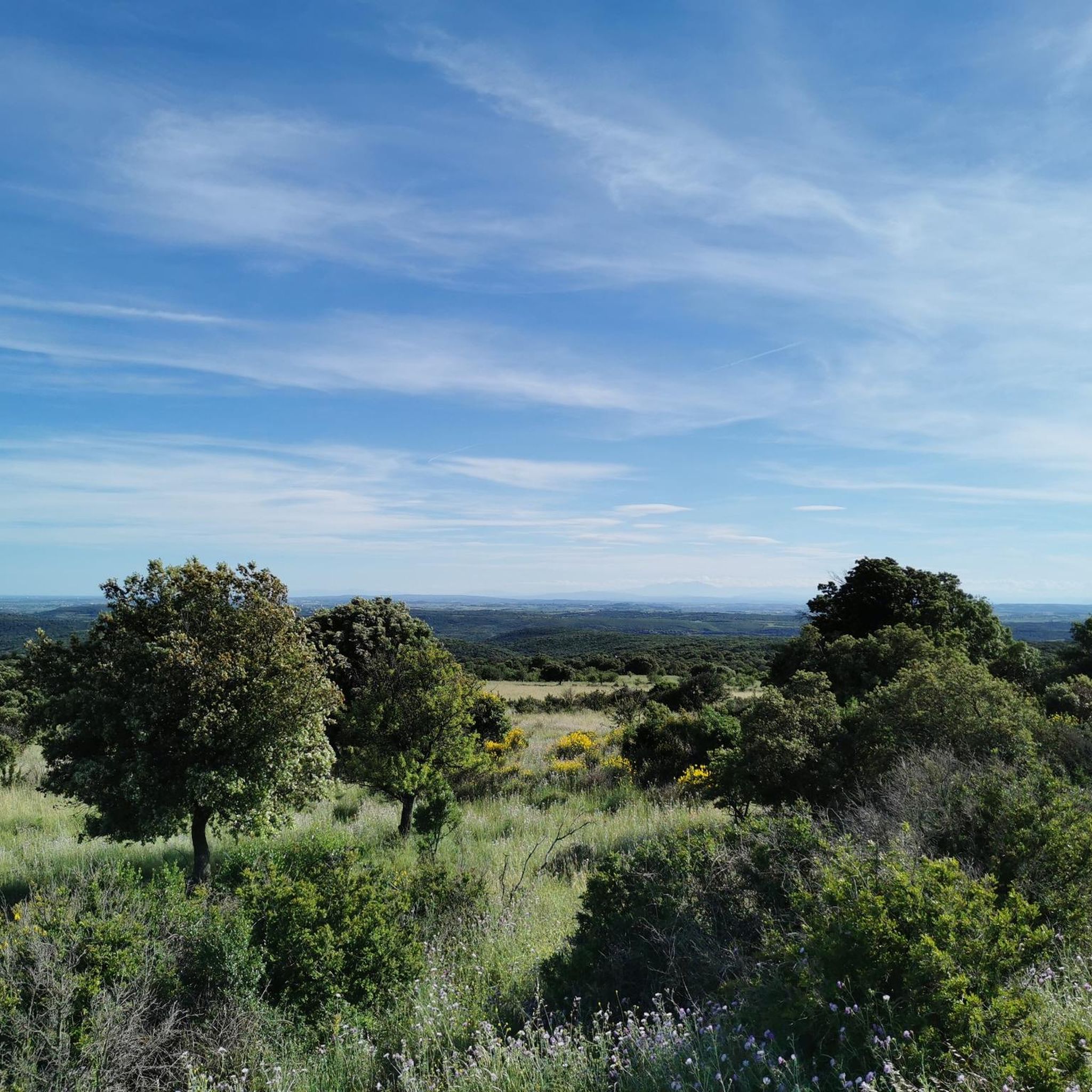
Road cycling routes around Montesquieu traverse a landscape characterized by varied terrain, including rolling hills, river valleys, and forested areas. The region benefits from France's extensive and well-maintained road network, providing numerous options for cyclists. Features such as the Garonne basin and the presence of natural parks contribute to diverse cycling environments.
Best road cycling routes around Montesquieu
- The most popular road cycling route is Picturesque town – Faugères loop from Fos, a 31.1 miles (50.1 km) trail that…
Last updated: October 16, 2026
31
riders
37.4km
01:39
350m
350m
Moderate road ride. Good fitness required. Mostly well-paved surfaces and easy to ride.
20
riders
73.3km
03:37
1,060m
1,060m
Hard road ride. Very good fitness required. Some segments of this route may be unpaved and difficult to ride.

4.0
(3)
20
riders
54.0km
02:31
510m
510m
Moderate road ride. Good fitness required. Mostly well-paved surfaces and easy to ride.
8
riders
53.7km
02:49
930m
930m
Hard road ride. Very good fitness required. Some segments of this route may be unpaved and difficult to ride.
5.0
(1)
8
riders
46.4km
02:16
610m
610m
Moderate road ride. Good fitness required. Mostly well-paved surfaces and easy to ride.
Get access to more routes and recommendations from other explorers.
Already have an account?
Our route recommendations are based on thousands of hikes, rides, and runs completed by other people on komoot.
Start today with a free account
Your next adventure awaits.


Tips from the Community

The Saint-Étienne church is one of the major witnesses to the history of Boujan-sur-Libron. Built in the 11th century on the site of an old chapel attributed to the Visigothic era, it was destroyed and rebuilt several times before taking its Gothic form in the 14th century. Its history can still be read in its different layers: nave dated 1536, bell tower completed in 1666, and choir remodeled in 1890. It notably preserves a Romanesque capital, a painting of the Rosary from 1670, a high altar from the 18th century, and a bell from 1686. The current square was once occupied by the village cemetery, which was moved in 1836. An interesting stop before continuing through the narrow streets of the old Boujan circular settlement.
2
0
It is difficult to imagine that the heart of the village was here nearly a thousand years ago. From the 11th century onwards, the Castellas formed the nucleus of the Abeilhan castrum, around which the fortified village developed. The church of Notre-Dame-de-Pitié is part of this history: it gradually replaced the old parish church of Saint-Pierre, located outside the ramparts, as the inhabitants grouped together under the protection of the fortifications. The latter still exists: transformed into a chapel, it can be discovered about 700 meters north-east of the old centre, amidst the vineyards. The Castellas has, however, almost entirely disappeared. At the end of the 19th century, its last vestiges were demolished to make way for the impressive construction you see today... a drinking water reservoir. Few visitors imagine that this imposing building actually hides a hydraulic infrastructure. In 1923, the war memorial was added to it in an elegant architectural composition with a double staircase, giving the ensemble its current appearance. A final curiosity: despite its name, Abeilhan has no connection with bees. The toponym most likely derives from the Gallo-Roman estate of a landowner named Apilius (Apilianum), recalling that this promontory was already occupied several centuries before the birth of the medieval village.
2
0
In the heart of the village of Laurens, the former seigneurial castle recalls the medieval origins of this commune in the Hérault Avant-Monts region. Built in the 12th century by the lords of Fouzilhons, it was once the center of local power and the point around which the village developed. Together with the church, it formed the heart of the medieval community: one represented seigneurial authority, the other the spiritual life of the inhabitants. Over the centuries, the castle lost its original defensive and administrative function to become a place closer to the people. Today it houses the town hall, offering a surprising change of destiny: a former symbol of feudal power has become the village's common house. Nearby, the clock tower alone tells several centuries of Laurens' history. The first bell tower that occupied this site had a dual function: it served as a watchtower for the lord of the castle and as a belfry for the village community. From this high point, it participated in the surveillance of the territory while allowing the inhabitants to be alerted and gathered to the rhythm of the bell. In 1730, this first structure was replaced by the current bell tower. It retains its strategic position above the old access to the castle and the former church, which later became the Maison du peuple.
3
0
Built at the end of the 12th century and integrated into the ramparts of Gabian, the church of Saint-Julien-et-Sainte-Basilisse forms the historic heart of the village. It still retains its original Romanesque nave and apse, while the side chapels and bell tower, added in the 15th century, bear witness to its evolution over time. The site is however much older: Gabian owes its name to a Gallo-Roman estate belonging to Gavius. The Romans diverted the spring of La Resclauze to supply Béziers via an aqueduct nearly twenty kilometers long, proof of the site's importance since Antiquity. This spring is also the origin of an exceptional geological curiosity: the presence of natural petroleum, exploited since Roman times for medicinal purposes and for caulking, and then from 1924 by the Société des Pétroles de Gabian. Industrial activity ceased when the small deposit could no longer compete with the large oil fields discovered in the mid-20th century.
3
0
Le Prieuré Saint-Martial is a discreet but history-rich stop amidst the wine landscapes of Alignan-du-Vent. Behind its walls lies a site occupied since antiquity: the priory is said to have been built on the site of an ancient Roman villa, before evolving over the centuries under the religious and agricultural influence of the communities that occupied it. Associated with a Benedictine monastic presence, Saint-Martial bears witness to a time when priories were not only places of prayer but also centers for land exploitation. Around the religious building, a vibrant estate was organized, linked to cultivation, livestock farming, and probably viticulture, which profoundly shaped the landscape of Languedoc. The site subsequently experienced a new life: the former Le Prieuré Saint-Martial complex has been restored and transformed into a charming place to stay, with accommodations set up in the historic buildings, a tree-lined park, and relaxation areas. It indeed features about a dozen accommodations (apartments, lofts, cottages, and villas), blending the charm of the old (stone walls, exposed beams, vaulted volumes) with contemporary amenities. Guests have access to two swimming pools, one of which is heated in mid-season. This redevelopment now makes it possible to preserve a rural heritage that could have disappeared, by giving a new function to these centuries-old stones.
3
0
A few steps from the Saint-Saturnin church, this small sector between the place du Quai and the rue Venel reveals a more intimate face of Tourbes! Narrow alleys, old facades, exposed stones bear witness to a habitat built over the centuries.
2
0
The cooperative winery of Alignan-du-Vent bears witness to wine history. Created in 1936 under the name "Les Vignerons d'Alignan-du-Vent", it was born in a difficult context for small producers, facing the wine market crisis and the need to unite to better promote their harvest.
3
0
Pézenas is not just about Molière, even though the playwright stayed there several times between 1650 and 1656 under the protection of the prince de Conti. The city was for a long time one of the most influential in Languedoc: the States of Languedoc met there regularly, and Louis XIII, Richelieu, or the prince de Conti stayed there. While strolling through the narrow streets, keep your eyes open: many doors still retain their original knockers and ironwork, testaments to the skill of Pézenas artisans. A tradition that is perpetuated today by the Musée de la Porte et de la Ferronnerie, unique in France. Finally, one last curiosity: the famous Maison de Molière should not be misleading. Despite its name, there is nothing to confirm that the playwright lived there. Local tradition rather holds that he liked to settle in the barber Gély's shop, where he observed the inhabitants and their foibles, a source of inspiration that is said to have fueled several of his future characters.
2
0
Frequently Asked Questions
What kind of terrain can I expect on road cycling routes around Montesquieu?
Road cycling routes around Montesquieu offer a diverse landscape, characterized by rolling hills, picturesque river valleys, and tranquil forested areas. The region benefits from France's extensive and well-maintained road network, providing a variety of cycling environments suitable for different preferences.
How many road cycling routes are available in the Montesquieu area?
There are over 180 road cycling routes available around Montesquieu, catering to various skill levels and preferences. This extensive network ensures plenty of options for exploration.
Are there routes suitable for beginners or those looking for an easier ride?
Yes, Montesquieu offers a good selection of routes for less experienced riders. There are 28 easy road cycling routes available, providing gentler gradients and shorter distances to enjoy the scenery at a relaxed pace.
What are some popular circular road cycling routes in the region?
Many routes around Montesquieu are designed as loops, allowing you to start and finish in the same location. For example, the Picturesque town – Faugères loop from Fos is a popular moderate option, and the more challenging Lake Salagou – Lake Salagou loop from Fos offers stunning views around the distinctive terrain of Lake Salagou.
What are the best times of year for road cycling around Montesquieu?
The region generally benefits from a pleasant Mediterranean climate, especially around areas like Montesquieu-des-Albères. Spring and autumn typically offer the most comfortable temperatures for road cycling, avoiding the peak heat of summer while still enjoying good weather. Cooler summers are also noted in higher altitude areas, which can be ideal.
Are there any notable natural features or landmarks to see along the routes?
Yes, the routes often pass by significant natural features and landmarks. You can cycle near the distinctive terrain of Lake Salagou and The Red Lands of Salagou. Other points of interest include the Olivettes Dam and the dramatic landscapes of the Cirque of Mourèze, which also has a dedicated viewpoint.
What do other road cyclists enjoy most about cycling in Montesquieu?
The area is highly rated by the komoot community, with an average score of 4.4 stars from over 130 reviews. Cyclists frequently praise the varied terrain, which includes everything from challenging ascents around areas like Mont de Gabian to scenic rides through river valleys and past picturesque towns.
Are there any routes that offer significant climbs for advanced cyclists?
Absolutely. Montesquieu offers 58 difficult road cycling routes with significant elevation gain. For instance, the Mont de Gabian – Cave traditional loop from Fos includes notable ascents, providing a good challenge for experienced riders.
Can I find amenities like cafes or places to stop along the cycling routes?
While specific amenities vary by route, many routes pass through or near small towns and villages where you can typically find cafes, bakeries, or small shops for refreshments. The region's character, with its picturesque towns and traditional landscapes, often means opportunities to stop and refuel are available.
Are there any family-friendly road cycling options around Montesquieu?
While road cycling generally requires a certain level of fitness and road awareness, some of the easier and moderate routes with less traffic could be suitable for families with older children who are comfortable cycling on roads. It's always recommended to check the route details and difficulty before heading out with family.
What is the longest road cycling route available in Montesquieu?
Among the featured routes, the Mont de Gabian – Cave traditional loop from Fos is a substantial ride, covering 50.8 miles (81.7 km). This route offers a comprehensive exploration of the traditional landscapes and ascents in the area.
Are there any routes that pass through forested areas?
Yes, the Montesquieu region includes forested sections, contributing to varied cycling environments. The general description of the area mentions forested areas, and routes often traverse these natural settings, providing shade and a different scenic experience.
Most popular routes around Montesquieu
Most popular attractions around Montesquieu

Get inspired with the komoot mobile app


Explore more
Browse the best Road cycling routes in other regions.
