The best road cycling routes around Le Plessis-L'Échelle
5.0
(1)
54
riders
34
rides
Road cycling routes around Le Plessis-L'Échelle traverse a landscape characterized by open fields, gentle rolling terrain, and scattered woodlands. The region offers a mix of quiet country roads suitable for cycling, often connecting small villages and historical sites. Elevation gains are generally modest, making it accessible for various fitness levels.
Best road cycling routes around Le Plessis-L'Échelle
- The most popular road cycling route is Chambord Castle – Chambord Castle loop from Concriers, a 43.8 miles (70.4 km) trail that…
Last updated: July 5, 2026
5.0
(1)
12
riders
70.5km
02:49
270m
270m
Moderate road ride. Good fitness required. Some segments of this route may be unpaved and difficult to ride.
6
riders
61.8km
02:39
280m
280m
Moderate road ride. Good fitness required. Mostly well-paved surfaces and easy to ride.

Sign up for free
6
riders
50.0km
02:10
210m
210m
Moderate road ride. Good fitness required. Mostly well-paved surfaces and easy to ride.
4
riders
28.3km
01:07
80m
80m
Easy road ride. Great for any fitness level. Mostly well-paved surfaces and easy to ride.
4
riders
92.8km
03:53
530m
530m
Moderate road ride. Good fitness required. Mostly well-paved surfaces and easy to ride.
Get access to more routes and recommendations from other explorers.
Sign up for free
Already have an account?
Our route recommendations are based on thousands of hikes, rides, and runs completed by other people on komoot.
Start today with a free account
Your next adventure awaits.
Login or Signup
Popular around Le Plessis-L'Échelle
Tips from the Community

The current Church of Saint Maurice dates from the 16th century, replacing a 12th-century building. The entrance is through a door located on the east side, as renovations during the 19th century altered the church's orientation. An entrance was created in the flat apse, and a polygonal apse was built to the west. A south aisle was also added. Inside, the nave is flanked by two side aisles. The right aisle, to the north (since the church is now off-center), dates from the 16th century. The left aisle, built in 1865, is covered, like the rest of the church, by ribbed vaults. The baptistery chapel contains a modern marble font and a late 18th-century painting depicting the baptism of Christ by John the Baptist. On either side of the chancel, two chapels terminate the side aisles. The chancel, in the Neo-Gothic style, dates from the 19th century, while the crucifix dates from the 16th century. The pulpit, imposing for a rural church, is made of oak and dates from the 19th century. The exit, located to the east, still retains traces of the former apse. On the 19th-century apse, there is a reused stone from the 12th-century building and a consecration cross.
0
0
This old sanctuary in the Beauce region, on the edge of the Marchenoir forest, not far from the ruins of Cîteaux Abbey, has a glorious past and a certain artistic charm, which the 1963 restoration work brought to light. This church, along with the "Petit Cîteaux" (Little Cîteaux), was partially burned during the Hundred Years' War. The foundations of some walls reveal the Romanesque period. The bell tower dates from the 12th century, and the consecration crosses, themselves carved in stone, are very old. The portal opening, with its pointed arch, dates from the 15th century and was well-deserving of the beautiful wrought-iron door with hinges that has recently been installed. The altar is a magnificent 12th-century Touraine stone from an old cemetery chapel, supported by two ancient columns that are relics of Cîteaux Abbey. The cemetery once surrounded the church. The two stone benches on either side of the entrance are former tombstones. In the square in front of the post office, there once stood a huge barn: the tithe barn. Until 1989, the bell tower still housed one of the oldest bells in the region. It dated from 1522 and weighed 650 kilos, but unfortunately, a deep crack irreparably damaged its beautiful bronze casing. Named Sulpice, the inscription in Gothic script that once adorned it read: "In the year 1522, Sulpice was named by Sir Michel Berger, parish priest, and nobleman Guillaume de Frouville, squire, and Lady Katherine de Frouville." The new bell, named Catherine, weighs 310 kilos and is tuned to A sharp. It was christened on December 10, 1989, by Bishop Goupy of Blois. Madame Loridon is the godmother, and Mr Bernard Seigneuret is the godfather.
0
0
Saint-Laurent Church is distinguished by its attractive wooden porch that extends across the entire facade. The facade is quite large for a church without side aisles. Numerous 18th-century alterations are evident, particularly to the windows.
0
0

For €4, you can do a mini wine tasting, which means you can try three wines from a selection of around 50. You choose your own wines from the vending machine. It's closed for lunch (1:15 p.m. - 2:15 p.m.). You can try (and buy) various cookies for free before or afterward in the biscuit shop next door 😉.
1
0
The Church of Saint Sauveur La Trinité, probably built in the 12th century, is notable for its Romanesque windows with columns and capitals. On its walls, alternating with the consecration crosses, one can admire a Stations of the Cross in blue enamel on earthenware. The choir is lit by five Romanesque windows decorated with stained glass depicting Our Lord and the four Evangelists.
0
0

It's the Bracieux market hall, not Selles-sur-Cher. I don't know how we can change that.
0
0

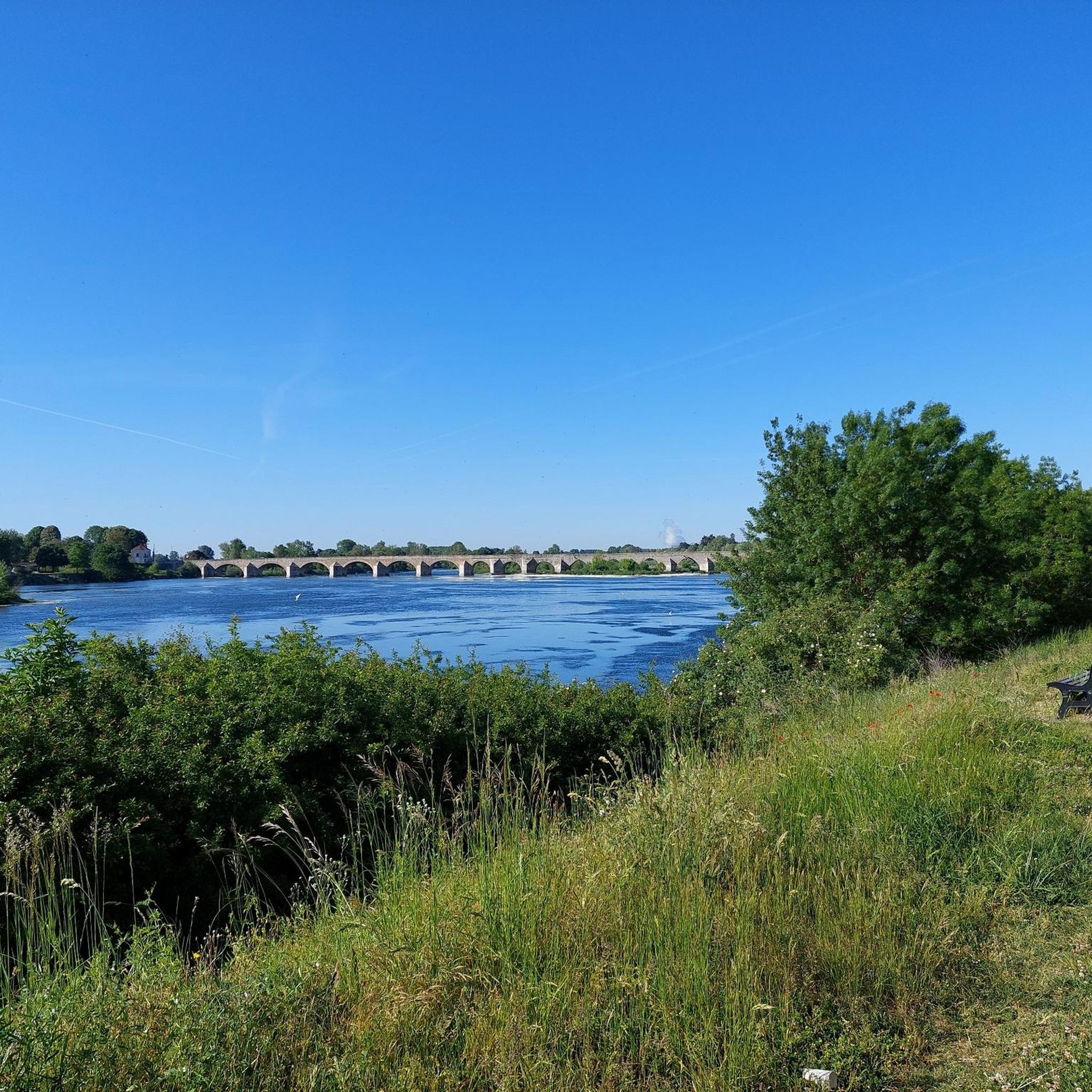
Beautiful crossing of the Loire, very busy bridge
0
0
Frequently Asked Questions
How many road cycling routes are available around Le Plessis-L'Échelle?
There are over 25 road cycling routes around Le Plessis-L'Échelle, offering a variety of options for different skill levels. The region features a mix of easy and moderate trails.
What kind of terrain can I expect on road cycling routes in Le Plessis-L'Échelle?
The terrain around Le Plessis-L'Échelle is characterized by open fields and gentle rolling hills. Elevation gains are generally modest, making it accessible for various fitness levels and providing a pleasant cycling experience through the countryside.
Are there any easy road cycling routes suitable for beginners or families?
Yes, there are 12 easy road cycling routes in the area. A great option for a less strenuous ride is the Saint Maurice Church – Église Saint Sulpice loop from Vallière, which is just under 20 miles (28.2 km) with minimal elevation gain.
What are some scenic road cycling routes that include historical landmarks?
Many routes offer scenic views and pass by historical sites. The Chambord Castle – Chambord Castle loop from Concriers is a popular choice, featuring views of the iconic Chambord Castle. Another route, the Montigny Castle loop from Saint-Léonard-en-Beauce, winds through the countryside past Montigny Castle.
Are there longer distance road cycling routes for experienced riders?
While the region is known for its gentle terrain, there are routes that offer longer distances. The Meslay Castle – Château de Meslay loop from Oucques is one of the longer options, covering over 53 miles (86.1 km) with moderate elevation, providing a good challenge for a day trip.
What attractions can I see along the road cycling routes in Le Plessis-L'Échelle?
Beyond the routes themselves, you can discover several interesting attractions. The Talcy Castle and Église Saint Sulpice are notable historical sites. You might also encounter traditional windmills like the Talcy Windmill, adding to the charm of your ride.
What is the best time of year for road cycling in Le Plessis-L'Échelle?
The spring and autumn months generally offer the most pleasant conditions for road cycling in Le Plessis-L'Échelle, with milder temperatures and beautiful scenery. Summer can also be enjoyable, but it's advisable to start earlier in the day to avoid the midday heat.
Are there any challenging road cycling routes with significant climbs?
The Le Plessis-L'Échelle region is characterized by gentle rolling terrain rather than significant climbs. There are no routes classified as 'difficult' in this guide, making it more suitable for those seeking enjoyable rides without extreme elevation challenges.
What do other road cyclists enjoy most about cycling in Le Plessis-L'Échelle?
The area is highly rated by the komoot community, with an average score of 5.0 stars. Reviewers often praise the quiet country roads, the picturesque open landscapes, and the opportunity to cycle past historical castles and tranquil lakes.
Are the road cycling routes generally low-traffic?
Many of the road cycling routes around Le Plessis-L'Échelle utilize quiet country roads that connect small villages. This often results in minimal traffic, providing a peaceful and enjoyable cycling experience through the rural landscape.
Are there any routes that pass by lakes or natural water features?
Yes, the Étang de Saint-Lubin – Étang de Saint-Lubin loop from Marchenoir is a great option. This route leads through open landscapes and directly past the Étang de Saint-Lubin, offering pleasant views of the lake.
Most popular routes around Le Plessis-L'Échelle
Most popular attractions around Le Plessis-L'Échelle

Get inspired with the komoot mobile app


Explore more
Browse the best Road cycling routes in other regions.
