Attractions and Places To See around Le Faou - Top 20
Best attractions and places to see around Le Faou include historical sites, unique architecture, and natural landscapes. Le Faou is a Petite Cité de Caractère, situated where the River Faou meets the sea. It serves as a gateway to the Crozon Peninsula and the Armorique Regional Natural Park. The town features preserved 16th-century corbelled houses and significant religious sites.
Best attractions and places to see around Le Faou
- The most popular attractions is Summit of Ménez Hom, a summit…
Last updated: October 9, 2026
Summit of Ménez Hom
Highlight • Summit
Translated by Google •
Tip by

Landévennec Abbey
Highlight • Other
Translated by Google •
Tip by

Sign up now to discover places like this
Get recommendations on the best single tracks, peaks, & plenty of other exciting outdoor places.
Pont de Térénez
Highlight • Bridge
Translated by Google •
Tip by

Cemetery (in the movie
Highlight • Other
"In a small, remote village in Brittany there is a very special library. Books …
Translated by Google •
Tip by

Saint-Sauveur Church of Le Faou
Highlight • Religious Site
The church was founded by the Knights Hospitallers of the Order of St. John. The building was rebuilt in 1544 and 1680, with a beautiful domed …
Translated by Google •
Tip by
Sign up for free to discover even more attractions around Le Faou.
Already have an account?
Start today with a free account
Your next adventure awaits.
Other adventures around Le Faou

Tips from the Community

The Abbey of Saint-Guénolé of Landévennec is impressively located at the mouth of the Aulne river on the Crozon Peninsula in Brittany. According to tradition, the monastery was founded around 485 by Saint Guénolé; archaeological finds confirm in any case a monastic settlement as early as the turn of the 5th to the 6th century. In 818, Emperor Louis the Pious ordered the community to adopt the Benedictine rule. In the 9th century, Landévennec developed into an important cultural center with its own scriptorium. In 913, the abbey was plundered by Vikings, and the monks fled with relics and manuscripts to Montreuil-sur-Mer. They returned around 940; at the beginning of the 11th century, a large Romanesque monastic complex was built. In 1636, Landévennec joined the reform-oriented Benedictine Congregation of Saint Maur. During the French Revolution, the monastery was abolished in 1789 and subsequently sold as national property. The impressive ruins of the medieval abbey are preserved today and have been archaeologically excavated. Immediately next to it, a new Benedictine monastery was built in the 20th century, whose church and convent buildings were consecrated in 1958. An active monastic community still lives there today according to the Rule of Saint Benedict. Landévennec is particularly charming in that it allows one to trace around 1,500 years of Breton monastic and cultural history in one place.
1
0


My recommendation would be to definitely visit the museum - it's very interesting from a historical perspective.
2
0


Church from the book and film “the mystery of Henri Pick”. I was here on a Saturday evening during my walk and a little before 6pm. I was most kindly invited to find a spot. Very friendly people and what a beautiful location for a church.
1
1

superb view and essential crossing point for Crozon
0
0

The publisher's information on the book by David Foenkinos (on which the film is based) states: "In a small, remote village in Brittany there is a very special library. Books are collected here that were never allowed to be published. One day a young editor discovers a manuscript that causes excitement and life even in the capital Paris changed many people. The author, Henri Pick, was the local pizza maker. But his widow claims that he never read a single book in his life and never wrote anything down on paper other than shopping lists. Did Monsieur Pick lead a secret second life? A charming novel - light, lively and full of humor."
2
1
Frequently Asked Questions
What historical and architectural features can I explore in Le Faou?
Le Faou is renowned for its unique architectural identity as a 'Petite Cité de Caractère'. You can admire the beautiful 16th-century corbelled houses with wooden sides and storefronts along streets like Rive and General de Gaulle. The town also features the impressive Saint-Sauveur Church of Le Faou, a Gothic-style church with a fine Renaissance bell tower and a unique 16th-century baptismal font.
Are there any significant religious sites near Le Faou?
Yes, besides the Saint-Sauveur Church of Le Faou, you can visit the 17th-century Folgoat Chapel, known for its miraculous legend. A short distance away is the Notre-Dame de Rumengol Church, a 16th-century pilgrimage site famous for its pardons dedicated to the Virgin.
Where can I find panoramic views around Le Faou?
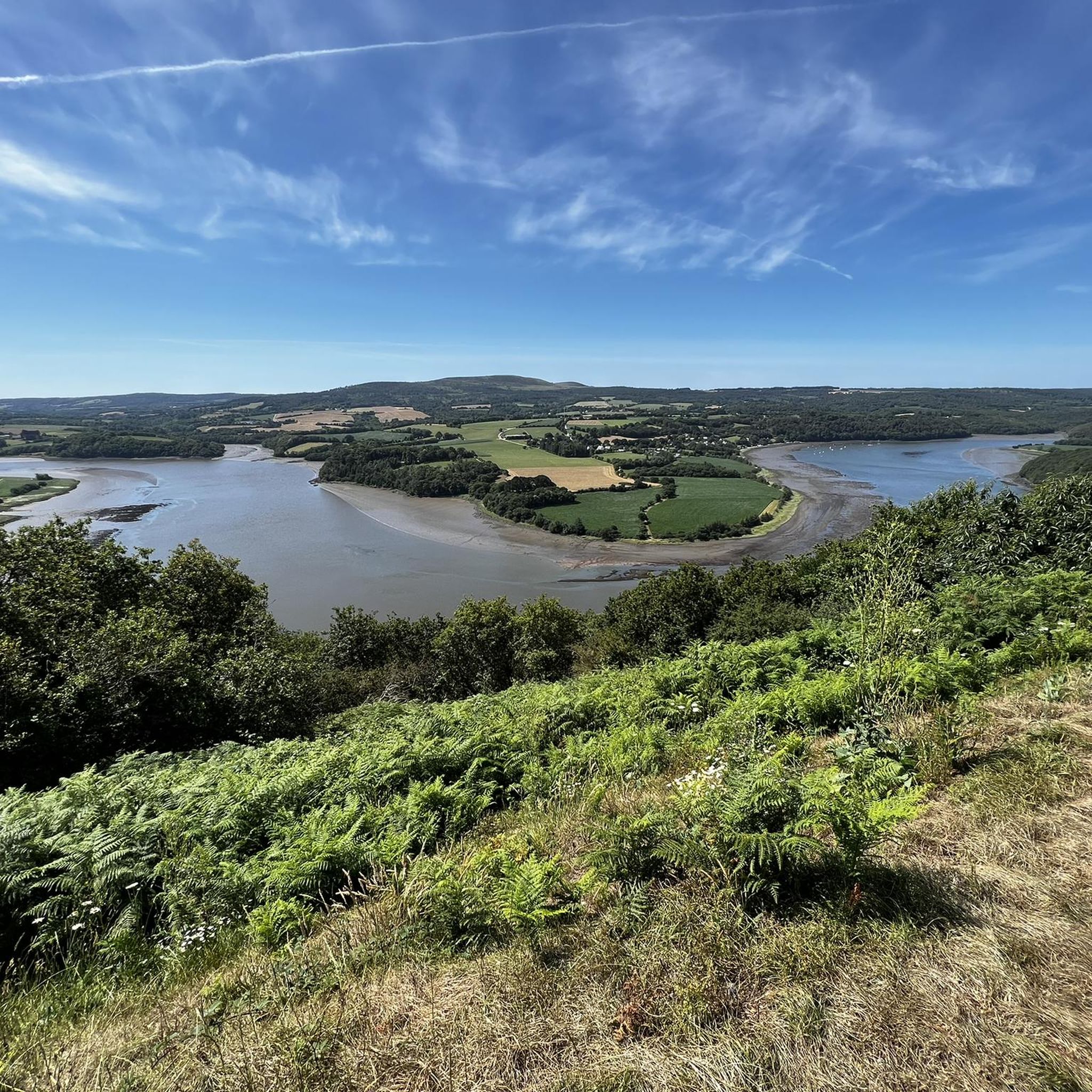
For breathtaking vistas, head to the Summit of Ménez Hom, which offers 360° views over the valley and the bays of Brest and Douarnenez. Another excellent spot is the Pont de Térénez, an impressive curved span bridge that provides beautiful views of the Aulne river and the surrounding landscape, with a dedicated cycling path for easy access.
What natural areas are accessible from Le Faou?
Le Faou is ideally located as a gateway to the Armorique Regional Natural Park and the Crozon Peninsula. You can explore the vast Cranou Forest, which offers numerous trails for walks and hikes, and is home to an arboretum and the St. Conval fountain. The River Faou also flows through this forest before meeting the sea.
Are there opportunities for hiking or other outdoor activities near Le Faou?
Absolutely. The region around Le Faou, particularly the Cranou Forest and Armorique Regional Natural Park, offers diverse outdoor activities. You can find various hiking trails, from easy to difficult, such as the 'Red bridge – Cranou Forest loop' or the 'Cranou Forest loop from Rumengol'. For more details on routes, visit the Hiking around Le Faou guide.
What kind of trails are available for running or gravel biking?
Le Faou offers a variety of trails suitable for running and gravel biking. Runners can explore routes like the 'Le Faou – Saint-Sauveur Church loop' or 'Running loop from Pont Rouge'. For gravel biking enthusiasts, there are challenging routes such as the 'Locronan – The Grand Bridge of Douarnenez loop' or the 'Térénez Bridge – Le Faou loop'. You can find more options in the Running Trails around Le Faou and Gravel biking around Le Faou guides.
Are there family-friendly attractions or activities in the Le Faou area?
Yes, several attractions are suitable for families. The Summit of Ménez Hom and the Pont de Térénez are both categorized as family-friendly, offering impressive sights and easy access. The Folgoat Chapel also provides a pleasant, peaceful spot for a family visit. Additionally, the Cranou Forest has easy walking trails perfect for families.
When is the best time to visit Le Faou for outdoor activities?
The best time to visit Le Faou for outdoor activities is generally from late spring to early autumn (May to September). During these months, the weather is typically milder and more conducive to hiking, running, and exploring the natural parks and coastal areas. Summer offers longer daylight hours and warmer temperatures, ideal for enjoying the Crozon Peninsula and forest trails.
What do visitors particularly enjoy about the attractions around Le Faou?
Visitors frequently praise the stunning 360° views from the Summit of Ménez Hom and the impressive engineering and scenic beauty of the Pont de Térénez. The historical charm of Le Faou's corbelled houses and the intricate details within the Saint-Sauveur Church are also highly appreciated. The blend of preserved history and extensive natural landscapes makes the area a diverse and engaging destination.
Can I learn about the local history and culture of Le Faou?
Yes, you can delve into the town's past at the Maison de Pays (House of the Land), located at 39 rue du Général de Gaulle. This 16th- to 18th-century building hosts permanent exhibitions on Le Faou's history, traditional costumes, and photographs, as well as temporary displays. It is typically open from May to September.
Are there any unique architectural sights besides the corbelled houses?
Beyond the famous corbelled houses, Le Faou also features the 'Relais de Poste' (Post House) on Rue du Général de Gaulle. This building stands as a testament to the town's historical importance as a significant stopover for stagecoaches traveling between Brest and Quimper, showcasing another facet of its rich architectural heritage.
What is the significance of the Pont de Térénez?
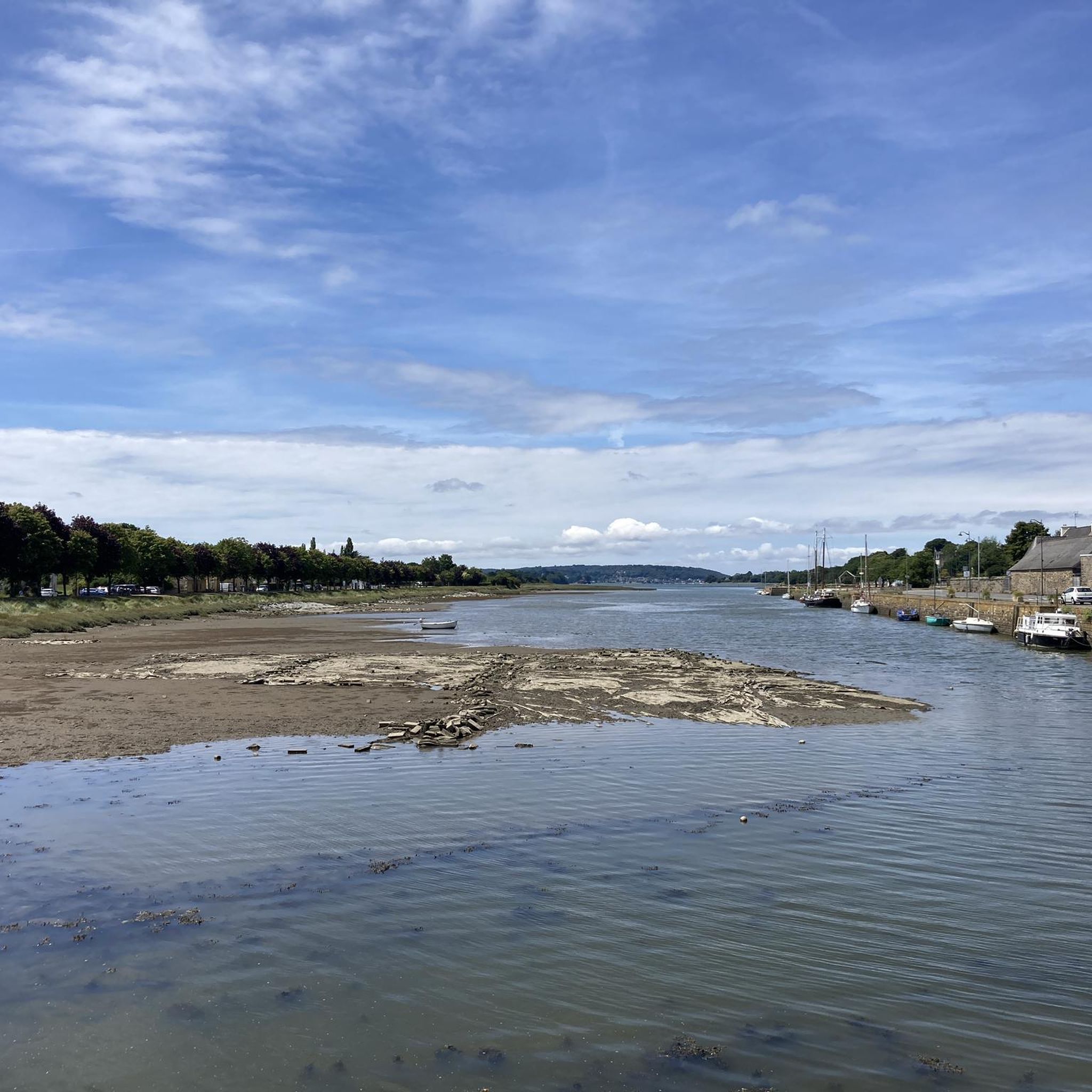
The Pont de Térénez is a remarkable feat of engineering, recognized as the longest curved span bridge in the world. It spans the Aulne river, connecting the Crozon Peninsula with Le Faou, and features a separate cycling path, making it a popular spot for both its architectural beauty and recreational opportunities. It has also won international awards for its design.
Most popular routes around Le Faou
Most popular attractions around Le Faou

Get inspired with the komoot mobile app


Explore more
Still not found the Highlight you’re looking for? See guides of the top attractions in other regions:
