The best road cycling routes around Saint-Preuil
4.8
(17)
691
riders
235
rides
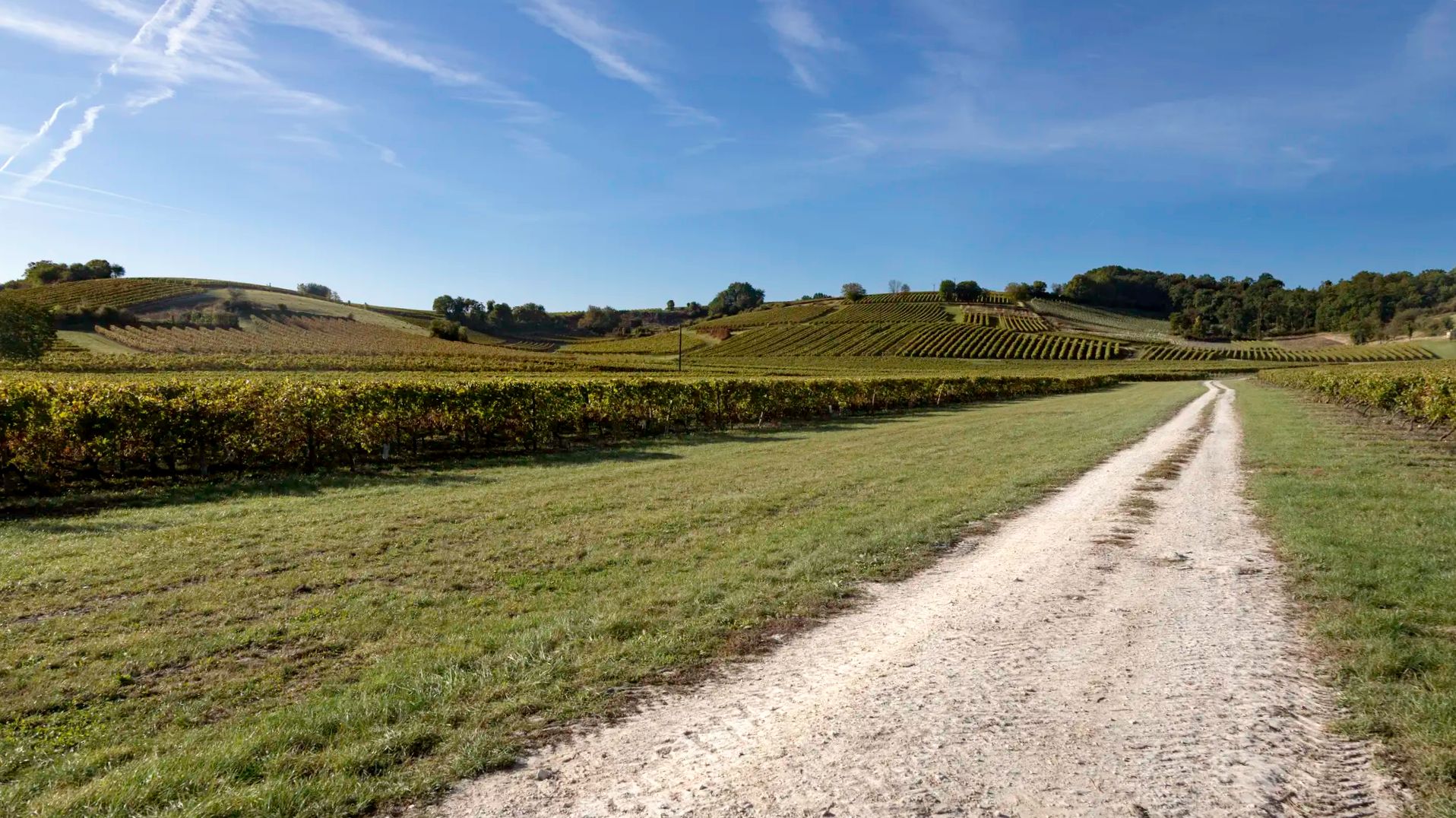
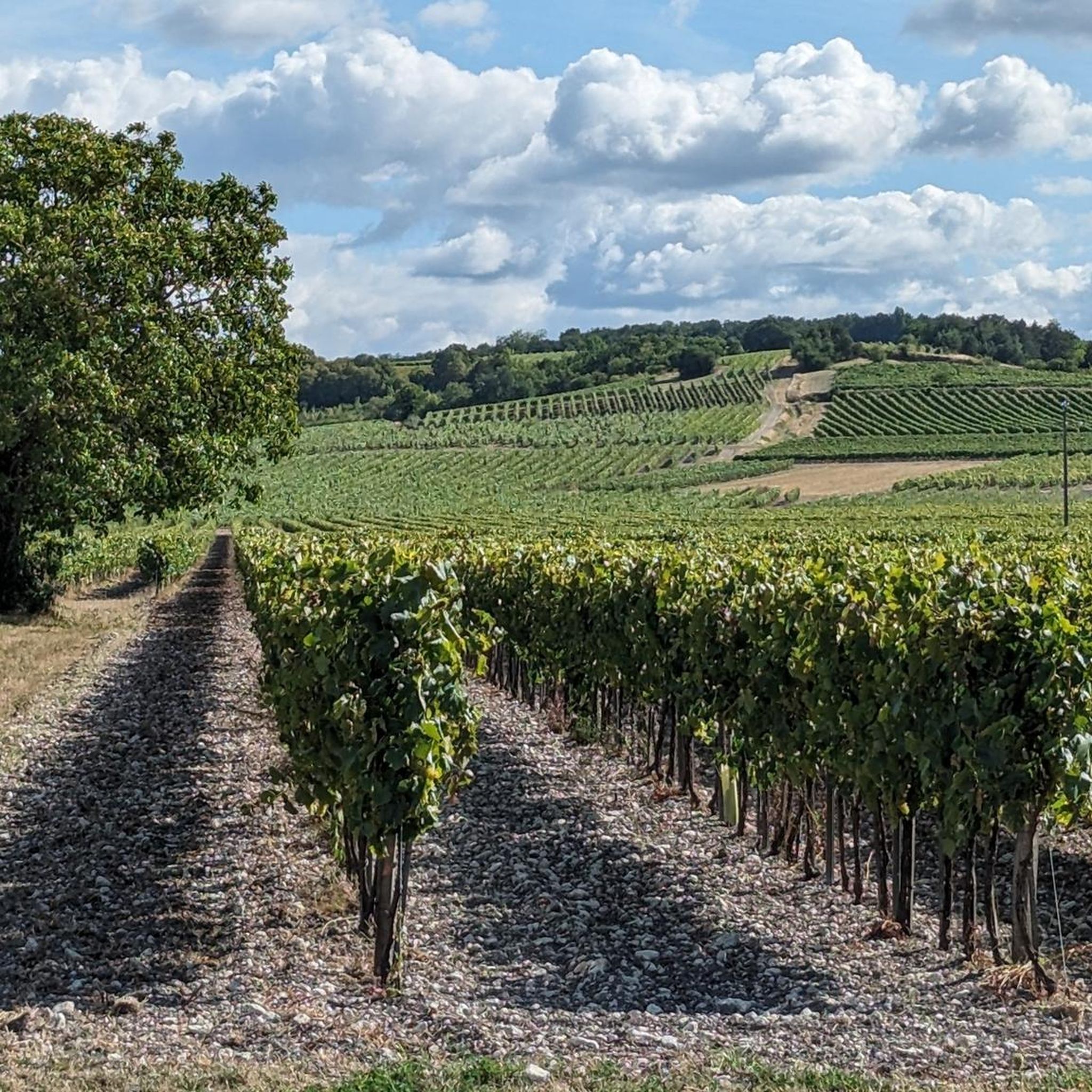
Road cycling routes around Saint-Preuil traverse the undulating landscapes of France's Grande Champagne region, characterized by extensive vineyards. The terrain offers a mix of gentle ascents and descents, providing varied cycling experiences. Routes often follow the Né and Collinaud rivers, passing through the protected Né valley, a Natura 2000 classified area. This region combines scenic vineyards with preserved natural environments and historical rural heritage.
Best road cycling routes around Saint-Preuil
- The most popular road cycling route is Saint-Fort Dolmen –…
Last updated: July 13, 2026
9
riders
Moderate road ride. Good fitness required. Some segments of this route may be unpaved and difficult to ride.
5
riders
59.3km
02:40
520m
520m
Moderate road ride. Good fitness required. Mostly well-paved surfaces and easy to ride.

Sign up for free
6
riders
59.0km
02:40
480m
480m
Moderate road ride. Good fitness required. Some segments of this route may be unpaved and difficult to ride.
6
riders
51.2km
02:12
390m
390m
Moderate road ride. Good fitness required. Mostly well-paved surfaces and easy to ride.
10
riders
52.8km
02:12
230m
230m
Moderate road ride. Good fitness required. Mostly well-paved surfaces and easy to ride.
Get access to more routes and recommendations from other explorers.
Sign up for free
Already have an account?
Our route recommendations are based on thousands of hikes, rides, and runs completed by other people on komoot.
Start today with a free account
Your next adventure awaits.
Login or Signup

Other adventures around Saint-Preuil

Tips from the Community


HISTORY OF THE HOUSE OF HINE In 1791, Thomas Hine (1775-1822), then aged 16, left his native land on the south coast of England to go to France… in the middle of the French Revolution. He went to Jarnac, Charente, where he was hired as a clerk in the Ranson et Delamain trading house, which produced his father’s favourite cognac. James Delamain (1738-1800), a Huguenot who had emigrated from Ireland, founded the trading house in 1763 with his father-in-law Jean-Isaac Ranson. On 3 October 1797 (13 Brumaire Year VI), Thomas Hine married Françoise Élisabeth Delamain, daughter of James Delamain and Marie Ranson. In 1817, the Ranson et Delamain house was liquidated, the heirs having been unable to agree on the succession. The eponymous son-in-law founded Thomas Hine & Co, and his cousins Paul Roullet and Henri Delamain (James' grandson) founded the Maison Roullet et Delamain seven years later, which would become Delamain et Cie. The links between the two Protestant Jarnac families remained close, and Thomas Hine's great-granddaughter, Adrienne Hine (1850-1922) married Philippe Delamain (1847-1902) - they had sons Jacques and Robert Delamain. Today, as in Thomas Hine's time, the Hine establishments line the banks of the Charente in Jarnac. The logo is inspired by Hine's speaking arms, hind meaning doe in Old English. He is lying down, his head turned backwards, symbolically looking towards England2. In 1962, Hine was granted the Royal Warrant of Her Majesty Queen Elizabeth II, and became the official supplier of cognac to the Court of England. In 1987, the company was bought by Moët Hennessy. In 2003, it became the property of the CL Financial group, which emerged from the Angostura group. The House was bought in 2013 by the Edv company. TYPOLOGY OF HINE EAUX DE VIE The House of HINE is located on the banks of the Charente, in the heart of the Cognac region. In the cellars, which ensure the protection of the precious vintages under seal, little has changed in more than 260 years. From the neighboring quays once began the journey of HINE cognacs around the world. This house is one of the oldest in Jarnac. Cognacs exclusively from the Grande and Petite Champagne vintages, a distillation with the lees, and an aging in fine grains with a light to moderate heating. Here, every manufacturing detail will be revealed to you. > To find out more: - https://hine.com/fr - Address: 16 quai Orangerie 16200 Jarnac - 05 45 35 59 59 - Visits, Tasting and Purchases possible - Opening periods: From 01/04 to 31/12 Monday, Tuesday, Wednesday, Thursday and Friday from 9 a.m. to 5:30 p.m. Excluding public holidays. Full price: from €20. Free for children under 18. (Subject to change)
0
0
Visit of the quarries on request. From September to May: visit at 3 p.m. From June to August: visit at 5 p.m. A walk of about 2 hours allows you to contemplate the facade of the quarries, the church, the washhouse, the communal oven, the castle, the porches and the wells. 05 45 81 92 28 smpatrim@gmail.com Meet at the post office square A link to find out more: https://pierre-et-carriers.haute-saintonge.org/la-pierre-et-ses-carrieres/237-pierre-et-carrieres/868-saint-meme-les-carrieres
0
0
In Saint-Meme-des-Carrières, you will find access to the quarries which can be visited with a guide. These limestone stones are visible on many buildings in Charente, and internationally.
0
0

Consider deviating from the cycle path for a few minutes. Church your real the detour
1
0

Superb dolmen surrounded by vineyards. The site is wonderful. Accessible by a short passable white path.
0
0

The hunebed stands on a ledge halfway up the hill. The tumulus which covered it has disappeared. This dolmen is of an imposing and unusual height in the region. The deck table rests alone on three perfectly square pillars 2.20 m high. Several orthostats show traces of wear or write-off attempts by stonemasons [ 2 ] . All orthostats are of shell limestone [ 3 ] . The table, in sandstone , measures 5.40 meters long and 4.40 meters wide for a maximum thickness of 0.90 m, it weighs about 40 tons. The room opens to the southeast, the presumed entrance corridor that originally existed has completely disappeared [ 2 ] . The plan of the burial chamber seems to have been dictated by the shape of the deck table, making it a totally atypical dolmen [ 4 ] . The dolmen has been emptied a long time ago as it has been listed as such since 1826
2
0
Frequently Asked Questions
What kind of terrain can I expect on road cycling routes in Saint-Preuil?
Road cycling routes in Saint-Preuil primarily traverse the rolling vineyard landscapes of the Grande Champagne region. You can expect a mix of gentle ascents and descents, with routes weaving through extensive vineyards, alongside rivers like the Né and Collinaud, and occasionally through forests, offering varied and picturesque scenery.
Are there routes suitable for different fitness levels?
Yes, the Saint-Preuil area offers a range of road cycling routes for various abilities. You'll find approximately 50 easy routes, over 180 moderate options, and about 10 challenging trails, ensuring there's something for every cyclist.
What are some natural features or scenic areas I can explore by road bike?
The region is rich in natural beauty. You can cycle through the extensive vineyards of Grande Champagne, explore the protected Né valley (a Natura 2000 classified area), and follow paths alongside the Né and Collinaud rivers. These routes offer picturesque views and opportunities to experience diverse flora and fauna.
What historical landmarks or attractions can I see along road cycling routes?
Many routes incorporate historical and rural heritage sites. You might encounter charming villages, ancient dolmens, and impressive châteaux. For example, the Saint-Fort Dolmen – Dolmen of Saint-Fort loop from Lignières-Ambleville explores historical dolmens. Other notable sites include Château de Bouteville, Bourg-Charente Castle, and the Abbaye de Bassac.
Are there any circular road cycling routes available?
Yes, many road cycling routes in Saint-Preuil are designed as loops, allowing you to start and finish in the same location. Popular examples include the Vibrac Bridge – Vibrac Bridge loop from Saint-Même-les-Carrières and the Château de Bouteville – Shepherdess Pass loop from Segonzac.
What do other road cyclists say about the routes in Saint-Preuil?
The road cycling routes around Saint-Preuil are highly regarded by the komoot community, with an average rating of 4.75 stars from over 16 reviews. Cyclists often praise the stunning vineyard scenery, the peaceful countryside, and the variety of routes available.
What is the best time of year for road cycling in Saint-Preuil?
The Charente countryside, where Saint-Preuil is located, is described as one of the most beautiful rural areas of southwest France. While specific seasonal advice isn't provided, the region's mild climate generally makes spring and autumn ideal for cycling, offering pleasant temperatures and vibrant landscapes, especially during harvest season in the vineyards.
Are there options for less experienced cyclists or those who prefer less strenuous rides?
Absolutely. The undulating terrain includes many sections with gentle ascents and descents. For those who prefer an easier ride or want to tackle the hills with less effort, the availability of electric bikes in the region can enhance accessibility, allowing everyone to explore the vineyards and countryside at their own pace.
Where can I find parking for road cycling routes in Saint-Preuil?
While specific parking locations aren't detailed, many routes start from villages or towns in the area, such as Lignières-Ambleville or Segonzac. These locations typically offer public parking facilities suitable for cyclists looking to begin their tours.
Can I find places to eat or stay near the cycling routes?
The region is dotted with picturesque villages like Criteuil-la-Magdeleine and Segonzac. These villages, and others throughout the Grande Champagne area, often provide local cafes, restaurants, and accommodation options, perfect for a break or an overnight stay during your cycling adventure.
Are there any routes that offer riverside views?
Yes, several routes follow the natural waterways of the region. The Vibrac Bridge – Vibrac Bridge loop from Saint-Même-les-Carrières, for instance, offers views of the Vibrac Bridge and includes sections along the rivers, providing a different scenic experience from the vineyards.
What is the longest moderate road cycling route available?
Among the moderate routes, the Château de Bouteville – Shepherdess Pass loop from Segonzac is a substantial option, covering 35.9 miles (57.8 km) through the Grande Champagne vineyards.
Most popular routes around Saint-Preuil
Most popular attractions around Saint-Preuil

Get inspired with the komoot mobile app


Explore more
Browse the best Road cycling routes in other regions.
