Attractions and Places To See around Jettingen - Top 20
Best attractions and places to see around Jettingen include a variety of historical sites, natural formations, and cultural landmarks. The region offers opportunities to explore ancient castles, significant religious buildings, and unique natural features like grottoes and plateaus. Visitors can discover a diverse landscape that combines historical depth with scenic outdoor experiences. The area provides numerous points of interest for those seeking both cultural insights and natural beauty.
Best attractions and places to see around Jettingen
- The most popular attractions…
Last updated: October 10, 2026
Ferrette Castle
Highlight • Castle
Translated by Google •
Tip by

Dwarves' Grotto
Highlight • Cave
Translated by Google •
Tip by

Sign up now to discover places like this
Get recommendations on the best single tracks, peaks, & plenty of other exciting outdoor places.
Grand Cannon of Zillisheim
Highlight • Historical Site
Translated by Google •
Tip by
Porte de Belfort
Highlight • Historical Site
Translated by Google •
Tip by

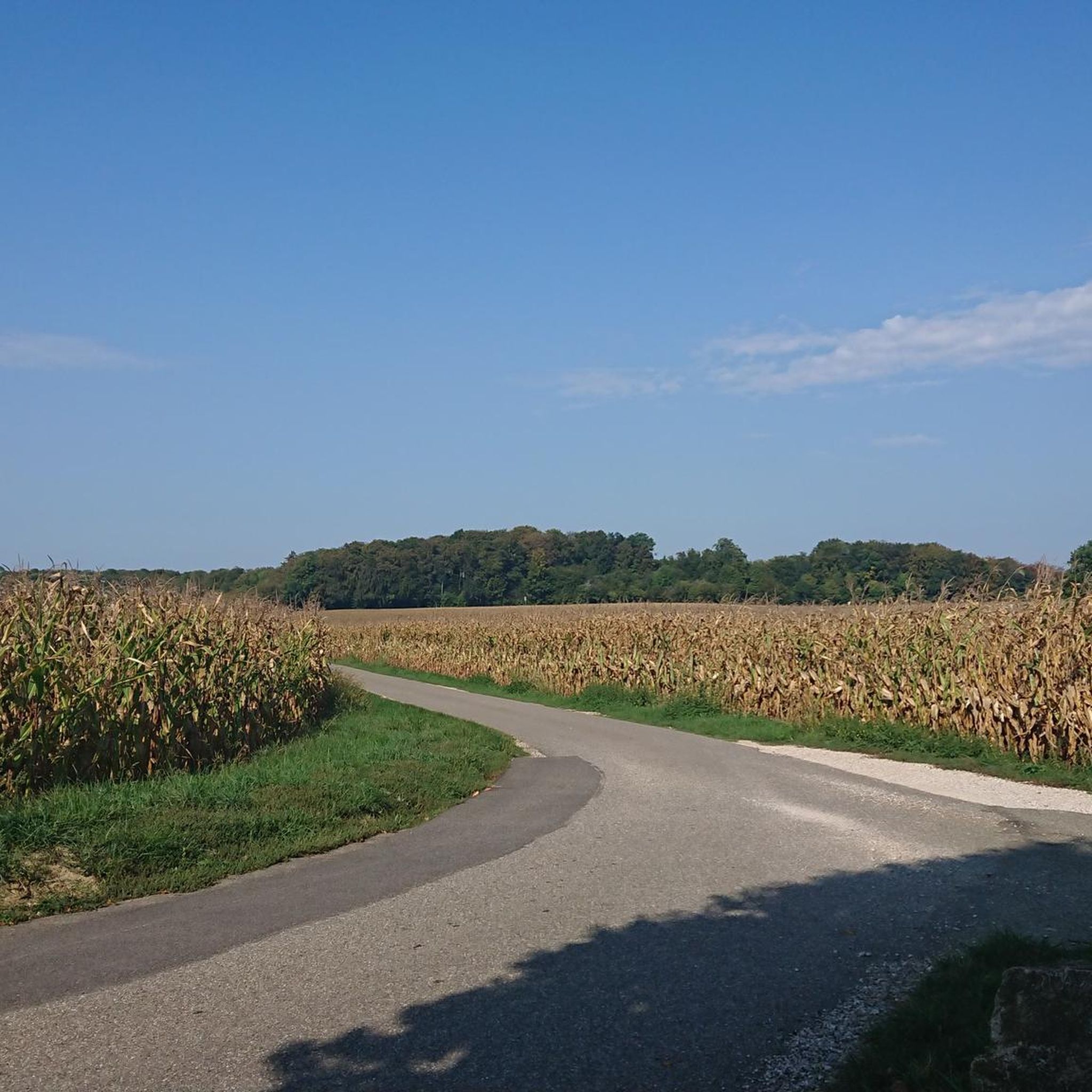
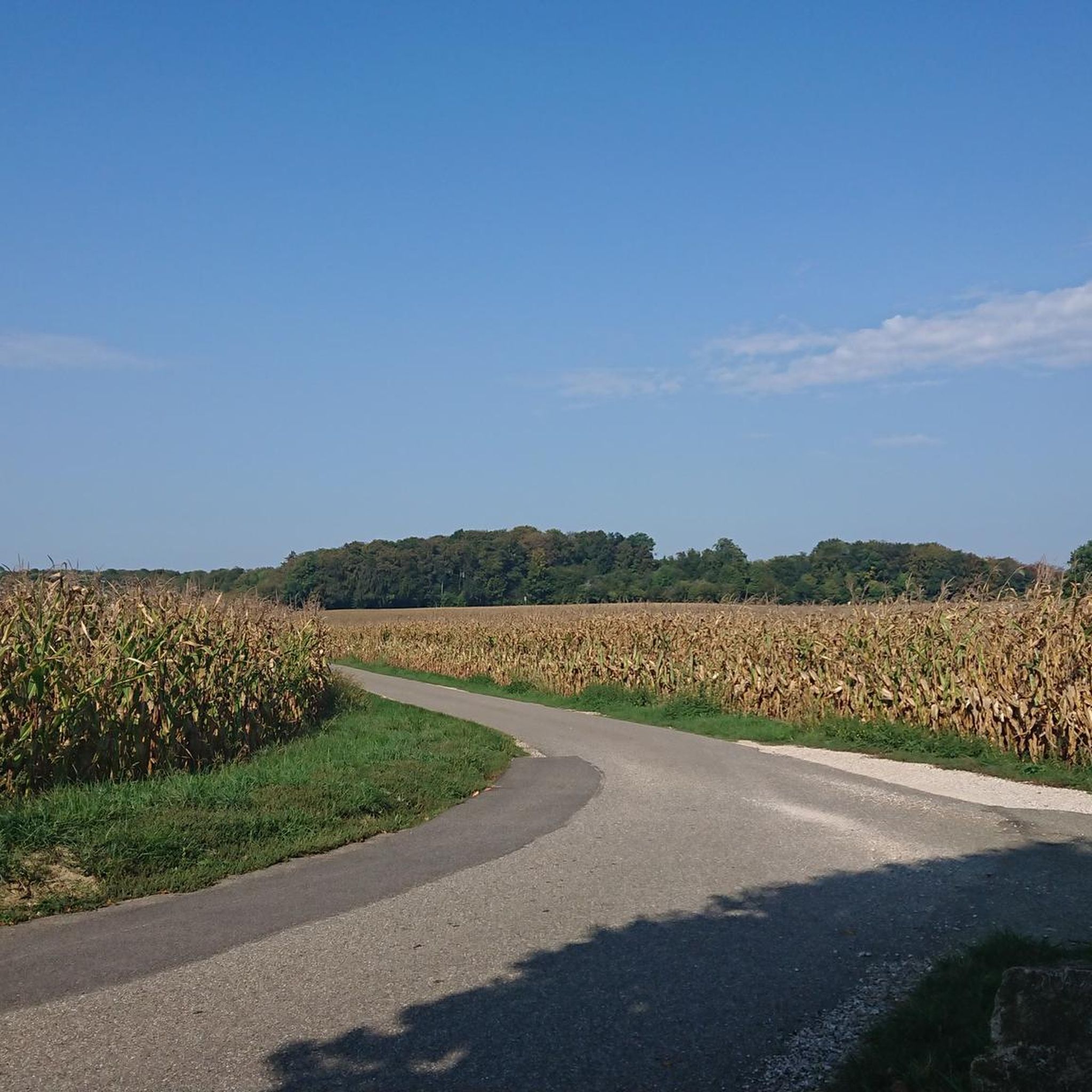
Sundgau Plateau Countryside
Highlight (Segment) • Cycleway
Translated by Google •
Tip by

Sign up for free to discover even more attractions around Jettingen.
Already have an account?
Start today with a free account
Your next adventure awaits.

Tips from the Community

At the gate, a so-called Borne Vauthier can be seen in the middle. These memorial stones mark the course of the Western Front in World War I and, in particular, the position that German troops had reached on July 18, 1918 – the furthest extent of their advance at that time. The stones are named after the French sculptor and former soldier Paul Moreau-Vauthier. A total of 118 such Bornes were created between 1921 and 1927: 96 in France and 22 in Belgium. Originally, significantly more locations were planned. The stones were erected along a front line from the Belgian coast to the Franco-Swiss border. The monoliths, about one meter high, are mostly made of pink granite. On their top, there is a soldier's helmet on a laurel wreath. The sides depict typical soldier's equipment, including a gas mask, a canteen, and hand grenades. Many stones bear the inscription “Ici fut repoussé l’envahisseur 1918” – “Here the invader was repulsed in 1918”. The Bornes Vauthier are therefore not only monuments but also historical landmarks: they make the former front line visible in the terrain and commemorate the battles of 1918. However, it is important to note that they are not located exactly on the former front line everywhere, as some stones were moved for practical reasons, for example, to roads or intersections.
0
0

A lovingly furnished grotto for the little dwarves
0
0

The cannon must have been huge. It had a range of up to 40 km. It terrorized the inhabitants of Belfort. This was the response to the bombing of Freiburg, among other places. It was then used as a feint to distract from the attack on Verdun.
0
0

Beneath the forest canopy, you can discover numerous traces of bygone times, still visible or legible; only the "barracks" have disappeared. During a guided tour with one of the site's enthusiastic volunteers, you can explore the underground tunnels and discover the organization of this impressive military infrastructure. Of course, you can also visit the surface infrastructure yourself, following the marked route, where the panels provide detailed explanations. An application, "Site du Grand Canon de Zillisheim," is also available for download.
5
0

The 38 cm Schnellladekanone L/45 (38 cm S.K. L/45) was a gun used by the Imperial Navy and the German Army during World War I. Originally designed as a naval gun, it was also used on land under the designation 38 cm Geschütz Max or Langer Max. The "38 cm SK L/45" had a barrel with an inner diameter of 38 cm, making it one of the largest calibers used at the time. Its range was up to 48 km. Between 1915 and 1916, the German army installed a naval gun called the "Langer Max" in the Zillisheim Forest. This gun, designed to fire long bursts at Belfort and the Saint Amarin Valley, was actually a diversionary plan....
1
0

@Koblinator regarding main roads: yes, but it must be made very clear that the French 1. consider and respect cyclists more than the Swiss (in my experience) and 2. therefore always drive very generously around them (changing lanes to the left). After 17 years of racing, constantly on the Swiss-French border, my clear conclusion is...F = Tour de France country...
0
0

This site is the location of a “KW” cannon of the “Kaiser Wilhelm Geschutze” or “Max le long” type whose mission, during the First World War, was to fire large detonations at Belfort to provide a diversion during attacks. on Verdun and the forts of Vaux and Douaumont.
2
0
The Château de Ferrette is one of the oldest in Alsace. The ruins of the upper castle offer a superb panorama of the Vosges, the Black Forest and the Jura. The lower castle has several round towers open at the throat and equipped with fire hydrants. Allow 45 to 60 minutes for a self-guided visit to the castle.
1
0
Frequently Asked Questions
What historical landmarks can I explore around Jettingen?
Jettingen and its surroundings offer a rich history. You can visit the impressive Ferrette Castle, one of Alsace's oldest castles, offering panoramic views. Another significant site is the Grand Cannon of Zillisheim, a World War I artillery position with underground tunnels. Additionally, the historic Schloss Jettingen, dating back to 1480, features four massive corner towers and an English-style garden. The Jettinger Kulturscheuer, a 17th-century farmhouse, now serves as a cultural center.
Are there any notable religious buildings or cultural sites in the area?
Yes, the region is known for its religious architecture. The Saint Bernard of Menthon Church in Ferrette is one of Alsace's oldest churches, with parts dating back to Roman times. Jettingen-Scheppach is home to the pilgrimage church of Allerheiligen, an 18th-century Rococo church, and several other significant parish churches in Scheppach, Ried, and Schönenberg. The burial chapel of the Graf von Stauffenberg family is also located in Jettingen.
What natural attractions or scenic viewpoints are there near Jettingen?
Nature enthusiasts can explore the Dwarves' Grotto, an impressive gorge that provides access to the Plateau des Nains with beautiful views of the Ill valley. The Sundgau Plateau Countryside also offers scenic vistas. For those who enjoy heights, the Schönbuch Tower provides an extraordinary observation experience. You can also visit the Xanderklinge Gorge Trail with its waterfalls, or the Heiligmannsee, a popular swimming lake east of the Mindel river.
What kind of outdoor activities can I do around Jettingen?
The area around Jettingen is excellent for various outdoor activities. You can find numerous routes for hiking, cycling, and mountain biking. For detailed options, explore the hiking guide, the cycling guide, and the MTB trails guide for Jettingen. The Mindeltal and Nature Park Augsburg - Westliche Wälder also offer diverse natural landscapes for exploration.
Are there family-friendly attractions or activities in Jettingen?
While specific family-focused attractions are not detailed, many natural sites and outdoor activities can be enjoyed by families. The Heiligmannsee is a popular spot for swimming and sunbathing. The numerous cycling and hiking trails, such as the Mindeltal-Radweg, cater to various skill levels, including families with children. Exploring the grounds of Schloss Jettingen or looking for stork nests around the town hall can also be engaging for younger visitors.
Where can I go for a scenic walk or hike near Jettingen?
For scenic walks and hikes, consider routes like the 'Fountain – Le Moulin de Hundsbach loop from Jettingen' (9.7 km, moderate) or the 'Le Moulin de Hundsbach – Saint-Brice Chapel loop from Franken' (14.3 km, moderate). The Xanderklinge Gorge Trail also offers a picturesque walk with waterfalls. You can find more options in the hiking guide for Jettingen.
What cycling routes are available around Jettingen?
Cyclists have several options, including the 'The Ill in Hirsingue – Saint-Brice Chapel loop from Hausgauen' (36.5 km, difficult) or the 'Roman road – The Ill in Hirsingue loop from Knœringue' (27.3 km, moderate). The Mindeltal-Radweg and Glött-Radweg are also popular choices for exploring the area by bike. For more routes, refer to the cycling guide for Jettingen.
What do visitors enjoy most about the attractions around Jettingen?
Visitors particularly appreciate the blend of historical depth and natural beauty. The panoramic views from Ferrette Castle and the unique geological formations of the Dwarves' Grotto are highly rated. The historical significance of sites like the Grand Cannon of Zillisheim also draws considerable interest, with many enjoying guided tours of its underground tunnels.
Are there any unique wildlife or natural phenomena to observe?
Jettingen is known for its storks, with nests traditionally found on the town hall roof. Efforts have been made to regenerate stork habitats and the Hopfenweiher pond to support the stork population, making it a popular symbol and a point of interest for wildlife spotting. The Mindeltal and Nature Park Augsburg - Westliche Wälder also offer diverse ecosystems where you might observe local flora and fauna.
Can I learn about local history and culture beyond castles and churches?
Yes, beyond the prominent castles and churches, you can delve into local history at the Jettinger Kulturscheuer, the oldest farmhouse in Jettingen, which now hosts cultural events. The nearby Herrenberg Market Square, though not directly in Jettingen, offers a picturesque town center with beautiful half-timbered houses, providing a glimpse into traditional regional architecture and life.
Is there a good place for swimming or relaxing by the water?
Yes, the Heiligmannsee, located east of the Mindel river, is a popular spot for bathing, swimming, and sunbathing. Its water quality is regularly monitored during the bathing season, making it a reliable choice for a refreshing dip or a relaxing day by the water.
What is the significance of Schloss Jettingen?
Schloss Jettingen is a historically significant castle built in 1480, notable as the birthplace of renowned children's author Isabella Braun and resistance fighter Claus Schenk Graf von Stauffenberg. Although privately owned, visitors can walk through its extensive English-style garden and grounds. You can learn more about Claus von Stauffenberg on Wikipedia.
Most popular routes around Jettingen
Most popular attractions around Jettingen

Get inspired with the komoot mobile app


Explore more
Still not found the Highlight you’re looking for? See guides of the top attractions in other regions:
