Attractions and Places To See around Saint-Palais - Top 20
Best attractions and places to see around Saint-Palais include a mix of historical sites, natural landscapes, and dedicated cycling routes. This region features a network of canals and wet meadows, providing habitats for diverse wildlife. Visitors can explore churches with unique histories and enjoy scenic paths along dikes and former railway lines. The area offers opportunities for both cultural exploration and outdoor activities.
Best attractions and places to see around Saint-Palais
- The most popular attractions is Nice track on the…
Last updated: July 2, 2026
Market and Saint-Saturnin Church of Braud-et-Saint-Louis
Highlight • Religious Site
Translated by Google •
Tip by

Blaye-Etauliers - Cycle path 🚴
Highlight (Segment) • Other
Tip by

Sign up now to discover places like this
Get recommendations on the best single tracks, peaks, & plenty of other exciting outdoor places.
Sign up for free
Church of the Abbey of Sainte-Marie-Madeleine of Pleine-Selve
Highlight • Religious Site
Translated by Google •
Tip by

A surprising church name
Highlight • Other
Translated by Google •
Tip by
The Belt – canals and wet meadows
Highlight • Natural
Tip by
Sign up for free to discover even more attractions around Saint-Palais.
Sign up for free
Already have an account?
Start today with a free account
Your next adventure awaits.
Login or Signup



Tips from the Community

Opposite the church, you'll find a small supermarket, public restrooms, and drinking water. Always interesting.
0
0

The Saint-Saturnin Church was built in 1898 after the previous church was destroyed during the French Revolution. Near the church stands the Column of the Shipwrecked, an ex-voto erected by Nordic sailors who survived a shipwreck in the early 17th century. Located on the right bank of the Gironde River, Europe's largest estuary, the town owes its wealth of infrastructure and sports facilities to the presence of the Blayais National Park. In the heart of the marshland, its territory boasts typical wetland landscapes, home to exceptional flora and fauna. Discover it on bike rides or by visiting the "Terres d'oiseaux" bird park, next to the port of Callonges. A major producer of asparagus from Blayais, but also a wine-growing commune located in one of the largest vineyards in the world, Bordeaux, Braud-et-Saint-Louis also borders the appellations of cognac and pineau des Charentes.
0
0

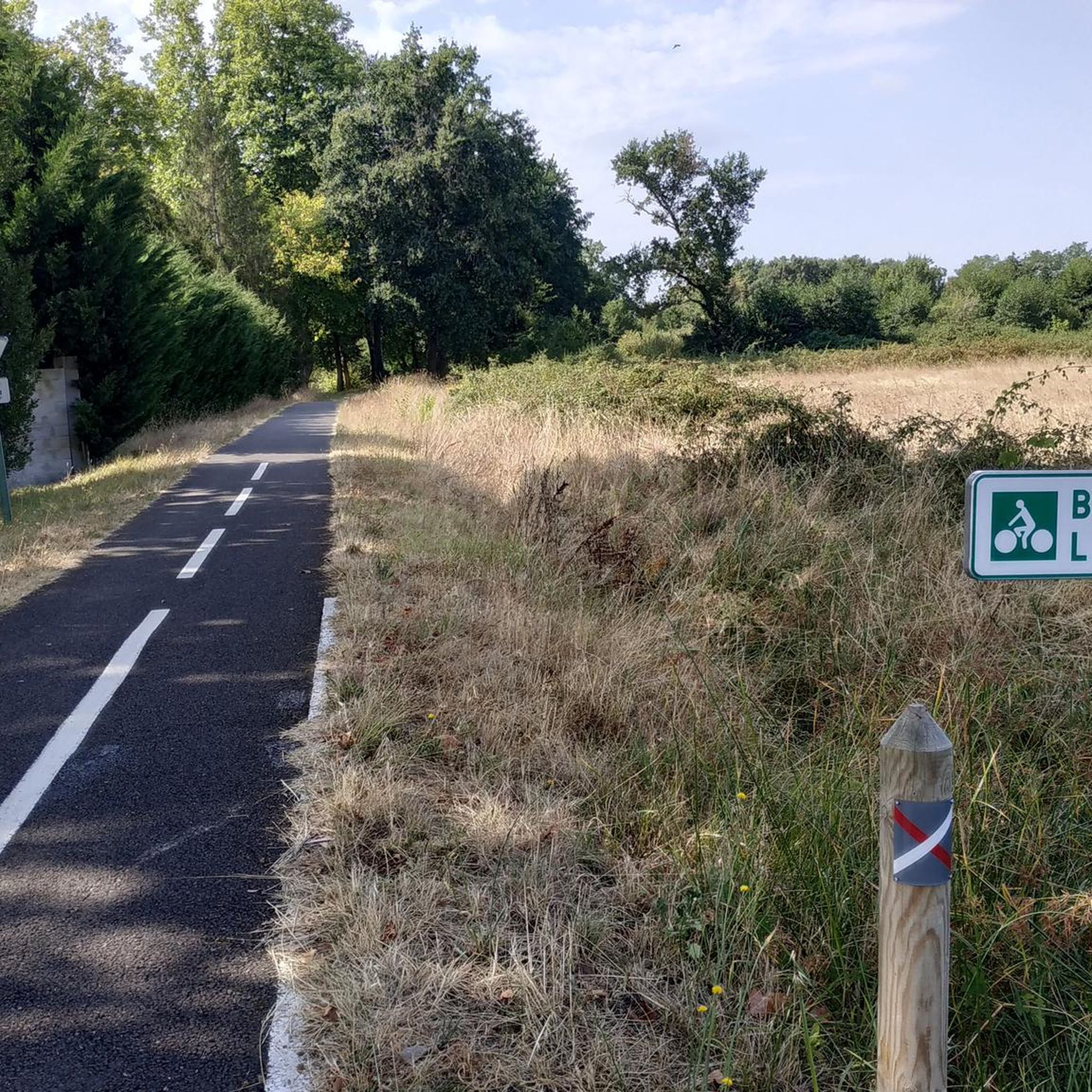
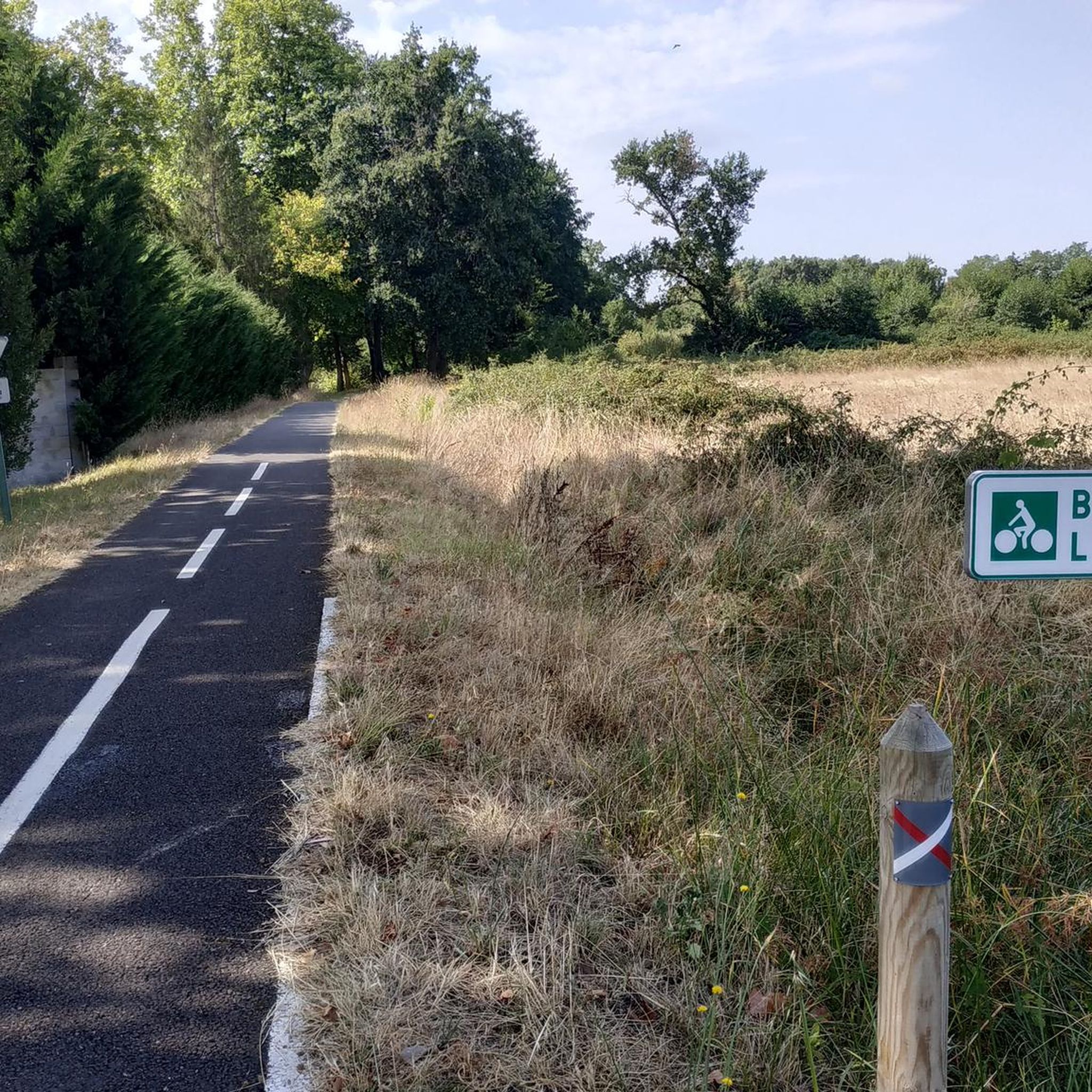
Beautiful railway track cycle path between Blaye and Etauliers.
2
1

This church is quite recent (19th century) because it was built following the destruction of the village parish during the Revolution. However, its architecture is worthy of interest when passing through the charming town of Braud-et-Saint-Louis.
1
0

This cycle path was completely renovated in 2019. The old railway line leads to the entrance to the citadel of Blaye.
1
1

The only downside not a single bench or picnic table
1
0

Sanctus Saturninus de Brau is the name found in the 14th century. Braud would be an abbreviation of Beraud, Saintonge form of the Germanic name Beroald, which means Old Lord. Based on the form "Embrand" which formerly would have designated this locality. Several possible etymologies of Braud The name Braud could also come from the Gascon Braou which means Bull, a sign that this form of cattle was raised in the swamps. Commune formed from the union of two former parishes: Braud, from old French "Brai", mud, marshy place and St Louis, parish founded by the Duke of St Simon in 1656 and included in the commune of Braud in 1802. Origin of the name of the municipality of Braud and Saint Louis Braud would come from beraud, Saintonge form of the Germanic name berard, old lord" or from the Gascon braou, "bull", a sign that these cattle were raised in the swamps or even from the old French brai, "mud", "swampy place". The parish of Braud is cited under the name of Sanctus Saturninus (Saint Saturnin) of Braud. The drying out of the marshes, in the 17th century, on the initiative of the Duke Claude de Saint Simon, governor of Blaye, was to make it possible to transform the marshes into "good nature of arable land" and create villages. The draining finished, the plots are allocated, the smallholdings appear. The number of inhabitants encouraged the Duke of Saint Simon to found two parishes: the parish of Saint Louis (all the part of the large marsh located between the Gironde and the ring canal, between the Clonges canal and that of Fréneau), in l honor of the King of France and that of Saint Simon. The church, the presbytery and the cemetery built between 1665 and 1667 were destroyed during the Revolution of 1789. Rebuilt in 1895 in a neo-Gothic style and on a new north-south orientation, it is located north of the town of Braud -and-Saint-Louis. The spire of the bell tower culminates at 37 meters in height. After the Revolution, the parish of Saint Saturnin de Braud and the parish of Saint Louis des Marais were united to form the municipality of Braud and Saint Louis. THE CROSS OF SAINT LOUIS A cross found in the attic of the presbytery of Braud was erected at a place called "La Chapelle", near Fréneau, during a procession in June 1915, thus indicating the location of the disappeared church. This cross is visible from the road leading to the nuclear power plant, on the left, 4 km from the Paillerie roundabout.
1
0
The Abbey of Sainte-Marie-Madeleine goes down in history for having been founded by Geoffroi du Loroux, Archbishop of Bordeaux, around 1145-1150. The only vestige of the imposing Premonstratensian monastery, the church of the Abbey of Sainte-Marie-Madeleine, founded in the 12th century, is the jewel of the village of Pleine-Selve. 12th century church, made up at the time of a single nave, a transept and a flat apse. In the 13th century, addition of chapels to the arms of the transept. The convent buildings were completely destroyed by French troops in 1407 during the Hundred Years War and then during the Wars of Religion. The church itself had its nave amputated. Of the 13th century building, the crossing, the north arm of the transept, the north chapel, the flat apse remain. During the 19th century, construction of a sacristy on the south facade of the chevet. The Romanesque church is only the choir of the old church, only the apse presents the architecture of the 12th century. Today it has the status of a parish church. The building was classified as a historical monument in 1908.
0
0
Frequently Asked Questions
What natural features can I explore around Saint-Palais?
The region around Saint-Palais offers diverse natural landscapes. You can discover The Belt – canals and wet meadows, a natural area rich in biodiversity, providing a habitat for various birds and wildlife. Additionally, the area features scenic dikes, such as the Nice track on the dikes, which offer great views across the coastal scenery and along streams.
Are there any historical or cultural sites to visit?
Yes, Saint-Palais and its surroundings are home to several interesting historical and cultural sites. You can visit the Market and Saint-Saturnin Church of Braud-et-Saint-Louis, a 19th-century church with notable architecture. Another historical gem is the 12th-century church with A surprising church name, which retains its Romanesque structure and features a western portal with sculpted capitals.
What outdoor activities are popular near Saint-Palais?
The area around Saint-Palais is excellent for various outdoor activities. Cycling is very popular, with dedicated paths like the Blaye-Etauliers - Cycle path, which follows an old railway line. You can also find numerous routes for cycling, running, and mountain biking, offering diverse terrain from easy loops to more challenging trails.
What do visitors enjoy most about the attractions around Saint-Palais?
Visitors particularly appreciate the scenic views and the tranquility of the natural areas. The Nice track on the dikes is loved for its coastal scenery and river views, while The Belt – canals and wet meadows is valued for its rich wildlife and birdwatching opportunities. The historical churches also offer a glimpse into the region's past.
Are there family-friendly attractions in the Saint-Palais area?
Yes, several attractions are suitable for families. The natural areas like The Belt – canals and wet meadows are great for exploring wildlife and enjoying easy walks. The Market and Saint-Saturnin Church of Braud-et-Saint-Louis offers a cultural experience that can be interesting for all ages. Many of the cycling and running routes are also accessible for family outings.
Where can I go for a scenic bike ride?
For a scenic bike ride, consider the Nice track on the dikes, which offers beautiful views along the coast and streams. Another excellent option is the Blaye-Etauliers - Cycle path, a dedicated rail-to-trail section that leads towards the historic Blaye citadel, providing an idyllic and almost car-free experience.
What kind of wildlife can I expect to see in the wet meadows?
The wet meadows and drainage canals, particularly in areas like The Belt, are a haven for diverse bird species. You might spot little egrets, crested mergansers, purple herons, black kites, kingfishers, shelducks, black scoters, and marsh harriers, as these areas are on a migration route and serve as nesting, wintering, or breeding grounds.
Are there any unique historical monuments or structures besides churches?
While the churches are prominent, the area also features other historical elements. Near the Saint-Saturnin Church of Braud-et-Saint-Louis, you can find the Colonne des Naufragés, a monument that serves as an ex-voto from Nordic sailors who survived a shipwreck in the 17th century, adding a unique maritime historical layer to the region.
Can I find trails for running near Saint-Palais?
Yes, there are several running trails available. You can find various running loops around Saint-Palais, including easy to moderate options from locations like Saint-Aubin-de-Blaye, Braud-et-Saint-Louis, and Le Pas d'Ozelle. These trails often take you through scenic landscapes, including dikes and natural areas.
What is the best way to experience the coastal scenery around Saint-Palais?
The best way to experience the coastal scenery is by exploring the elevated trails along the dikes. The Nice track on the dikes offers continuous views across the coastal landscape and along the streams, making it ideal for walking or cycling to fully appreciate the surroundings.
Are there any specific routes for mountain biking?
Yes, mountain biking enthusiasts can find several routes around Saint-Palais. There are various MTB trails, including loops from Étauliers and Saint-Aubin-de-Blaye, which range from easy to moderate difficulty. These trails often lead through diverse terrain, offering a good challenge and scenic views.

Get inspired with the komoot mobile app


Explore more
Still not found the Highlight you’re looking for? See guides of the top attractions in other regions:
