The best road cycling routes around Solente
3.2
(5)
175
riders
75
rides
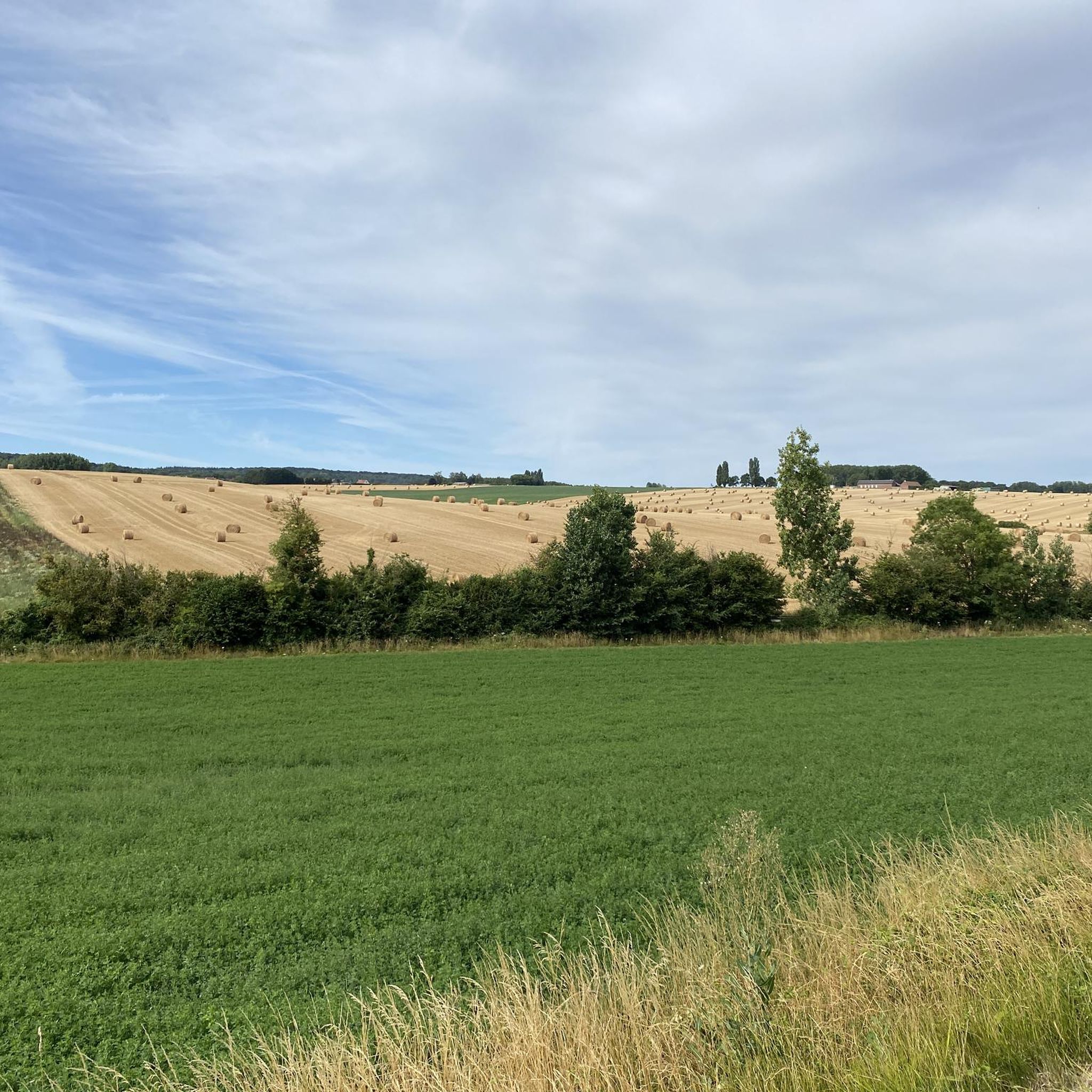
Road cycling routes around Solente traverse a landscape characterized by gentle hills and open agricultural areas. The region offers a network of roads suitable for cycling, with varying elevation changes across its terrain. Cyclists can expect to encounter a mix of rural scenery and small villages. The area's topography provides options for both flatter, easier rides and routes with moderate climbs.
Best road cycling routes around Solente
- The most popular road cycling route is Canal de Saint-Quentin Path – Tower…
Last updated: July 9, 2026
28
riders
Moderate road ride. Good fitness required. Mostly well-paved surfaces and easy to ride.
13
riders
56.0km
02:15
120m
120m
Moderate road ride. Good fitness required. Some segments of this route may be unpaved and difficult to ride.

Sign up for free
6
riders
50.1km
02:05
290m
290m
Moderate road ride. Good fitness required. Mostly well-paved surfaces and easy to ride.
5
riders
47.1km
01:55
180m
180m
Easy road ride. Great for any fitness level. Mostly well-paved surfaces and easy to ride.
4
riders
51.6km
02:06
250m
250m
Moderate road ride. Good fitness required. Mostly well-paved surfaces and easy to ride.
Get access to more routes and recommendations from other explorers.
Sign up for free
Already have an account?
Our route recommendations are based on thousands of hikes, rides, and runs completed by other people on komoot.
Start today with a free account
Your next adventure awaits.
Login or Signup


Tips from the Community

Calvin's birthplace is dedicated to the famous reformer born here in 1509. Rebuilt after its destruction during the First World War, it now houses a museum retracing the life and work of John Calvin, as well as the religious and humanist history of his time. It houses a rich collection of portraits, ancient works, documents, and 16th-century furniture.
0
0

The reconstruction of Notre-Dame, consecrated in 1928, was designed by Swiss architect Albert Montant—who also designed the church of Canny-sur-Matz. Albert Montant was an excellent connoisseur of medieval architecture, and the building, constructed of brick with some stone elements, contains numerous references to Romanesque architecture, revisited here with great originality and sensitivity. The plan features a bell tower porch, a single nave, and a choir with side aisles, culminating in an apse framed by two apsidioles. Each section has its own distinctive features. The bell tower porch—which echoes that of the previous church—opens with a semicircular arched portal with three arches resting, on each side, on as many small columns via cubic capitals. Three small, offset windows open above, and a gable crowns the whole. Instead of the traditional gallery, the bell tower porch forms, inside, a richly lit lantern crowned by a four-sided dominion vault. Of Carolingian origin, the lantern tower enjoyed great popularity in Anglo-Norman architecture and beyond, as evidenced by the one at Laon Cathedral. The nave has three bays with semicircular barrel vaults. Its two transverse arches are supported by abacuses surmounting consoles, a device intended to house statues, now missing. The choir is covered with a barrel vault that closes in a cul-de-four at the apse. Eleven small semicircular windows penetrate this vault, the base of which is highlighted by a continuous cordon of billets. Three semicircular arches resting on circular piers provide access to the side aisles, each covered with a semicircular barrel vault. This entire ensemble clearly draws its inspiration from the Romanesque architecture of Berry and Auvergne. In the nave, we notice six stained-glass windows by Blanchet-Lesage (1959) on the themes of Faith, Charity, Hope, Prudence, Justice, and Strength (2008).
0
0

The Cathedral of Notre-Dame de Noyon is an impressive Gothic building in the heart of Noyon, in the Oise department. Built between 1145 and 1235, the cathedral is a major religious and cultural monument. It exemplifies the transition from Romanesque to Gothic architecture. The cathedral is 103.11 meters long (exterior) and 91.33 meters (interior), with a nave height of 22.73 meters. The interior is richly decorated with works of art and features a magnificent Merklin organ from 1898. The cathedral also has a Louis XVI-style high altar.
1
1


Whether on the Somme or on the canals: driving on the water is always pleasant. Water-rich area...
1
0
The Port de plaisance de Pont l'Évêque is a marina located in the municipality of Pont-l'Évêque, in the Oise department. It offers beautiful views of the side channel to the Oise and is a lovely place to relax and enjoy the tranquility of the area. There are several snack bars where you can enjoy a cup of coffee or a drink.
1
0

The complex of buildings surrounding Notre-Dame Cathedral is one of the earliest examples of Gothic architecture. You can admire the cathedral's rich liturgical furnishings, the elegant canons' residences, the remains of the episcopal chapel, and the chapter library, one of the oldest in Europe. You'll also discover the history of Noyon, the ancient episcopal city that witnessed the coronation of Charlemagne and the birth of John Calvin. The cathedral chapter of Noyon is a true treasure trove of art and history that will delight both the eyes and the mind.
5
0
If you're looking for a scenic and historic route, you can try the Saint-Quentin Canal in northern France. This canal connects the Escaut, the Oise and the Somme, and crosses the watershed at a summit level 20.4 km long with two tunnels. You can run along the towpath, admire the views of the countryside and the waterway, and discover the towns and villages along the route. The canal was built in the 18th century and was an important link for trade and transport. You can learn more about its history and engineering at the Musée du Touage in Riqueval, where you can also see the electric tugboats that pull the boats through the long tunnel. The Saint-Quentin canal is an ideal destination for runners who love culture and adventure.
2
0
Frequently Asked Questions
What kind of terrain can I expect on road cycling routes in Solente?
Road cycling in Solente offers a diverse experience, transitioning from picturesque coastal stretches to the mountainous landscapes of the Cilento, Vallo di Diano and Alburni National Park. You'll encounter a continuous series of climbs and descents, with minimal flat sections, making for a challenging yet rewarding ride through unspoiled nature, olive groves, and abundant greenery.
Are there routes suitable for beginners or those looking for an easier ride?
Yes, Solente offers options for various skill levels. While many routes feature significant elevation changes, there are also easier options. For example, the Roadbike loop from Roye is an easy 47.1 km trail that provides a gentler introduction to the region's cycling.
How many road cycling routes are available in the Solente region?
There are over 70 road cycling routes documented in the Solente region on komoot. These range from easy loops to more challenging moderate and difficult trails, ensuring a variety of options for every cyclist.
What is the best time of year to go road cycling in Solente?
Given the region's Mediterranean flora and coastal-to-mountainous terrain, spring and autumn generally offer the most pleasant conditions for road cycling in Solente. The weather is typically milder, and the natural beauty, including olive groves and gorse bushes, is vibrant. Summers can be warm, especially in coastal areas, while winters might present more challenging conditions in the higher elevations.
Are there any circular road cycling routes in Solente?
Yes, many of the road cycling routes in Solente are designed as loops, allowing you to start and finish at the same point. A popular moderate circular route is the Notre-Dame de Noyon Cathedral – Varesnes Church loop from Écuvilly, which covers 56.0 km and passes by historical landmarks.
What kind of historical or cultural sights can I see along the routes?
The Solente region is rich in history and culture. Cyclists can pass through microscopic towns in the Cilento hills and enjoy views of historic structures like the perfectly restored Castle of Rocca Cilento. You might also encounter local churches such as the Church of the Assumption of Our Lady. While not directly on all routes, the broader region also features the UNESCO World Heritage site of Padula Charterhouse.
What do other cyclists say about road cycling in Solente?
The road cycling routes in Solente are highly rated by the komoot community, with an average score of 3.7 stars. Cyclists often praise the quiet country roads, the diverse scenery ranging from open fields to rolling hills, and the immersive natural experience due to minimal traffic.
Are there any particularly scenic viewpoints or natural features to look out for?
Absolutely. The region is a UNESCO World Biosphere Reserve, offering stunning natural beauty. You'll cycle through hills dotted with centuries-old olive trees, immense gorse bushes, and lush green landscapes due to abundant water. For breathtaking panoramic views, an optional climb leads to Mount Gelbison, reaching 1700 meters above sea level.
What is the typical length of road cycling routes in Solente?
Route lengths in Solente vary significantly. You can find shorter loops, such as the Roadbike loop from Nesle (Somme) at 50.1 km, or longer, more challenging rides like the Canal de Saint-Quentin Path – Tower of the Château de Ham loop from Nesle (Somme), which spans 92.2 km.
Are there any less crowded road cycling routes in Solente?
One of the defining characteristics of road cycling in Solente is the near-total absence of traffic on many roads. The region is known for its serene and unspoiled environment, offering a peaceful cycling experience away from crowds, especially on routes that venture into the national park areas.
Are there any attractions or points of interest related to local industry or infrastructure?
Yes, beyond natural beauty and historical sites, you might encounter points of interest related to local infrastructure. For example, the Cargo ship loading station at Quiquery offers a glimpse into the region's industrial aspects, while the Souterrain de la Panneterie provides insight into historical underground structures.
Most popular attractions around Solente

Get inspired with the komoot mobile app


Explore more
Browse the best Road cycling routes in other regions.
