Top 5 Castles around Le Conquet
Best castles around Le Conquet are found at the westernmost tip of Brittany, a region historically significant for its strategic coastal position. This area features a range of fortified structures and châteaux that reflect centuries of defensive architecture. The landscape combines rugged coastlines with historical landmarks, offering insights into the region's past.
Best castles around Le Conquet
- The most popular castles is Fort Bertheaume, a castle that guards the entrance to the Goulet de Brest and offers expansive views.…
Last updated: October 4, 2026
Fort Bertheaume
Highlight • Castle
Information: fort-de-bertheaume.bzh
Translated by Google •
Tip by

Maison des Seigneurs
Highlight • Historical Site
Translated by Google •
Tip by

Sign up now to discover places like this
Get recommendations on the best single tracks, peaks, & plenty of other exciting outdoor places.
Fort de l'Îlette
Highlight • Historical Site
Translated by Google •
Tip by

Calgrac'h Fort (Kernic)
Highlight • Castle
Translated by Google •
Tip by

Start today with a free account
Your next adventure awaits.

Other adventures around Le Conquet

Tips from the Community

Can be done by bike or on foot
2
0

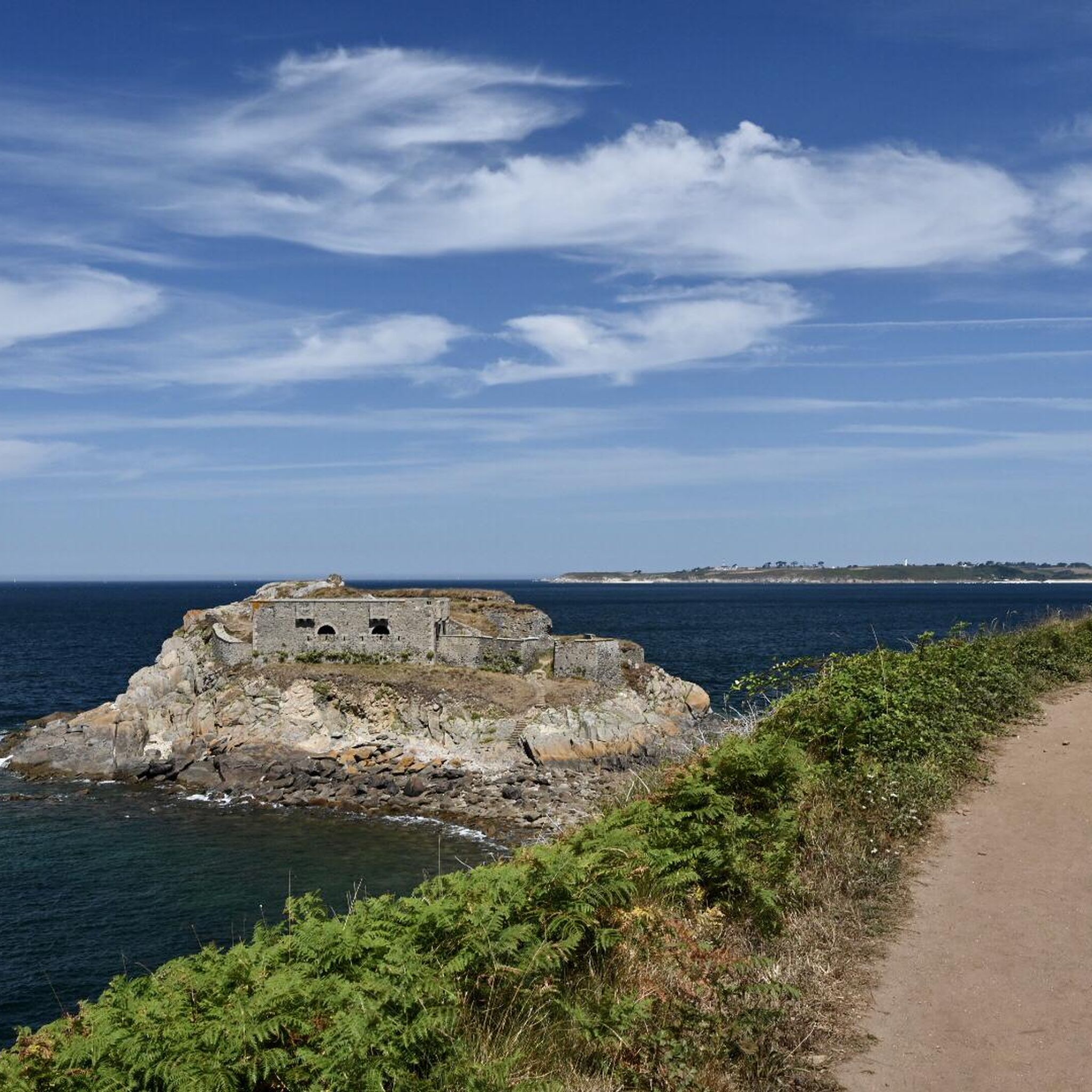
Built by Vauban in the 17th century on a rocky islet to monitor the port of Brest. Its geographical position allows it to always have an eye on the entrance to the Goulet de Brest, an arm of the sea which connects the harbor of Brest to the Atlantic Ocean. Today the fort is accessible by a footbridge and can be visited in summer. For many centuries, the harbor of Brest attracted the desires of invaders. Since the Middle Ages, protection posts have been set up on the coasts to control its entry. The most effective of them: Bertheaume, a rocky islet located thirty meters from the shore, in Plougonvelin. In the 17th century, around 1690, at the request of Louis XIV, Vauban built a formidable fort there, which would be used militarily until 1944.
0
0

One of 45 forts and batteries located along the Iroise coast, Fort de Bertheaume was built in 1689 to guard the entrance to the Goulet de Brest. A footbridge connects the islet to the mainland.
1
0

beautiful paths on the circuit of the island - the fort is a great backdrop
2
0
Beautiful trails at this point. The outpost at the fort has a climbing course and long zipline.
1
0
This fortified house, visible from afar, was part of a complex that was intended to protect the port of Le Conquet from raids, which had been very frequent since the 13th century, and to facilitate the collection of shipping fees. The complex consisted of three watchtowers staggered along the southern bank of the Ria. Remains of one of these buildings still remain and another has been converted into a residential building. They were older than the Poncelin House (or Maison de Seigneurs), which can be dated to around 1510.
2
0


The fort of Calgrac'h (Kernic in French), is the remnant of a construction of 1862 dedicated to defending France from threats from across the Channel. Now in ruins, it is possible to enter. For the pleasure of the eyes, dozens of graffiti cover the interior walls.
0
0
Frequently Asked Questions
What types of historical fortifications can I explore around Le Conquet?
Le Conquet offers a variety of historical fortifications, from fortified houses to strategic forts. You can visit the Maison des Seigneurs, a 16th-century fortified house that protected the port, or the picturesque Château de Toul (also known as de Cosquiez), which blends historical fortification elements with Gothic Revival charm. For a more robust military history, Fort Bertheaume is a must-see.
Are there any family-friendly castles or forts to visit near Le Conquet?
Yes, Fort Bertheaume is an excellent choice for families. Located on an islet, it offers historical tours and, during summer, activities like ziplining. The footbridge connecting it to the mainland makes it easily accessible for all ages.
What is the historical significance of Fort Bertheaume?
Fort Bertheaume has a rich military history, dating back to its significant rebuilding by Vauban around 1690 at the request of Louis XIV. It served as a crucial defense point guarding the entrance to the Goulet de Brest until 1944. Its strategic location offers stunning panoramic views, making it a significant historical landmark.
Can I access Fort de l'Îlette, and what can I see there?
Fort de l'Îlette is a mid-19th-century fortification that can be accessed at low tide. From the fort, you'll get superb views of Blancs Sablons beach and the Kermorvan lighthouse. Remember to watch out for the rising tide and slippery, algae-covered rocks when visiting.
Are there any walking or hiking routes near the castles and forts?
Absolutely! The coastal area around Le Conquet is perfect for walks. You can find numerous routes, such as those included in the MTB Trails around Le Conquet guide, which also features walking paths. Many trails offer views of the fortifications and the stunning natural coastline.
What outdoor activities can I do near these historical sites?
Beyond exploring the castles and forts, the region offers excellent opportunities for outdoor activities. You can enjoy cycling, with routes like the 'View of Le Conquet – Kermovan Lighthouse loop' found in the Cycling around Le Conquet guide. There are also various hiking and mountain biking trails that allow you to discover the natural features and coastline.
What is the best time of year to visit the castles and forts around Le Conquet?
The summer months are ideal for visiting, especially if you wish to partake in guided tours or activities like ziplining at Fort Bertheaume. However, the mild climate of Brittany means that spring and autumn also offer pleasant conditions for exploring the historical sites and coastal walks without the peak season crowds.
Are there any cafes or restaurants near the castles?
Le Conquet town itself, where the Maison des Seigneurs is located, offers various cafes and restaurants. For Fort Bertheaume, there are facilities available, especially during the summer season, and the fort is close enough to Le Conquet for dining options.
What do visitors enjoy most about the fortifications in Le Conquet?
Visitors frequently highlight the stunning views, particularly from Fort Bertheaume, which guards the entrance to the Goulet de Brest. The historical context of these structures, like the Maison des Seigneurs protecting the port, and the opportunity to combine history with coastal walks are also highly appreciated.
Is there parking available at Fort Bertheaume?
Yes, parking is available near Fort Bertheaume on the mainland side, from where a footbridge connects to the islet. This makes it convenient for visitors arriving by car.
What is the Calgrac'h Fort and is it worth visiting?
The Calgrac'h Fort (Kernic) is a remnant of an 1862 construction built to defend France. Now in ruins, it offers a unique, atmospheric experience where you can explore its interior walls covered with graffiti. It's worth visiting for those interested in more rugged, less-preserved historical sites.
Most popular routes around Le Conquet
Most popular attractions around Le Conquet

Get inspired with the komoot mobile app


Explore more
Looking for the best castles somewhere else? Discover other guides around Le Conquet:
