Top 9 Mountain Passes around Meisengott
Best mountain passes around Meisengott are found in the Bas-Rhin department of Alsace, France. Meisengott, also known as Maisonsgoutte, is a village in the Giessen de Steige Valley, serving as a gateway to the Vosges Mountains. This region features hills, extensive forests, and diverse landscapes, including high-altitude meadows and valleys. The area provides opportunities for outdoor activities, with numerous mountain passes accessible from the village.
Best mountain passes around Meisengott
- The most popular mountain passes is Champ du Feu,…
Last updated: June 26, 2026
Champ du Feu
Highlight • Summit
Translated by Google •
Tip by

Champ du Feu Monoliths
Highlight • Natural Monument
Translated by Google •
Tip by

Sign up now to discover places like this
Get recommendations on the best single tracks, peaks, & plenty of other exciting outdoor places.
Sign up for free
Charbonnière Pass
Highlight • Pub
Translated by Google •
Tip by

Kreuzweg Pass
Highlight • Mountain Pass
Translated by Google •
Tip by
Col de Steige
Highlight • Mountain Pass
Translated by Google •
Tip by
Sign up for free to discover even more mountain passes around Meisengott.
Sign up for free
Already have an account?
Start today with a free account
Your next adventure awaits.
Login or Signup

Tips from the Community

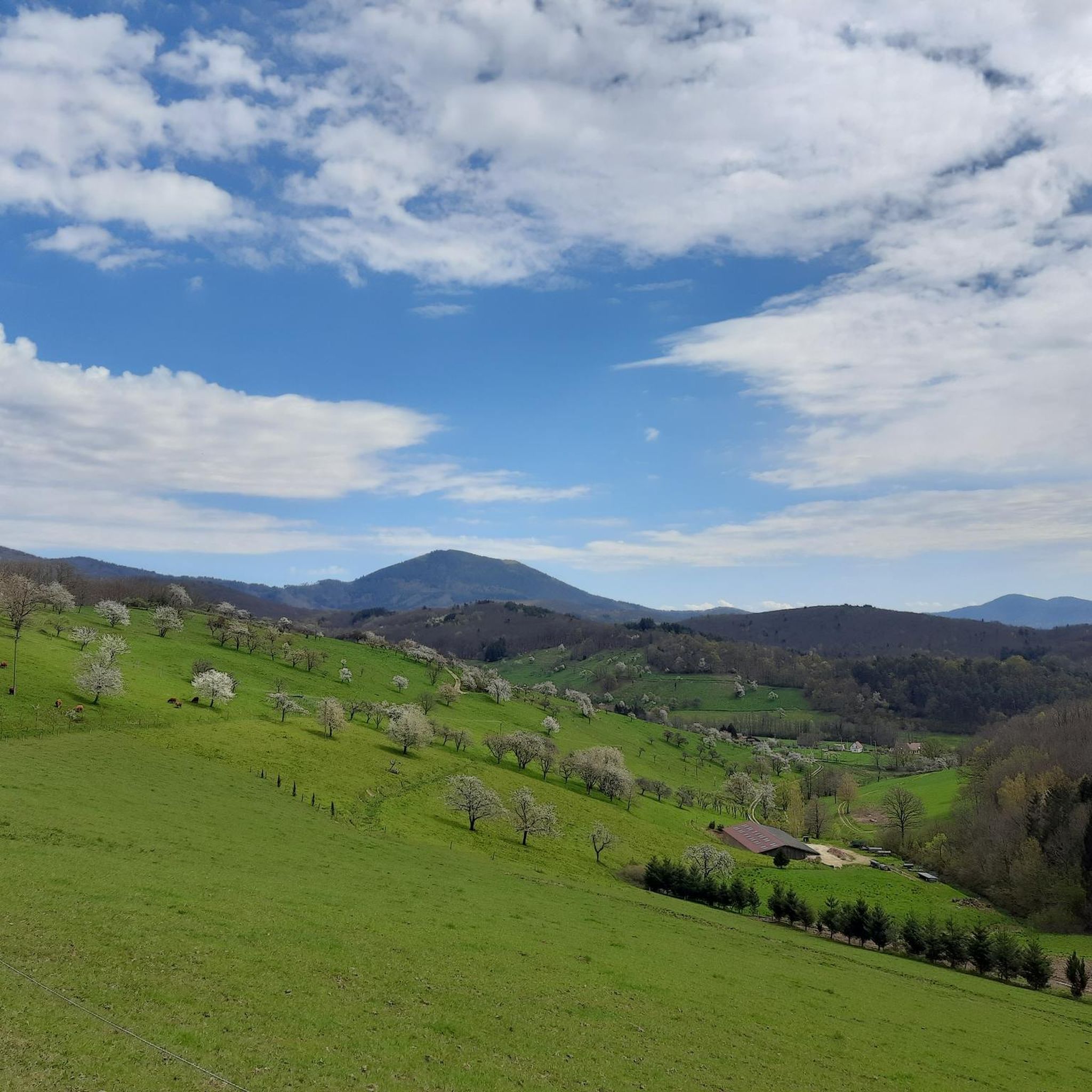
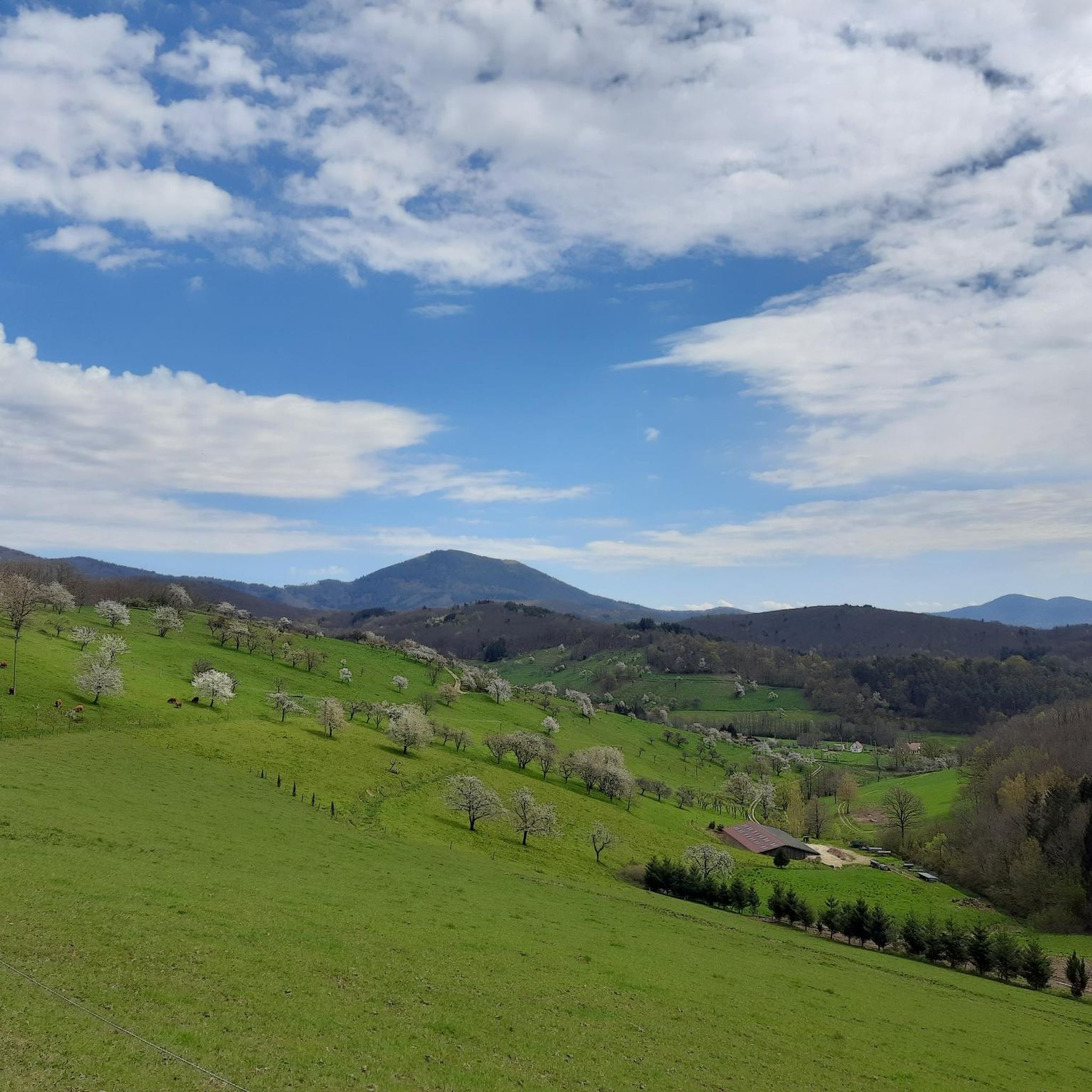
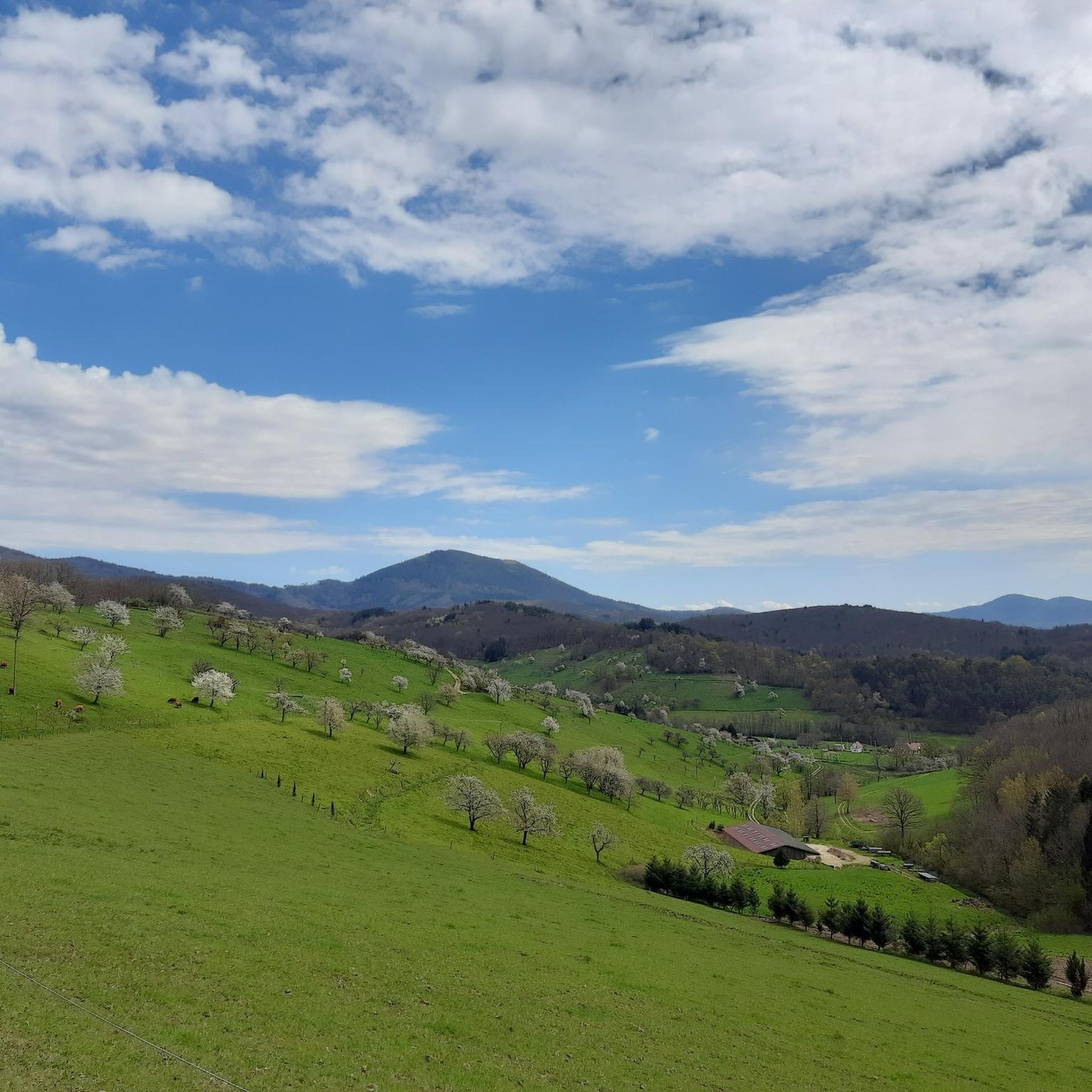
Champ du Feu, at 1099 meters, is the highest mountain in the Bas-Rhin department of the Vosges in Alsace. It is located between the villages of Belmont and Le Hohwald and consists of an extensive high plateau with forests, meadows, and moorlands. The area is a popular nature and recreational area. In summer, it is mainly used for hiking, mountain biking, and nature observation. In winter, there is a small ski resort with cross-country trails and simple slopes for winter sports. The stream La Serva originates from Champ du Feu and later forms the Cascade de la Serva. In clear weather, the summit offers wide views over the Vosges, the Rhine plain, and as far as the Black Forest. The area is particularly known for its tranquil nature, high moors, sunrises and starry skies, as well as well-marked hiking trails.
0
0


Possible origins of the name: Celtic rituals: It is believed that solstice and sacrificial fires were lit here in Celtic times. Charcoal burners' fire: The "fire" could also refer to the fires lit by charcoal burners in the surrounding forests of the Vosges Mountains. Cattle pasture: A popular theory states that the French word "feu" is a corruption of the German word "Vieh," meaning "field of cattle," as it was a sparsely wooded plateau where cattle could graze. Text from the Internet
1
0

Magnificent pass to climb from different slopes (Breitenbach, Steige, Vallée de la Bruche, Andlau). It is also a crossing point towards the Champ du feu, the Hohwald, the Mont Ste Odile.
0
0

Pass culminating at 960 m altitude.
0
0

If you come from the Col de la Charbonnière, it is only a few meters uphill again and then you have already reached the top of the pass.
1
0

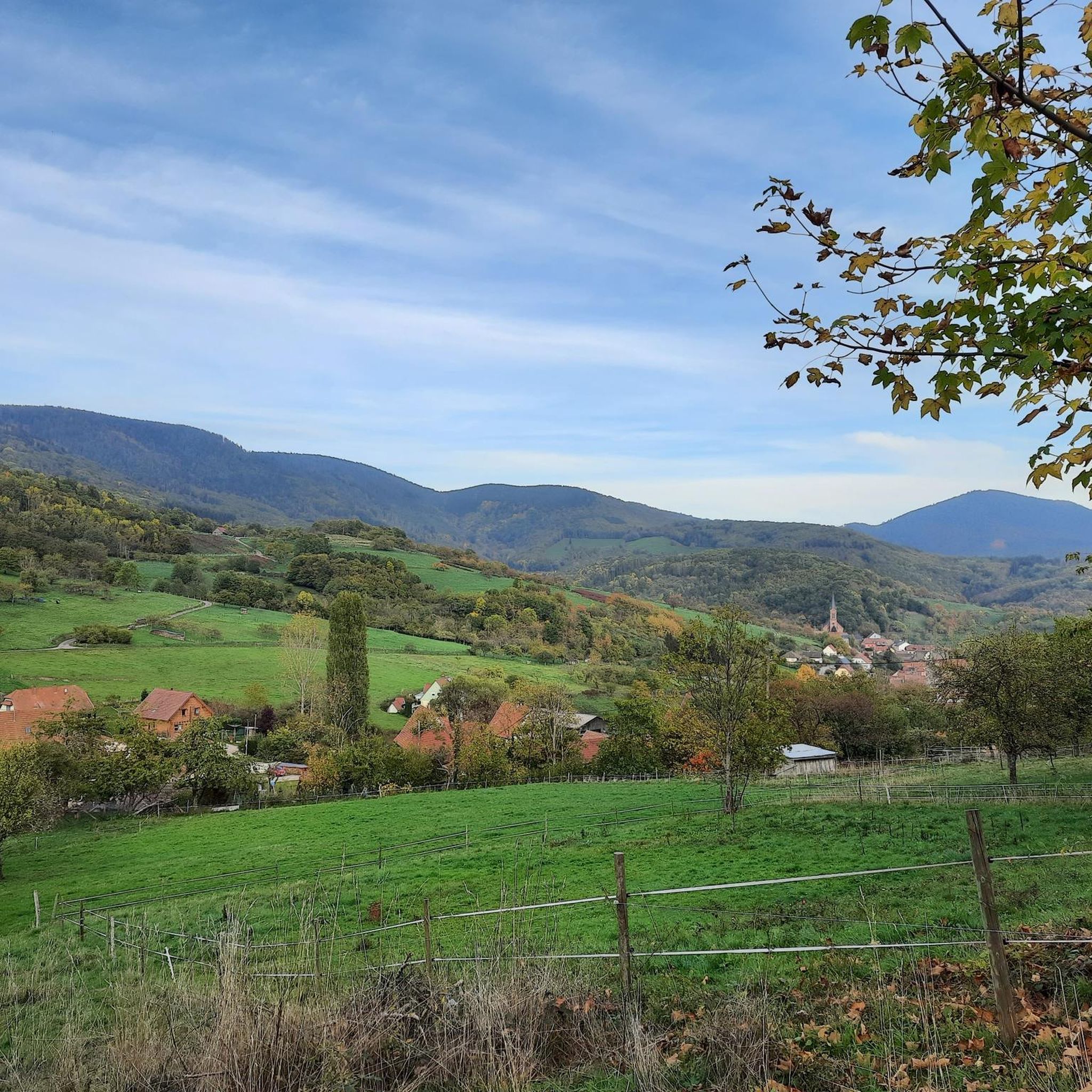
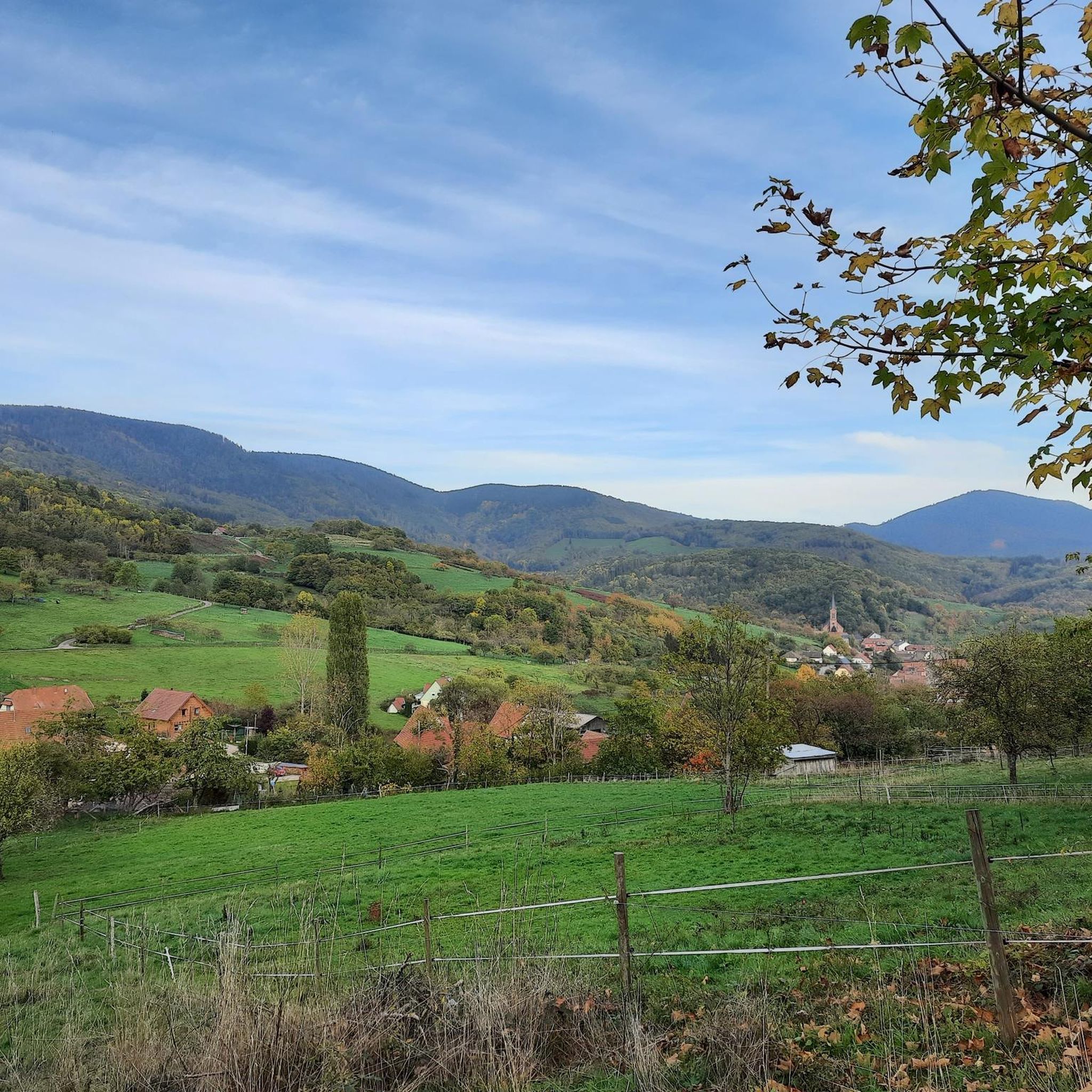
Halfway between the charming hamlet of Hohwald and the Champ du Feu station, the Kreuzweg pass offers a pleasant stopover. In the middle of the imposing forest of the massif, it offers unobstructed views at an altitude of 768 meters. It is a good place to spend the night in the mountains with the presence of two farm inns. There is also an adventure park for the enjoyment of young people.
0
0

Today the restaurant was completely full at 1 p.m. You should probably make a reservation here. TEL: +33 3 88 08 31 17
2
0
Frequently Asked Questions
What are some of the most popular mountain passes to visit near Meisengott?
The region around Meisengott, serving as a gateway to the Vosges Mountains, offers several popular passes. Among them, Champ du Feu is highly regarded for its panoramic views and dense forests, popular for cycling and nature enjoyment. Another notable pass is Col de Steige, known for its scenic location with a small lake and low traffic. The Charbonnière Pass is also a well-known intermediate pass with a restaurant, connecting various routes in the area.
Are there family-friendly mountain passes around Meisengott?
Yes, several passes in the area cater to families. The Charbonnière Pass, for instance, is categorized as family-friendly and features a restaurant, making it a good spot for a break. The broader Vosges Mountains also offer various accessible areas suitable for family outings, with some passes providing amenities like summer toboggan runs, such as the Col de la Schlucht, or farm inns like near Le Markstein.
What kind of natural features can I expect to see on the mountain passes in the Vosges Mountains?
The Vosges Mountains, accessible from Meisengott, are characterized by diverse natural features. You'll find 'ballons' (round-topped summits), extensive forests, high-altitude meadows, deep valleys, and unique rock formations. Passes like the Petit Ballon Pass are known for their mountain pastures and grazing animals, while others like Champ du Feu offer dense forests and panoramic views.
What outdoor activities are available near the mountain passes around Meisengott?
The region is excellent for various outdoor activities. You can enjoy extensive hiking, cycling, and gravel biking. For example, there are numerous routes for gravel biking around Meisengott, including routes that pass through Charbonnière Pass. Cycling routes often include climbs to passes like Champ du Feu and Col de Steige. Running trails are also abundant, with options like the 'Kreuzweg Pass – Champ du Feu loop'.
Are there historical sites or landmarks on or near these mountain passes?
Yes, the Vosges Mountains hold historical significance. The Ballon d'Alsace, for instance, is famous as the first mountain pass ever included in the Tour de France in 1905 and also contains historical reminders of World War One. The Col du Bonhomme is a main historical pass linking Lorraine and Alsace since ancient times. Additionally, Champ du Feu features a lookout tower built in 1898, offering a historical landmark alongside its natural beauty.
What is the best time of year to visit the mountain passes near Meisengott?
The best time to visit largely depends on your preferred activities. Summer and autumn are ideal for hiking and cycling, with pleasant temperatures and vibrant foliage. In winter, passes like Col de la Schlucht and Ballon d'Alsace transform into popular destinations for winter sports like skiing and snowshoeing, though conditions can vary. Always check local weather forecasts before your visit, especially for higher passes.
Where can I find food or accommodation near the mountain passes?
Several mountain passes offer facilities for food and sometimes accommodation. The Charbonnière Pass has an auberge with a restaurant. Near Le Markstein, a renowned farm inn provides an ideal spot for a break. In the village of Villé, a pleasant 45-minute walk from Maisonsgoutte, you can find various cafes, pubs, and restaurants.
Are there any easy or beginner-friendly mountain passes for cycling or hiking?
While many passes offer challenging climbs, there are also more moderate options. The Col de Steige, for example, has an average gradient of 2.57% from Saint Martin, making it less strenuous for cyclists. Similarly, the Salcée Pass is described as a smaller pass where you might hardly have to climb much depending on your direction, suitable for those seeking a more relaxed route.
What do visitors enjoy most about the mountain passes around Meisengott?
Visitors frequently appreciate the stunning panoramic views, the tranquility of the dense forests, and the diverse opportunities for outdoor activities like cycling and hiking. The scenic beauty of the Vosges Mountains, with its unique 'ballons' and high-altitude meadows, is a major draw. Many also enjoy the local charm, including farm inns and the authentic Vosges atmosphere found at passes like Petit Ballon.
Can I find viewpoints with magnificent scenery on these passes?
Absolutely. Many passes offer superb viewpoints. Champ du Feu is known for its stunning panoramic views, and it even has a lookout tower. Le Markstein also provides magnificent viewpoints, especially along the scenic Route des Crêtes. The Petit Ballon Pass offers superb views of the surrounding valleys, and the Ballon d'Alsace is famous for its panoramic vistas.
Are there specific passes that are part of the Route des Crêtes?
Yes, several prominent passes in the Vosges Mountains are part of the famous Route des Crêtes. The Col de la Schlucht and the Col du Bonhomme are both crossed by this scenic route. Le Markstein also lies along the Route des Crêtes, making these passes key points for experiencing this iconic drive or ride.
Most popular routes around Meisengott
Most popular attractions around Meisengott

Get inspired with the komoot mobile app


Explore more
See even more epic mountain passes by checking out these guides around Meisengott:
