The best road cycling routes around Paray-Douaville
4.3
(20)
930
riders
232
rides
Road cycling routes around Paray-Douaville traverse a landscape characterized by open countryside, agricultural fields, and scattered woodlands. The region features gentle elevation changes, with routes often connecting small villages and historical landmarks. Road cyclists can expect a mix of quiet rural roads and paths that pass by features such as castles, churches, and ponds.
Best road cycling routes around Paray-Douaville
- The most popular road cycling route is Esclimont Castle – Lavoir de Soulaires loop from Ablis, a 45.4 miles…
Last updated: July 5, 2026
35
riders
73.5km
02:56
300m
300m
Moderate road ride. Good fitness required. Mostly well-paved surfaces and easy to ride.
32
riders
11.4km
00:28
20m
20m
Easy road ride. Great for any fitness level. Mostly well-paved surfaces and easy to ride.

Sign up for free
5.0
(1)
18
riders
66.8km
02:55
420m
420m
Moderate road ride. Good fitness required. Mostly well-paved surfaces and easy to ride.
13
riders
52.8km
02:09
290m
290m
Moderate road ride. Good fitness required. Mostly well-paved surfaces and easy to ride.
4.0
(1)
10
riders
69.4km
02:58
360m
360m
Moderate road ride. Good fitness required. Mostly well-paved surfaces and easy to ride.
Get access to more routes and recommendations from other explorers.
Sign up for free
Already have an account?
Our route recommendations are based on thousands of hikes, rides, and runs completed by other people on komoot.
Start today with a free account
Your next adventure awaits.
Login or Signup



Tips from the Community

The church of Bleury, dedicated to Saint Martin, probably dates from the end of the Middle Ages. It was remodeled and enlarged in the 16th century by the addition of a large chapel on the north side. The nave ends with a semicircular apse. The chapel to the north is extended by a square bell tower which once opened onto the nave through an arch that is now blocked but still visible. The chapel opens onto the nave through two pointed arches made of recently rendered clotted stone. It communicated with the ground floor of the courtyard through an arch that is now closed. Another filled-in arch appears on the wall between the chapel and the lower room of the courtyard. The church is covered with a paneled roof. A single beam is sculpted, the penultimate one on the west side. It supported, with the beam resting on the facade wall, a recently demolished gallery. Some of the nave's semi-circular windows are late, and the pointed arch openings have Gothic tracery. The square bell tower has a saddleback roof. It is pierced with pointed arch openings. Access to the building is from the south, under a modern porch that houses a portal surmounted by a shield with three fleurs-de-lis. A stone cornice runs under the roof to the south, supported by unsculpted modillions. Two 18th-century altarpieces were included in the Supplementary Inventory of Historic Monuments on June 17, 1975. 16th-century wall paintings depict the Mass of Saint Gregory. They were discovered in 1881 and classified as Historic Monuments on November 17, 1908. Their preservation is currently threatened by infiltration due to the poor condition of the roof structure. The Sauvegarde de l’Art Français provided aid of 75,000 F in 1994, thus contributing to the repairs undertaken to restore the framework, which will allow the walls to be cleaned up.
0
0
According to tradition, the church choir covers the remains of an older building, possibly dating back to the 6th century, which was built to house the saint's body. According to current knowledge, the commune of Saint-Piat (Sanctus Piatus in Latin) officially appeared in 1087, mentioned in a charter of the Nottonville Priory (Eure-et-Loir), on which it depended. The current building was rebuilt during the time of Francis I, as suggested by the date 1535 engraved on two buttresses of the apse and the date 1542 engraved on a piece of wood from the vault. This is according to a study by the SAEL (Eure-et-Loir Archaeological Society). The three-sided apses, the dripstone towers (horizontal members projecting from a wall), and the sculpted roof structures are a testament to the importance of the reconstructions carried out in the department during the 16th century. The church of Saint-Piat is one of them. While the church has not been officially recognized, it nevertheless contains objects that have attracted attention both for their antiquity and quality, but not always for good reason. Their artistic value, far from attracting only religious or aesthetic interest, has also aroused a covetousness that, unfortunately, remains for some of them. Fortunately, those still in place are carefully cared for and offer the curious a story to discover, a beauty to slowly ponder as they progress toward the choir.
0
0

Ideal for a coffee break. There's a bar and a pastry shop that makes delicious macarons! There's a water fountain next to the church, a little further on.
0
0

Most beautiful segment of the Valley | Auffargis - Cernay-la-Ville
0
0

The river flows through the narrow rocky chaos: it almost feels like you are in the mountains.
0
0

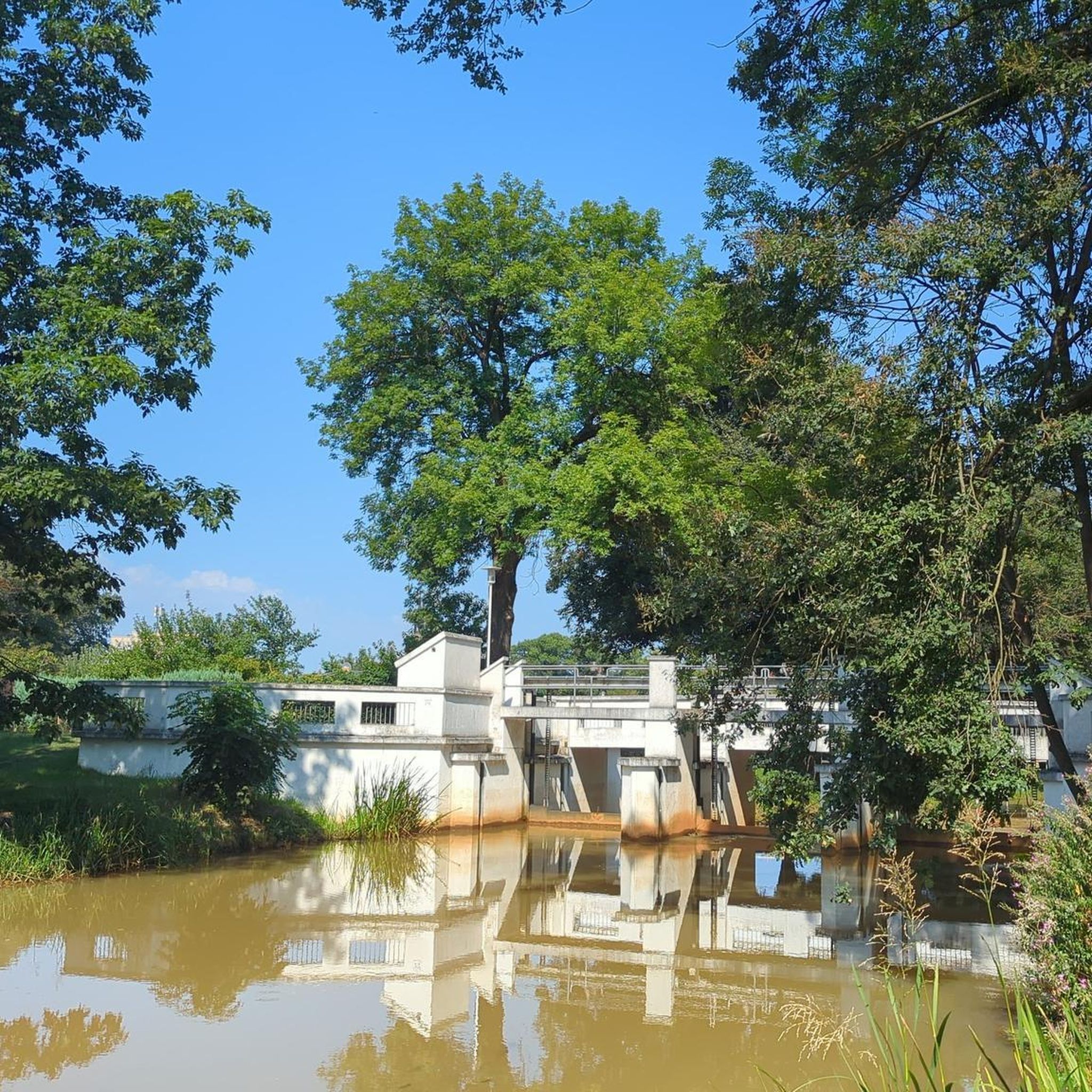
A former mill on the road
7
0
The Abbey of Vaux-de-Cernay is a former Cistercian monastery
6
0

it's a route with very few vehicles so you can relax more to have fun
0
0
Frequently Asked Questions
How many road cycling routes are available in Paray-Douaville?
There are over 230 road cycling routes in the Paray-Douaville region, offering a wide range of options for different skill levels and preferences.
Are there easy road cycling routes suitable for beginners in Paray-Douaville?
Yes, Paray-Douaville offers 58 easy road cycling routes. A great option for a gentle ride is the Bréau-sans-Nappe obelisk loop from Boinville-le-Gaillard, which is just 7.1 miles (11.4 km) long and features minimal elevation gain.
What kind of elevation gain can I expect on road cycling routes in Paray-Douaville?
The Paray-Douaville region is characterized by gentle elevation changes. While some routes like the Bullion Church – Pavilion Pond loop from Ablis can have around 420 meters of ascent over 41.6 miles, many routes feature more modest climbs, making them accessible for various fitness levels.
What are some longer road cycling routes in the Paray-Douaville area?
For those seeking longer rides, routes like the Guiperreux Toad Crossing – Pavilion Pond loop from Ablis cover approximately 77.9 km (48.4 miles). Another substantial option is the Esclimont Castle – Lavoir de Soulaires loop from Ablis, which is 73 km (45.4 miles).
What can I see along the road cycling routes in Paray-Douaville?
Many routes pass by historical sites and natural features. You might encounter landmarks such as Esclimont Castle, traditional wash houses, and various churches and ponds. The region's open countryside also offers scenic views of agricultural fields and scattered woodlands.
Are there any notable castles or historical sites to visit while road cycling?
Yes, the region is home to several historical sites. You can cycle past the impressive Esclimont Castle, or explore the Château de Denonville. The Esclimont Castle – Armenonville church loop from Ablis is a great route to experience some of these historical points of interest.
What do other road cyclists enjoy most about road cycling in Paray-Douaville?
The area is highly rated by the komoot community, with an average score of 4.3 stars. Reviewers often praise the quiet rural roads, the gentle terrain, and the opportunity to discover historical landmarks and scenic countryside views.
Are there any circular road cycling routes in Paray-Douaville?
Most of the road cycling routes in Paray-Douaville are designed as loops, allowing you to start and end your ride in the same location. Examples include the Bréau-sans-Nappe obelisk loop from Boinville-le-Gaillard and the Bullion Church – Pavilion Pond loop from Ablis.
What is the best time of year for road cycling in Paray-Douaville?
The region's gentle terrain and open countryside are generally pleasant for road cycling from spring through autumn. During these seasons, you can expect milder weather and lush landscapes. While winter cycling is possible, be prepared for colder temperatures and potentially wet conditions.
Are there any hidden gem road cycling routes in Paray-Douaville?
With over 230 routes, there are many opportunities to discover less-trafficked paths. Exploring the numerous moderate routes, such as the Esclimont Castle – Armenonville church loop from Ablis, can lead you through charming villages and serene landscapes away from the main roads.
Most popular routes around Paray-Douaville
Most popular attractions around Paray-Douaville

Get inspired with the komoot mobile app


Explore more
Browse the best Road cycling routes in other regions.
