Attractions and Places To See around Le Luot - Top 20
Attractions and places to see around Le Luot include a variety of historical, cultural, and natural sites. This small, rural commune in Normandy serves as a base for exploring the wider Avranches and Mont Saint-Michel regions. The area offers notable landmarks, cultural institutions, and natural features within a short distance. Visitors can discover a range of experiences from ancient abbeys to scenic viewpoints.
Best attractions and places to see around Le Luot
- The most popular attractions is Abbaye de La…
Last updated: July 6, 2026
Abbaye de La Lucerne
Highlight • Religious Site
Translated by Google •
Tip by

Château d'Avranches
Highlight • Castle
Translated by Google •
Tip by

Sign up now to discover places like this
Get recommendations on the best single tracks, peaks, & plenty of other exciting outdoor places.
Sign up for free
Kirche Notre-Dame-des-Champs
Highlight • Historical Site
Translated by Google •
Tip by
Thomas Becket Square
Highlight • Monument
Translated by Google •
Tip by

Gilbert Bridge over the Sée
Highlight • Bridge
Translated by Google •
Tip by
Sign up for free to discover even more attractions around Le Luot.
Sign up for free
Already have an account?
Start today with a free account
Your next adventure awaits.
Login or Signup


Tips from the Community

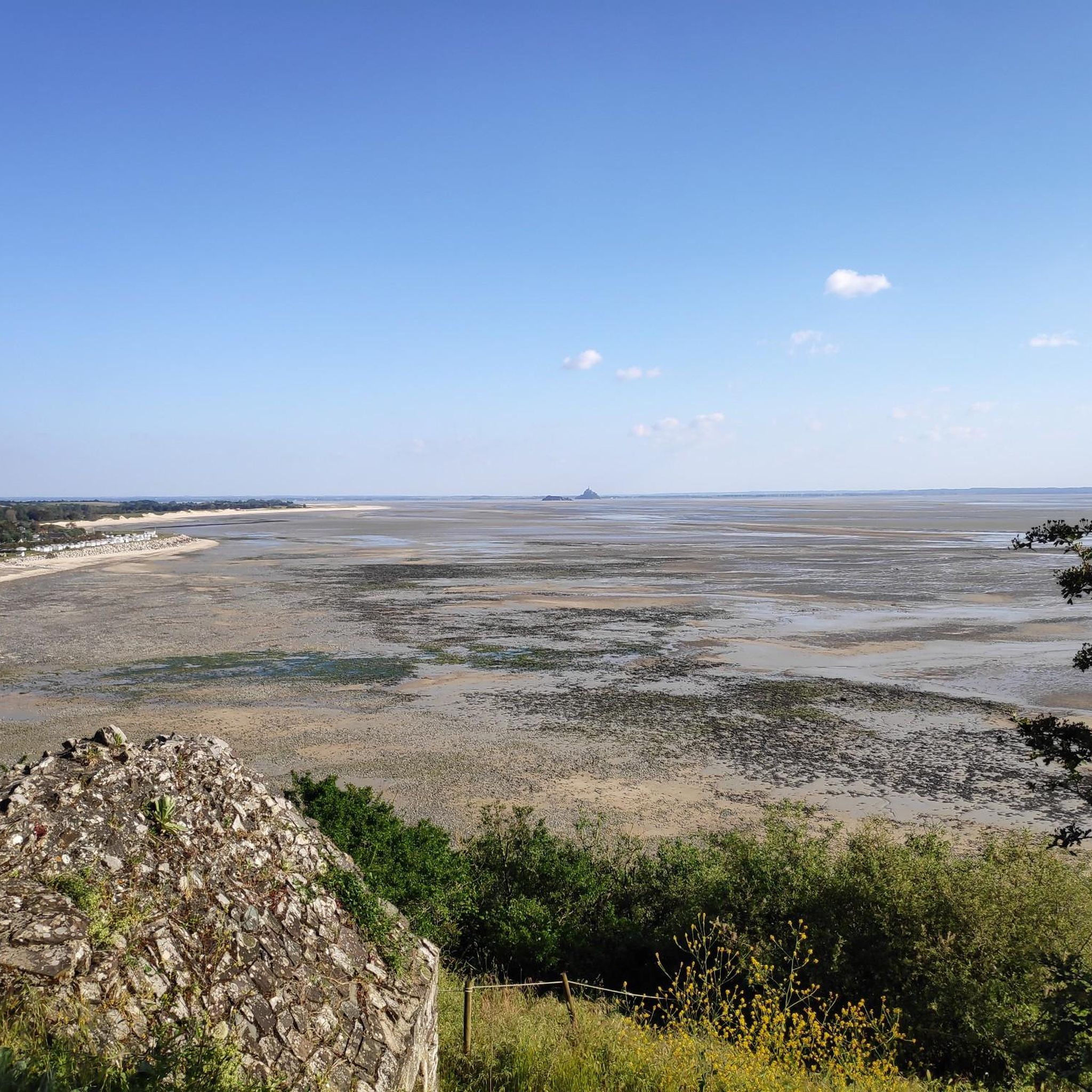
At the end of the old town, in the extension of Place Daniel Huet, the old square was reorganized into three areas. To the south of the square, according to the plans of the former Bishop of Avranches, 21 trees with hawthorn stems were planted near a children's playground. Faithful to the plan of the archaeologist who excavated the site in the 1970s, the architect realized the nave of the cathedral with a low granite wall crowned with an oak crossbeam on which one could sit. The tombstone commemorating the penance of King Henri Plantagenêt was replaced in the place of the north portal. A triple arcade in Corten steel 6 meters high symbolizes the main gate of the disappeared building and two faceted masts 33 meters high, the towers. Like sentinels or a signal over the bay, these masts are also and above all enormous lightning rods, which the city did not have. The overhanging forecourt offers a breathtaking panoramic view of the bay and the Sée valley. Free access. https://www.wikimanche.fr/Square_Thomas-Becket_(Avranches)
0
0

The “Pont Gilbert - Passerelle de la Sée” is a pedestrian and bicycle bridge that connects Avranches and Marcey-les-Grèves. This bridge is located on the site of a historic bridge and has a ramp for a gentle climb and easy crossing to the other side of the river. It is a very useful bridge and recommended by cyclists. The bridge is also one of the highlights in the Vernix region.
4
0

At the site of the historic bridge there is now a very useful pedestrian and cycle bridge with a ramp for gently climbing and crossing to the other side of the small river.
2
0
The old Notre-Dame des Champs church was located, as its name suggests, outside the city, to the south. This very simple church, known from a photo and a few engravings, dates from the end of the 17th century. Having become too small and work becoming necessary, the idea was accepted, around 1855, of constructing a new building, especially after the collapse of the Saint-André cathedral. Plans and an estimate were drawn up by the architect Nicolas Théberge, architect from La Manche and “child of the parish”. We also owe the latter other buildings in the neo-Gothic style such as Saint-Patrice du Teilleul in 1851, Saint-Hilaire-du-Harcouët in 1855, Saint-Pair de Sartilly or Sainte-Croix de Saint-Lô in 1860. However, it was not until April 12, 1863 to witness the laying of the first stone. The "neo-Gothic" style decided on by the architect involves the construction of a building with bold proportions that completely break with those of the modest church that we wish to replace. The means of the city and the parish were insufficient, especially since the reconstruction of Saint-Gervais had been very expensive, and in 1865 the mayor of Avranches and the archpriest traveled to Paris to seek help state finance. This long-requested aid was not finally granted until 1876 and the consecration of the church by Bishop Germain took place on November 13, 1892. The slow construction of the building was marred by many sometimes tragic events such as, in 1868, the death of a twenty-seven-year-old mason who fell from the height of the rose window where he was working. The architect Théberge, who died in 1866, was replaced by Cheftel. Delayed by the First World War, which mobilized all the workforce, the two towers of the facade were completed between 1926 and 1937; at this time, the large organs were also installed, the wind tunnel of which immediately benefited from electricity. In June 1944, the church was seriously damaged by a fire following the bombardment of the city. Restoration work lasted several years and the reopening to worship only took place in February 1962. The church is in the form of a nave with a façade with two towers (unfinished arrows), a projecting transept, and an ambulatory choir with an axial chapel (never built)1. The church had been provided with a set of windows signed Duhamel-Marette, destroyed by the bombings of 1944
0
0
At the end of the old town, in the extension of Place Daniel Huet, the old square has been reorganized into three spaces. To the south of the square, as on the plans of the former bishop of Avranches, 21 trees, hawthorns on stems, have been planted near a children's play area. Faithful to the plan provided by the archaeologist who excavated the site in the 1970s, the architect materialized the nave of the cathedral with a low granite wall topped with an oak crosspiece on which to sit. The funerary slab, which commemorates the penance of King Henri Plantagenêt, has been replaced at the location of the north portal. A triple arcade in Corten steel 6 meters high symbolizes the main door of the building that has disappeared and two faceted masts of 33 meters, the towers. Like watchmen or a signal over the bay, these masts are also and above all formidable lightning rods which the city did not have. In front, overhanging, the forecourt offers a breathtaking panoramic view of the bay and the Sée valley. Free access. https://www.wikimanche.fr/Square_Thomas-Becket_(Avranches)
1
0

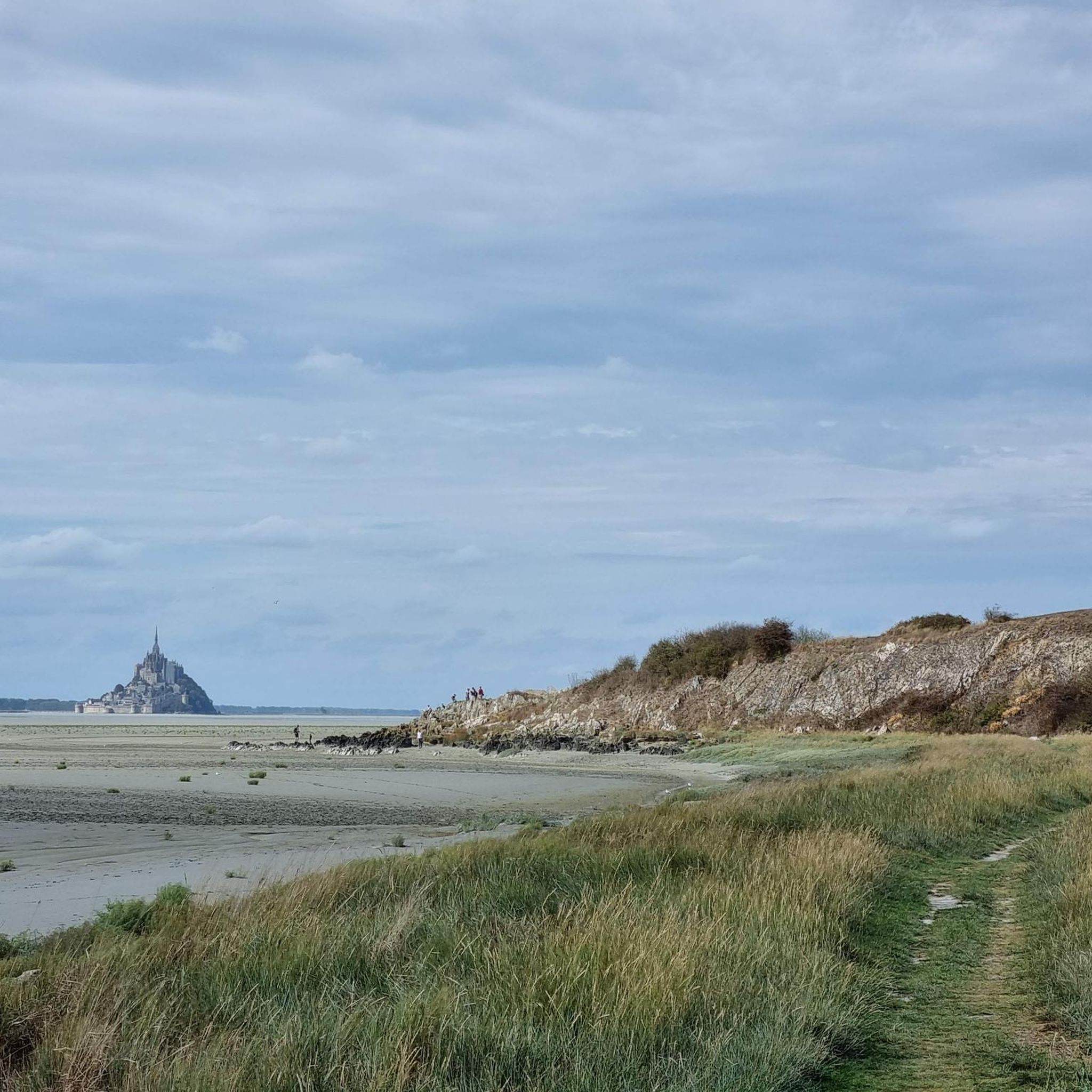
This former fortified castle was built in the 10th century to protect the city from Breton attacks. Located on a rock, it offers beautiful views over the bay of Mont-Saint-Michel and the Sée valley.
2
0

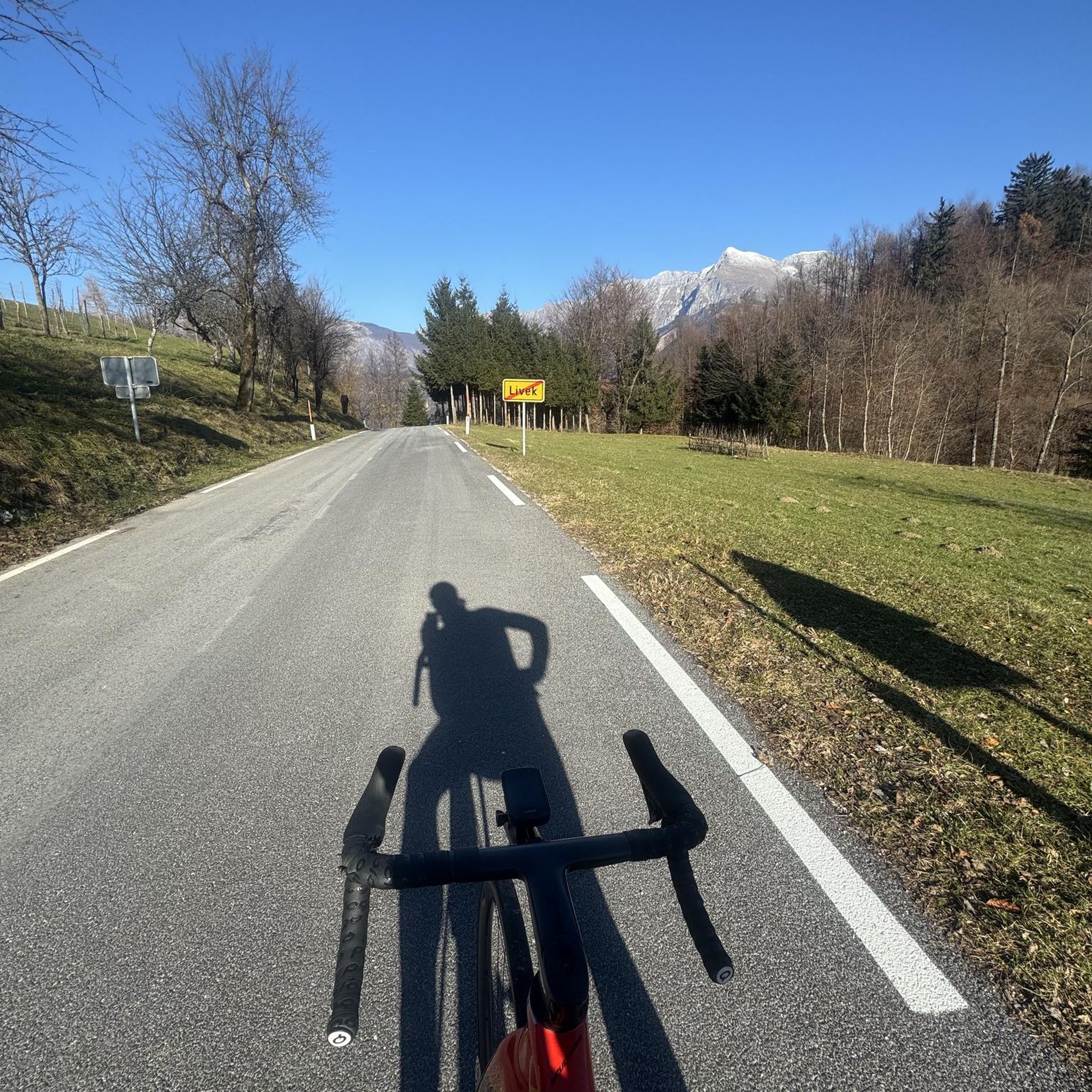
Small paved cycle path that spans the Sée with the lock. Quiet and practical, it passes without problem on a road bike.
0
0
The Château d'Avranches was built around 950 by Onfroi Le Dane, on the remains of the old Roman walls. Located on a rock, the fortress could monitor the bay of Mont-Saint-Michel and the various invaders made no mistake and occupied it; Celts with the Abrincates, Romans, Saxons, then Franks. A succession of enclosures and ditches were added to it. The Roman keep unfortunately disappeared in the last century. The top of the curtain forms a platform at the same level as the terrace. A diagram, made by Canon Pigeon, shows how keep and curtain wall were connected. This is also verifiable in a document kept in the Calvados Archives. Another detail should be noted, it is impossible to access the terrace from inside the building. Passages were obstructed after a collapse of the upper level of the building, at an undetermined time. Today, at the top of a crenellated curtain wall, one discovers a panorama over the bay and the valley of the Sée, in the heart of the various Avranchinese districts.
8
0
Frequently Asked Questions
What historical and cultural sites are worth visiting near Le Luot?
The area around Le Luot is rich in history and culture. You can explore the well-preserved Abbaye de La Lucerne, a monastic complex founded in 1143. Also, visit the remnants of Château d'Avranches, a 10th-century fortified castle offering panoramic views. In Avranches, the Kirche Notre-Dame-des-Champs is a significant historical church, and Thomas Becket Square marks the site of a former cathedral with a memorial and bay views. Further afield, the iconic Mont Saint-Michel and its Abbey, and the Scriptorial d'Avranches museum, are highly recommended.
Are there any family-friendly attractions around Le Luot?
Yes, several attractions near Le Luot are suitable for families. The Abbaye de La Lucerne is considered family-friendly, offering a beautiful setting to explore. The Château d'Avranches provides an engaging historical experience with great views. In Avranches, Thomas Becket Square features a children's play area. Additionally, the Zoo de Champrepus, located about 8.7 km from Le Luot, is a popular choice for families.
Where can I find scenic viewpoints or natural beauty spots?
For scenic views, head to Château d'Avranches, which offers beautiful panoramas over the Bay of Mont-Saint-Michel and the Sée valley. Thomas Becket Square in Avranches also provides a breathtaking panoramic view of the bay. For natural beauty, the Jardin des Plantes in Avranches is a pleasant botanical garden, and the general Norman countryside around Le Luot, with its small woods and the Braize River, offers tranquil landscapes for local walks.
What outdoor activities, like hiking or cycling, can I do near these attractions?
The region around Le Luot is excellent for outdoor activities. You can find numerous hiking routes, such as a moderate 10 km loop from La Lucerne-d'Outremer or an easy 3.8 km loop connecting Kirche Notre-Dame-des-Champs and the Donjon of Avranches. For cycling, options include a moderate 34 km loop from La Haye-Pesnel to Jullouville Beach or a challenging 40 km loop around Abbaye de La Lucerne. Gravel biking routes are also available, like the moderate 44 km 'View of Mont Saint-Michel Bay' loop from Avranches. You can find more details on these and other routes in the Hiking around Le Luot, Gravel biking around Le Luot, and Cycling around Le Luot guides.
Are there any accessible attractions for visitors with mobility considerations?
The Gilbert Bridge over the Sée is a pedestrian and bicycle bridge that is wheelchair accessible, featuring a ramp for easy crossing. While specific accessibility details for all historical sites vary, many outdoor areas like the Jardin des Plantes in Avranches offer paved paths. It's always advisable to check directly with specific venues for their latest accessibility information.
What do visitors enjoy most about the attractions around Le Luot?
Visitors frequently praise the historical depth and well-preserved nature of sites like Abbaye de La Lucerne, noting its beautiful architecture and green environment. The panoramic views from locations such as Château d'Avranches and Thomas Becket Square are also highly appreciated. The region's blend of historical monuments, cultural institutions, and natural landscapes, all within a short distance, makes it a diverse and engaging destination.
Can I find any unique architectural highlights in the area?
Absolutely. The Abbaye de La Lucerne is a prime example, showcasing remarkable Anglo-Norman architecture that blends Romanesque and Gothic styles. The Kirche Notre-Dame-des-Champs in Avranches, consecrated in 1892, is another notable architectural piece, built in a neo-Gothic style to replace a cathedral destroyed during the French Revolution.
Are there any specific bridges or river-related attractions?
Yes, the Gilbert Bridge over the Sée is a notable pedestrian and bicycle bridge connecting Avranches and Marcey-les-Grèves. It's located on the site of a historic bridge and is appreciated by cyclists for its practicality and gentle incline. The Braize River also flows through Le Luot, contributing to the rural landscape.
What kind of terrain can I expect on hiking trails near Le Luot?
Hiking trails around Le Luot vary in terrain and difficulty. You can find easy walks, such as the 3.8 km loop around Avranches, which includes Kirche Notre-Dame-des-Champs. Moderate trails, like the 10 km loop from La Lucerne-d'Outremer, often traverse wooded valleys and rural landscapes. More difficult routes, such as the 19 km loop around Abbaye de La Lucerne from La Haye-Pesnel, might involve longer distances and more varied elevation. The general area is characterized by the Norman countryside, offering a mix of paths through fields, small woods, and along rivers.
Are there any attractions that offer a glimpse into medieval history?
For a deep dive into medieval history, the Abbaye de La Lucerne, founded in 1143, provides an exceptional example of a preserved monastic complex. The Château d'Avranches, built around 950, offers insights into the region's defensive past. Additionally, the Scriptorial d'Avranches museum houses medieval manuscripts from Mont Saint-Michel, offering a unique look into the intellectual life of the period.
What is the best way to explore the region's attractions from Le Luot?
Le Luot serves as a tranquil base for exploring the surrounding region. Given its rural nature, having a car is generally the most convenient way to reach many of the attractions, such as Mont Saint-Michel, the Zoo de Champrepus, and the various sites in Avranches. For those who enjoy active travel, the area also offers numerous cycling and hiking routes that connect many points of interest, allowing for a more immersive experience of the Norman countryside.
Most popular routes around Le Luot

Get inspired with the komoot mobile app


Explore more
Still not found the Highlight you’re looking for? See guides of the top attractions in other regions:
