Attractions and Places To See around Mulcent - Top 20
Best attractions and places to see around Mulcent include historical landmarks and a preserved natural environment. This rural commune in the Yvelines department of France is situated on an agricultural plateau, offering extensive rural and wooded areas. The region provides opportunities for exploring centuries of history and tranquil natural features, including the nearby Vaucouleurs valley.
Best attractions and places to see around Mulcent
- The most popular attractions is Château de Tilly, a castle that is a 17th-century estate with…
Last updated: October 11, 2026
The Donjon of Houdan
Highlight • Castle
Translated by Google •
Tip by

Donjon and Fortified Site of Montchauvet
Highlight • Historical Site
Translated by Google •
Tip by

Sign up now to discover places like this
Get recommendations on the best single tracks, peaks, & plenty of other exciting outdoor places.
Château de Tilly
Highlight • Castle
Translated by Google •
Tip by

Fortified Farm of la Troche
Highlight • Historical Site
Translated by Google •
Tip by
View of Thoiry Castle
Highlight (Segment) • Other
Translated by Google •
Tip by

Sign up for free to discover even more attractions around Mulcent.
Already have an account?
Start today with a free account
Your next adventure awaits.




Tips from the Community


Built at the end of the 12th century by the Counts of Montfort and listed as a Historic Monument since 1889, the Houdan Tower was used to watch for enemies and defend the territory. The Keep consists of a 15 m diameter and 21 m high tower, flanked by four turrets of the same height located at the four cardinal points. From the 16th century until the French Revolution, the Keep served as a prison, and executions took place at the foot of the Tower. The first water reservoir was installed in the tower in 1880. The second, built in 1952, is still visible. Tours are available on certain days.
0
0


Monument dating from the end of the 12th century
1
0

Estate built in the first third of the 17th century, having preserved its park, its outbuildings and its alley of lime trees from the end of the 18th century. The castle stands opposite the church of Tilly, it was bought and saved from ruin in 1936 by François Delalande, his daughter still occupies it today. It is a beautiful Louis XIII-style residence, flanked by its two towers with an original domed roof, in a six-hectare park entirely surrounded by walls.
1
0
The Tower (commonly called "The Dungeon"), built in the 12th century under the reign of the Counts of Montfort, and classified as a Historic Monument since 1840, had the function of watching out for enemies and defending the territory. But in reality, it mainly had a dissuasive role since it was reputed to be impregnable. Built on the site of an old Merovingian necropolis, it originally consisted of an enclosure and a main tower. The enclosure, which has now disappeared, had a circular turret intended for the defense of the gate. The access door, located 4 meters from the ground then raised in the 15th century to 6 meters, was the only access to the large room on the 1st floor reserved for the military chief. It was accessed via a drawbridge.
0
0

Located in the Yvelines, the castle of Thoiry dates from the Renaissance. Now a museum and a zoo, here you can appreciate the building from afar.
0
0

One of the most beautiful Ile de France villages with its many vestiges.
2
0
Frequently Asked Questions
What historical landmarks can I explore near Mulcent?
The region around Mulcent is rich in history. You can visit the impressive 12th-century Donjon of Houdan, a medieval fortified tower offering panoramic views. Another significant site is the Donjon and Fortified Site of Montchauvet, a village considered one of the most beautiful in Île-de-France, featuring a 12th and 13th-century church and ruins of a keep. Additionally, the Château de Tilly, a 17th-century estate with a preserved park, is also nearby.
Are there any notable castles or estates to visit in the area?
Yes, the area features several notable estates. The Château de Tilly is a beautiful Louis XIII-style residence with two towers and a domed roof, set within a six-hectare walled park. While not directly accessible, you can also get a View of Thoiry Castle, a Renaissance-era building now housing a museum and zoo, from afar along a quiet road.
What kind of natural environment can I expect around Mulcent?
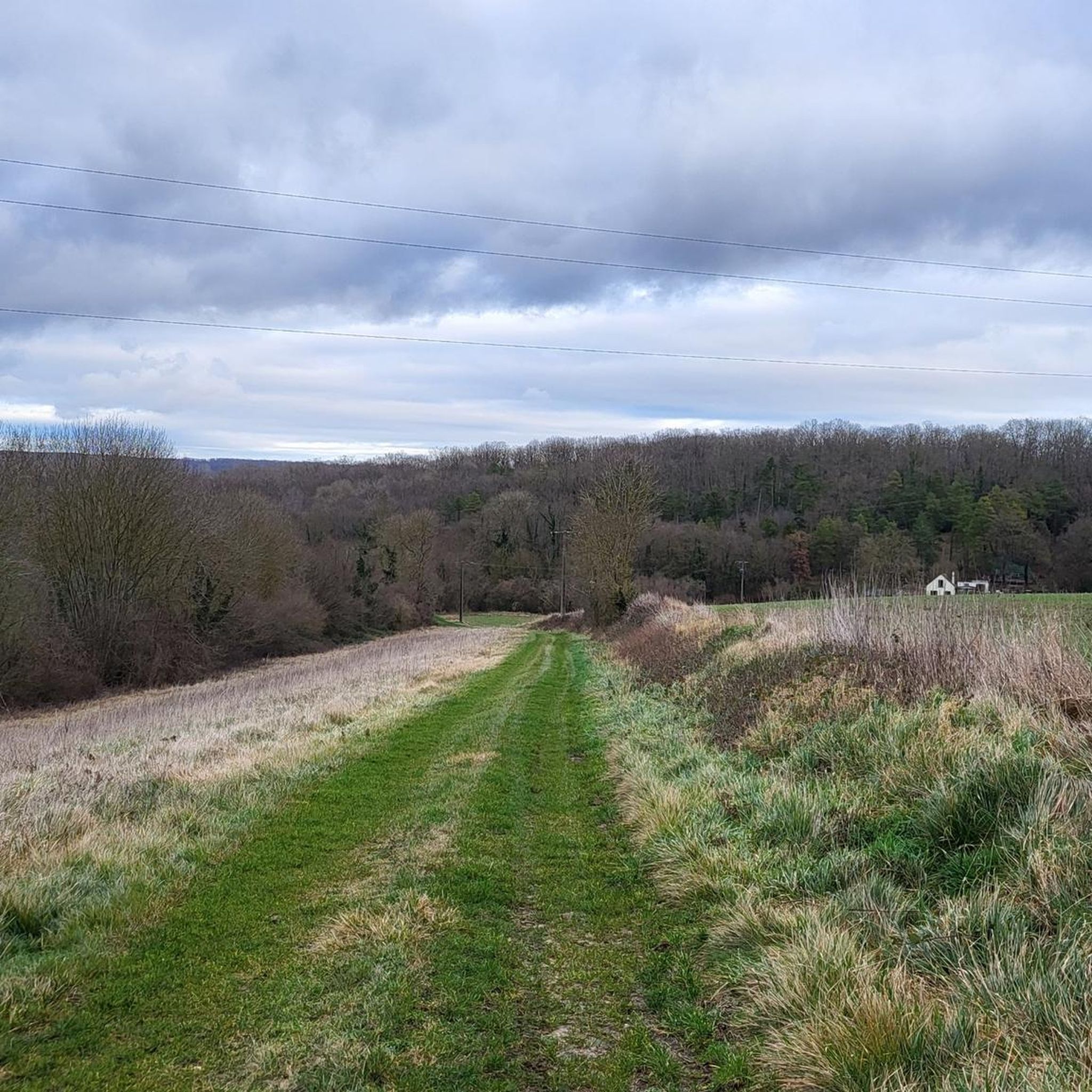
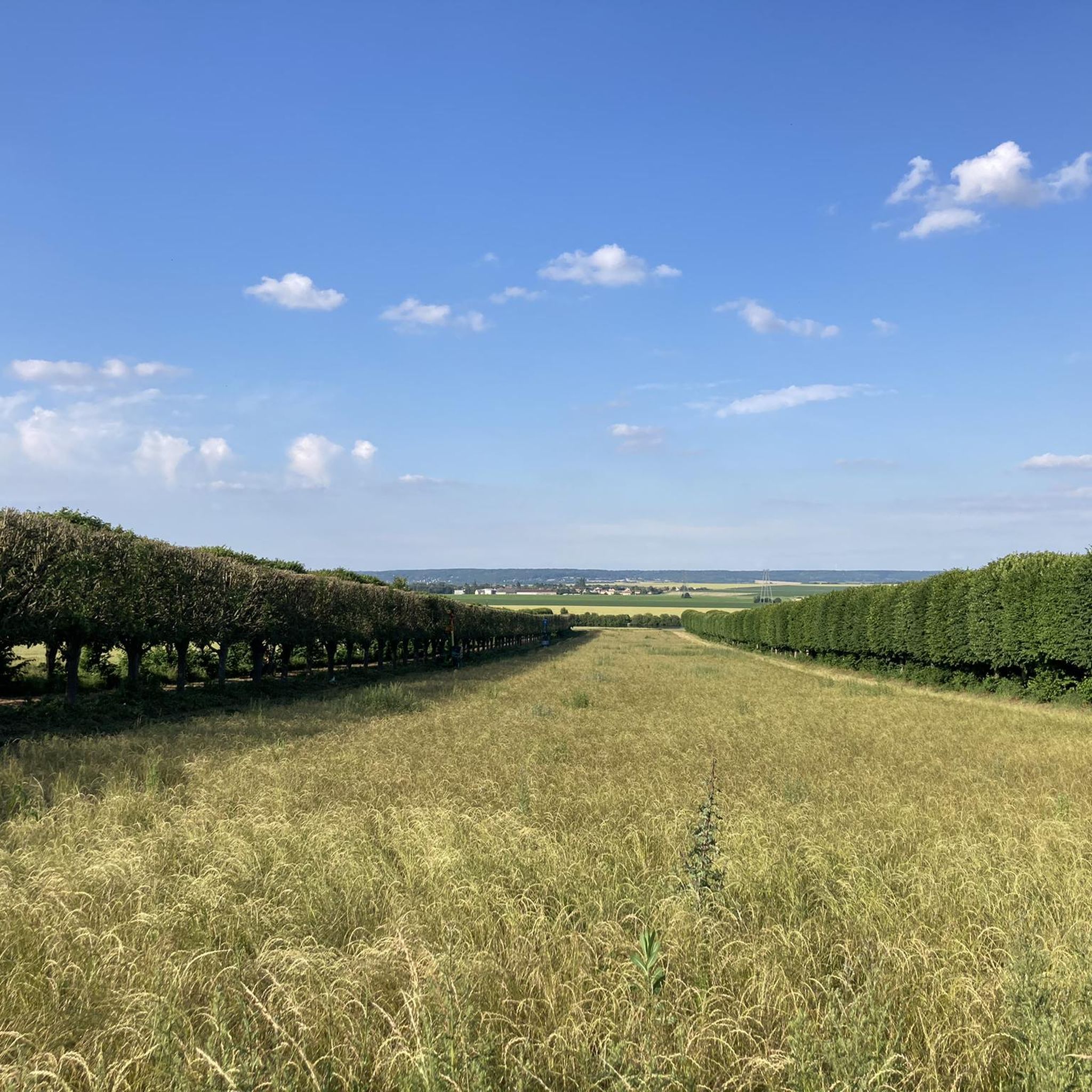
Mulcent is characterized by its preserved rural environment, making it ideal for green tourism. The village is situated on the agricultural plateau of Mantois, offering extensive rural and wooded areas. You'll find tranquil landscapes and opportunities to explore the scenic Vaucouleurs Valley nearby.
Are there opportunities for hiking or walking near Mulcent?
Absolutely. The region offers various hiking and walking routes. You can find moderate trails like the "Porte de Bretagne loop from Montchauvet" or the "Gallo-Roman sanctuary – Saint Martin Church, Orvilliers loop". For more options, explore the Hiking around Mulcent guide.
Can I find trails for mountain biking or running in the Mulcent area?
Yes, there are dedicated trails for both mountain biking and running. For mountain biking, consider routes like the "Rompu Pond – Ponts Quentin Stream loop" or the "Pinardière Pond loop". Runners can enjoy trails such as the "Ru du Moulin de l'Étang loop" or the "Bois de Cerisy loop". Detailed routes are available in the MTB Trails around Mulcent and Running Trails around Mulcent guides.
What is the Donjon of Houdan and what can I see there?
The Donjon of Houdan is an impressive 12th-century medieval fortified tower, built by the Counts of Montfort. It served to watch for enemies and defend the territory. Today, it's a classified historical monument offering panoramic 360-degree views of the surrounding Houdanais region. It was restored and reopened to the public in 2016. You can learn more about its history and design, which was innovative for its era with four turrets. For more information, you can visit the tourisme-pays-houdanais.fr website.
What makes Montchauvet a significant place to visit?
Montchauvet is considered one of the most beautiful villages in Île-de-France and is a significant historical site. It features a 12th and 13th-century church, and visitors can explore the ruins of its fortified site, including vestiges of a keep and a town wall with the distinctive Porte de Bretagne gate. The castle was built in the 1130s and was part of a village fortified by Philippe II 'Auguste' around 1200. You can find more details about its history on castles.nl.
Are there any family-friendly attractions or activities near Mulcent?
The historical sites like the Donjon of Houdan and the Donjon and Fortified Site of Montchauvet can be engaging for families interested in history and exploration. The preserved rural environment also offers opportunities for easy walks and outdoor activities suitable for all ages, allowing families to enjoy nature together.
What do visitors enjoy most about the attractions around Mulcent?
Visitors appreciate the blend of historical discovery and natural tranquility. The Donjon of Houdan is praised for its historical significance and panoramic views, while the Donjon and Fortified Site of Montchauvet is loved for its charm as one of the most beautiful villages in Île-de-France and its many historical vestiges. The overall preserved rural landscape also makes the area appealing for those seeking green tourism and soft sports.
Are there any other historical sites besides castles and fortified villages?
Yes, the neighboring commune of Septeuil, often included in discovery circuits, features an ancient bridge over the Flexanville stream and the Saint-Nicolas church, originally a 13th-century chapel. Septeuil also holds archaeological significance with a Gallo-Roman nymphaeum. Additionally, the Fortified Farm of la Troche, with buildings dating from the 16th century and a history potentially linked to the Templars, offers another glimpse into the region's past, though it is a private property and not open for visits.
What is the best time to visit Mulcent and its surrounding attractions?
The Mulcent area, with its rural landscapes and historical sites, is generally pleasant to visit during spring, summer, and early autumn. These seasons offer favorable weather for exploring the outdoor attractions, hiking, and enjoying the scenic beauty. Many historical sites also have extended opening hours during these months.
Most popular routes around Mulcent
Most popular attractions around Mulcent

Get inspired with the komoot mobile app


Explore more
Still not found the Highlight you’re looking for? See guides of the top attractions in other regions:
