Top 8 Castles around Weinburg
Castles around Weinburg offer a journey through historical landscapes, primarily located within the Northern Vosges region. This area is characterized by its hilly terrain, dense forests, and strategic locations that historically housed numerous fortifications. Visitors can explore a rich cultural heritage, with many sites showcasing centuries of architectural evolution and historical events. The natural landscape provides a scenic backdrop for exploring these ancient structures.
Best castles around Weinburg
- The most popular castles is Lichtenberg Castle, a castle that was…
Last updated: July 7, 2026
Lichtenberg Castle
Highlight • Castle
Translated by Google •
Tip by

Warthenberg Castle
Highlight • Castle
Translated by Google •
Tip by

Sign up now to discover places like this
Get recommendations on the best single tracks, peaks, & plenty of other exciting outdoor places.
Sign up for free
Little Meisenbach Castle
Highlight • Castle
Translated by Google •
Tip by

Neuwiller-lès-Saverne Village Center
Highlight • Settlement
The former abbey church of St. Peter and Paul, founded around 720, belonged to one of the oldest monasteries on the Upper Rhine. In its early years, this was …
Translated by Google •
Tip by

Castle Ruins in Parc naturel régional des Vosges du Nord
Highlight • Castle
Translated by Google •
Tip by

Start today with a free account
Your next adventure awaits.
Login or Signup

Tips from the Community

Although the few remaining ruins of this structure are called a castle, it appears that the site was first used as a Roman temple and then as a Christian church. Nearby are superb rock formations typical of the Northern Vosges Mountains.
1
0

Very beautiful places in the calm of the forest
0
0

Sights: The former abbey church of St. Peter and Paul, founded around 720, belonged to one of the oldest monasteries on the Upper Rhine. In its early years, this was led by Saint Pirminius, among others. The church is one of the most artistically valuable and stylistically diverse in Alsace. It has a Carolingian crypt (8th century), Romanesque chapels (11th century), a choir and a transept in the transitional style to Gothic (late 12th century), a purely Gothic nave (13th century) and a classicist façade with a tower (1768). The remains of the monastery building (chapter house, one wing of the cloister) are of Gothic style (13th century). The furnishings are very rich (medieval gravestones and the Adelphus carpets from around 1470 with depictions of the life and miraculous work of St. Adelphus of Metz in the chapels; baptismal font, pulpit, Adelphus shrine, organ, Holy Sepulchre in the nave). The portals and rose windows are also remarkably designed and decorated. Archaeological remains of other buildings of the monastery complex can be seen to the north of the church. The now Protestant church of St. Adelphus was built between 1200 and 1225 in the transitional style from Romanesque to Gothic. It impresses with its powerful west facade and its simple interior. The choir of the church, which until then contained the reliquary and the Adelphus carpets depicting the life of St. Adelphus of Metz, was demolished in the 19th century and replaced by a flat wall. The Herrenstein Castle (ruin) was built at the beginning of the 13th century by the Counts of Dagsburg. In the 16th century it was converted into a fortress by the Alsatian military architect Daniel Specklin. Former synagogue, built in 1875, and Jewish cemetery, established in 1877
2
0

The remains are not the ruins of a small castle, as the popular name might suggest, but rather the remains of a Roman or Gallo-Roman sanctuary from the 2nd century, with a second phase of use in the 4th century. It may have later been used as a Christian church. In Curt Mündel's guide to the Vosges Mountains (1911 edition), the ruins are referred to as "Meisenbacher Schlössel," and the rock below as "Ochsenstall" (Oxen Stable), probably because the rock overhang was formerly used as a shelter for cattle.
0
0

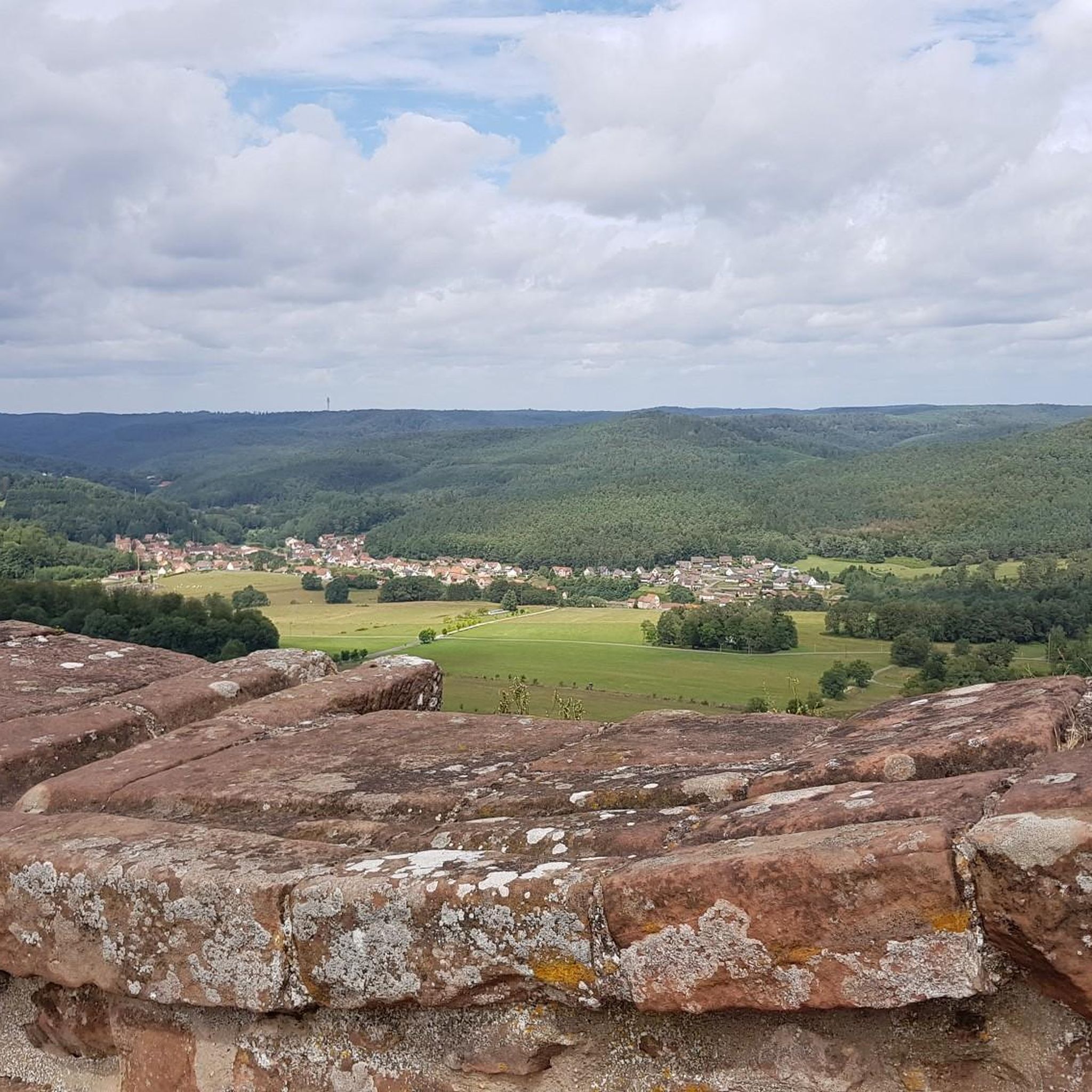
The castle complex is located on a spur on the Daubenschlag rock (French: Rocher du Daubenschlag). All that is visible here are the foundations of a large castle. Behind the clearly visible moat there is a strong shield wall, against which a large square keep (base area 11 × 11 meters) leans in the middle. In the middle of the castle complex there are still remains of a palace.
2
0

Not much left to see but easy to incorporate as a loop from the main path.
0
0

When you arrive at the castle ruins, there is an information board with the history of the ruins. Entrance is around the corner
0
0

Great Trail S2 down to Buckelmühle; Please be considerate of the hikers
0
0
Frequently Asked Questions
What are some of the most historically significant castles to visit around Weinburg?
The region around Weinburg, primarily the Northern Vosges, is rich in historical fortifications. Lichtenberg Castle, built in the 13th century, is a key defense point with a rich history, including a 16th-century chapel and a Renaissance marble mausoleum. Another significant site is Warthenberg Castle, where excavations have revealed the foundations of a large castle, including a strong shield wall and a square keep.
Are there family-friendly castles to explore near Weinburg?
Yes, several castles in the area are suitable for families. Lichtenberg Castle is listed as family-friendly and offers a large, well-maintained complex with beautiful views. The Neuwiller-lès-Saverne Village Center, which includes the ruins of Herrenstein Castle, is also noted as family-friendly, offering a broader historical and cultural experience.
What kind of views can I expect from the castles around Weinburg?
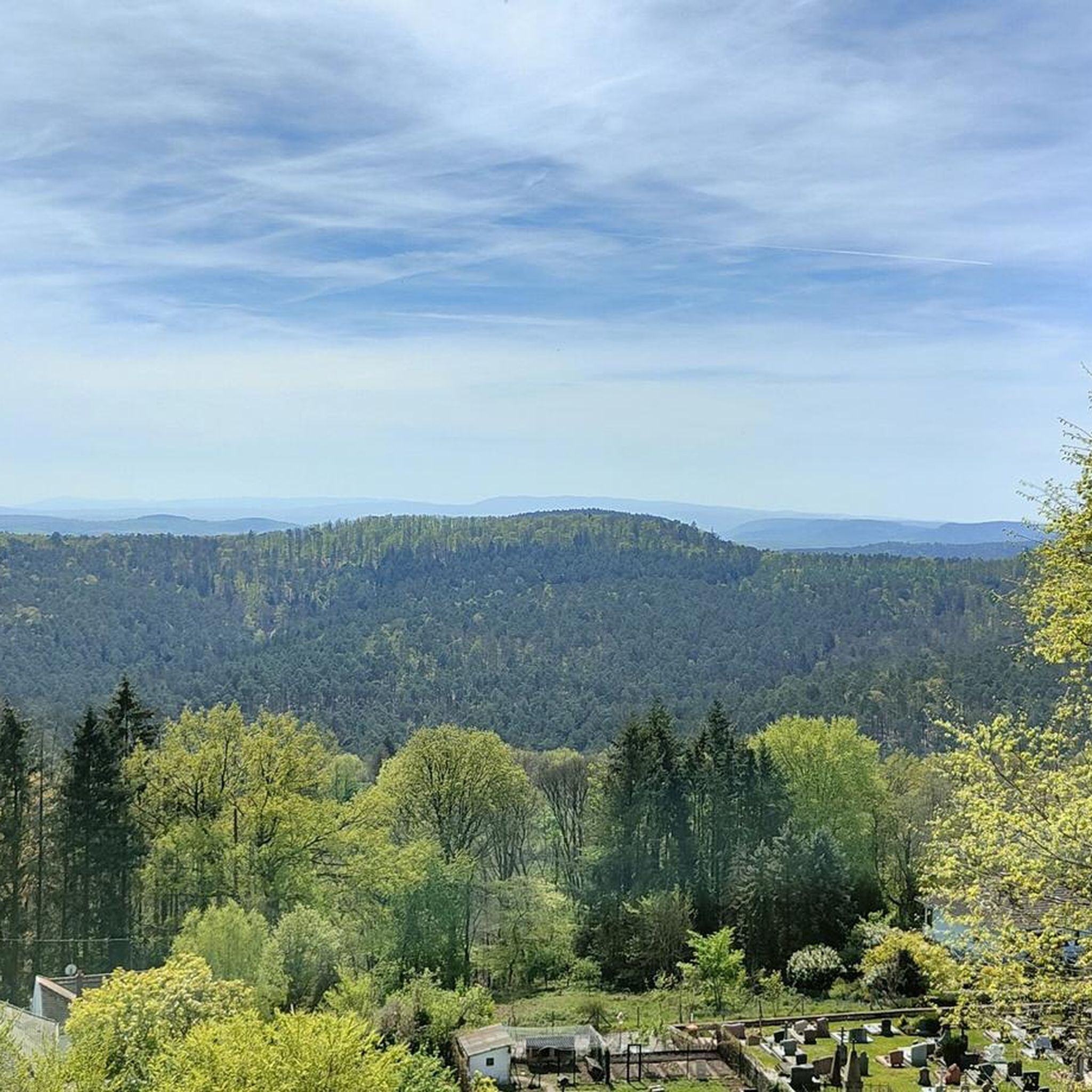
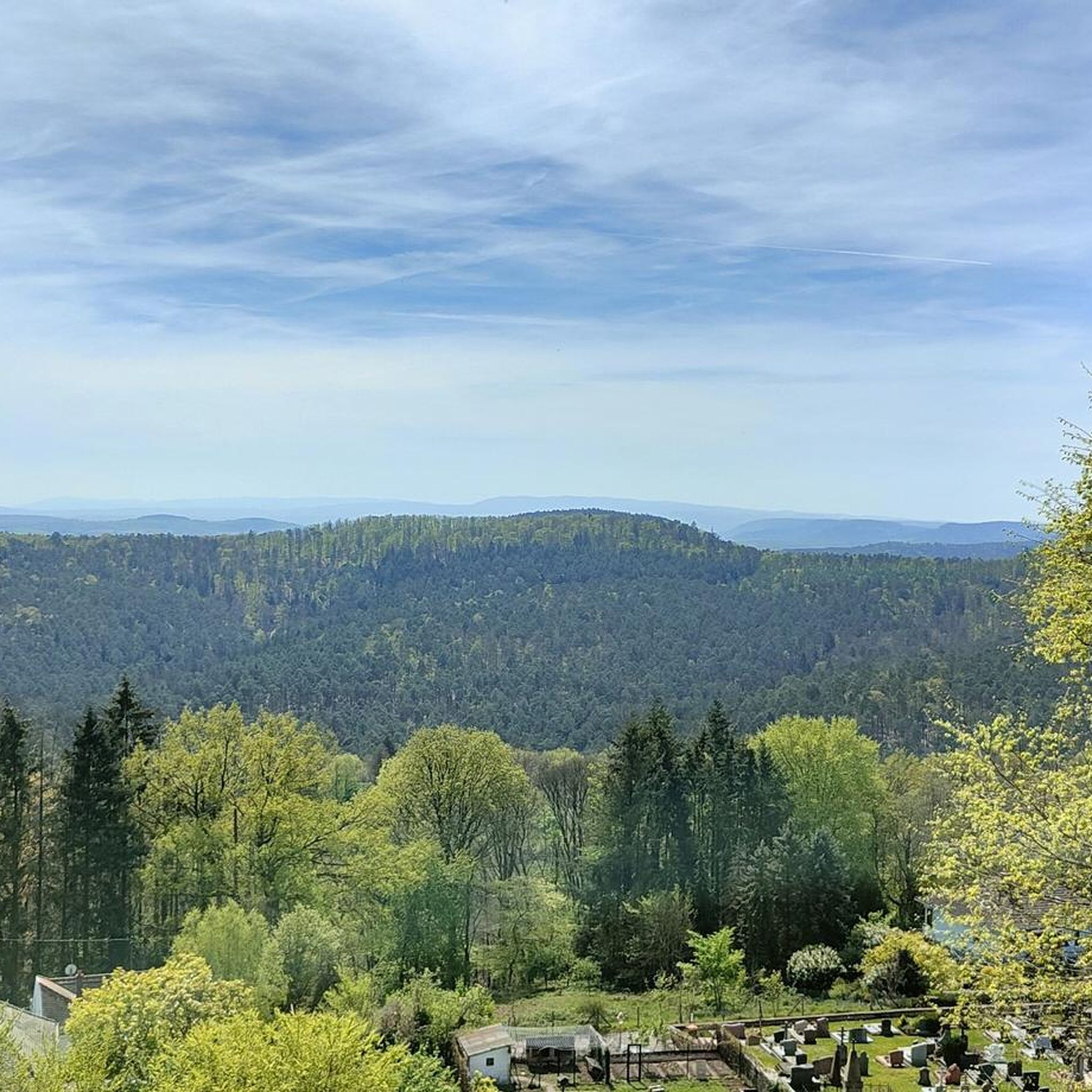
Many castles in the Northern Vosges offer panoramic views due to their strategic hilltop locations. From Lichtenberg Castle, you can see the top of the Strasbourg cathedral on a clear day, along with beautiful vistas of the Vosges mountains. Warthenberg Castle is also a designated viewpoint, offering scenic perspectives from its perch on the Daubenschlag rock.
What outdoor activities can I do near these castles?
The area around Weinburg is excellent for various outdoor activities. You can find numerous running trails, such as the 'Englishberg West Viewpoint – Englishberg loop' or the 'Forêt du Bannholz loop'. For mountain biking, options include the 'Blick auf Lichtenberg – "Le Schaenzel" loop' or the challenging 'Ochsenstall Cave – Graufthal Troglodyte Houses loop'. Gravel biking routes are also available, like the 'La Petite-Pierre – Graufthal Troglodyte Houses loop'. You can explore more routes in the Running Trails around Weinburg, MTB Trails around Weinburg, and Gravel biking around Weinburg guides.
Are there hiking trails near the castles?
Yes, the region offers many hiking opportunities. While specific hiking trails directly linked to each castle are not detailed, the nearby running guides provide routes that often traverse similar terrain suitable for walking. For example, the 'Altenberg – Pfannenfelsen loop' from Weiterswiller offers a moderate challenge. The area's hilly terrain and dense forests provide a scenic backdrop for exploring. Check the Running Trails around Weinburg guide for routes that can be adapted for hiking.
What are the admission costs for visiting castles like Lichtenberg Castle?
For Lichtenberg Castle, there is an admission fee. Current prices are approximately €6 for adults, €3.5 for children, and a family rate of €17 (for 2 adults + 2 children). Student rates are also €3.5. It's always a good idea to check their official website for the most up-to-date pricing and opening hours.
Where can I find parking when visiting castles in the area?
When visiting Lichtenberg Castle, parking spaces and rest stops are available in the village below the castle, approximately 500 meters away. For other castle sites, parking availability may vary, so it's advisable to check local information or maps beforehand.
What natural features can I see around the castles?
The castles are set within the Northern Vosges Mountains, known for its natural beauty. Near Little Meisenbach Castle, you can find superb rock formations typical of the region. The area's hilly terrain and dense forests are prominent natural features that enhance the historical sites.
What do visitors enjoy most about the castles around Weinburg?
Visitors appreciate the historical ambiance and the beautiful views offered by the castles. Many enjoy the well-preserved or restored complexes, like Lichtenberg Castle, and the opportunity to explore ancient ruins. The scenic backdrop of the Northern Vosges and the sense of discovery, especially at sites like Warthenberg Castle, are also frequently mentioned.
Are there any hidden gem castles or lesser-known historical sites?
While not a 'hidden gem' in the sense of being completely unknown, Little Meisenbach Castle offers a unique historical perspective. Although little remains of the castle itself, the site is notable for its historical use, possibly as a Roman temple and later a Christian church, set amidst superb rock formations. It provides a different kind of historical exploration compared to larger, more intact castles.
What is the best time to visit the castles around Weinburg?
The Northern Vosges region offers different experiences throughout the year. Spring and autumn generally provide pleasant weather for exploring and hiking, with vibrant foliage or blooming nature. Summer is also popular, though it can be warmer. Winter visits might offer a unique, quieter experience, but some facilities or trails could be less accessible depending on snow conditions. Always check local weather forecasts before your visit.
Most popular routes around Weinburg
Most popular attractions around Weinburg

Get inspired with the komoot mobile app


Explore more
Looking for the best castles somewhere else? Discover other guides around Weinburg:
